


Electric Vehicles Future Of Transportation Industry Powerpoint PPT Template Bundles DK MD




Try Before you Buy Download Free Sample Product
 Impress Your
 Audience
 100%
100% Editable
 Save Hours
 of Time


Our Electric Vehicles Future Of Transportation Industry Powerpoint PPT Template Bundles DK MD are topically designed to provide an attractive backdrop to any subject. Use them to look like a presentation pro.
People who downloaded this PowerPoint presentation also viewed the following :
Content of this Powerpoint Presentation
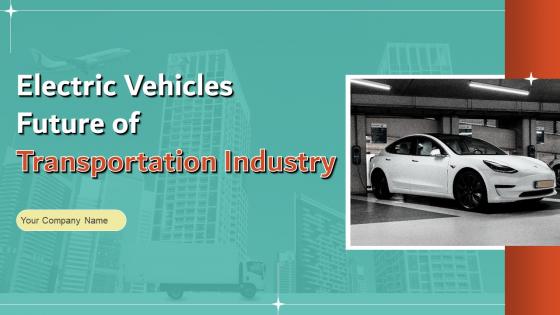
Slide 1: This slide introduces Electric Vehicles Future of Transportation Industry. State your company name and begin.
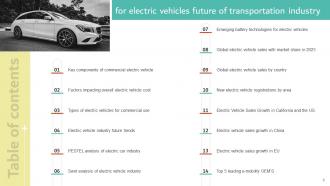
Slide 2: This slide shows Table of Content for the presentation.
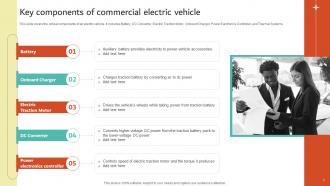
Slide 3: This slide presents Key components of commercial electric vehicle.
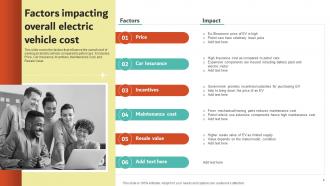
Slide 4: This slide displays Factors impacting overall electric vehicle cost.
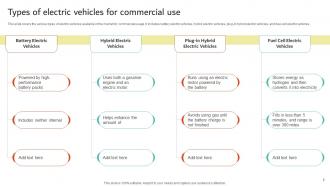
Slide 5: This slide represents Types of electric vehicles for commercial use.
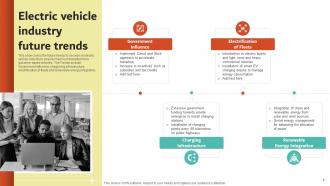
Slide 6: This slide covers the future trends to be seen in electric vehicle industry to ensure maximum transition from gasoline-based vehicles.
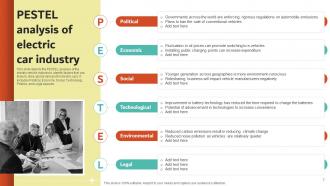
Slide 7: This slide depicts the PESTEL analysis of the electric vehicle industry to identify factors that are likely to drive global demand for electric cars.
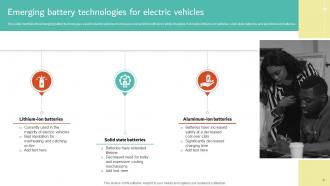
Slide 8: This slide showcases Emerging battery technologies for electric vehicles.
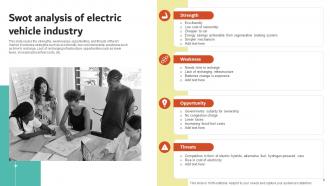
Slide 9: This slide shows Swot analysis of electric vehicle industry.
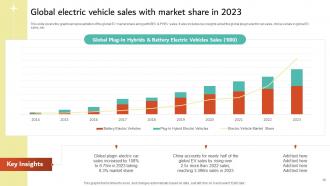
Slide 10: This slide presents Global electric vehicle sales with market share in 2023.
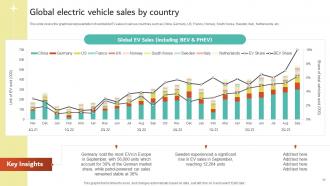
Slide 11: This slide displays Global electric vehicle sales by country.
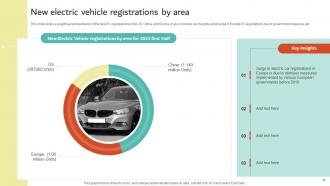
Slide 12: This slide represents New electric vehicle registrations by area.
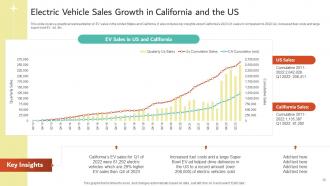
Slide 13: This slide showcases Electric Vehicle Sales Growth in California and the US.
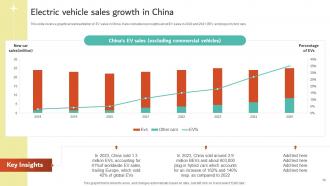
Slide 14: This slide shows Electric vehicle sales growth in China.
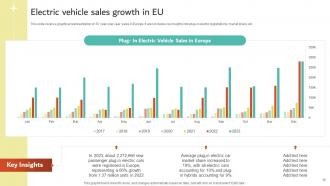
Slide 15: This slide covers a graphical representation of EV year-over-year sales in Europe.
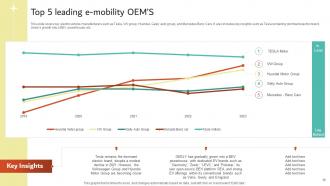
Slide 16: This slide covers key electric vehicle manufacturers such as Tesla, VW group, Hyundai, Geely auto group, and Mercedes Benz Cars.
Slide 17: This is a Thank You slide with address, contact numbers and email address.
Electric Vehicles Future Of Transportation Industry Powerpoint PPT Template Bundles DK MD with all 22 slides:
Use our Electric Vehicles Future Of Transportation Industry Powerpoint PPT Template Bundles DK MD to effectively help you save your valuable time. They are readymade to fit into any presentation structure.






FAQs for Electric Vehicles Future Of Transportation Industry Powerpoint PPT Template
Honestly, the money you'll save is pretty crazy - electricity is way cheaper than gas, and you basically never need maintenance since there's like no moving parts. Oil changes become a thing of the past. Plus the instant acceleration is actually addictive once you try it. Environmental stuff is obvious but gets better as power grids improve. Oh and you might get HOV lanes or free parking depending where you live. I'd crunch the numbers first though - figure out what you'd actually save based on how much you drive and what electricity costs around here.
Yeah, so charging stations are basically the main thing holding back EVs right now. Most people just don't trust they'll find working chargers when they need them – and honestly, fair point. If you live in an apartment, you're kinda screwed for home charging. Plus half the time you drive somewhere and the charger's broken or super slow. Range anxiety is real when the nearest fast charger is like 30+ miles away. That said, things are getting better fast. Before you buy anything, definitely check those PlugShare and ChargePoint apps to see what's actually near you.
Dude, definitely look into government incentives before buying - they're game changers. Federal tax credit gives you up to $7,500 back, plus states throw in their own rebates. You also get HOV lane access and sometimes free charging which is nice. Without these deals, EVs would honestly still be just for rich tech bros. The sticker shock is real otherwise. Like, your average person shopping for a Camry suddenly starts eyeing Teslas when there's thousands knocked off the price. I'd check what your state offers first though - some places are way more generous than others. Could save you a ton.
So EV batteries are kinda complicated environmentally. Mining lithium and cobalt definitely sucks for the planet upfront. But these batteries last like 8-15 years, then they can do energy storage stuff before getting recycled. We're actually getting really good at recycling now - pulling out 95% of the materials, which is pretty cool. Even with all the mining drama, EVs still beat gas cars for carbon footprint over their whole life. I'd just stick with manufacturers that aren't being sketchy about their sourcing and have decent recycling programs. Tesla's gotten better about this lately.
Honestly, the two big ones to watch are solid-state batteries and LFP chemistry. Solid-state could bump your range up 50% and charge way faster - though we're still waiting a few years for mass production. LFP is already rolling out and it's cheaper, lasts longer, plus way safer since you don't get that scary thermal runaway thing. Tesla's using them now in some cars. There's also silicon nanowire stuff that cranks up energy density, but I'm less sure on the timeline there. Definitely worth factoring into when you pull the trigger on your next EV.
So EVs don't have tailpipes, which honestly makes a huge difference for city air quality. Transportation is like the biggest polluter in urban areas. You're not spewing nitrogen oxides and all that gross stuff directly where people are walking around. Yeah, the power plant might burn coal or whatever, but those are usually outside cities with way better filters than car exhausts. My cousin got a Tesla last year and even just switching to a plug-in hybrid would help your neighborhood's air quality. The math still works out better emissions-wise even with dirty electricity.
Honestly, it's mostly supply chain stuff that's killing them right now. Getting enough lithium and cobalt is a nightmare, and battery production is still super complex. Charging infrastructure can't keep up either - though that's slowly improving. Retooling old factories takes forever and costs insane amounts of money. Labor's another issue since they need specialized workers for EV manufacturing. I always keep an eye on gigafactory announcements because that tells you who's actually serious about ramping up vs just talking about it. Short sentences here. The materials bottleneck is probably the biggest headache though.
So it really depends on who you're asking about EVs. Younger people and city folks are way more into them, but older consumers and rural areas? Not so much. Money's a huge factor - rich people think they're totally doable, while everyone else freaks out about the price tag and where to even charge the thing. Range anxiety is real, especially if you're stuck in the middle of nowhere instead of some metro area with charging stations everywhere. Oh, and education level matters too - the more school someone has, the more they're cool with EVs. If you're doing any marketing for these things, you've gotta split your messaging by demographics instead of just blasting the same stuff to everyone.
Dude, the EV shift is crazy - traditional engine suppliers are freaking out trying to pivot while battery makers suddenly became the hot commodity. Heavy batteries mess with the whole just-in-time thing too, which is a nightmare logistically. Automakers can't rely on old relationships anymore since they need completely different stuff like charging components. Oh, and don't get me started on rare earth suppliers - they're loving this. You should probably figure out which suppliers you have can actually handle EV components. Better to know now than scramble later.
So EVs are actually pretty cool for the grid - they help balance supply and demand way better than I expected. You'll charge overnight when electricity's cheaper (usually from wind power). The crazy part? Some cars can send power BACK to the grid during peak hours. Vehicle-to-grid tech is getting seriously impressive. This whole two-way thing lets utilities store extra renewable energy and takes pressure off the grid when everyone's running AC. Definitely check out time-of-use rates if you're thinking about getting one - saves money and uses more clean energy.
Dude, EVs are getting crazy good with over-the-air updates now - your car literally updates like your phone while you sleep. Most newer ones have solid voice assistants and smart route planning that'll map out charging stops for you. The smartphone integration is pretty seamless too. There's this cool vehicle-to-grid thing starting up where your car can sell power back during peak hours (though I haven't seen it much yet). Honestly, when you're shopping, spend real time testing the infotainment system. You'll be using it constantly for charging stuff and trip planning, so make sure it doesn't suck.
So EVs are way more efficient - they convert like 85-90% of energy into actual movement. Hybrids still waste a bunch of energy as heat through their gas engines. But here's the thing - it totally depends on where you live. If your local grid runs on coal (looking at you, midwest), hybrids might actually be cleaner right now. Though honestly, that's changing pretty fast as more renewables come online. I'd check what your utility company uses for power generation. That'll tell you which one's actually better for the environment in your area.
So basically EVs pack way more voltage than regular cars - like 400-800V instead of just 12V. If you crash and the battery gets damaged, you could get shocked or deal with battery fires (which are honestly a pain to put out). Also they're crazy quiet, so watch out for pedestrians who can't hear you sneaking up on them. Most of the time though? You're fine. The batteries are pretty well protected for normal driving. Just don't take it to some random shop if you need repairs - make sure they actually know EVs or you'll regret it.
Yeah, EVs do struggle a bit in crazy weather, but honestly they're tougher than most people give them credit for. Winter's the real killer - you'll lose like 20-40% of your range when it's freezing because the battery hates cold and you're blasting heat nonstop. Summer's not as bad since AC systems are pretty solid now. Here's the game changer though: precondition while you're still plugged in so you're not draining the battery to heat/cool the car. Oh, and they actually drive great in snow - that heavy battery pack keeps everything planted. My neighbor swears by his Tesla in bad weather.
So here's the deal - self-driving cars are basically giving EVs a huge boost. Autonomous vehicles just work better when they're electric because they can optimize energy through smart routing and stuff. Fleet companies like Uber are all over self-driving EVs since they don't have to pay drivers and electricity is cheaper than gas. That combo is honestly pretty solid. Investment money is pouring into companies doing both technologies too. Oh and if you're looking at EV investments, autonomous features will probably speed up how fast people adopt them. Makes sense when you think about it.
-
Loved the templates on SlideTeam, I believe I have found the go to place for my presentation needs!
-
The templates are handy and I can personalize them as per my needs. Glad to be your subscriber!