

Email Drip Marketing Campaign Flow Chart




Try Before you Buy Download Free Sample Product
 Impress Your
 Audience
 100%
100% Editable
 Save Hours
 of Time


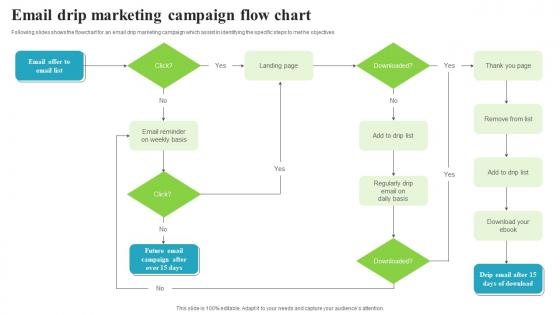
Following slides shows the flowchart for an email drip marketing campaign which assist in identifying the specific steps to met he objectives.
People who downloaded this PowerPoint presentation also viewed the following :
Email Drip Marketing Campaign Flow Chart with all 6 slides:
Use our Email Drip Marketing Campaign Flow Chart to effectively help you save your valuable time. They are readymade to fit into any presentation structure.





FAQs for Email Drip Marketing
So you set up a bunch of emails that automatically send to people based on what they do - like when they sign up or buy something. It's pretty cool because once you build the sequence, it just runs itself. You can split your audience into different groups and send them totally different email flows depending on their interests. Way better than sending everyone the same boring mass email, honestly. I'd start with just a basic welcome series - doesn't have to be fancy. Even 3-5 emails will boost your engagement big time. It's like having a sales person working 24/7.
Honestly, you gotta just experiment with your audience. There's no magic number that works for everyone. Start basic - maybe once or twice weekly. Then split test different schedules for a few weeks. Give some people emails every 3 days, others weekly, whatever. Watch your open rates and unsubscribes like a hawk - that'll tell you if you're annoying people. B2B audiences usually put up with more frequent emails than regular consumers, which is kinda weird but true. Run tests for at least 2-4 weeks so you actually get useful data, then tweak from there.
Definitely track your open rates first - that tells you if people actually care about your subject lines. Click-through rates are huge too since they show whether your content's any good. Conversion rates matter most though, obviously, because that's actual money. Unsubscribe rates suck to watch but you gotta monitor them. Also keep an eye on deliverability and how fast your list grows. Honestly, I'd just throw together a simple dashboard and check it weekly - drip campaigns are more about spotting patterns than obsessing over individual emails anyway.
Dude, segmentation is a total game changer. You can actually send stuff people care about instead of random emails they'll ignore. Like, I once accidentally sent baby formula ads to college guys – awkward much? But when you break your list into groups (maybe by age, what they've bought, or how they found you), your open rates will actually improve. People engage more when emails feel like they're meant for them, not mass-blasted to everyone. Honestly, just start with 2-3 basic groups and go from there. Way better than the spray-and-pray approach most people do.
Mix it up with different content types - educational stuff, behind-the-scenes posts, customer stories, product updates. I've watched so many brands just pitch constantly and people get annoyed fast. Add helpful tips or quick tutorials that actually matter to your audience. Oh, and founder stories work surprisingly well for building connection. Stick to that 80/20 thing where most of your content provides value and only 20% is promotional. Test what works though - every audience is different. Industry insights are solid too if you can make them interesting.
Subject lines for drip campaigns? Focus on their pain point first, then hint at the solution. I always keep mine under 50 characters - mobile cuts off anything longer and it's annoying. Since you know where they are in your funnel, throw in some personalization. Action words work great: "discover," "unlock," "transform." Just don't go overboard with "FREE!!!" - spam filters hate that stuff. Mix up your approach throughout the sequence. Questions, benefits, creating urgency. I'm probably overthinking this, but testing different styles really does make a difference. Watch those open rates and stick with what actually works for your people.
Dude, personalization is everything with drip campaigns. Like, it can totally tank your open rates if you don't do it right. Most people just slap in "[First Name]" and call it a day, but you gotta go deeper than that. I'm talking about segmenting based on what people actually bought or how they found you. Generic emails? Yeah, those get deleted instantly now. When your content feels like it was made specifically for someone's situation, they'll actually read the whole sequence. Oh, and start with at least 3-4 audience segments based on their behavior or interests - trust me on this one.
So A/B testing is basically just comparing different versions of your emails to see what clicks with people. Subject lines are where I'd start - they're super easy to test and can make or break your open rates. You can also mess around with send times, the actual email copy, CTAs, whatever. Just test one thing at a time or you won't know what's actually working. Oh, and don't rush it - you need enough people and time to get real data, not just random noise. Your welcome email's probably the best place to start since people are most engaged then anyway.
Oh man, don't bombard people right away - that's the fastest way to get marked as spam. Also, stop making everything a sales pitch! Like seriously, mix in some actual value. Generic subject lines are trash too, and you gotta segment your list because someone who just signed up shouldn't get the same stuff as your longtime subscribers. Test everything before hitting send - broken links make you look super unprofessional. Actually, scratch that order... first figure out your timing and what you're trying to accomplish, then write the emails.
So these tools basically do all the boring email stuff automatically - sending sequences, sorting people into different groups, that kind of thing. You can set up triggers too, like if someone downloads something but doesn't book a call, it'll send a follow-up without you remembering. They track everything - opens, clicks, sales - which honestly saves me so much time digging through numbers. I'd start simple with Mailchimp or ConvertKit. Just do a basic 3-email welcome series first, then get fancier later once you see how it works.
Oh, this is actually pretty straightforward! So basically you want to repurpose stuff between channels - take your welcome email sequence and turn it into Instagram story highlights, or flip your social posts into email content. Facebook ads are where it gets interesting though - you can retarget people who already subscribe to your emails, or build lookalike audiences from your most engaged subscribers. Don't forget to throw social sharing buttons in those drip emails too. Honestly, I'd just pick whichever platform most of your email people hang out on and run parallel campaigns there first.
So first off, get your sender reputation sorted - dedicated IP, SPF/DKIM authentication, that whole thing. Gmail's honestly being a pain lately with their filtering. What really matters though is only emailing people who actually want to hear from you. Segment your lists hard and ditch the dead weight subscribers. Quality content beats everything else. Skip the spammy language, make unsubscribing super easy, and don't go crazy with send volumes - consistency wins over blasting everyone at once. Oh, and definitely run your current setup through one of those deliverability checkers first. Gives you a better starting point.
Honestly, I'd start with the simple stuff - throw a "Was this helpful?" button at the bottom of your emails since people actually click those. Track your open rates and click-throughs too, they're pretty telling even when people don't respond directly. Surveys work but don't go overboard with them. A/B testing subject lines is clutch for figuring out what clicks with your audience. Oh, and definitely check why people are unsubscribing - sometimes it's brutal but useful feedback. The real trick though? Actually changing things based on what you learn. If nobody's opening your weekly roundups, maybe it's time to try something else. Start small and build up your feedback game from there.
Check out Airbnb's welcome series - they gradually walk hosts through platform features without info-dumping everything at once. Grammarly does this cool thing where they share writing tips but sneak in premium feature mentions. Dropbox absolutely crushed their onboarding by sticking to one simple action per email (honestly genius). HubSpot's lead nurturing is solid too since they actually segment by where people are in the buying process. Oh, and definitely browse Really Good Emails or Campaign Monitor's case studies - you can basically steal their frameworks and adapt them.
So GDPR means you can't just add people to email campaigns anymore - you need actual consent first. None of that pre-checked box nonsense. Build proper opt-ins into your signup process and keep records of how people agreed to join. The fines are honestly terrifying if you screw this up. When someone wants their data deleted, you have to pull them from everything immediately. Oh, and make unsubscribing dead simple. I'd definitely use an email platform that handles this stuff automatically because manually tracking consent sounds like a nightmare.
-
I want to thank SlideTeam for the work that they do, especially their customer service.
-
Use of icon with content is very relateable, informative and appealing.