


Employee Engagement Action Plan For High Retention Rate Powerpoint Presentation Slides





Try Before you Buy Download Free Sample Product
 Impress Your
 Audience
 100%
100% Editable
 Save Hours
 of Time


Employee engagement allows you to assess and manage your employees perspectives on critical aspects of your work environment. Grab our Employee engagement action plan to Increase Retention Rate template. It showcases the concept of employee engagement and the problems faced by employees and the organization. Our Employee retention deck includes employee engagement strategies and the importance of employee retention. It also covers a survey that helps companies identify the weak areas to enhance employee engagement. Improvement areas include communication, teamwork and collaboration, appreciation and recognition, etc. Our Employee satisfaction PPT presents the employee recognition and appreciation program to increase employee engagement. It includes its benefits, how to develop it, strategies, reward and gifting ideas, and its impact. Our Employee Engagement and Retention module highlights the effect of improving the focus areas after implementing the action plan. Lastly, it also covers a section with dashboards to analyze employee recognition and employee turnover rate. Download our 100 percentage editable and customizable template, also compatible with Google Slides.
People who downloaded this PowerPoint presentation also viewed the following :
Content of this Powerpoint Presentation
Slide 1: This slide introduces Employee Engagement Action Plan for High Retention Rate. Commence by stating Your company name.
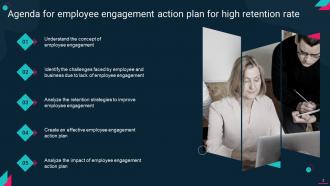
Slide 2: This slide depicts the Agenda of the presentation.
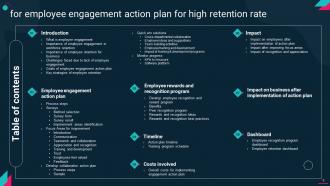
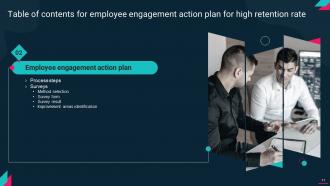
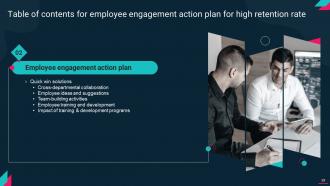
Slide 3: This slide incorporates the Table of contents.
Slide 4: This slide highlights the Title for the Topics to be discussed further.
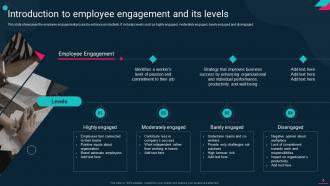
Slide 5: This slide showcases the employee engagement process to enhance productivity.
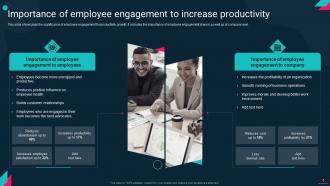
Slide 6: This slide portrays the Importance of employee engagement to increase productivity.
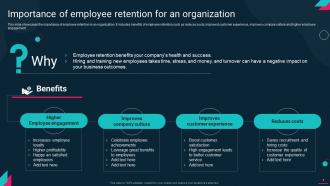
Slide 7: This slide exhibits the Importance of employee retention for an organization.
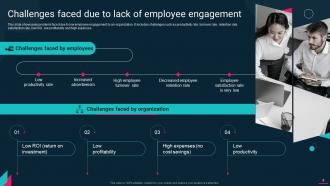
Slide 8: This slide presents the Challenges faced due to lack of employee engagement.
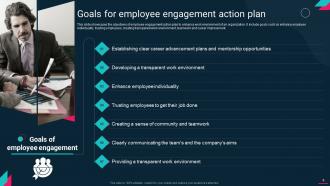
Slide 9: This slide depicts the Goals for employee engagement action plan.
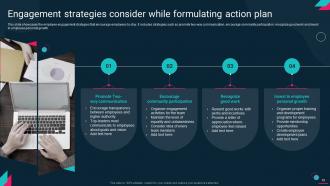
Slide 10: This slide highlights the Engagement strategies consider while formulating action plan.
Slide 11: This slide mentions the Heading for the Components to be covered next.
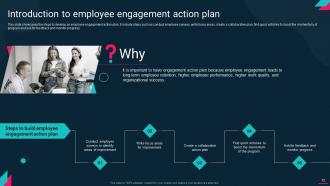
Slide 12: This slide showcases the steps to develop an employee engagement action plan.
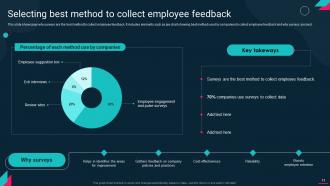
Slide 13: This slide deals with Selecting the best method to collect employee feedback.
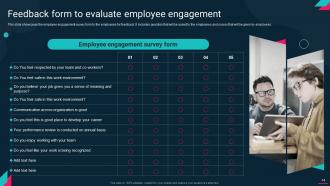
Slide 14: This slide presents the employee engagement survey form to the employees for feedback.
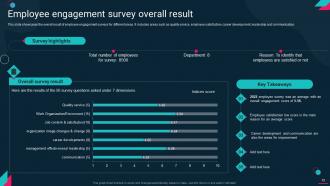
Slide 15: This slide elucidates the Employee engagement survey overall result.
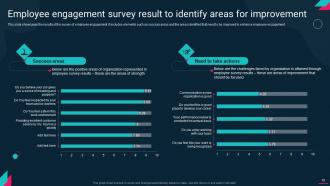
Slide 16: This slide showcases the results of the survey of employee engagement.
Slide 17: This slide indicates the Title for the Ideas to be covered further.
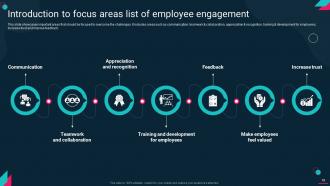
Slide 18: This slide reveals the important areas that should be focused to overcome the challenges.
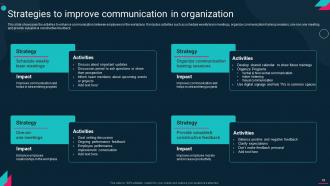
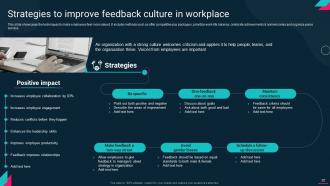
Slide 19: This slide highlights the Strategies to improve communication in organization.
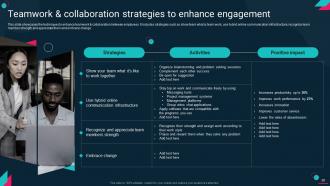
Slide 20: This slide exhibits the Teamwork & collaboration strategies to enhance engagement.
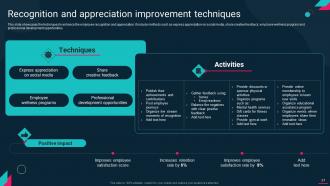
Slide 21: This slide shows the techniques to enhance the employee recognition and appreciation.
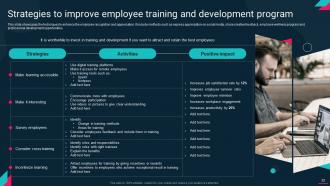
Slide 22: This slide depicts the Strategies to improve employee training and development program.
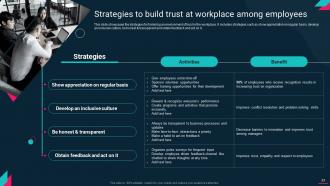
Slide 23: This slide elucidates the Strategies to build trust at workplace among employees.
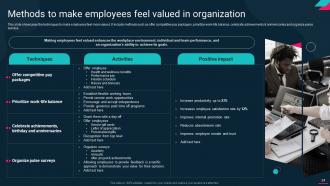
Slide 24: This slide states the Methods to make employees feel valued in organization.
Slide 25: This slide reveals the techniques to make employees feel more valued.
Slide 26: This slide indicates the Heading for the Ideas to be discussed in the upcoming template.
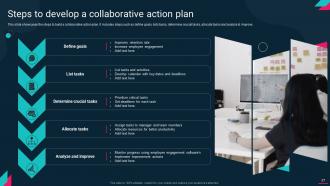
Slide 27: This slide states the Steps to develop a collaborative action plan.
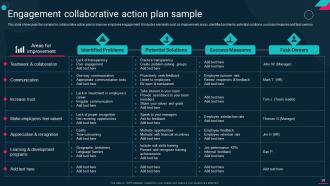
Slide 28: This slide showcases the sample for collaborative action plan to improve employee engagement.
Slide 29: This slide elucidates the Title for the Topics to be covered in the upcoming template.
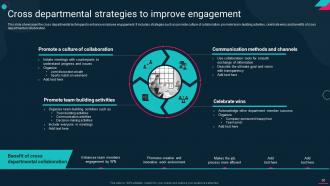
Slide 30: This slide focuses on the Cross departmental strategies to improve engagement.
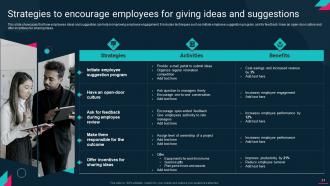
Slide 31: This slide exhibits the Strategies to encourage employees for giving ideas and suggestions.
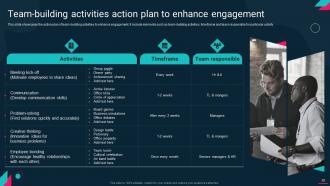
Slide 32: This slide showcases the action plan of team-building activities to enhance engagement.
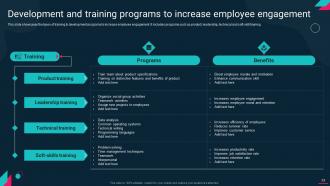
Slide 33: This slide deals with the Development and training programs to increase employee engagement.
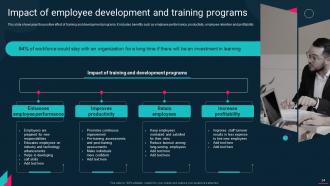
Slide 34: This slide depicts the Impact of employee development and training programs.
Slide 35: This slide highlights the Heading for the Components to be discussed next.
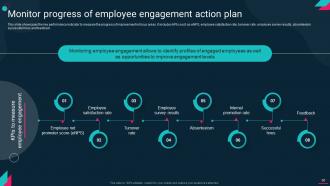
Slide 36: This slide shows the key performance indicator to measure the progress of improvement in focus areas.
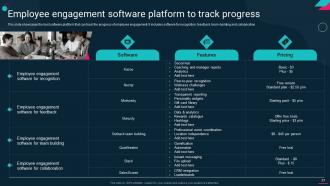
Slide 37: This slide emphasizes on the Employee engagement software platform to track progress.
Slide 38: This slide represents the Title for the Ideas to be covered next.
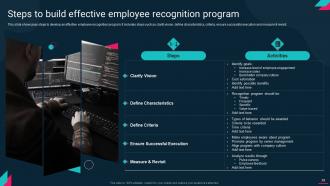
Slide 39: This slide states the Steps to build effective employee recognition program.
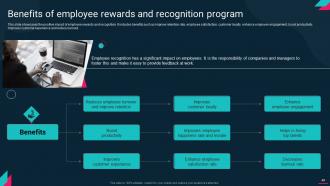
Slide 40: This slide displays the Benefits of employee rewards and recognition program.
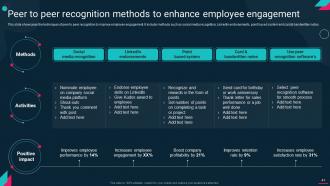
Slide 41: This slide showcases the techniques of peer to peer recognition to improve employee engagement.
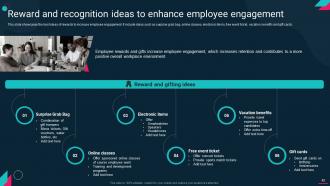
Slide 42: This slide focuses on the Reward and recognition ideas to enhance employee engagement.
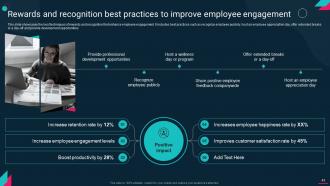
Slide 43: This slide exhibits the Rewards and recognition best practices to improve employee engagement.
Slide 44: This slide indicates the Heading for the Ideas to be discussed further.
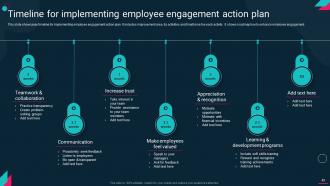
Slide 45: This slide reveals the Timeline for implementing employee engagement action plan.
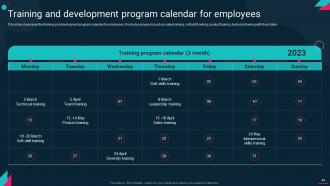
Slide 46: This slide elucidates the Training and development program calendar for employees.
Slide 47: This slide includes the Title for the Contents to be covered in the upcoming template.
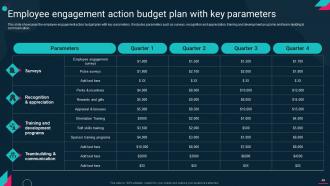
Slide 48: This slide showcases the employee engagement action budget plan with key parameters.
Slide 49: This slide depicts the Heading for the Topics to be discussed further.
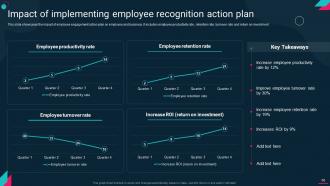
Slide 50: This slide highlights the Impact of implementing employee recognition action plan.
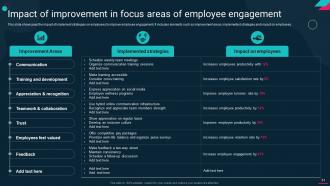
Slide 51: This slide mentions about the Impact of improvement in focus areas of employee engagement.
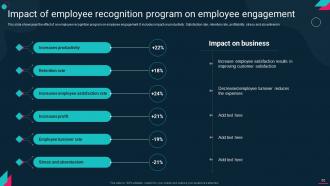
Slide 52: This slide reveals the effect of an employee recognition program on employee engagement.
Slide 53: This slide indicates the Title for the Ideas to be covrered in the next template.
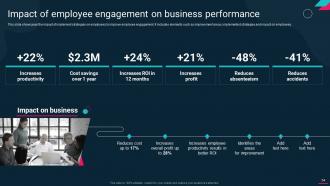
Slide 54: This slide showcases the impact of implement strategies on employees to improve employee engagement.
Slide 55: This slide presents the Heading for the Ideas to be further discussed.
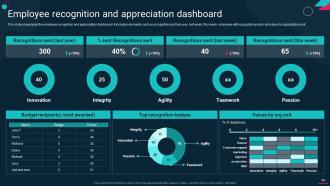
Slide 56: This slide illustrates the Employee recognition and appreciation dashboard.
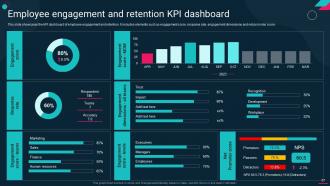
Slide 57: This slide represents the Employee engagement and retention KPI dashboard.
Slide 58: This is the Icons slide containing all the Icons used in the plan.
Slide 59: This slide is used for depicting some Additional information.
Slide 60: This is the About us slide for stating the Company-related information.
Slide 61: This is Our mission slide for depicting the organization's mission, vision, and goals.
Slide 62: This is Our team slide. State your team-related information here.
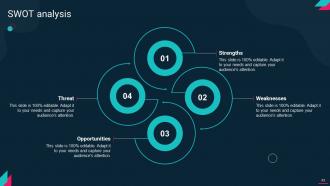
Slide 63: This slide elucidates the SWOT analysis.
Slide 64: This is the Puzzle slide with related imagery.
Slide 65: This is the Idea generation slide for encouraging fresh ideas.
Slide 66: This slide contains the Post it notes for reminders and deadlines.
Slide 67: This is the 30 60 90 days plan slide for effective planning.
Slide 68: This is the Thank you slide for acknowledgement.
Employee Engagement Action Plan For High Retention Rate Powerpoint Presentation Slides with all 73 slides:
Use our Employee Engagement Action Plan For High Retention Rate Powerpoint Presentation Slides to effectively help you save your valuable time. They are readymade to fit into any presentation structure.






FAQs for Employee Engagement Action Plan For High Retention Rate
Honestly, it comes down to connection and being clear about stuff. Regular one-on-ones are clutch. Don't micromanage - that'll kill engagement so fast. I've noticed teams doing virtual coffee chats work pretty well, or even just async check-ins. Your people need to feel like their work actually matters and they're still growing professionally. Oh, and definitely ask them directly what makes them feel connected - you might be surprised by what they say. Some want more social time, others just want clearer goals. Trust goes a long way too.
Honestly, I'd do a combo approach. Monthly anonymous surveys work great - but keep them super short, like 5 questions tops because people hate long forms. The real gold though? Pay attention during your one-on-ones and watch body language in meetings. Who's actually engaged vs just sitting there? Track stuff like attendance patterns and how people react when you give feedback. Sometimes your gut tells you more than data anyway. Oh, and notice who volunteers for things versus who you always have to ask. Start with a basic monthly survey this week and see what happens.
Honestly, culture is everything when it comes to getting people engaged at work. Nobody sticks around places that feel off or toxic - I've been there and it sucks. You want people showing up because they actually care, not just for a paycheck. The trick is making sure what you say your culture is actually matches reality. Like, are your leaders walking the talk? How do you handle mistakes? Those daily moments matter way more than whatever's printed on your office posters. I'd start by honestly looking at what your workplace actually feels like versus what you claim it is.
Dude, people just want to know their work matters, you know? Give them specific feedback regularly - not just the yearly review BS. Recognition doesn't need to be some big production either. Honestly, a genuine "hey, great job on that project" hits harder than most managers realize. Just make it timely and specific. I've seen teams completely check out when they feel invisible or don't know if they're crushing it or failing. Try weaving quick feedback into your weekly check-ins. Short bursts work way better than saving everything up.
Honestly, monthly check-ins are game-changers - way better than those awkward annual reviews nobody likes. Focus on growth opportunities too, like actual career paths so people don't feel stuck. Recognition's huge but doesn't need to break the bank. A genuine shoutout beats some random gift card any day. Oh, and skip the one-time survey thing - that's useless. You'll want quarterly pulse checks to see what's really moving the needle. I swear, half the companies I know treat engagement like checking a box instead of having real conversations with their people.
Engaged employees are honestly just way more productive and creative. They actually give a damn about quality work and will go the extra mile without you having to ask. The turnover thing is huge too - people stick around when they're happy, which saves you a fortune in hiring costs. I've seen teams where engagement was high and their customer satisfaction scores were always better. Makes sense though, right? Happy employees = happy customers. Oh, and collaboration improves dramatically when people aren't just phoning it in. Start with regular check-ins and actually listen to what they're telling you. That's where it all begins.
Honestly? Bad managers are the worst culprit here - they'll kill engagement faster than anything else. Poor communication from leadership doesn't help either, plus people get burned out when there's no growth path or they feel overworked and underappreciated. Survey your team first to see what's hitting them hardest. Then focus on better feedback loops, some kind of career development stuff, and recognition that actually happens regularly. Training managers is huge since they're dealing with people daily. Don't try fixing everything at once though - you'll just spread yourself too thin and nothing will stick.
Honestly, the right tech can totally change how engaged your team feels. Start with something like Slack or Teams - keeps everyone connected without the email chaos. Feedback platforms are huge too because people actually want to be heard, you know? Oh, and those digital recognition systems? I was skeptical at first, but employees genuinely love the badges and public shoutouts. Learning platforms keep people growing, which means they'll stick around longer. Don't go overboard though - pick one tool that fixes your biggest communication headache first. You can always add more later once people get comfortable with it.
Honestly, wellness programs work because they make people feel valued as actual humans instead of just worker bees. Mental health support, gym memberships, stress management - stuff like that sends the message that your company genuinely cares. Healthier employees have way more energy too, so it's pretty much win-win. Though here's the thing - don't just throw random perks at people and hope something sticks. Ask your team what they'd actually use first. Maybe they want meditation apps, maybe they need childcare help. You'll be surprised what matters most to them vs what you think they need.
Yeah, D&I stuff really does make a huge difference for engagement. People want to feel like they belong at work - sounds basic but it's true. When employees see themselves represented and feel valued for who they are, they actually care more about their jobs. You'll notice better retention, more people volunteering for projects, folks actually talking in meetings instead of staying quiet. The trick is being real about it though. Nobody wants those fake corporate diversity theater things. Just listen to what your different employee groups are actually saying they need. Sometimes it's simpler than you'd think.
Yeah, onboarding is huge for getting people engaged early on. You're basically showing new hires whether they actually matter to the company or not. I've watched so many places just dump people in with zero guidance, then act shocked when everyone's checked out by week three. Good training goes way beyond just the technical stuff too - people need to understand your culture and how their job actually connects to everything else. The first 90 days really make or break it. Structure those months right and you'll save yourself tons of headaches later.
Honestly, how you lead makes a huge difference in whether your team actually cares about their work. Micromanage people and you'll kill their motivation super fast. Transformational leaders who paint the big picture and give clear direction? They get way better engagement - though being "inspirational" all the time sounds exhausting to me. When you include people in decisions, they feel heard and buy in more. Sure, being autocratic might work short-term, but it'll backfire eventually. Really just depends on reading what your specific team needs instead of using the same approach with everyone.
Honestly, one-on-ones are game changers - way more important than those big team calls. Set up random virtual coffee breaks too (sounds dumb but people actually love it). Be super clear about goals and how their specific work matters. Oh and trust them with their schedules! Micromanaging remote workers is basically asking for people to quit. I learned this the hard way when I kept checking in on someone every few hours - they were so annoyed. Create some casual Slack channels where people can just chat about random stuff. Transparency is huge too.
Honestly, it's pretty obvious once you know what to look for. Performance drops, they're calling in sick more, barely speaking up in meetings - basically that "check please" vibe. Pay attention to people who used to be engaged but suddenly went radio silent. Have real conversations with them first. Figure out what's actually wrong - burnout, feeling stuck, whatever. Then actually do something about it instead of just nodding along. Give them projects they care about, shout them out when they do good work. Include them in decisions. The trick is listening and then following through. Most managers skip that second part.
You'll want to track the obvious stuff - satisfaction scores, retention rates, how many people actually show up to your engagement programs. But honestly, absenteeism tells you way more than most surveys do. People vote with their feet, you know? Also watch internal promotions closely since nobody grows internally when they're mentally checked out. I'd do quick pulse surveys monthly or quarterly to catch problems before they explode. The real trick is consistency though - don't just take random snapshots. Set up some basic dashboard so you can actually see what's trending and tweak things as you go.
-
Perfect template with attractive color combination.
-
The best collection of PPT templates!! Totally worth the money.