


Employee survey motivation powerpoint slide show




Try Before you Buy Download Free Sample Product
 Impress Your
 Audience
 100%
100% Editable
 Save Hours
 of Time


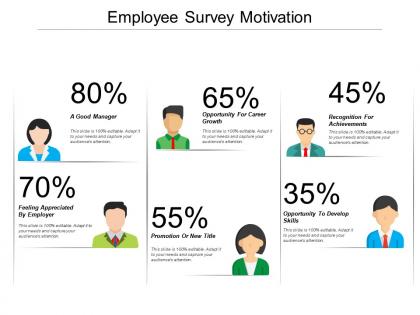
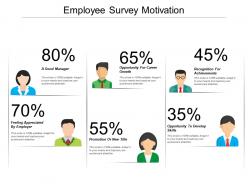
Create unique presentations to display motivation at workplace using our one of the most innovative employee survey motivation PowerPoint slide show. PPT template facilitates to outline the methods used in study to gather data about various factors that affect employee motivation and how to better motivate the company’s employees in future. With the support of this professional PPT on employee satisfaction, you can easily create questionnaire on employee motivation and display results accordingly. Measure the employee’s current satisfaction of motivational factors in the company to determine which factors should be changed implemented or eliminated in order to motivate the employees to do their best work in future. Do motivation survey and analyze results on the basis of various factors e.g. opportunity for career growth, rewards and recognition for achievements, promotion, appreciation, opportunities to develop skills with this employee engagement presentation template. Now, without thinking too much, download this design by a single click on download button and impress your viewers. Our Employee Survey Motivation Powerpoint Slide Show enhance your connectivity with clients. They broaden your access to them.
People who downloaded this PowerPoint presentation also viewed the following :
Employee survey motivation powerpoint slide show with all 5 slides:
Our Employee Survey Motivation Powerpoint Slide Show have appropriate images for humor. It allows you to deliver a hearty joke.
FAQs for Employee survey motivation
Honestly, it comes down to a few key things. Purpose matters - people want to feel like their work actually means something. Give them autonomy over how they get stuff done, and don't forget to recognize good work when you see it. Growth opportunities are massive too. Fair pay is obviously important (though I've seen people stay in lower-paying jobs they love), but here's the thing - their relationship with their direct manager usually trumps everything else. Trust and communication make or break it. Work-life balance helps too. If you want to improve things on your team, just start having real one-on-ones and actually listen to what they're telling you.
Honestly, start with employee surveys - engagement scores and satisfaction ratings before and after your changes. Exit interviews are incredibly valuable too, people are way more honest when they're leaving. Look at your retention rates and absenteeism data since those numbers don't lie. I'd do pulse surveys quarterly instead of just yearly ones because things change fast. Oh and productivity metrics obviously, though those can be tricky to measure sometimes. Here's the thing - pick maybe 3 key metrics and actually track them monthly. Otherwise you'll just drown in spreadsheets and never look at any of it.
Leadership makes or breaks team engagement, honestly. Good leaders listen and actually care about helping people grow. They're transparent about where the company's headed too. Creates that safe space where people want to bring their A-game. Bad bosses who micromanage or just phone it in? Team engagement dies fast. Recognition matters way more than people think - meaningful feedback and trusting your team creates this ripple effect. My old manager used to say you can't fake energy, and he was right. Your team mirrors whatever vibe you're putting out there.
Honestly, just pick tools that don't feel like extra homework. Pulse survey apps are clutch because you get feedback right away instead of waiting a whole year for reviews. Slack or Teams help remote people stay in the loop - and yeah, those silly GIF reactions actually do help morale somehow. Recognition software is solid for calling out wins when they happen. Learning platforms work if people can pick stuff they're genuinely interested in. Don't overwhelm yourself though. Start with whatever's driving you the most crazy right now and fix that first.
Dude, this stuff actually works. Companies with engaged employees see 23% higher profits and 18% better productivity - those aren't small numbers. Your people won't call out sick as much (81% less absenteeism), and they actually give a damn about quality work. Customer satisfaction goes up too. Honestly, I used to think this was just HR fluff, but the money side is real. You'll want to check in with your team regularly and actually do something with their feedback. Even tiny changes move the needle business-wise. It's weird how taking care of people ends up being good for profits.
Honestly, most remote teams mess up because they skip the personal stuff. Do regular one-on-ones - not just those big group meetings where nobody really talks. Those virtual coffee chats? They're weirdly effective even though they feel super awkward initially. Give people control over their schedules when you can. Oh, and definitely celebrate wins publicly in your team channels. The whole trick is recreating those random hallway conversations that used to just... happen. Start with weekly check-ins where you actually ask how someone's doing, not just project updates.
Honestly, people just want to feel like their work actually matters, you know? Recognition hits that psychological sweet spot - it's what keeps someone from quietly checking out mentally. I've noticed the biggest mistake is waiting for annual reviews or throwing around vague "great work" comments. That stuff doesn't land. Instead, get specific about what they did well and do it regularly. Like, call out one real achievement per person each week. It doesn't have to be some big production either. The difference in team energy is pretty obvious once you start doing it consistently.
Honestly? Most companies just assume they know what employees want without actually asking. They roll out random stuff like foosball tables thinking that'll fix everything - it won't. Don't treat engagement like some annual survey you check off your list either. The real problems are usually terrible managers, zero career growth, or people having no clue what's expected of them. Skip the surface-level perks and dig into what's actually broken. Just start by having real conversations with your team about what they need. Build solutions around that instead.
Honestly, most companies mess this up because they just collect feedback and let it die in someone's inbox. You want pulse surveys and regular check-ins, but here's the thing - you absolutely have to act on what people tell you AND tell them what you're doing about it. Mix up your channels too: anonymous surveys for the sketchy stuff, team talks for ideas, skip-levels so you catch what managers miss. Oh and make it feel like an actual conversation, not some corporate investigation. People get super cynical when they think you don't care. Show them their input changes things.
So much has changed lately! Companies are going all-in on virtual team building since everyone's working from home or hybrid now. Mental health stuff is everywhere too - flexible PTO, wellness programs, you name it. What's really wild is how they're using data to figure out what motivates each person individually instead of just generic pizza parties (thank god). Annual reviews are basically dead - now it's all about those quick pulse surveys and constant feedback. Oh, and if you're thinking about switching things up, just ask your team what they actually want first. Saves so much guesswork.
Start with real introductions - not just those weird hallway "this is Sarah" moments, but sit-downs where people actually talk about their roles. A 30-60-90 day plan helps too so they're not constantly stressing about whether they suck or not (that spiral is brutal). Oh, and assign a buddy who isn't their boss - someone they can ask the "stupid" questions to without feeling judged. The frequent check-ins are huge those first couple weeks. Actually listen when they tell you what's confusing or what isn't working. Most managers just nod and move on, but you'll catch problems early if you pay attention.
Look, people just work harder when they feel like they actually belong, you know? Diverse teams come up with better ideas because everyone's not thinking the same way. I've seen it firsthand - when someone feels safe to speak up, meetings get way more productive. Nobody wants to stick around if they're constantly pretending to be someone else at work. The trick isn't just hiring different people though. You've got to make sure everyone feels heard once they're there. Check who's actually talking in your meetings - that'll tell you everything. Oh, and turnover drops like crazy too, which saves you a ton of headaches.
Honestly, yeah - you can't just treat everyone the same way at work. Boomers want recognition and job security. Gen X? They're all about that work-life balance and being left alone to do their thing. Millennials actually love feedback (weird, I know) and need to feel like their work matters. Gen Z wants room to grow and flexible schedules. I'd probably start by just asking people what motivates them - sounds obvious but most managers skip this step. Then give everyone options instead of forcing one approach on everybody. Way better results that way.
Honestly, CSR makes a massive difference for keeping people engaged at work. Your employees want to feel good about where they spend 40+ hours a week, you know? Companies with solid social responsibility programs see way better retention because people feel like they're part of something that actually matters. It's not just about paychecks anymore. I mean, I've seen studies backing this up, but it's pretty obvious when you think about it. Nobody wants to work somewhere that feels soulless. If you're trying to boost engagement, definitely lean into whatever CSR stuff you've got going - or start something new.
Honestly, I'd hit three main things with manager training. First - listening skills, because most of us think we're great listeners but we're really just waiting for our turn to speak lol. Teach them how to run one-on-ones that don't suck. Ask real questions, actually hear what people say, then follow up later. Recognition is huge too, but not just "hey good job" - get specific about what they did and why it mattered. Oh and definitely do monthly workshops where they can practice this stuff together. Managers love stealing ideas from each other anyway.
-
Great designs, Easily Editable.
-
Best way of representation of the topic.