


Ensuring safety of hotel staff public powerpoint presentation graphics design




Try Before you Buy Download Free Sample Product
 Impress Your
 Audience
 100%
100% Editable
 Save Hours
 of Time


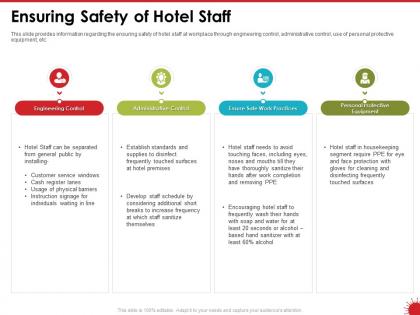
This slide provides information regarding the ensuring safety of hotel staff at workplace through engineering control, administrative control, use of personal protective equipment, etc.
People who downloaded this PowerPoint presentation also viewed the following :
Ensuring safety of hotel staff public powerpoint presentation graphics design with all 2 slides:
Use our Ensuring Safety Of Hotel Staff Public Powerpoint Presentation Graphics Design to effectively help you save your valuable time. They are readymade to fit into any presentation structure.

FAQs for Ensuring safety of hotel staff public powerpoint
Key safety protocols include emergency evacuation procedures, hazardous material handling, guest incident reporting, workplace injury prevention, and security threat response training. These protocols enhance operational safety by establishing clear procedures, minimizing liability risks, and ensuring regulatory compliance, with many hospitality organizations finding that comprehensive safety training ultimately reduces insurance costs while protecting both staff and guests.
Hotels can effectively train their staff through comprehensive emergency response programs that include regular fire safety drills, medical emergency protocols, evacuation procedures, and crisis communication training. These programs enhance staff confidence and guest safety by combining hands-on simulations, scenario-based learning, and clear chain-of-command protocols, with many hospitality organizations finding that consistent quarterly training ultimately delivers faster emergency response times and significantly improved guest trust.
Technology enhances hotel staff safety through panic buttons, real-time communication systems, mobile safety apps, surveillance monitoring, and automated incident reporting. These digital solutions enable immediate emergency response, location tracking during isolated tasks, and comprehensive safety protocols, with many hotels finding that integrated technology platforms significantly reduce response times and create safer working environments for housekeeping and maintenance teams.
Hotel staff commonly encounter slip and fall hazards from wet floors, lifting injuries from heavy luggage and linens, chemical exposure from cleaning products, cuts from broken glass or kitchen equipment, and workplace violence from difficult guests. These hazards significantly impact operational efficiency and employee retention, with many hotels finding that comprehensive safety training and proper equipment reduce incidents by up to 40%, ultimately delivering lower insurance costs and improved staff morale.
Hotels create a safety culture through regular training programs, clear communication protocols, incident reporting systems, leadership commitment, and employee empowerment initiatives. By implementing comprehensive safety meetings, providing proper protective equipment, establishing anonymous reporting channels, and recognizing safety achievements, hotels enable staff to prioritize guest and colleague wellbeing, ultimately delivering enhanced operational efficiency and reduced liability risks.
Hotels should implement comprehensive safety protocols including proper chemical handling training, ergonomic equipment usage, buddy system implementation, emergency communication devices, and regular safety audits. These measures streamline operations by reducing workplace injuries, minimizing liability costs, and enhancing staff retention, with many hospitality organizations finding that proactive safety investments ultimately deliver improved service quality and competitive operational advantage.
Hotels can assess risks through comprehensive area-specific evaluations, including slip-and-fall hazards at front desks, burn and cut risks in kitchens, and equipment-related dangers in maintenance areas. These assessments enable targeted safety protocols, specialized training programs, and preventive measures, with many hospitality organizations finding that systematic risk evaluation reduces incidents by 40-60%, ultimately enhancing staff confidence and operational efficiency.
A comprehensive hotel staff safety manual should include emergency procedures, workplace hazard identification, guest interaction protocols, equipment operation guidelines, and incident reporting systems. These protocols enhance staff preparedness by establishing clear response procedures, minimizing operational risks, and ensuring regulatory compliance, with many hospitality organizations finding that structured safety frameworks ultimately deliver reduced liability and improved guest experiences.
Variations in local laws create complex compliance landscapes for hotels, requiring adaptation to different safety standards, training requirements, emergency protocols, and reporting procedures across jurisdictions. This regulatory diversity means hospitality chains must develop flexible safety frameworks that meet varying requirements while maintaining consistent protection levels, with many international hotel groups finding that standardizing above the highest local requirements ensures comprehensive staff safety and operational efficiency.
Management can encourage safety reporting through anonymous reporting systems, regular safety meetings, non-punitive policies, and clear communication channels that protect staff from retaliation. These strategies enhance workplace transparency by fostering open dialogue, implementing digital reporting platforms, and recognizing employees who identify hazards, ultimately delivering safer operations and improved staff retention across hospitality organizations.
Mental health integration includes employee assistance programs, stress management workshops, regular wellness check-ins, mental health first aid training, and creating psychologically safe work environments. Hotels increasingly recognize that addressing burnout, workplace anxiety, and emotional exhaustion through counseling services, peer support networks, and management training ultimately delivers higher retention rates, improved guest service quality, and reduced absenteeism across their operations.
Best practices for hotel event safety include comprehensive risk assessments, clear evacuation protocols, adequate security staffing, crowd control measures, and coordination with local emergency services. These strategies enhance guest confidence and operational efficiency by minimizing incidents, ensuring regulatory compliance, and maintaining reputation, with many hospitality organizations finding that proactive safety planning ultimately delivers competitive advantage and reduces liability costs.
Hotels can leverage employee feedback through regular safety surveys, anonymous reporting systems, department-specific focus groups, and digital feedback platforms that capture real-time safety concerns. This frontline intelligence enables management to identify hazard patterns, implement targeted safety protocols, and create responsive safety cultures, with many hospitality organizations finding that employee-driven safety improvements reduce workplace incidents while enhancing overall operational efficiency.
PPE serves as a critical defense mechanism for hotel staff safety, including gloves, masks, safety goggles, non-slip footwear, and protective clothing for various departments. These protective measures significantly reduce workplace injuries, minimize exposure to cleaning chemicals and biological hazards, and enhance overall operational safety, with many hospitality organizations finding that comprehensive PPE programs ultimately deliver lower insurance costs and improved staff confidence.
Hotels can balance guest satisfaction with staff safety by implementing strategic scheduling, clear communication protocols, and technology-enabled solutions during peak periods. Through automated check-in systems, real-time staff communication tools, and transparent guest messaging about safety measures, properties maintain service quality while protecting employees, with many hotels finding that guests appreciate visible safety commitments, ultimately enhancing both staff confidence and customer trust.
-
Innovative and Colorful designs.