


Enterprise Risk Management Overview Powerpoint Presentation Slides





Try Before you Buy Download Free Sample Product
 Impress Your
 Audience
 100%
100% Editable
 Save Hours
 of Time


Our Enterprise Risk Management Overview Powerpoint Presentation Slides are topically designed to provide an attractive backdrop to any subject. Use them to look like a presentation pro.
People who downloaded this PowerPoint presentation also viewed the following :
Content of this Powerpoint Presentation
Slide 1: This slide introduces Enterprise Risk Management Overview. State your Company Name and begin.
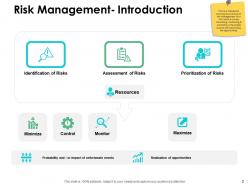
Slide 2: This slide shows Risk Management- Introduction describing- Identification of Risks, Assessment of Risks, Prioritization of Risks.
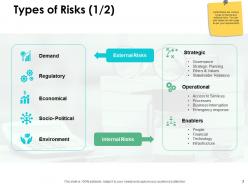
Slide 3: This slide shows Types of Risks describing External, Strategic, operational and enables risks.
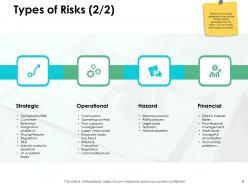
Slide 4: This is another slide on Types of Risks describing- Strategic, Operational, Hazard and Financial risks.
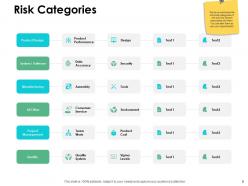
Slide 5: This slide showcases Risk Categories which includes- Product Design, System/ Software, Manufacturing, Project Management, Quality and all other.
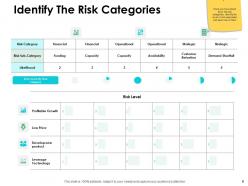
Slide 6: This slide represents Identify the Risk Categories with risk level and other sub categories.
Slide 7: This slide shows Stakeholders Risk Appetite in graphical form.
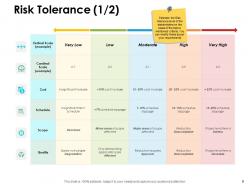
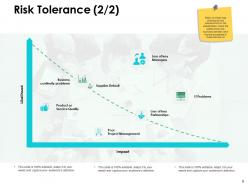
Slide 8: This slide shows Risk Tolerance on a scale describing risk impact from very low to very high.
Slide 9: This is another slide on Risk Tolerance showing the risk tolerance limit of the stakeholders.
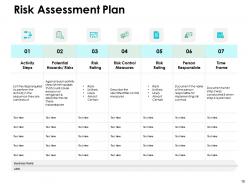
Slide 10: This slide presents Risk Assessment Plan in tabular form.
Slide 11: This slide displays Enterprise Risk Management Overview Icons.
Slide 12: This slide reminds about 15 minutes Coffee Break.
Slide 13: This slide is titled as Additional Slides for moving forward.
Slide 14: This slide shows Column Chart with two products comparison.
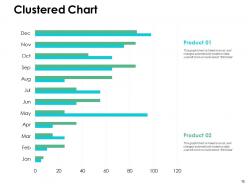
Slide 15: This slide displays Clustered Chart with two products comparison.
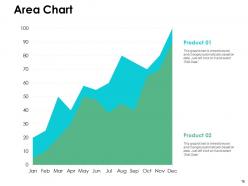
Slide 16: This slide presents Area Chart comparing two different products.
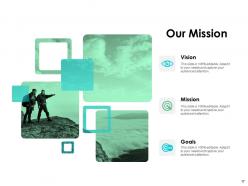
Slide 17: This is Our Mission slide with related imagery and text.
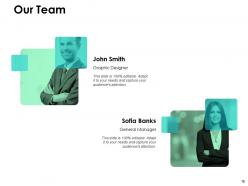
Slide 18: This is Our Team slide with names and designation.
Slide 19: This slide shows Magnifying Glass with data in percentage.
Slide 20: This is a Timeline slide to show information related with time period.
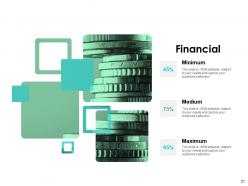
Slide 21: This is a Financial slide. Show your finance related stuff here.
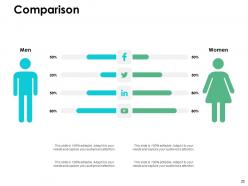
Slide 22: This is a Comparison slide to state comparison between commodities, entities etc.
Slide 23: This is an Idea Generation slide to state a new idea or highlight information, specifications etc.
Slide 24: This is a Thank You slide with Address# street number, city, state, Contact Number, Email Address.
Enterprise Risk Management Overview Powerpoint Presentation Slides with all 24 slides:
Use our Enterprise Risk Management Overview Powerpoint Presentation Slides to effectively help you save your valuable time. They are readymade to fit into any presentation structure.







FAQs for Enterprise Risk Management Overview
Key components of an effective ERM framework include risk governance structures, comprehensive risk identification processes, standardized assessment methodologies, integrated monitoring systems, and clear response protocols. These elements work together by establishing accountability across organizational levels, enabling proactive threat detection, and streamlining decision-making processes, with many enterprises finding that this strategic combination ultimately delivers enhanced operational resilience and competitive advantage.
Organizations integrate ERM into business strategy by embedding risk assessment into strategic planning, aligning risk appetite with business objectives, and establishing risk governance frameworks across all operational levels. Through integrated dashboards and cross-functional committees, companies like banks and manufacturers seamlessly incorporate risk considerations into decision-making processes, ultimately enhancing strategic resilience and competitive advantage.
Organizational culture significantly influences ERM success by shaping employee attitudes toward risk identification, communication transparency, and accountability across all levels. Companies with collaborative, open cultures enable more comprehensive risk reporting and faster response times, while hierarchical or siloed environments often hinder information flow, ultimately determining whether ERM initiatives deliver strategic value or remain compliance exercises.
Technology enhances Enterprise Risk Management effectiveness by automating risk identification, enabling real-time monitoring, and providing predictive analytics capabilities. Through AI-powered platforms and integrated dashboards, organizations streamline compliance reporting, accelerate threat detection, and improve decision-making accuracy, with many financial institutions and healthcare systems finding that automated risk assessment delivers faster response times and significantly reduced operational vulnerabilities.
Common ERM implementation challenges include inadequate executive support, siloed risk assessments across departments, insufficient technology integration, lack of standardized processes, and resistance to cultural change. These obstacles often result in fragmented risk visibility and inconsistent reporting, with many organizations finding that poor stakeholder engagement and limited resources ultimately undermine their ability to achieve comprehensive risk management.
Organizations can measure ERM effectiveness through key risk indicators, risk appetite metrics, incident frequency tracking, compliance assessments, and stakeholder feedback surveys. These measurement frameworks enable companies to evaluate risk mitigation success, identify emerging vulnerabilities, and demonstrate ROI to leadership, with many financial institutions and healthcare organizations finding that regular effectiveness reviews ultimately enhance decision-making and regulatory compliance.
ERM provides the strategic framework within which compliance risk management operates as a specialized function, ensuring regulatory adherence aligns with broader organizational objectives and risk appetite. While compliance focuses on meeting specific regulatory requirements, ERM integrates these efforts with operational, financial, and strategic risks, enabling organizations to optimize resource allocation and avoid siloed approaches that can create blind spots.
Scenario analysis enables organizations to evaluate potential risk impacts by modeling various hypothetical situations, market conditions, and operational disruptions across different probability levels. Financial institutions, energy companies, and healthcare systems leverage these simulations to stress-test portfolios, assess regulatory compliance scenarios, and model crisis responses, ultimately enhancing strategic decision-making and strengthening organizational resilience against unforeseen challenges.
Key ERM metrics include Value at Risk (VaR), risk-adjusted return on capital, probability of default, loss given default, and key risk indicators across operational, financial, and strategic domains. These quantitative measures enable organizations to benchmark exposure levels, allocate capital efficiently, and monitor risk appetite adherence, ultimately delivering enhanced decision-making capabilities and regulatory compliance.
Stakeholder communication within ERM frameworks can be optimized through automated reporting dashboards, regular risk assessment updates, standardized communication protocols, and cross-functional collaboration platforms. These approaches streamline information flow by providing real-time risk visibility, ensuring consistent messaging across departments, and enabling proactive stakeholder engagement, ultimately delivering enhanced decision-making transparency and stronger organizational risk resilience.
Organizations can foster proactive risk management through comprehensive training programs, clear communication channels, incentive structures, regular risk assessments, and leadership modeling. By integrating risk awareness into daily operations, encouraging employee reporting without penalties, and rewarding proactive identification of potential issues, companies create a culture where risk management becomes everyone's responsibility, ultimately delivering enhanced organizational resilience and competitive advantage.
Regulatory changes significantly reshape Enterprise Risk Management by requiring updated compliance frameworks, enhanced reporting mechanisms, and stricter oversight protocols across all business operations. Industries like banking, healthcare, and manufacturing must continuously adapt their risk assessment strategies, implement new monitoring systems, and retrain personnel, ultimately strengthening organizational resilience while ensuring competitive advantage through proactive compliance management.
Best practices for developing a risk-aware governance structure include establishing clear risk oversight committees, integrating risk assessments into strategic planning processes, defining accountability frameworks, implementing regular risk reporting mechanisms, and embedding risk considerations into decision-making protocols. These practices enhance organizational resilience by ensuring comprehensive risk visibility, streamlined communication channels, and proactive mitigation strategies, with many enterprises finding that structured governance ultimately delivers improved regulatory compliance and competitive advantage.
Risk appetite is effectively communicated through clear policy documents, regular training sessions, and cascading frameworks that translate board-level statements into operational guidelines across all departments. Organizations achieve this by establishing consistent metrics, conducting quarterly reviews with leadership teams, and integrating risk thresholds into decision-making processes, ultimately ensuring alignment between strategic objectives and day-to-day operations.
Businesses can leverage data analytics for enhanced risk identification through predictive modeling, real-time monitoring systems, pattern recognition algorithms, sentiment analysis, and automated reporting dashboards. These technologies enable organizations to detect emerging threats faster, quantify risk impacts more accurately, and prioritize mitigation strategies effectively, with many financial institutions and healthcare organizations finding that analytics-driven approaches significantly improve their operational resilience and regulatory compliance.
-
Use of icon with content is very relateable, informative and appealing.
-
Excellent Designs.
-
I discovered this website through a google search, the services matched my needs perfectly and the pricing was very reasonable. I was thrilled with the product and the customer service. I will definitely use their slides again for my presentations and recommend them to other colleagues.