


Enterprise Vulnerability Management Process Flow Chart





Try Before you Buy Download Free Sample Product
 Impress Your
 Audience
 100%
100% Editable
 Save Hours
 of Time


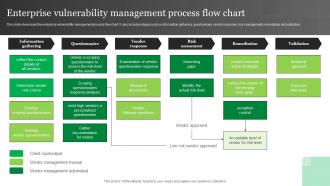
This slide showcases the enterprise vulnerability management process flow chart. It also includes stages such as information gathering, questionnaire, vendor response, risk management, remediation and validation
People who downloaded this PowerPoint presentation also viewed the following :
Enterprise Vulnerability Management Process Flow Chart with all 6 slides:
Use our Enterprise Vulnerability Management Process Flow Chart to effectively help you save your valuable time. They are readymade to fit into any presentation structure.





FAQs for Enterprise Vulnerability Management
Honestly, you need four main things working together. Asset discovery comes first - can't fix what you don't know about, right? Then automated scanning across everything (not just the obvious networks). Risk-based prioritization is huge because let's be real, you'll drown trying to patch every single CVE that pops up. Finally, some way to track remediation so stuff actually gets done instead of sitting in spreadsheets forever. The whole system kinda falls apart if any piece is missing. I'd start with nailing down your asset inventory though - learned that the hard way when everything else just becomes guesswork.
So basically you want a risk-based system that mixes CVSS scores with what actually matters to your business. Figure out your most critical assets first. Then layer on vulnerability severity plus how exposed everything is - internet-facing stuff obviously gets priority. EPSS is clutch for predicting which vulns will actually get exploited (saves you from chasing every random CVE). I'd create buckets like "drop everything and fix now" versus "patch within a week." Oh and definitely check if there are active exploits floating around. The whole point is building something your team can just run with instead of debating priorities every single time.
You really need continuous monitoring - it's what keeps your whole vulnerability process working. Old quarterly scans? Total waste of time, they miss way too much. With constant scanning, you'll catch critical stuff in hours instead of months, which honestly makes all the difference when zero-days hit. I'd set up automated schedules so you're not manually running scans all the time. Make sure your tools actually communicate with each other too - nothing worse than gaps in coverage because systems aren't synced up. It's basically like having security that never takes a break.
Dude, automated tools are lifesavers - they'll continuously scan everything and rank vulnerabilities by actual risk level. No more spending weeks on manual checks that are already outdated when you finish. You get real-time visibility instead of those snapshot assessments that miss half the stuff anyway. Honestly, I can't imagine going back to doing this manually. The reporting side handles itself too, which is clutch for compliance stuff. Just make sure whatever you pick plays nice with your current security tools. Nothing worse than having to jump between like 5 different dashboards when you're trying to fix things quickly.
So threat intelligence basically stops you from playing whack-a-mole with every single vulnerability. You get actual context about what hackers are actively using right now - not just some theoretical CVSS score that might be totally irrelevant. It's way smarter than blindly patching everything. Your team can focus on the stuff that'll actually mess you up instead of wasting time on random low-priority fixes. Makes your limited time and budget go much further, which honestly your security team will thank you for.
Honestly, don't try to patch everything at once - you'll go crazy. Focus on the stuff that actually matters first. Critical systems and high-severity vulns get priority, obviously. Set up proper maintenance windows for different groups of assets, and always test patches in dev before pushing to production. Have a rollback plan because patches break things sometimes (learned that the hard way). The goal isn't perfect patch coverage immediately. Work through your biggest risks systematically. Oh, and track how long it takes you to patch critical vulns - that metric will save your butt during audits.
Focus on MTTD and MTTR first - those tell you how fast you're catching and fixing stuff. Track vulnerability density per asset too, plus your patch compliance rates. Honestly, false positive rates from scanners are huge because chasing fake alerts kills morale. I'd definitely add trend analysis since showing progress over time makes everyone happy. Oh, and measure what percentage of critical/high vulns get fixed within your SLAs. Keep it to maybe 3-5 metrics though - any more and you'll just ignore the dashboard. Better to actually watch a few important ones than drown in numbers you never look at.
Map your vuln management straight to whatever compliance you're stuck with - PCI, SOX, HIPAA, the usual suspects. Focus on critical and high-severity stuff in your scope systems first. Set remediation timelines that beat the framework requirements, not just meet them. Auditors are obsessed with documentation, so keep solid records of scanning schedules and patch deployments. Here's the thing though - compliance is basically the bare minimum. Don't let it cap your security standards. Automated reporting saves your butt during audit season. Trust me on that one.
Ugh, the worst part is translating all that techy stuff into language your CEO actually gives a damn about. Like, you can't just waltz in saying "we've got 500 critical CVEs" - they'll stare at you blankly. Break it down to what keeps them up at night: lost revenue, failed audits, customer data getting leaked. Most security folks are honestly pretty awful at this whole translation thing. Plus you're stuck figuring out which "critical" vulns actually matter for YOUR setup specifically. My take? Build a dead-simple dashboard showing trends over time. Always connect your findings back to business goals they already obsess over.
Honestly, you've gotta get everyone involved, not just dump it all on IT. Do training that doesn't suck - real examples work way better than those awful PowerPoint slides we've all sat through. People need to feel safe reporting weird stuff without getting thrown under the bus. I've watched companies where employees are terrified to say anything! Pick some security champions from different teams who can field questions and keep good habits going. Oh, and actually celebrate when someone spots something fishy or follows the rules right. Positive reinforcement beats fear every single time for getting people to actually care long-term.
Set up a clear way for researchers to reach your security team with solid response times. Nobody wants to sit on a critical bug because they can't find the right contact. Always acknowledge quickly, even if you can't fix it right away. Document everything - steps to reproduce, impact, the works. Trust me, you'll thank yourself later when you're trying to remember details months down the line. Don't just follow CVSS scores blindly; prioritize what actually threatens your business. Oh, and close the loop with reporters once you've patched. Those relationships are gold.
So risk assessments are basically your way to figure out what to panic about first, haha. You look at how easy something is to exploit, which systems get hit, and what happens if someone actually pulls it off. Without this you're just randomly patching stuff hoping for the best. The whole point is getting data to back up why you're spending money on the really scary vulnerabilities instead of whatever's making the most noise. I'd start by sorting your vulns by actual risk level - those CVSS scores don't tell the whole story anyway.
Honestly, continuous scanning is where it's at right now - catch stuff during development instead of scrambling later. DevSecOps integration is pretty much mandatory at this point. Runtime protection has gotten really popular, which totally makes sense with how crazy dynamic cloud workloads are these days. API security scanning is blowing up too since every app has like 50 APIs now. Cloud-native tools are finally getting decent at handling containers and all that ephemeral infrastructure nonsense. My take? Get your vulnerability workflows automated ASAP and find tools that can scan infrastructure-as-code. Future you will definitely appreciate it.
So basically, every vendor you work with expands your attack surface in ways you can't really control. They've got access to your systems or data, right? Their security problems become your problems fast. I mean, look at all those supply chain attacks lately - total nightmare scenarios. You're running their software, using their cloud stuff, connecting to their APIs. One breach on their end and you're screwed too. Honestly, you need to treat vendor security assessments like they're as critical as your own internal stuff. Regular security questionnaires, monitoring their posture - the whole deal.
Risk score first - hit the critical stuff that'll actually mess up your business. Low-risk patches? Automate those so your team isn't wasting time on the boring ones. Set clear SLAs too - 72 hours for critical, 30 days for medium. Game changer though? Getting security and IT ops to actually talk to each other. I've seen so many places where they're basically working against each other and it's painful to watch. Map out your current process first and find where things get stuck. Trust me, there's always a bottleneck nobody wants to admit exists.
-
Informative presentations that are easily editable.
-
“Slides are formally built and the color theme is also very exciting. This went perfectly with my needs and saved a good amount of time.”