


Environmental Analysis To Optimize Business Performance Powerpoint Presentation Slides




Try Before you Buy Download Free Sample Product
 Impress Your
 Audience
 100%
100% Editable
 Save Hours
 of Time


Business environment analysis is a vital process for organizations to gain a comprehensive understanding of the internal and external factors that impact their operations. Grab our insightfully designed Environmental Analysis to Optimize Business Performance PowerPoint presentation. It provides an overview of the stages, objectives, elements, challenges, and critical drivers of organizational environment scanning. Our Business Factors Assessment deck highlights the significance of conducting methods such as PESTEL analysis, SWOT analysis, survey approaches, perceptual mapping, and evaluation techniques like CATWOE, VRIO, and MOST analysis. These tools aid in identifying opportunities, anticipating threats, and gaining a competitive edge. Additionally, our Organizational External Factors PPT emphasizes the importance of measuring overall business performance through impact assessment and tracking Key Performance Indicators KPIs to monitor the effectiveness of implemented strategies. By engaging in thorough business environment analysis, organizations can make informed decisions, adapt to changing market dynamics, and position themselves for success in their respective industries. Get instant access.
People who downloaded this PowerPoint presentation also viewed the following :
Content of this Powerpoint Presentation
Slide 1: This slide introduces Environmental Analysis to Optimize Business Performance. Commence by stating Your Company Name.
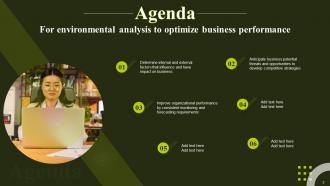
Slide 2: This slide depicts the Agenda for the presentation.
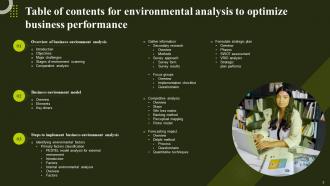
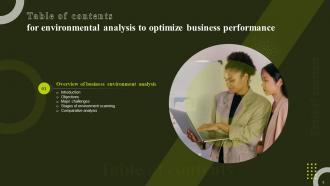
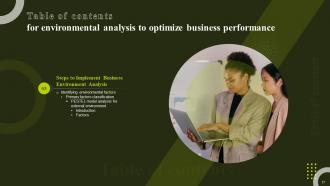
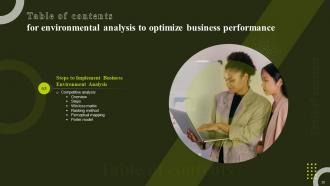
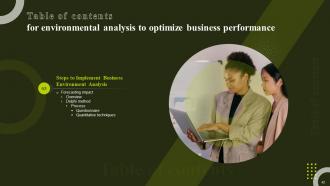
Slide 3: This slide includes the Table of contents.
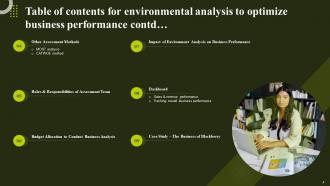
Slide 4: This is yet another slide continuing the Table of contents.
Slide 5: This slide highlights the Title for the Topics to be covered further.
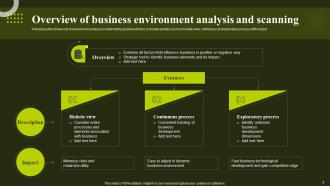
Slide 6: This slide presents the Overview of business environment analysis and scanning.
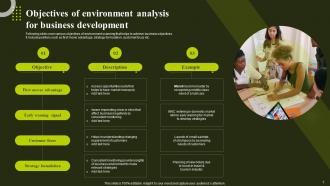
Slide 7: The Following slide cover various objectives of environment scanning that helps to achieve business objectives.
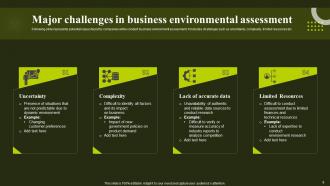
Slide 8: This slide exhibits the Major challenges in business environmental assessment.
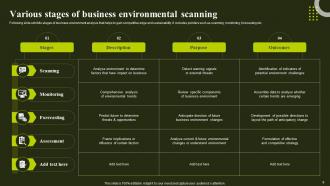
Slide 9: The Following slide exhibits stages of business environment analysis that helps to gain competitive edge and sustainability.
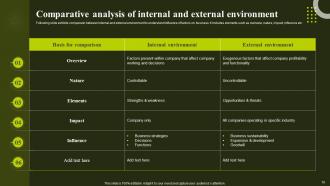
Slide 10: This slide reveals the Comparative analysis of internal and external environment.
Slide 11: This slide includes the Heading for the Contents to be discussed next.
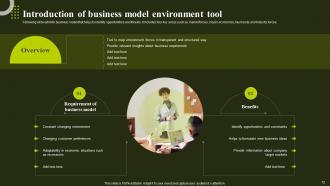
Slide 12: This slide reveals the Introduction of business model environment tool.
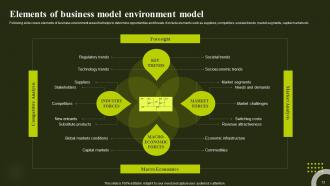
Slide 13: This slide states the Elements of business model environment model.
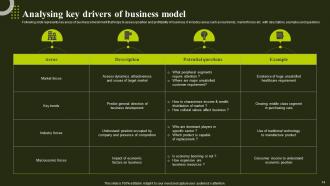
Slide 14: This slide deals with Analysing key drivers of business model.
Slide 15: This slide includes the Title for the Ideas to be covered in the upcoming template.
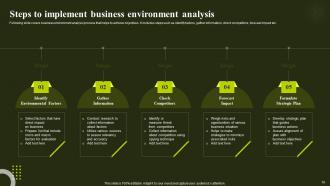
Slide 16: The Following slide covers business environment analysis process that helps to achieve objectives.
Slide 17: This slide portrays the Heading for the Ideas to be discussed in the upcoming template.
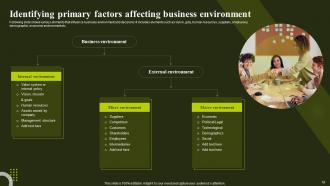
Slide 18: This slide focuses on Identifying primary factors affecting business environment.
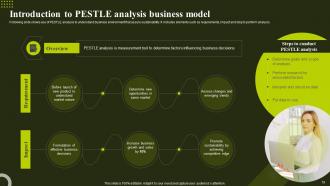
Slide 19: The Following slide shows use of PESTLE analysis to understand business environment that assure sustainability.
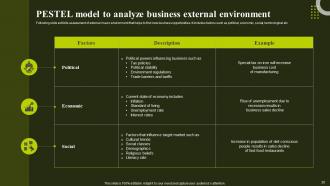
Slide 20: This slide displays the PESTEL model to analyze business external environment.
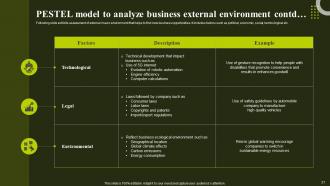
Slide 21: This slide continues the PESTEL model to analyze business external environment.
Slide 22: This slide depicts the Title for the Contents to be covered in the upcoming template.
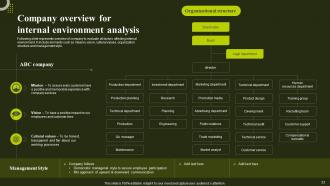
Slide 23: This slide showcases the Company overview for internal environment analysis.
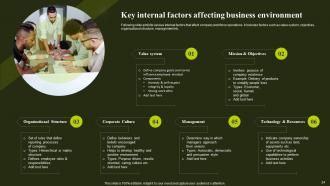
Slide 24: This slide highlights the Key internal factors affecting business environment.
Slide 25: This slide mentions the Heading for the Topics to be discussed in the next template.
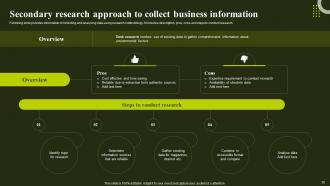
Slide 26: This slide reveals the Secondary research approach to collect business information.
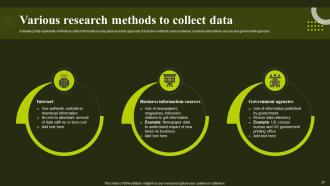
Slide 27: This slide states the Various research methods to collect data.
Slide 28: This slide indicates the Title for the Topics to be covered in the upcoming template.
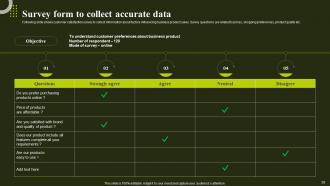
Slide 29: The Following slide shows customer satisfaction survey to collect information about factors influencing business product sales.
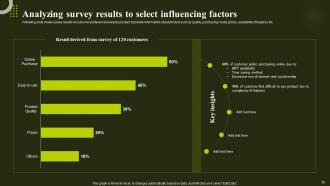
Slide 30: This slide focuses on Analyzing survey results to select influencing factors.
Slide 31: This slide contains the Heading for the Contents to be discussed further.
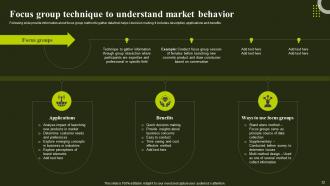
Slide 32: This slide displays the Focus group technique to understand market behaviour.
Slide 33: The Following slide shows checklist that assure proper planning and implementation of focus groups session.
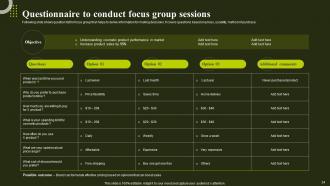
Slide 34: This slide portrays the question list for focus group that helps to derive information for making decisions.
Slide 35: This slide exhibits the Title for the Ideas to be covered in the next template.
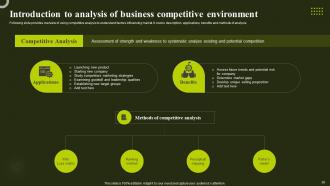
Slide 36: This slide reveals the Introduction to analysis of business competitive environment.
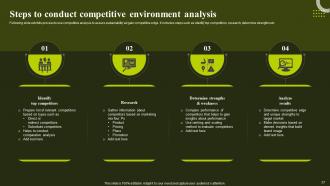
Slide 37: This slide highlights the Steps to conduct competitive environment analysis.
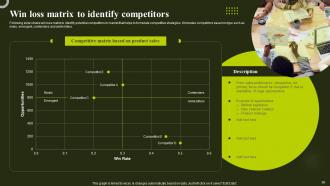
Slide 38: The Following slide shows win loss matrix to identify potential competitors in market that helps to formulate competitive strategies.
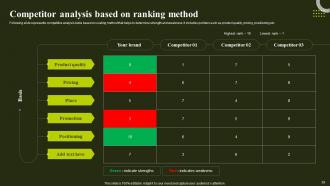
Slide 39: This slide reveals the Competitor analysis based on ranking method.
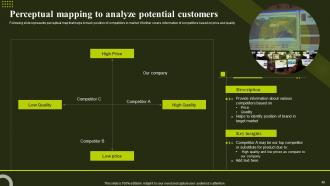
Slide 40: The Following slide represents perceptual map that helps to track position of competitors in market.
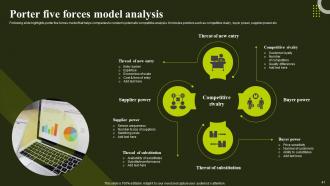
Slide 41: Thsi slide highlights porter five forces model that helps companies to conduct systematic competitive analysis.
Slide 42: This slide presents the Heading for the Ideas to be discussed next.
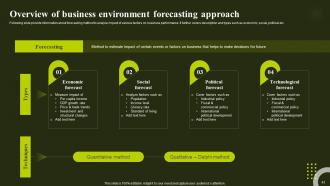
Slide 43: This slide provides information about forecasting method to analyze impact of various factors on business performance.
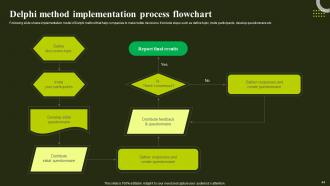
Slide 44: This slide shows implementation model of Delphi method that help companies to make better decisions.
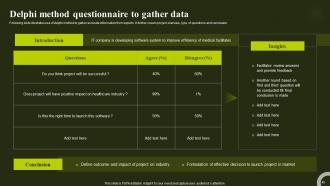
Slide 45: This slide indicates the Delphi method questionnaire to gather data.
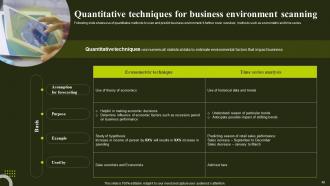
Slide 46: This slide exhibits the Quantitative techniques for business environment scanning.
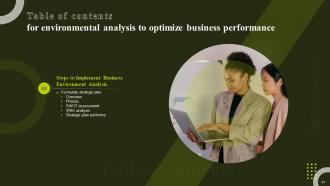
Slide 47: This slide portrays the Title for the Contents to be covered in the upcoming template.
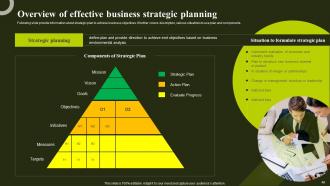
Slide 48: This slide presents the Overview of effective business strategic planning.
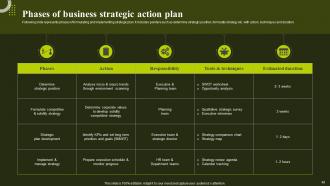
Slide 49: This slide states the Phases of business strategic action plan.
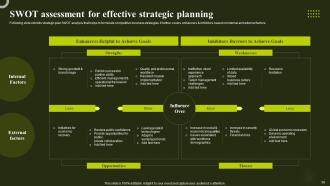
Slide 50: This slide displays the SWOT assessment for effective strategic planning.
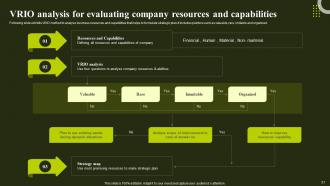
Slide 51: This slide exhibits the VRIO analysis for evaluating company resources and capabilities.
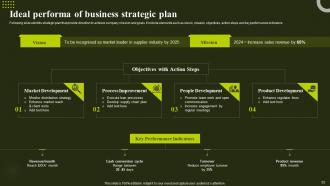
Slide 52: This slide presents the Ideal performa of business strategic plan.
Slide 53: This slide depicts the Heading for the Topics to be discussed in the upcoming template.
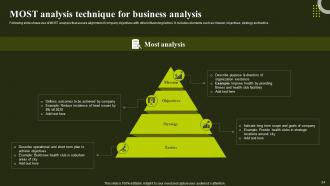
Slide 54: The Following slide shows use of MOST analysis that assure alignment of company objectives with other influencing factors.
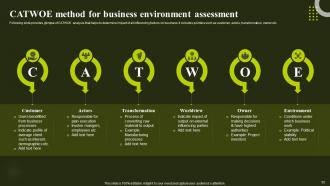
Slide 55: This slide provides glimpse of CATWOE analysis that helps to determine impact of all influencing factors on business.
Slide 56: This slide depicts the Title for the Topics to be covered in the next template.
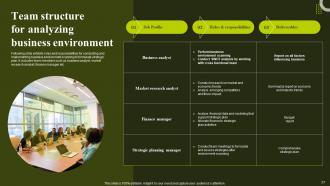
Slide 57: This slide displays the Team structure for analyzing business environment.
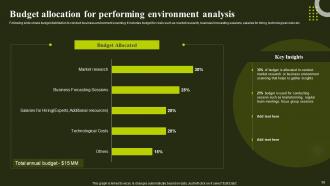
Slide 58: This slide showcases the Budget allocation for performing environment analysis.
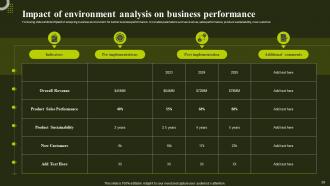
Slide 59: This slide highlights the Impact of environment analysis on business performance.
Slide 60: This slide displays the Heading for the Contents to be discussed in the following template.
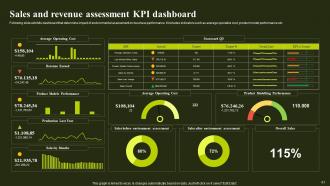
Slide 61: This slide shows the Sales and revenue assessment KPI dashboard.
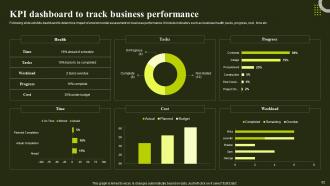
Slide 62: This slide reveals the KPI dashboard to track business performance.
Slide 65: This is the Icons slide containing all the Icons used in the plan.
Slide 66: This slide is used for depicting some Additional information.
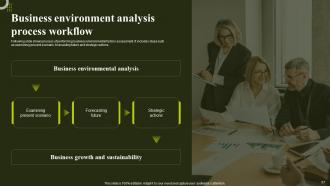
Slide 67: The Following slide shows process of performing business environmental factors assessment.
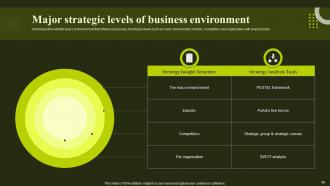
Slide 68: This slide exhibits layers of environment that influence business.
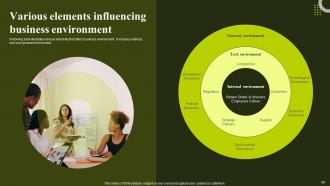
Slide 69: The Following slide illustrates various elements that affect business environment.
Slide 70: This is the About us slide. State your company-related information here.
Slide 71: This is Meet our team slide. State your team-related information here.
Slide 72: This slide includes the company's Vision, Mission, and Goal.
Slide 73: This is the Puzzle slide with related imagery.
Slide 74: This is the Venn diagram slide.
Slide 75: This slide contains the Post it notes for reminders and deadlines.
Slide 76: This slide exhibits the company's Timeline.
Slide 77: This is the 30 60 90 Days plan slide for effective planning.
Slide 78: This is the Thank You slide for acknowledgement.
Environmental Analysis To Optimize Business Performance Powerpoint Presentation Slides with all 79 slides:
Use our Environmental Analysis To Optimize Business Performance Powerpoint Presentation Slides to effectively help you save your valuable time. They are readymade to fit into any presentation structure.








FAQs for Environmental Analysis To Optimize Business Performance
Environmental analysis comprises external factors assessment, competitive landscape evaluation, market trends identification, regulatory environment review, and stakeholder impact analysis. These components work together by examining political, economic, social, and technological influences on business operations, enabling organizations across industries like healthcare, finance, and manufacturing to anticipate market shifts, mitigate risks, and ultimately gain competitive advantage through informed strategic planning.
SWOT analysis assesses environmental factors by categorizing external opportunities like regulatory incentives, emerging green markets, and sustainability trends, alongside threats including climate regulations, resource scarcity, and environmental compliance costs. Through this strategic framework, organizations systematically evaluate their environmental positioning, identify competitive advantages in sustainability initiatives, and develop adaptive strategies that transform environmental challenges into business opportunities, ultimately delivering enhanced resilience and market differentiation.
PESTLE analysis systematically examines Political, Economic, Social, Technological, Legal, and Environmental factors that shape business operations and strategic decisions. This comprehensive framework enables organizations to anticipate market shifts, regulatory changes, and emerging opportunities across industries, with many companies finding that regular PESTLE assessments enhance risk management and competitive positioning in increasingly dynamic markets.
Economic trends significantly influence environmental sustainability practices by affecting corporate investment priorities, regulatory policy development, consumer purchasing behaviors, and technology adoption rates. During economic growth periods, organizations typically increase sustainability investments in renewable energy and green technologies, while economic downturns often shift focus toward cost-effective environmental solutions that deliver immediate operational savings and competitive advantages.
Stakeholder analysis enhances environmental decision-making by identifying key parties, understanding diverse perspectives, assessing potential impacts, and facilitating collaborative solutions. This strategic approach enables organizations to anticipate resistance, build consensus among communities and regulatory bodies, and develop more comprehensive environmental strategies, ultimately delivering sustainable outcomes while minimizing conflicts and ensuring long-term project viability.
Climate change creates significant environmental implications for business operations, including increased resource scarcity, extreme weather disruptions, supply chain vulnerabilities, regulatory compliance requirements, and shifting consumer demands for sustainability. Many organizations across manufacturing, agriculture, and retail sectors are finding that proactive environmental strategies ultimately deliver operational resilience, cost efficiencies, and competitive advantage in an increasingly climate-conscious marketplace.
Environmental analysis enables businesses to identify market opportunities by examining political, economic, social, technological, and competitive factors that reveal emerging trends and unmet needs. Through systematic monitoring of regulatory changes, demographic shifts, and technological advances, companies in sectors like renewable energy, healthcare, and consumer goods can spot gaps in market coverage, anticipate customer demands, and position themselves strategically ahead of competitors.
Carbon footprint, water usage, waste generation, energy consumption, and biodiversity impact represent the most effective metrics for measuring environmental impact. These comprehensive indicators enable organizations to track sustainability performance across manufacturing, retail, and service sectors, while delivering actionable insights for resource optimization, cost reduction, and enhanced regulatory compliance in an increasingly environmentally-conscious marketplace.
Regulatory changes significantly impact environmental compliance by requiring updated monitoring systems, revised operational procedures, and enhanced reporting protocols across industries. Manufacturing facilities must adapt production processes, financial institutions face stricter ESG disclosure requirements, and healthcare organizations encounter waste management updates, with many companies finding that proactive compliance strategies ultimately deliver competitive advantages and operational efficiencies.
Remote sensing satellites, Geographic Information Systems (GIS), IoT sensors, drones, and AI-powered data analytics are most useful for conducting environmental analyses. These technologies streamline data collection, monitoring, and assessment by providing real-time insights, predictive modeling, and comprehensive mapping capabilities, with organizations in agriculture, urban planning, and natural resource management finding that integrated environmental analysis delivers improved decision-making and regulatory compliance.
Environmental analysis aids risk management by identifying external threats like regulatory changes, market volatility, competitive pressures, and economic shifts before they impact operations. Through systematic monitoring of political, economic, social, and technological factors, organizations can develop contingency plans, diversify strategies, and allocate resources more effectively, ultimately minimizing potential losses while positioning themselves to capitalize on emerging opportunities.
Corporate social responsibility integrates into environmental analysis through sustainability metrics assessment, stakeholder impact evaluation, regulatory compliance monitoring, carbon footprint analysis, and resource efficiency measurement. Through comprehensive ESG frameworks, organizations streamline environmental reporting, enhance operational transparency, and deliver competitive advantages, with many companies finding that strategic CSR integration ultimately reduces costs while strengthening brand reputation.
Competition significantly influences environmental strategies by driving companies to adopt sustainable practices for differentiation, cost reduction, and regulatory compliance. Through competitive pressure, organizations enhance their green credentials, streamline resource efficiency, and develop eco-friendly products, while benchmarking against industry leaders, ultimately delivering competitive advantage and improved market positioning in an increasingly environmentally-conscious business landscape.
Organizations face challenges including data collection complexity, rapidly changing regulatory landscapes, resource constraints, stakeholder alignment difficulties, and integrating diverse environmental factors into strategic planning. While comprehensive analyses require significant investment in expertise and technology, many companies find that systematic environmental assessments ultimately deliver enhanced risk management, regulatory compliance, and competitive positioning in increasingly sustainability-focused markets.
Environmental audits contribute to business sustainability by systematically identifying resource inefficiencies, regulatory compliance gaps, waste reduction opportunities, and environmental risks that impact long-term operations. These comprehensive assessments enable organizations to streamline energy usage, minimize operational costs, and enhance stakeholder confidence, with many companies finding that proactive environmental management delivers competitive advantage and sustainable growth.
-
Fantastic and innovative graphics with useful content. The templates are the best and latest in the industry.
-
I was able to find the right choice of PPT template for my thesis with SlideTeam. Thank you for existing.