


Equity pool funding pitch deck powerpoint presentation slides





Try Before you Buy Download Free Sample Product
 Impress Your
 Audience
 100%
100% Editable
 Save Hours
 of Time


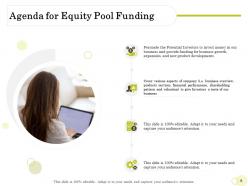
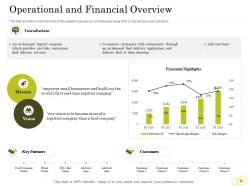
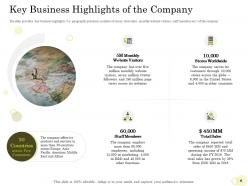
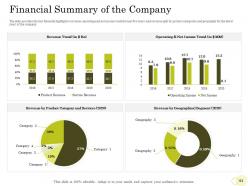
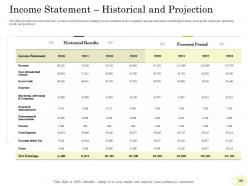
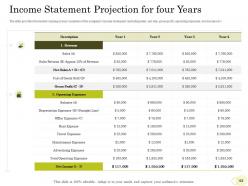
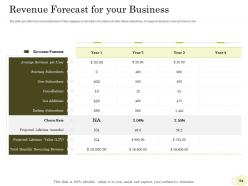
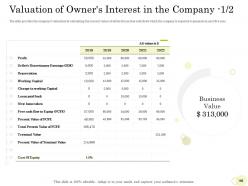
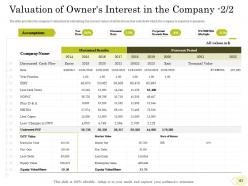
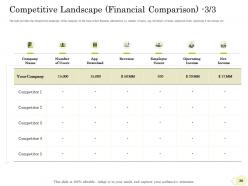
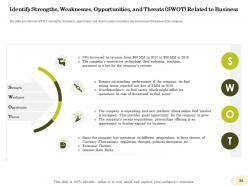
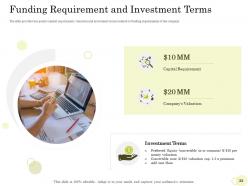
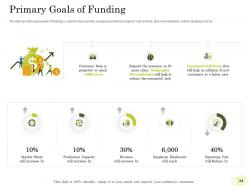
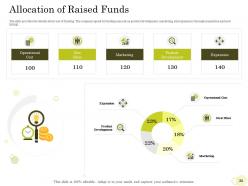
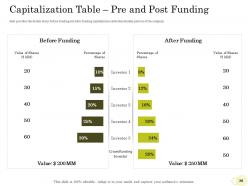
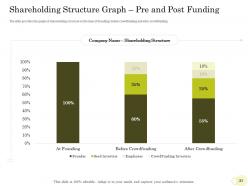
Build your company’s compensation armory by employing this Equity Pool Funding Pitch Deck PowerPoint Presentation Slides to persuade potential investors to invest in your business. Emphasize how venture capitalists can benefit from having equity in your company through these startup pitch PPT templates. Provide a thorough overview of the operational and financial activities by taking the aid of these investor pitch PPT layouts. You can build confidence in your prospective clients by listing out the company’s key offerings with the help of this investment pitch PPT design. With this content-specific seed funding pitch PPT presentation, you can give a detailed account of the income statement, revenue forecast, balance sheet, and valuation of the owner’s interest that will help you capture the attention of the audience. Share your funding requirement, investment terms, and areas of funds allocation with these venture capital fund pitch PPT slides. Download this hedge fund pitch PPT deck and share the company’s future growth plans in an attractive yet informative format.
People who downloaded this PowerPoint presentation also viewed the following :
Equity pool funding pitch deck powerpoint presentation slides with all 51 slides:
Use our Equity Pool Funding Pitch Deck Powerpoint Presentation Slides to effectively help you save your valuable time. They are readymade to fit into any presentation structure.





















FAQs for Equity pool funding pitch deck
Key benefits include attracting top talent through equity compensation, preserving cash flow during early stages, aligning employee interests with company success, facilitating investor confidence, and enabling strategic hiring flexibility. This approach allows startups to compete with larger companies for skilled professionals while building a motivated workforce invested in long-term growth, ultimately creating sustainable competitive advantage in talent acquisition.
Equity pool funding distributes ownership stakes among multiple investors or stakeholders, while traditional loans require repayment with interest and venture capital involves concentrated ownership by professional investors. Unlike debt financing that demands regular payments, equity pools enable organizations to share both risks and rewards across diverse participants, ultimately reducing individual financial burden while maintaining greater operational control compared to VC arrangements.
Equity pool funding agreements typically utilize structures including employee stock option pools, restricted stock units, performance-based equity grants, phantom stock arrangements, and convertible equity instruments. These structures enable organizations to attract talent, align stakeholder interests, and preserve cash flow while providing flexible vesting schedules, with many companies finding that strategic equity allocation enhances retention and drives long-term organizational growth.
Startups can effectively determine equity pool size by analyzing hiring plans, competitive benchmarks, funding stage requirements, and long-term growth projections. Many technology companies allocate 10-20% for employee equity pools, with early-stage startups often reserving larger percentages to attract key talent, while mature companies typically maintain smaller pools, ultimately balancing talent acquisition needs with founder dilution concerns.
Founders should consider team members' roles, experience levels, joining timeline, salary sacrifices, and long-term commitment when allocating equity. Early employees typically receive larger portions than later hires, with many startups finding that vesting schedules and performance milestones help retain talent while protecting founders' interests and ensuring equitable distribution as the company scales.
Employees serve as key beneficiaries of equity pool funding through stock options, restricted shares, and performance-based equity grants that align their interests with company growth. This strategic approach enables startups to attract top talent, retain critical employees, and motivate workforce performance, with many companies finding that equity compensation reduces cash burn while building stronger organizational commitment.
Equity pool funding significantly enhances employee motivation and retention by giving team members ownership stakes in company success, aligning personal financial interests with organizational growth. Through stock options and equity grants, employees become invested partners rather than just workers, with many startups and tech companies finding that equity compensation reduces turnover while attracting top talent who value long-term wealth-building opportunities.
Common pitfalls include inadequate initial pool sizing, failing to reserve equity for key future hires, poor documentation of vesting schedules, and lack of regular pool monitoring. Many startups also struggle with premature equity distribution to early employees, insufficient legal compliance, and failing to adjust pool allocations as company needs evolve, ultimately limiting their ability to attract strategic talent.
Transparent communication about equity pools enhances team dynamics by building trust, aligning expectations, and reducing speculation about compensation disparities. When organizations clearly explain allocation criteria, vesting schedules, and growth potential, employees feel more valued and motivated, while teams experience improved collaboration, reduced internal competition, and stronger collective commitment to company success.
Legal considerations for equity pool setup include securities law compliance, employee stock option plan documentation, vesting schedules, tax implications, and board resolutions for share authorization. These requirements involve regulatory filings, proper valuation methods, and comprehensive agreements that protect both company and employee interests, with many startups finding that early legal counsel streamlines future funding rounds and employee retention strategies.
Equity dilution reduces existing shareholders' ownership percentages when new shares are issued, though their absolute value may increase if the company's overall valuation grows significantly. While early investors and founders see their stakes decrease with each funding round, they often benefit from enhanced company resources, accelerated growth, and improved market positioning, with many finding that smaller percentages of larger, more valuable companies ultimately deliver greater returns.
Equity pool funding creates tax implications including corporate deductions for compensation expenses, potential Section 409A compliance requirements, deferred taxation structures, and employee withholding obligations. Companies typically benefit from tax deductions when equity vests, while employees face ordinary income treatment upon vesting and capital gains implications upon sale, with many organizations finding that proper structuring minimizes immediate tax burdens while maximizing long-term benefits.
Startups can attract talent using equity pool incentives by offering stock options, restricted stock units, performance-based equity, phantom stock, and employee stock purchase plans. These compensation packages enable companies to compete with larger employers while conserving cash flow, with many tech startups and growing businesses finding that equity participation increases employee retention and aligns team motivation with company success.
Companies should evaluate equity pool effectiveness using retention rates, performance metrics, employee satisfaction scores, talent acquisition success, and vesting schedule adherence as key benchmarks. These metrics enable organizations to assess whether their equity programs are attracting top talent, improving retention, and driving performance, with many finding that regular benchmark analysis ultimately delivers stronger employee engagement and competitive positioning.
Emerging trends in equity pool funding include increased focus on sustainability and ESG criteria, industry-specific allocations toward healthcare technology and fintech, regional concentration in Southeast Asian and African markets, and strategic partnerships between traditional VCs and corporate investors. These developments streamline capital access by targeting sector expertise, geographic expansion opportunities, and aligned investment values, with many startups finding that specialized pools deliver faster funding cycles and enhanced strategic guidance.
-
Qualitative and comprehensive slides.
-
Excellent template with unique design.
-
Good research work and creative work done on every template.
-
Out of the box and creative design.
-
Excellent work done on template design and graphics.