


Forensic Audit Powerpoint Ppt Template Bundles




Try Before you Buy Download Free Sample Product
 Impress Your
 Audience
 100%
100% Editable
 Save Hours
 of Time


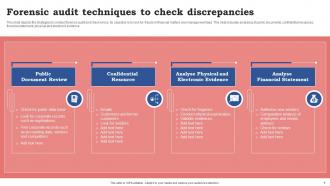
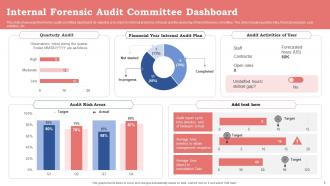
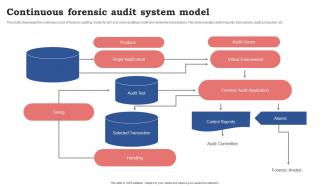
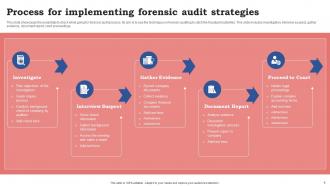
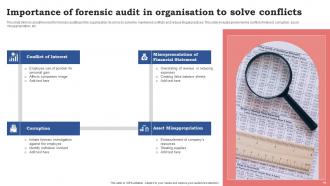
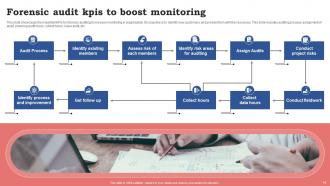
Introducing our comprehensive Forensic Audit PowerPoint PPT presentation your essential toolkit for unravelling financial intricacies and ensuring integrity. Dive into the realm of advanced forensic audit techniques, equipping you to unearth hidden discrepancies and potential fraud. Explore the critical role of a forensic audit committee, ensuring independent oversight and accountability. Discover the power of a continuous forensic audit model, empowering you to proactively safeguard your organizations financial health. With visually captivating slides and expert insights, our Forensic Audit PPT empowers you to navigate complex financial landscapes with precision. Whether you are an auditor or a financial professional, this PPT is your compass for transparency and compliance. Elevate your audit capabilities with our Forensic Audit PPT today.
People who downloaded this PowerPoint presentation also viewed the following :
Forensic Audit Powerpoint Ppt Template Bundles with all 25 slides:
Use our Forensic Audit Powerpoint Ppt Template Bundles to effectively help you save your valuable time. They are readymade to fit into any presentation structure.









FAQs for Forensic Audit Powerpoint
So basically you're hunting for financial fraud - detecting it, investigating what happened, and collecting rock-solid evidence for potential court cases. Figure out how much money got stolen too. Look for gaps in their internal controls that made the fraud possible in the first place. It's honestly pretty cool work, like being a detective but with spreadsheets. The big difference from normal audits? You're specifically searching for intentional crimes, not just whoops-level mistakes. Document everything meticulously since lawyers might need it later. Oh, and prepare for some seriously messy financial records.
So basically, forensic auditing is like being a financial detective - you're hunting for fraud or sketchy stuff that might end up in court. Regular auditing? That's just making sure the numbers add up and follow the rules. The documentation has to be rock solid since lawyers might tear it apart later. Most traditional auditors are doing routine checkups, but forensic work usually happens when someone already smells trouble. Honestly, the pressure's intense compared to normal auditing. You'd need special investigation training too, which is actually pretty cool if you're into that CSI-type work.
Look for revenues that jump right before quarter-end - major red flag. Round numbers are sketchy too since fraudsters love clean figures. Missing docs on big transactions? Suspicious. Also watch for journal entries from people who shouldn't have that access, and expenses getting weirdly reclassified. Related party stuff always makes me nervous tbh. Revenue timing games are probably the biggest thing though. When you're going through statements, that gut feeling when something's off? Trust it. I can't stress this enough - always trace back to the actual supporting documentation.
Honestly, call for a forensic audit the moment you suspect fraud or embezzlement. Cash going missing? Employee theft? Someone messing with the books? That's when you need it. Also useful in messy divorces when assets might be hidden - saw that happen to my cousin once, total nightmare. Insurance disputes are another big one. Oh, and definitely before buying a company to make sure their financials aren't garbage. Here's the thing though - don't wait around. The longer you sit on suspicions, the more time bad actors have to cover their tracks or destroy evidence.
You absolutely need tech for forensic audits these days. Data analytics tools can crunch huge datasets and find weird patterns in hours instead of weeks. Digital forensics software recovers deleted files and traces transactions - stuff you'd never catch manually. AI flags suspicious activity automatically too. I mean, doing this work without proper tech is basically impossible now. Oh, and make sure your team actually knows how to use whatever tools you pick. Sounds obvious but you'd be surprised how often that gets overlooked.
So forensic auditors are like financial detectives - they hunt down fraud by digging through records and following money trails. Way more intense than regular auditors. They interview people, document everything legally, and basically do CSI for spreadsheets (sounds boring but it's actually pretty cool). The key thing is they know how to preserve evidence so it'll hold up in court later. Honestly, if you suspect fraud at work, call them ASAP. The longer you wait, the harder it gets to piece together what actually went down.
You'll mostly deal with asset misappropriation - think expense fraud and inventory theft. Financial statement manipulation is huge too, where companies mess with their numbers. Revenue recognition games happen constantly. Companies get weird about timing their sales records. Payroll fraud shows up everywhere - fake employees or padded hours, stuff like that. Procurement schemes are annoying because vendors and employees team up on bogus invoices. Corruption and kickbacks round out the usual suspects. Watch expense reports and vendor relationships closely. That's honestly where you'll find most problems without digging too deep.
So basically you need rock-solid chain of custody - write down everyone who touches evidence and when. Never work on original digital files, always make forensic copies first. Hash values are clutch for proving nothing got tampered with (think of them like digital fingerprints). Write-protected storage is a must. Honestly the documentation part is mind-numbing but super critical. Courts don't mess around - one slip in your process and they'll toss everything. I learned that the hard way on my second case. Just assume everything you collect will end up in front of a judge.
Honestly, start with your CPA - that's non-negotiable. Then go for CFE certification, which is basically the gold standard for fraud work. Communication skills matter way more than people realize since you'll be breaking down complex financial stuff for lawyers and juries. Tech skills are becoming huge too - data analytics, digital forensics tools, cybersecurity basics. You need to be naturally skeptical and obsessive about details. The analytical thinking part comes with practice, but some people just have that "something's off here" instinct. CFE is definitely your best way in once you've got the accounting foundation down.
Honestly, just get your internal controls tight from day one. Regular financial reviews are clutch. Make sure you split up duties - never let one person run a whole process solo. Document everything (boring but saves your ass later). Set up whistleblower policies that people actually want to use. Internal audits catch problems before they explode. Build a culture where speaking up isn't terrifying. Trust me, it's way better when your team flags weird stuff early instead of letting it turn into a dumpster fire.
Look, a forensic audit will definitely make your company step up its game. Everyone suddenly cares about following rules when they know they're being watched - funny how that works. You'll see better internal controls and risk management pretty much right away. The findings become your blueprint for fixing weak spots and building stronger policies. Your board will probably go overboard with new monitoring stuff afterward, but honestly that's not a bad thing. Think of it like getting called out at the gym - embarrassing but it makes you work harder. Use those audit results to patch up whatever's broken in your governance setup.
First thing - lock down all your docs and data immediately. Don't let anyone touch or delete anything. Your IT folks need to freeze system logs and backups too. Get your legal team looped in ASAP, they'll help navigate the privilege stuff and keep things from going sideways with the auditors. Round up contracts, financial records, policies - basically anything that might matter. Oh, and figure out which people they'll want to interview so nobody disappears on vacation or something. It's gonna suck regardless, but staying organized makes it way less painful. Trust me on that one.
Honestly, the hardest part is just getting people to cooperate - everyone thinks you're there to get them fired or something. Data access gets messy fast, especially when records are incomplete or someone's conveniently "lost" files. Then you're dealing with encrypted stuff and ancient computer systems that need special tech skills. Oh, and management always wants results like yesterday, which is super realistic when you're digging through mountains of information. I swear some companies store everything except what you actually need. Start building relationships with the key people right away though - makes everything way smoother. Just document every single thing you do.
Your forensic audit findings basically become the backbone of legal cases. Attorneys use them as exhibits and for expert testimony - plus they're essential for calculating damages. Document everything obsessively because opposing lawyers will pick apart every single detail (learned this the hard way). Courts depend on forensic auditors to make complex financial data actually understandable to judges and juries. Write clear, bulletproof reports since you'll probably end up testifying about your methods. Honestly, the documentation trail you build during the audit can completely determine whether a case succeeds or fails.
Dude, first thing - keep your mouth shut about everything. Only share stuff with whoever's officially supposed to know. No office chatter, even with your own team. Document literally everything because fraud cases can get messy fast. Stay objective and watch out for conflicts of interest that could screw up your work. Be upfront about what methods you used and where you hit walls in your reports. Oh, and get written instructions about scope and who you're reporting to before you even start - learned that one the hard way! Following legal protocols isn't optional either.
-
Very well designed and informative templates.
-
They had the topic I was looking for in a readymade presentation…helped me meet my deadline.