


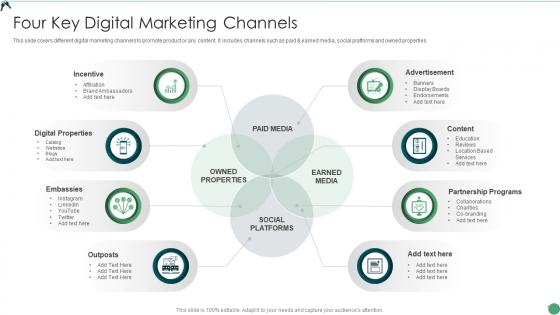
Four Key Digital Marketing Channels




Try Before you Buy Download Free Sample Product
 Impress Your
 Audience
 100%
100% Editable
 Save Hours
 of Time


This slide covers different digital marketing channels to promote product or any content. It includes channels such as paid and earned media, social platforms and owned properties.
People who downloaded this PowerPoint presentation also viewed the following :
Four Key Digital Marketing Channels with all 6 slides:
Use our Four Key Digital Marketing Channels to effectively help you save your valuable time. They are readymade to fit into any presentation structure.





FAQs for Four Key
Honestly, focus on four main things: know your audience inside and out, make content that doesn't suck, pick the right places to share it, and track what actually works. Get super specific about who you're targeting - their problems, where they spend time online, all that stuff. Create content that hits those pain points and distribute it where they already are. Don't try to be everywhere at once though. Pick maybe 2-3 channels max at first. The analytics thing is huge - track real conversions, not just likes and follows. Those numbers are basically meaningless if they're not making you money.
Don't try to be on every platform - honestly, you'll burn out. Pick like 2-3 where your people actually are. Behind-the-scenes stuff performs way better than polished posts, and definitely reply to comments yourself. Video is crushing it right now (stories, reels, whatever), so lean into that. Micro-influencers are your best bet over the big names - their followers actually care. Oh, and use hashtags but don't go crazy with them. Start by stalking where your competitors are most active. Consistent posting beats perfect posting every time.
So SEO is how you get Google to actually notice your website when people search for stuff. You optimize your content and keywords so search engines rank you higher in results. More visibility means more free traffic to your site - way better than paying for ads every time someone clicks. I'd start by figuring out what your customers are actually googling (might surprise you tbh). Then create good content around those search terms. It takes time but honestly it's worth it since the traffic keeps coming without constantly spending money. Focus on quality over trying to game the system.
Honestly, analytics changed everything for me - no more throwing money at random ads hoping they'll work. You'll actually see which campaigns bring in customers and where your audience spends time online. Plus you can test different messages and switch gears fast when something flops. The targeting gets way better too since you'll spot your best customer types instead of marketing to everyone (expensive mistake I made early on). Google Analytics is free and will blow your mind with the patterns it shows. Set up tracking on your site and socials first - that's where the magic happens.
Honestly, just solve real problems for people - that's what actually gets them to stop scrolling. Don't write like you're in some corporate meeting, ya know? Nobody wants to read that stuff. Tell stories instead of being all vague and theoretical. Ask questions. Your headlines should be super clear about what someone gets from reading. Oh, and definitely try different formats - videos hit different than carousel posts. Test what works for YOUR people specifically because every audience is weird in their own way. I'd pick one platform first, figure out your voice there, then branch out. Way easier than spreading yourself thin everywhere.
So PPC is basically paying for ads to get clicks right away - you'll see traffic within hours which is pretty crazy. Organic is the opposite though, you're earning visitors through SEO and content without paying for ads. Here's the thing - PPC gives you instant results but costs money constantly. Stop paying? Traffic disappears. Organic takes forever to build up (we're talking months) but once it's working, it keeps going. Honestly, most people need both. Quick budget for immediate results, then focus on organic for the long haul. Really depends what you can afford right now.
Dude, you'll see like 20-30% better conversions if you get your mobile stuff sorted out. I bounce off slow sites instantly - everyone does. Fast loading is huge, plus you need buttons people can actually tap without hitting three other things by mistake. The checkout part? That's where most people give up if it's a pain on their phone. Oh and test it on a few different devices first - sometimes what looks fine on an iPhone is a disaster on Android. Fix the worst problems and you're golden.
Find influencers whose followers are basically your dream customers. Micro-influencers are usually way better than big celebrities - their engagement rates are insane compared to the mega-famous ones. Work with them on content that doesn't scream "THIS IS AN AD!" Product reviews work great, or just having them naturally use your stuff in their regular posts. Oh, and behind-the-scenes content always does well too. Make sure their vibe actually matches your brand though, otherwise it'll feel super fake. Track which partnerships actually drive sales, not just likes.
Start with Google Analytics 4 and Search Console - those are your must-haves for tracking traffic and SEO stuff. Social platforms have their own analytics but honestly? Managing five different dashboards is a pain. Grab something like Hootsuite or Buffer to pull it all together. Oh, and if you're doing paid ads, set up UTM tracking and conversion pixels in Google Ads or Facebook. That's the boring-but-necessary part everyone skips. Once you get comfortable with these basics, you can always add fancier tools later.
Honestly? Monthly check-ins are your best bet, but quarterly works too if you're swamped. Everything moves so damn fast online - one day TikTok's hot, next day it's something else entirely. What I do is quick monthly performance reviews, then deeper quarterly strategy shifts. Track maybe 4-5 key metrics consistently so you're not scrambling to figure out what worked. Set those calendar reminders now or you'll forget (I always do). Seasonal stuff or big campaigns might need tweaks even more often. The key is staying flexible without constantly second-guessing yourself.
Honestly, you've gotta jump on AI personalization and voice search stuff - that's where things are heading fast. Interactive content is huge right now too, like polls and AR experiences. Privacy-first marketing is critical since third-party cookies are finally dying (thank god). Short-form video obviously isn't going anywhere. But here's what's really interesting - zero-party data collection where people actually want to share their preferences with you directly. I'd pick one area and start testing it now instead of waiting around. Your competitors are probably already messing with this stuff.
Honestly, segmentation is where you'll see the biggest wins - split your lists by how people actually behave or what they've bought before. Your subject lines need to grab attention without being those gross clickbait-y ones that make people feel duped. Mobile-friendly design is non-negotiable these days, and throw in some clear CTAs while you're at it. Here's the thing though - people stick around when you're consistently helpful, not when you're constantly selling to them. Test different send times too since every audience is weird about timing. Start A/B testing just one thing this week, don't go crazy with it.
Honestly, interactive stuff is where it's at - polls, Q&As, live videos, anything that gets people actually talking back to you. Stories are gold because they feel less formal, so people don't overthink before engaging. For email, definitely segment your lists and send stuff based on what they've done before. Building a real community is clutch too - like Facebook groups or Discord. I swear consistency matters more than being perfect though. Just pick one platform first and actually get good at it instead of being mediocre everywhere. And respond fast when people comment!
Oh man, visuals are everything! People process images like 60,000x faster than text - crazy right? So your images literally decide if someone stops scrolling or just keeps going. Poor design makes you look sketchy (those terrible stock photos, ugh). But good visuals? They build trust instantly. Your colors and fonts should scream "your brand" without saying anything. I'd honestly just look at what you're posting now and see where it looks cheap or off-brand. That's usually the easiest place to start upgrading. Consistent style across everything helps people remember you too.
Dude, just be straight with people about what data you're taking. Make your privacy policy something humans can actually read - not legal gibberish. Give users real control too, not fake toggles that don't do anything. Also avoid those sketchy design tricks that manipulate people into clicking stuff they don't want. Don't target kids or elderly folks with predatory ads either, that's just gross. Be honest about what you're selling. Honestly? The whole industry's pretty sketchy right now. My test is always: would I be cool with someone pulling this on my family? If not, hard pass.
-
Excellent template with unique design.
-
Great experience, I would definitely use your services further.