


Fulfillment Services Business Plan Powerpoint Presentation Slides





Try Before you Buy Download Free Sample Product
 Impress Your
 Audience
 100%
100% Editable
 Save Hours
 of Time


Grab our expertly crafted Fulfillment Services Business Plan PowerPoint Presentation to help entrepreneurs succeed in the competitive e commerce market by providing a comprehensive outline of their online business strategy. Our Amazon Corporate Plan includes an executive summary, a market analysis, and a breakdown of vital success factors. Additionally, it highlights the mission, vision, and the companys financial summary. Further, our Amazon Business Model PPT displays potential growth analysis and covers a SWOT analysis with Porters five force analysis model, customer analysis, and market sizing. The plan also outlines an offline and online marketing v strategy and a sales funnel for customer retention. The financial summary includes a scenario analysis, profit and loss statement, cash flow statement, balance sheet, and a DCF valuation model for the business after five years. By implementing the strategies outlined in this plan, you can increase your sales, improve customer retention, and ultimately achieve substantial success in the highly competitive marketplace. Access the PPT now to take your e commerce business to the next level. Get access to this 100 percentage editable template now.
People who downloaded this PowerPoint presentation also viewed the following :
Content of this Powerpoint Presentation
Slide 1: This slide introduces Fulfillment Services Business Plan. Commence by stating Your Company Name.
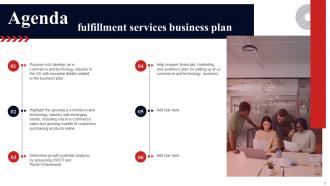
Slide 2: This slide depicts the Agenda of the presentation.
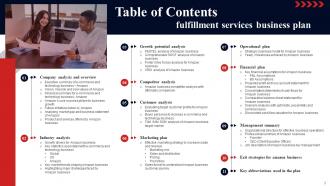
Slide 3: This slide includes the Table of Contents.
Slide 4: This slide highlights the Title for the Topics to be covered further.
Slide 5: This slide presents the Executive summary of e-commerce and technology business – Amazon.
Slide 6: This slide covers the details related to Amazon's vision, mission, and core values.
Slide 7: This slide provides the details related to Amazon’s financial performance based on its revenue growth and profitability.
Slide 8: This slide depicts Amazon's core success pillars defining its growth and profitability.
Slide 9: This slide includes details related to Amazon's future initiatives and its focus on expanding existing businesses and investing in new technologies.
Slide 10: This slide covers the problem associated with the e-commerce and technology industry.
Slide 11: The purpose of this slide is to provide information related to the wide range of products and services offered by the Amazon business.
Slide 12: This slide includes the Heading for the Contents to be discussed next.
Slide 13: This slide highlights the Key statistics associated with e-commerce and technology business - Global.
Slide 14: This slide continues the Key statistics associated with e-commerce and technology business – Global.
Slide 15: This slide presents the Key statistics associated with e-commerce and technology business - US.
Slide 16: This slide states the Key statistics associated with e-commerce and technology business - Amazon.
Slide 17: This slide portrays the Key market trends shaping Amazon business.
Slide 18: This slide deals with Highlighting major challenges faced by Amazon business.
Slide 19: This slide contains the Title for the Ideas to be further discussed.
Slide 20: This slide reveals the PESTEL analysis of Amazon business.
Slide 21: This slide shows the Comprehensive SWOT analysis of Amazon business.
Slide 22: The slide highlights porter’s five forces model and its implications in the US e-commerce and technology industry.
Slide 23: This slide portrays the VRIO analysis of Amazon business.
Slide 24: This slide includes the Heading for the Ideas to be covered next.
Slide 25: This slide displays the Amazon business competitor analysis with attributes comparison.
Slide 26: This slide continues the Amazon business competitor analysis with attributes comparison.
Slide 27: This slide shows the Title for the Topics to be discussed in the upcoming template.
Slide 28: This slide covers an assessment of how the company's products will fit into a particular market and where they will acquire the most traction with customers.
Slide 29: This slide provides an overview of how to better understand the target audience.
Slide 30: This slide depicts the TAM SAM SOM analysis of Amazon business target market.
Slide 31: This slide indicates the Heading for the Contents to be covered further.
Slide 32: This slide portrays the Effective marketing strategy to increase sales and revenue – Marketing mix.
Slide 33: This slide shows the Effective marketing strategy to increase sales and revenue – Sales and Distribution.
Slide 34: This slide displays the Effective marketing strategy to increase sales and revenue - Pricing.
Slide 35: The purpose of this slide is to implement an effective go-to-market strategy for bringing the company's products or services to an end customer.
Slide 36: This slide continues the Effective marketing strategy to increase sales and revenue – Promotion.
Slide 37: This slide reveals the Sales funnel to understand Amazon business customer journey.
Slide 38: This slide highlights the Title for the Contents to be discussed next.
Slide 39: This slide presents the Strategic business model for Amazon business.
Slide 40: The slide covers particular objectives or goals achieved by an organization in different years.
Slide 41: This slide portrays the Heading for the Topics to be covered in the upcoming template.
Slide 42: This slide depicts the important financial assumptions that are to be made while setting Amazon business.
Slide 43: This slide states the Key financial assumptions for Amazon Business – BS Assumptions.
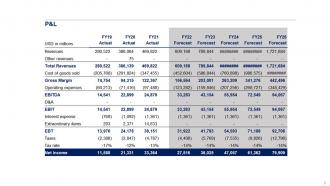
Slide 44: This slide represents the Projected profit and loss account statement for Amazon business.
Slide 45: This slide continues the Projected profit and loss account statement for Amazon business.
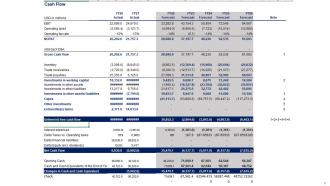
Slide 46: This slide displays the Consolidated statements of cash flows for Amazon business.
Slide 47: This slide continues the Consolidated statements of cash flows for Amazon business.
Slide 48: This slide covers the Comparative balance sheet statement for Amazon business.
Slide 49: This slide portrays the Scenario analysis with optimistic, pessimistic and nominal cases.
Slide 50: This slide continues the Scenario analysis with optimistic, pessimistic and nominal cases.
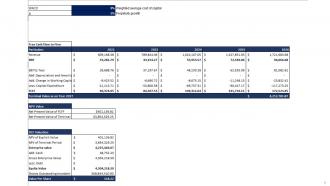
Slide 51: This slide shows the Discounted cash flow valuation for Amazon business.
Slide 52: This slide contains the Title for the Topics to be discussed next.
Slide 53: The slide highlights the organizational hierarchy in the company used to define the staff structure.
Slide 54: This slide presents the founder’s biggest professional achievements and most valuable skills.
Slide 55: This slide shows the CEO’s (Chief Executive Officer) biggest professional achievements and most valuable skills.
Slide 56: This slide depicts the Job description of Amazon business key management.
Slide 57: This slide continues the Job description of Amazon business key management.
Slide 58: This slide reveals the Heading for the Contents to be covered further.
Slide 59: This slide represents exit strategies such as sell-offs, IPOs, mergers, and acquisitions.
Slide 60: This slide exhibits the Title for the Ideas to be discussed in the upcoming template.
Slide 61: This slide presents the Key abbreviations used in the plan.
Slide 62: This is the Icons slide containing all the Icons used in the plan.
Slide 63: This slide is used for depicting some Additional infomration.
Slide 64: This is the 30,60,90 days plan slide for effective planning.
Slide 65: This slide highlights the company-related information.
Slide 66: This is Meet our team slide.
Slide 67: This slide contains the Posts it notes for reminders and deadlines.
Slide 68: This slide elucidates the organization-related Roadmap.
Slide 69: This slide displays the firm's Timeline.
Slide 70: This is the Quotes slide for motivation.
Slide 71: This is the Thank you slide for acknowledgement.
Fulfillment Services Business Plan Powerpoint Presentation Slides with all 79 slides:
Use our Fulfillment Services Business Plan Powerpoint Presentation Slides to effectively help you save your valuable time. They are readymade to fit into any presentation structure.









































































FAQs for Fulfillment Services Business Plan
Honestly, start with figuring out who you're actually serving - what's their shipping volume like? Warehouse space and staffing are obvious necessities. You'll also need solid inventory management systems and partnerships with UPS or FedEx. The tech side is massive though - get your WMS sorted and make sure it plays nice with other platforms. Financial projections will probably eat up more time than you think (they always do). Here's the thing - there are tons of 3PLs already, so nail down what makes you different first. Everything else should flow from that unique angle.
Look, market research is what stops you from building a business plan based on total guesswork. You'll see what competitors are actually charging, spot service gaps nobody's filling, and figure out what customers really need (not what you think they need). I've watched so many people skip this step and then wonder why their pricing was way off. It helps you pick which services to focus on first, nail down your target customers, and see where expansion makes sense. Plus it validates whether your assumptions are right before you blow your budget. Worth the time upfront, trust me.
Okay so logistics and supply chain stuff is literally what makes or breaks your fulfillment business. You've got to figure out your whole flow - inventory, where you're storing things, shipping partners, the tech that connects everything. Honestly, I've seen too many people just wing this part and it gets crazy expensive real quick. Your delivery times and what customers think of you? That all comes down to how tight your supply chain game is. Oh and definitely start by finding your biggest bottlenecks first - build everything else around fixing those headaches.
Start by mapping what tech you already have and spot the gaps that'll actually save you money. Warehouse management, inventory tracking, and order processing - that's your sweet spot for ROI. Honestly, companies that try automating everything at once usually crash and burn. Phase it out instead. Budget for software integrations and realistic timelines, but here's what people forget - training costs are huge. I've seen amazing systems sit unused because nobody knew how to work them. Oh, and don't let vendors oversell you on features you won't need for years.
Definitely track your order accuracy - shoot for 99% or higher. Shipping speed matters too, so watch your same-day and next-day percentages. Cost per shipment is obvious but don't sleep on customer satisfaction scores. Seriously, one terrible delivery can wreck you faster than bad Yelp reviews. Inventory turnover and return rates tell you a lot about what's actually working. Oh, and picks per hour if you want to see how efficient your warehouse really is. Setting up a daily dashboard sounds boring but it's clutch for catching problems early instead of scrambling later.
So packaging's where you'll see the biggest wins honestly - recyclable materials and right-sizing boxes cuts tons of waste. Route optimization helps with emissions too. Partner with green suppliers if you can. Warehouse stuff like renewable energy and recycling programs are solid moves. Carbon-neutral shipping is getting pretty popular with clients now. Oh and definitely track your metrics because everyone wants to see those sustainability numbers these days. It's kinda become a dealbreaker for some companies when they're picking fulfillment partners.
Dude, liability stuff is your biggest headache since you're touching everyone else's products - get solid insurance ASAP. Data protection laws are no joke when you're handling customer info. Employment law kicks in once you start hiring warehouse people. Oh, and depending what you're storing, there might be weird industry rules - like food or pharma stuff gets really annoying with regulations. Your client contracts need to be bulletproof too. Honestly? Just bite the bullet and hire a business lawyer from day one. I tried doing legal stuff myself once and it was a nightmare.
Dude, shipping partnerships are game-changers for your margins. Volume commitments get you way better rates, plus priority handling when things get crazy during holidays. Most carriers will hook you up with tracking integration and premium stuff like same-day delivery too. Honestly, rate negotiations can totally make or break you financially - I've seen businesses fail just because they paid retail shipping prices. Build relationships with maybe 2-3 major ones so you've got options and can pit them against each other. Even with low volume starting out, carrier reps will usually work with you on decent initial rates if you just reach out.
Honestly, scaling without killing your margins is probably the worst part. Inventory mistakes pile up so damn fast too - one warehouse screwup and suddenly your numbers are off. Getting different client systems to actually work together? Good luck with that mess. Peak season staffing is a nightmare since everyone's competing for the same workers. Oh, and clients always want Amazon speeds at Walmart prices, which is just not realistic. Build extra time and budget into literally everything though - I learned that the hard way when my "foolproof" plan fell apart week two.
Start planning for chaos right from the beginning - seriously, I learned this the hard way. Look at your past data to figure out when things get crazy, then triple that volume for planning purposes. Get cozy with temp agencies now so you can scale fast. For warehouse space, negotiate some kind of overflow deal you can flip on during holidays. Oh, and charge extra if clients don't give you a heads up about volume spikes - that's just smart business. Here's the key though: test everything when you're not drowning. Run fake holiday rushes in summer. The companies that make it are usually the ones who expect complete madness and plan accordingly.
So there's a few ways to price this stuff. Most people go with per-order fees, storage costs per cubic foot, or volume discounts - though honestly mixing them works best. Flat shipping rates are simple, then you add monthly storage fees and extra charges for returns or weird handling requests. Labor costs will eat into your margins more than you think, plus you've got tech expenses. I'd scope out what other fulfillment places charge locally first. Then you can position yourself based on whether you're faster or cheaper than them.
Dude, customer service will literally make or break your fulfillment business. When orders get messed up - and trust me, they will - how you handle it decides if clients stay or bail for someone else. You're basically representing their brand to customers, which is kind of a big deal. Get dedicated account managers set up early. Real-time tracking is a must, plus you need alerts that catch problems before customers even notice. Honestly, I'd rather spend money upfront on a solid support team than constantly scramble for new clients later. Way less stressful too.
Honestly, the scariest stuff is inventory getting damaged, shipping going sideways, and suddenly losing staff when you need them most. Technology crashes at the worst times too - Murphy's Law, right? Get insurance for damaged goods and work with multiple shipping companies so you're not screwed if one fails. Cross-train your people because someone always calls out. Contract-wise, make clients give you 30-60 days notice before bailing, maybe throw in termination fees. Keep backup systems running and actually test them regularly. Most important thing though - don't put all your eggs in one client basket. Spread the risk around.
Your business plan needs real-time inventory tracking and automated reorder points built in from day one. Map out how you'll handle seasonal swings and dead stock situations - trust me, these problems will sneak up on you fast. Don't forget about warehouse management software integration and cycle count protocols. Here's the thing though: seasonal fluctuations are honestly the trickiest part to nail down. Start planning these workflows before signing your first client. Playing catch-up later gets expensive real quick, and nobody wants that headache.
Honestly, automation is where you need to put your money - labor costs are killing everyone right now. Customers basically expect same-day delivery now, which is insane but that's where we are. Sustainability stuff is actually becoming a real factor too since B2B clients want carbon-neutral shipping and better packaging. Oh, and omnichannel fulfillment is massive - you're juggling inventory for online stores, physical retail, and marketplaces all at once. Micro-fulfillment centers in cities are popping up everywhere. I'd pick 2-3 of these for your plan and actually map out when you'll implement them.
-
Thanks to SlideTeam, we have an ideal template to present all the info we need to cover. Their slides give our numbers and projections a more clear and enchanting look.
-
Love how there are no boring templates here! The design is fresh and creative, just the way I like it. Can't wait to edit and use them for my extended projects!