


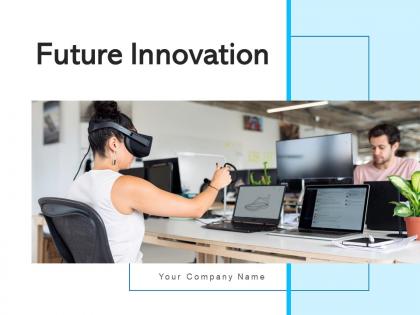
Future Innovation Product Strategy Launching Development Research Machines




Try Before you Buy Download Free Sample Product
 Impress Your
 Audience
 100%
100% Editable
 Save Hours
 of Time


Our Future Innovation Product Strategy Launching Development Research Machines are topically designed to provide an attractive backdrop to any subject. Use them to look like a presentation pro.
People who downloaded this PowerPoint presentation also viewed the following :
Future Innovation Product Strategy Launching Development Research Machines with all 12 slides:
Use our Future Innovation Product Strategy Launching Development Research Machines to effectively help you save your valuable time. They are readymade to fit into any presentation structure.



FAQs for Future Innovation Product Strategy Launching
Successful innovation in today's market includes customer-centricity, scalability, technological integration, agility, and sustainable value creation. These characteristics enable organizations to deliver solutions that address real market needs while maintaining competitive advantage, with many companies finding that combining rapid prototyping, data-driven insights, and cross-functional collaboration ultimately drives both market penetration and long-term growth.
Companies foster innovation culture through encouraging experimentation, providing dedicated time for creative projects, rewarding calculated risk-taking, and establishing cross-functional collaboration spaces. Organizations like Google and 3M successfully implement "innovation time" policies, open ideation platforms, and failure-tolerant environments, ultimately delivering breakthrough products, enhanced employee engagement, and sustained competitive advantage in rapidly evolving markets.
Technology serves as the primary catalyst for innovation by enabling automation, data analytics, artificial intelligence, cloud computing, and IoT integration across industries. These technological foundations revolutionize operations in healthcare through telemedicine, manufacturing via smart factories, and finance through digital banking, while streamlining processes, reducing costs, and enhancing customer experiences, ultimately delivering competitive advantages in an increasingly digital marketplace.
Businesses can measure innovation impact through revenue from new products, time-to-market improvements, customer satisfaction scores, operational efficiency gains, and market share growth. These metrics enable organizations to track innovation ROI across departments, with many companies finding that combining financial indicators with customer feedback provides comprehensive insights into competitive advantage and long-term performance enhancement.
Organizations face resistance to change, insufficient funding, lack of leadership support, rigid organizational structures, and fear of failure when implementing innovative ideas. These barriers often create silos that stifle creativity, with many companies finding that addressing cultural mindset and establishing dedicated innovation processes ultimately enables faster adaptation and competitive advantage in increasingly dynamic markets.
Customer feedback drives innovation by identifying unmet needs, revealing pain points, and validating new concepts before full development. Through direct surveys, user testing, and behavioral analytics, companies like Netflix and Amazon continuously refine their offerings, accelerate product iterations, and reduce development risks, ultimately delivering solutions that resonate with market demands while maintaining competitive advantage.
Companies can remain agile through continuous learning programs, cross-functional team structures, rapid prototyping processes, data-driven decision making, and flexible resource allocation strategies. These approaches enable organizations to pivot quickly during market shifts, streamline innovation cycles, and enhance competitive positioning, with many finding that decentralized decision-making and employee empowerment ultimately deliver faster responses to emerging opportunities.
Collaboration between departments enhances innovation by combining diverse expertise, accelerating idea development, and reducing implementation barriers through shared resources and perspectives. Cross-functional teams enable organizations to streamline product development cycles, minimize costly revisions, and deliver more comprehensive solutions, with many companies finding that structured interdepartmental collaboration ultimately accelerates time-to-market and competitive advantage.
Sustainability significantly shapes modern innovation by driving resource efficiency, reducing environmental impact, and creating competitive differentiation through responsible practices. Companies increasingly integrate sustainable approaches into product development, manufacturing processes, and supply chain management, with organizations like Tesla, Patagonia, and Unilever finding that eco-conscious innovation delivers both market advantage and long-term profitability.
AI and machine learning reshape innovation by accelerating research and development, enabling predictive analytics, and automating complex problem-solving processes across industries. These technologies streamline product development cycles, enhance decision-making capabilities, and facilitate breakthrough discoveries in sectors like healthcare, finance, and manufacturing, ultimately delivering competitive advantages and transforming how organizations approach creative solutions.
Design thinking methodologies improve innovation outcomes by fostering user-centric approaches, encouraging iterative prototyping, promoting cross-functional collaboration, and emphasizing empathy-driven problem-solving throughout development cycles. These human-centered processes enable organizations to identify unmet customer needs more effectively, reduce development risks through rapid testing, and ultimately deliver more meaningful solutions, with many companies finding that design thinking accelerates time-to-market while enhancing product relevance.
Small businesses can leverage innovation by adopting agile development processes, embracing emerging technologies like AI and automation, fostering customer-centric solutions, and forming strategic partnerships with tech providers. These approaches enable smaller companies to move faster than larger corporations, deliver personalized experiences, and reduce operational costs, ultimately creating competitive advantages through flexibility and responsiveness.
Ethical considerations in innovation include data privacy, algorithmic bias, environmental impact, workforce displacement, and equitable access to new technologies. These considerations require organizations to balance technological advancement with social responsibility, ensuring innovations enhance rather than harm communities, while many companies find that proactive ethical frameworks ultimately strengthen stakeholder trust and long-term competitive advantage.
Global markets influence local innovation strategies by creating competitive pressures, establishing international standards, and opening cross-border collaboration opportunities that drive technological advancement. Local companies increasingly adapt their R&D priorities, talent acquisition, and product development approaches to meet global demands, with many finding that strategic alignment with international trends, while maintaining regional customization, ultimately delivers enhanced market access and sustainable competitive advantage.
Leadership plays a crucial role in fostering innovation by establishing clear vision, allocating resources strategically, encouraging calculated risk-taking, and creating psychological safety for experimentation. Effective leaders balance guidance with autonomy, enabling teams to explore breakthrough solutions while maintaining operational focus, with many organizations finding that transformational leadership styles significantly accelerate innovation cycles and competitive positioning.
-
Great designs, Easily Editable.
-
Informative presentations that are easily editable.
-
Great designs, really helpful.
-
Attractive design and informative presentation.
-
Professional and unique presentations.