


General motors company profile overview financials and statistics from 2014-2018




Try Before you Buy Download Free Sample Product
 Impress Your
 Audience
 100%
100% Editable
 Save Hours
 of Time


This report is an extensively researched profile on company General Motors Company Profile Overview Financials And Statistics From 2014 to2018 in industry Consumer Goods And FMCG and Retail and Trade and E-Commerce and has been prepared by SlideTeam industry experts after extensively researching through hundreds of data sources.
People who downloaded this PowerPoint presentation also viewed the following :
General motors company profile overview financials and statistics from 2014-2018 with all 77 slides:
Moral character is your proud possession. Spread the virue with our General Motors Company Profile Overview Financials And Statistics From 2014-2018.

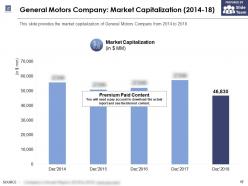
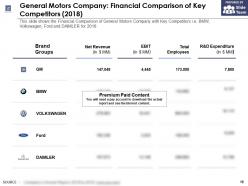
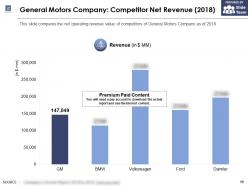
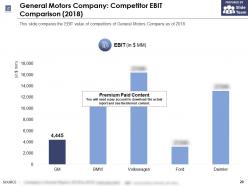

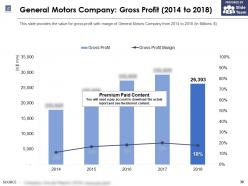
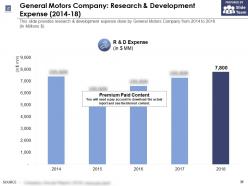
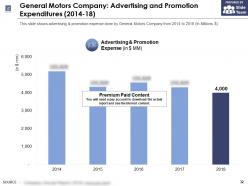
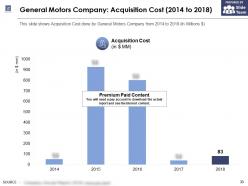
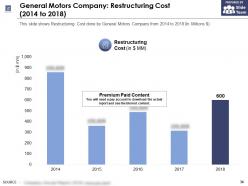

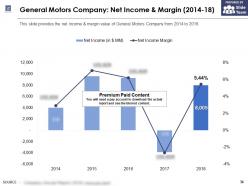
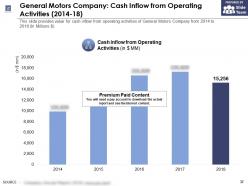
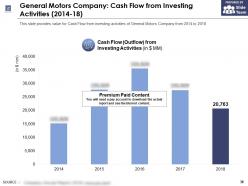
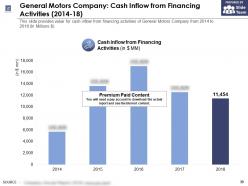
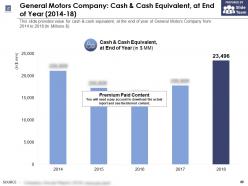
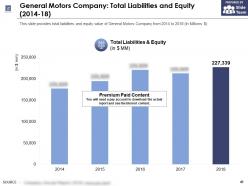
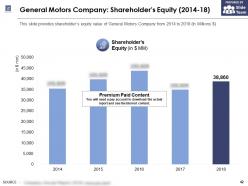

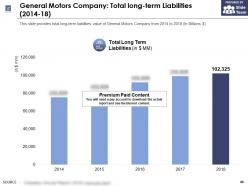
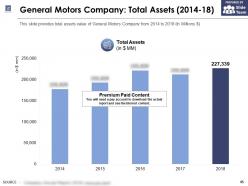

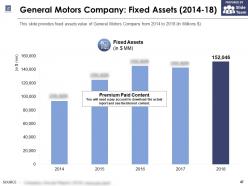
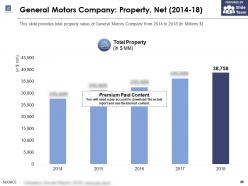
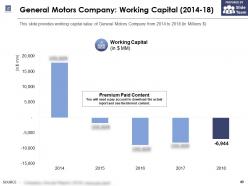
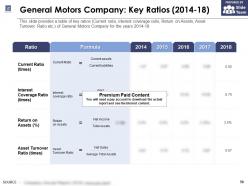
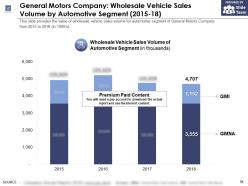
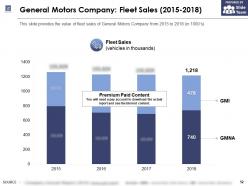


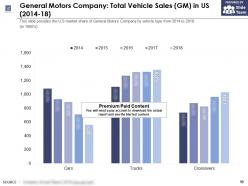
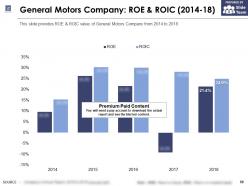
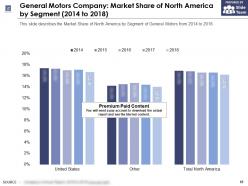
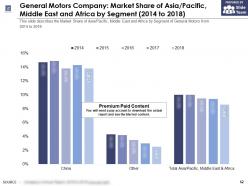


FAQs for General motors company profile overview financials and
General Motors' key milestones include its 1908 founding by William Durant, becoming the world's largest automaker by 1931, pioneering the automatic transmission in 1940, introducing the Corvette in 1953, and launching OnStar in 1996. These innovations revolutionized automotive manufacturing through mass production techniques, safety advancements, and connectivity solutions, ultimately delivering enhanced customer experiences and competitive advantages across global markets.
General Motors has strategically pivoted toward electrification through massive investments in battery technology, dedicated EV platforms like Ultium, and commitments to phase out internal combustion engines by 2035. The company has launched electric models across multiple brands including Cadillac, Chevrolet, and GMC, while building extensive charging infrastructure and battery manufacturing partnerships, ultimately positioning itself as a leader in the transition to sustainable mobility.
General Motors holds approximately 16-17% of the U.S. automotive market, positioning it as the leading domestic automaker ahead of Ford and behind Toyota and Stellantis in recent quarters. While facing intensifying competition from Tesla in electric vehicles and traditional rivals like Honda and Nissan, GM's strategic investments in EV technology, autonomous driving, and fleet electrification enable sustained competitive positioning across consumer and commercial segments.
General Motors approaches sustainability through electrification initiatives, renewable energy adoption, carbon-neutral manufacturing goals, waste reduction programs, and water conservation technologies. Through strategic partnerships and advanced manufacturing processes, GM facilities increasingly minimize environmental impact while maintaining operational efficiency, with many plants achieving zero-waste-to-landfill status, ultimately delivering competitive advantage in an increasingly eco-conscious automotive landscape.
General Motors has integrated electric vehicle platforms, Super Cruise hands-free driving technology, advanced connectivity systems, Ultra Cruise autonomous capabilities, and Ultium battery technology into its recent lineup. These innovations streamline manufacturing processes, enhance driver safety, and deliver superior customer experiences, with many automotive industry leaders finding that GM's strategic technology integration positions them competitively in the evolving mobility landscape.
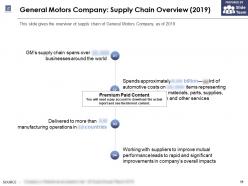
General Motors' global presence significantly influences its supply chain strategy through regional supplier networks, localized production facilities, and strategic partnerships across key markets like North America, China, and South America. This geographic diversification enables GM to reduce transportation costs, mitigate geopolitical risks, and adapt manufacturing processes to local consumer preferences, ultimately delivering enhanced operational efficiency and competitive pricing in an increasingly complex automotive landscape.
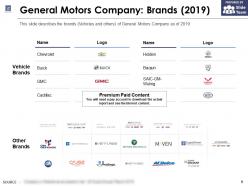
General Motors' brand identity centers on innovation, reliability, accessibility, and American automotive heritage, spanning diverse market segments through distinct sub-brands like Chevrolet, Cadillac, and GMC. This strategic brand architecture enables GM to deliver tailored experiences across price points and consumer preferences, while maintaining unified focus on quality engineering and technological advancement, ultimately strengthening market presence and competitive positioning.
General Motors has formed strategic partnerships with LG Energy Solution for battery manufacturing, Honda for electric vehicle development, Microsoft for cloud computing services, and Cruise for autonomous vehicle technology. These collaborations enhance GM's capabilities by accelerating electric vehicle production, expanding autonomous driving features, and improving connected car services, ultimately delivering competitive advantages in sustainability and innovation.
General Motors addresses autonomous vehicle development challenges through its Cruise subsidiary, substantial R&D investments, strategic partnerships with technology companies, rigorous safety testing protocols, and regulatory collaboration. Through advanced AI systems and extensive real-world testing, GM streamlines development timelines while ensuring safety standards, with many automotive manufacturers finding that strategic partnerships ultimately deliver competitive advantage in this increasingly complex technological landscape.
Critical financial metrics for assessing General Motors include revenue growth, operating margin, free cash flow, return on invested capital, and automotive debt-to-equity ratios. These indicators reveal GM's operational efficiency, capital allocation effectiveness, and financial stability across economic cycles, with investors particularly focusing on cash generation capabilities and leverage management to evaluate the company's resilience in the cyclical automotive industry.
General Motors contributes to smart city transportation through electric vehicle infrastructure, autonomous vehicle technology, connectivity platforms, and mobility-as-a-service solutions. Through partnerships with urban planners and technology companies, GM enables cities to reduce emissions, optimize traffic flow, and enhance public transportation integration, ultimately delivering cleaner air and more efficient urban mobility systems.
COVID-19 significantly impacted General Motors through temporary plant shutdowns, supply chain disruptions, and shifting consumer demand toward digital services and electric vehicles. The pandemic accelerated GM's digital transformation initiatives, enhanced workplace safety protocols, and strengthened their commitment to electric vehicle development, with many automotive manufacturers finding that crisis-driven adaptations ultimately delivered operational resilience and competitive advantages.
General Motors promotes diversity through comprehensive supplier diversity programs, employee resource groups across multiple identity dimensions, inclusive leadership development initiatives, and strategic partnerships with minority-serving institutions. These efforts streamline talent acquisition, enhance innovation through diverse perspectives, and strengthen community relationships, with many automotive companies finding that inclusive cultures ultimately deliver improved financial performance and competitive market positioning.
General Motors differentiates its customer service through personalized digital experiences, proactive maintenance alerts, comprehensive warranty programs, and integrated mobile app solutions that streamline vehicle management. Through OnStar connectivity and direct-to-consumer initiatives, GM enhances customer relationships with real-time support, remote diagnostics, and seamless service scheduling, ultimately delivering superior ownership experiences while building long-term brand loyalty.
General Motors is pursuing electric vehicle expansion, autonomous driving technology, mobility services, and strategic partnerships across emerging markets like China, India, and Latin America. Through localized manufacturing, affordable EV models, and ride-sharing platforms, GM delivers market-specific solutions while building charging infrastructure, ultimately positioning itself for long-term competitive advantage in rapidly growing automotive segments.
No Reviews