


Growth Oriented Business Plan Powerpoint Presentation Slides




Try Before you Buy Download Free Sample Product
 Impress Your
 Audience
 100%
100% Editable
 Save Hours
 of Time


Introducing Growth-Oriented Business Plan PowerPoint Presentation Slides. The business growth templates contain a business overview, financial highlights of the company, product and services offered, revenue streams, growth strategies, and so on. You can easily present the financial highlights covering turnover, net assets, and EBITA, by using the corporate growth PowerPoint visuals. Our content-ready corporate strategies PowerPoint slideshow helps you to describe short term and long term goals of the company. You can easily identify and analyze the strengths, weaknesses, threats, and opportunities of the company. Showcase PESTLE analysis that analyzes external and internal factors that can affect your organization’s performance. Showcase the types of mergers, acquisitions, and joint ventures that the company will adopt to grow their business with the help of business growth and development PowerPoint themes. You can also write down your five years financial plan covering profit and loss assumptions. Also, showcase various risk mitigation plans to overcome them. This business performance dashboard PPT slideshow shows your business performance covering revenue, gross profit, and customer satisfaction. Download our ready-to-use business development strategy PPT deck and upgrade your business economy in the market.
People who downloaded this PowerPoint presentation also viewed the following :
Content of this Powerpoint Presentation
Slide 1: This slide introduces Growth Oriented Business Plan. Menton your Company name and begin.
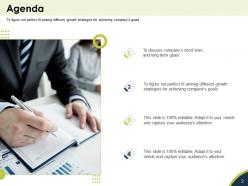
Slide 2: This slide displays Agenda
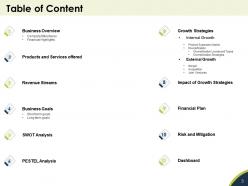
Slide 3: This slide displays Table of Content of the presentation.
Slide 4: This slide shows Table of Content.
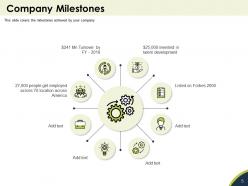
Slide 5: This slide covers the milestones achieved by your company
Slide 6: This slide provides the financial highlights covering revenue generation, gross and net profit margin
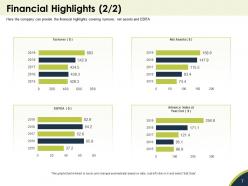
Slide 7: This slide provides the financial highlights covering turnover, net assets and EBITA
Slide 8: This slide displays Table of Content.
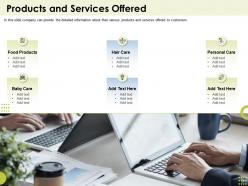
Slide 9: In this slide company can provide the detailed information about their various products and services offered to customers
Slide 10: This slide displays Table of Content.
Slide 11: This slide discusses about Revenue Streams.
Slide 12: This slide shows Table of Content.
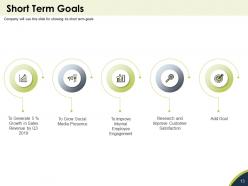
Slide 13: This slide depicts Short Term Goals.
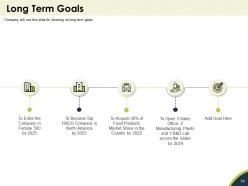
Slide 14: Company will use this slide for showing its long term goals
Slide 15: This slide displays Table of Content with SWOT analysis.
Slide 16: This slide can be used for showing its strengths, weaknesses, threats and opportunities
Slide 17: This slide depicts Table of Content containing- PESTEL Analysis.
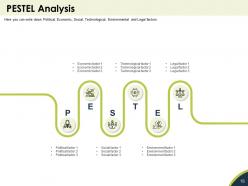
Slide 18: This slide depicts PESTEL Analysis. Here you can write down Political, Economic, Social, Technological, Environmental and Legal factors.
Slide 19: This slide displays Table of Content.
Slide 20: This slide shows Product Expansion Matrix
Slide 21: This slide highlights Diversification Levels and Types.
Slide 22: This slide displays concentric, conglomerate and horizontal diversification strategies.
Slide 23: This slide displays Table of Content.
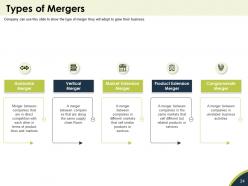
Slide 24: This slide represents Types of Mergers.
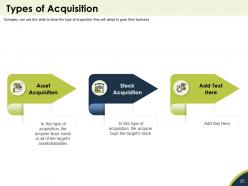
Slide 25: This slide highlights Types of Acquisition
Slide 26: This slide shows Types of Joint Ventures. Company can use this slide to show the type of joint venture they will adopt to grow their business.
Slide 27: This slide depicts Table of Content.
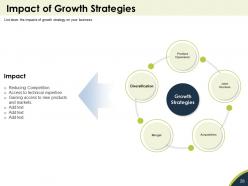
Slide 28: This slide shows Impact of Growth Strategies.
Slide 29: This slide shows Table of Content containing- Financial Plan
Slide 30: This slide highlights 5 Year Financial Plan.
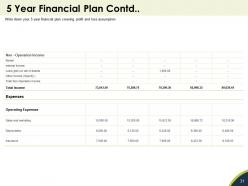
Slide 31: This slide is continued with 5 Year Financial Plan Contd. Write down your 5 year financial plan covering profit and loss assumption
Slide 32: This slide shows Table of Content with- Risk Mitigation Plan
Slide 33: This slide highlights Risk Mitigation Plan. List down various identified risk and mitigation plan to overcome them
Slide 34: This slide shows Table of Content with- Dashboard
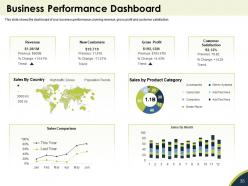
Slide 35: This slide shows the dashboard of your business performance covering revenue, gross profit and customer satisfaction
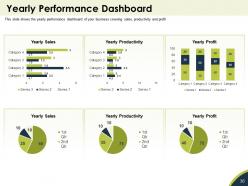
Slide 36: This slide shows the yearly performance dashboard of your business covering sales, productivity and profit
Slide 37: This is Icons Slide for Growth Oriented Business Plan.
Slide 38: This slide is titled as Additional Slides for moving forward.
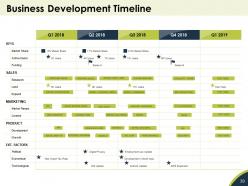
Slide 39: This slide shows Business Development Timeline
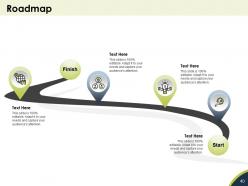
Slide 40: This slide shows Roadmap process.
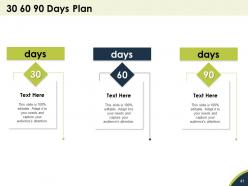
Slide 41: This is 30 60 90 Days Plan template.
Slide 42: This slide displays Mission, Vision and Goals.
Slide 43: This is Our Team slide with Names and Designations.
Slide 44: This is About Us slide to showcase Company specifications.
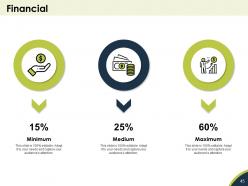
Slide 45: This is Financial slide.
Slide 46: This slide shows Timeline process.
Slide 47: This is Thank You slide with Contact details.
Growth Oriented Business Plan Powerpoint Presentation Slides with all 47 slides:
Use our Growth Oriented Business Plan Powerpoint Presentation Slides to effectively help you save your valuable time. They are readymade to fit into any presentation structure.
















FAQs for Growth Oriented Business Plan
A growth-oriented business plan should include market analysis, competitive positioning, scalable revenue models, strategic expansion timelines, and resource allocation frameworks. These elements work together by identifying growth opportunities, establishing measurable targets, and outlining operational strategies, with many organizations finding that comprehensive planning ultimately delivers sustainable scaling and competitive advantage.
Market analysis enhances growth-oriented business plans by identifying untapped opportunities, understanding customer behavior patterns, assessing competitive landscapes, and revealing market trends that drive strategic decisions. Through comprehensive market research, organizations can optimize resource allocation, minimize expansion risks, and target high-potential segments more effectively, ultimately delivering faster growth and sustainable competitive advantage.
Financial projections serve as the strategic foundation for growth-oriented business plans, providing revenue forecasts, cash flow analysis, funding requirements, and ROI calculations that guide expansion decisions. These projections enable businesses to secure investor confidence, allocate resources effectively, and identify potential financial bottlenecks, with many organizations finding that accurate forecasting ultimately delivers sustainable growth and competitive market positioning.
Businesses can effectively identify growth potential through market analysis, competitive assessment, customer segmentation studies, financial forecasting, and operational capacity evaluation. These strategic approaches enable organizations to quantify opportunities across sectors like retail, technology, and healthcare, while measuring scalability through revenue projections, market penetration rates, and resource optimization metrics, ultimately delivering competitive advantage.
A business plan adapts to changing market conditions through flexible strategic frameworks, diversified revenue streams, agile operational models, and regular performance metrics review. By incorporating scenario planning and market analysis updates, businesses can pivot their growth strategies while maintaining core objectives, with many organizations finding that this adaptive approach enables sustained expansion even during market volatility, ultimately delivering competitive resilience.
Sustainable growth strategies include diversifying revenue streams, investing in employee development, maintaining strong cash flow management, building strategic partnerships, and continuously innovating products or services. These approaches enable businesses to scale efficiently while minimizing risks, with many successful organizations finding that combining operational efficiency with market expansion ultimately delivers long-term competitive advantage.
Competitive analysis influences growth-oriented business plans by identifying market gaps, revealing successful strategies, and highlighting differentiation opportunities that drive strategic positioning. Through comprehensive competitor evaluation, businesses can benchmark performance metrics, anticipate market shifts, and adapt pricing strategies, ultimately enabling more informed resource allocation and targeted expansion into underserved segments where competitive advantages deliver sustainable growth.
Common pitfalls include overestimating market demand, underestimating resource requirements, neglecting competitive analysis, setting unrealistic timelines, and failing to establish measurable metrics. These oversights can derail growth strategies by creating cash flow issues, missed market opportunities, and operational bottlenecks, with many organizations finding that thorough market validation and conservative financial projections ultimately deliver more sustainable expansion.
Customer feedback is crucial for growth-oriented strategy, driving product innovation, market expansion decisions, and competitive positioning while identifying untapped revenue opportunities. Companies leveraging systematic feedback collection through surveys, analytics, and direct engagement can pivot strategies faster, enhance customer retention, and ultimately scale more effectively in increasingly competitive markets.
Growth-oriented businesses should track revenue growth rate, customer acquisition cost, customer lifetime value, market share expansion, and operational efficiency metrics. These indicators enable organizations to assess scalability by measuring profitability trends, retention rates, and resource optimization, with many companies finding that combining financial and operational metrics delivers comprehensive insights for strategic decision-making.
Technology and innovation support growth-oriented business plans by automating operations, enhancing customer experiences, and enabling data-driven decision making through AI, cloud computing, and analytics platforms. These technologies streamline processes, reduce operational costs, and accelerate market expansion, with many organizations finding that strategic tech investments ultimately deliver competitive advantages and scalable growth opportunities.
Effective marketing strategies include digital advertising, content marketing, social media engagement, strategic partnerships, and data-driven customer segmentation. These approaches streamline brand visibility and customer acquisition by targeting specific demographics, enhancing online presence, and leveraging analytics, with many organizations finding that integrated campaigns deliver measurable ROI and accelerated market expansion.
Companies build growth-supporting cultures through clear communication of growth objectives, empowering employee decision-making, investing in continuous learning programs, and establishing feedback mechanisms that encourage innovation. This strategic combination enables organizations to adapt quickly to market changes, streamline operational processes, and enhance employee engagement, with many finding that such cultures ultimately deliver sustained competitive advantage and improved performance outcomes.
Partnerships and collaborations serve as strategic accelerators for growth objectives by expanding market reach, sharing resources, reducing operational costs, and accessing new customer segments. Through strategic alliances, joint ventures, and collaborative frameworks, organizations leverage complementary strengths, enter new markets faster, and achieve scalable growth, with many businesses finding that partnerships deliver competitive advantages beyond individual capabilities.
Businesses can effectively allocate resources by conducting thorough market analysis, prioritizing high-ROI initiatives, diversifying investment portfolios, and implementing data-driven decision frameworks. Through strategic resource allocation, companies streamline operations, accelerate market expansion, and enhance competitive positioning, with many organizations finding that balanced investment in technology, talent, and market development ultimately delivers sustainable growth and improved operational efficiency.
-
Unique and attractive product design.
-
The content is very helpful from business point of view.