


Half yearly content calendar roadmap




Try Before you Buy Download Free Sample Product
 Impress Your
 Audience
 100%
100% Editable
 Save Hours
 of Time


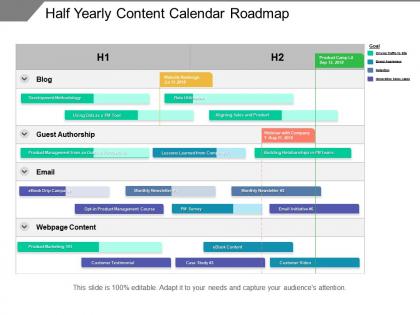
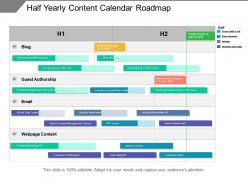
Follow the details through our, half-yearly content calendar roadmap PPT design. Grow in your concepts through this half-yearly content calendar. We have conceptualized various development methodology in this PPT design. Align your sales and product data through the charts we have shown here. Use this comprehensive PowerPoint bundle for investigating, planning, documenting or managing a business program in various areas and services. Well, suited graphics and subject drove content to allow you to brief on your long-term and short-term strategies. Download half-yearly content calendar roadmap PPT design and get ahead by incorporating your data and reach towards your goals and growth. Ensure folks don't act immaturely with our Half Yearly Content Calendar Roadmap. Enable them to address intense emotions.
People who downloaded this PowerPoint presentation also viewed the following :
Half yearly content calendar roadmap with all 5 slides:
Differentiate fact from fiction with our Half Yearly Content Calendar Roadmap. Inform them of the events that actually happened.


FAQs for Half yearly
A half-yearly content calendar should include content themes aligned with business goals, seasonal campaigns, product launches, industry events, and audience engagement milestones. This strategic approach enables marketing teams to coordinate campaigns across channels, allocate resources efficiently, and maintain consistent messaging, with many organizations finding that structured planning ultimately delivers improved content ROI and stronger brand positioning.
Businesses can align content strategy with seasonal trends by mapping key industry events, holidays, product cycles, and customer behavior patterns to specific quarters, then developing themed campaigns that resonate with audience needs during each period. This strategic approach enables companies to capitalize on peak engagement windows, anticipate market demands, and create relevant messaging that drives higher conversion rates, with many organizations finding that seasonal alignment increases content effectiveness by 40-50%.
Content themes should align with industry cycles, seasonal trends, audience behavior patterns, product launches, and strategic business objectives throughout the year. Successful organizations often map themes around quarterly goals, holiday seasons, and sector-specific events, with retail focusing on shopping seasons, B2B companies emphasizing fiscal planning periods, ultimately ensuring consistent messaging while maximizing engagement opportunities.
Analytics from previous content performance inform future topics by identifying high-engagement themes, optimal posting times, audience preferences, and content formats that drive conversions. Through performance metrics analysis, marketing teams can strategically prioritize topics that resonate with their target demographics, replicate successful content structures, and allocate resources toward proven engagement drivers, ultimately delivering higher ROI and sustained audience growth.
Audience segmentation enables targeted content planning by identifying distinct user groups, their preferences, pain points, consumption patterns, and seasonal behaviors across six months. This strategic approach allows marketers to create personalized content journeys, optimize timing and channels for each segment, and allocate resources more effectively, ultimately delivering higher engagement rates and conversion outcomes.
Visual elements in content calendars enhance team effectiveness by improving comprehension, accelerating decision-making, and streamlining workflow coordination through color-coding, charts, and intuitive layouts. These design features enable marketing teams to quickly identify content gaps, track campaign progress, and allocate resources more efficiently, with many organizations finding that visual calendars reduce planning time while improving cross-departmental collaboration and strategic alignment.
Content planning tools include Asana, Trello, Monday.com, CoSchedule, and Hootsuite, alongside specialized platforms like Airtable and Google Workspace for collaborative scheduling. These technologies streamline workflows by centralizing campaign management, automating publishing schedules, and enabling real-time team collaboration, with many marketing departments finding that integrated platforms ultimately deliver faster content production and enhanced strategic alignment across their half-yearly roadmaps.
Brands maintain relevance through strategic planning, trend monitoring, content audits, seasonal alignment, and built-in flexibility for real-time adjustments. By incorporating quarterly reviews, social listening tools, and agile content frameworks, organizations can pivot messaging based on market shifts, customer feedback, and emerging opportunities, ultimately delivering consistent engagement while staying competitive in an increasingly dynamic marketplace.
Innovative repurposing approaches include transforming blog posts into interactive infographics, converting webinar content into podcast series, creating social media carousels from research reports, developing video tutorials from written guides, and repacking case studies into multiple format variations. These strategies streamline content production by maximizing resource efficiency, extending content lifespan, and reaching diverse audience preferences, ultimately delivering greater ROI while maintaining consistent messaging across channels.
Brand collaborations and influencer partnerships can be strategically mapped across your half-yearly calendar by identifying seasonal campaigns, product launches, awareness months, and major industry events that align with partner audiences. These partnerships work best when integrated into existing content themes, with cross-promotional campaigns during peak engagement periods like holidays or industry conferences, ultimately expanding reach while sharing resources and delivering authentic messaging that resonates with both audiences.
Key metrics include engagement rates, website traffic, lead generation, conversion rates, and brand awareness indicators like social shares and mentions. Through comprehensive analytics tracking, organizations can measure content ROI, audience growth, and customer acquisition costs, while monitoring time-on-page and email click-through rates, ultimately delivering strategic insights that enhance future content planning and competitive positioning.
Businesses can adapt their content plans by maintaining flexible editorial frameworks, establishing rapid response protocols, and creating modular content that can be quickly repurposed or paused. Through agile planning approaches, organizations pivot messaging tone, accelerate relevant topics, and delay promotional content while maintaining audience engagement, with many finding that responsive adaptability ultimately strengthens brand trust and market positioning.
Maintaining audience engagement throughout a half-yearly period requires consistent value delivery through diverse content formats, strategic timing, interactive elements like polls and Q&A sessions, and seasonal relevance. These approaches streamline audience retention by providing regular touchpoints, fostering community participation, and adapting messaging to evolving market conditions, with many organizations finding that consistent engagement ultimately delivers stronger brand loyalty and sustained competitive advantage.
User-generated content integrates into half-yearly strategies through planned campaigns, seasonal hashtag initiatives, customer spotlight features, review incorporation, and community challenges aligned with business goals. This strategic combination enables brands to enhance authenticity, reduce content creation costs, and boost engagement rates, while building stronger customer relationships and delivering more diverse, relatable content that drives conversions.
Common pitfalls include overambitious content volumes, insufficient buffer time for revisions, neglecting seasonal relevance, failing to align with business objectives, and creating rigid schedules without flexibility. Many organizations find that successful six-month calendars require realistic resource allocation, cross-departmental collaboration, and built-in adaptation periods, ultimately delivering consistent content quality while maintaining strategic alignment with evolving market conditions.
No Reviews