


Health Care System Improvement Powerpoint Ppt Template Bundles




Try Before you Buy Download Free Sample Product
 Impress Your
 Audience
 100%
100% Editable
 Save Hours
 of Time


Our Health Care System Improvement Powerpoint Ppt Template Bundles are topically designed to provide an attractive backdrop to any subject. Use them to look like a presentation pro.
People who downloaded this PowerPoint presentation also viewed the following :
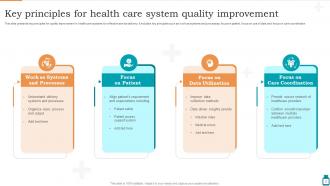
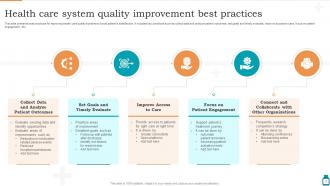
Health Care System Improvement Powerpoint Ppt Template Bundles with all 18 slides:
Use our Health Care System Improvement Powerpoint Ppt Template Bundles to effectively help you save your valuable time. They are readymade to fit into any presentation structure.






FAQs for Health Care System Improvement Powerpoint
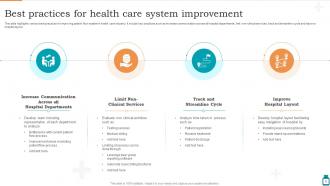
Healthcare systems face critical challenges including escalating costs, workforce shortages, aging populations, health disparities, and outdated technology infrastructure. These interconnected issues strain resources while creating barriers to quality care, with many hospitals and health networks finding that strategic investments in digital transformation, workforce development, and preventive care models ultimately deliver improved patient outcomes and operational efficiency.
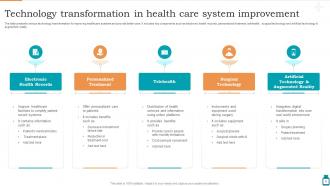
Technology integration improves patient care through electronic health records, telemedicine platforms, AI-powered diagnostic tools, remote monitoring devices, and automated medication systems. These solutions streamline healthcare delivery by reducing medical errors, enabling faster diagnoses, and enhancing care coordination, with many hospitals finding that digital transformation ultimately delivers improved patient outcomes and operational efficiency.
Patient feedback plays a crucial role in identifying service gaps, improving care quality, enhancing patient satisfaction, and driving operational efficiency within healthcare systems. Through systematic collection and analysis, hospitals and clinics can streamline appointment processes, reduce wait times, and enhance communication protocols, with many healthcare organizations finding that patient-centered improvements ultimately deliver better outcomes and increased trust.
Healthcare facilities can ensure equitable access by implementing community outreach programs, establishing satellite clinics in underserved areas, offering multilingual services, providing sliding-scale payment options, and partnering with local organizations. Through strategic resource allocation and targeted initiatives, hospitals and health systems can minimize geographic barriers, reduce cost obstacles, and enhance cultural competency, ultimately delivering more inclusive care while strengthening community health outcomes.
Team-based healthcare delivery offers improved patient outcomes, enhanced care coordination, reduced medical errors, increased efficiency, and better provider satisfaction. Through collaborative models, hospitals and clinics streamline communication between specialists, nurses, and primary care physicians, while reducing burnout and accelerating treatment decisions, ultimately delivering more comprehensive patient care and operational cost savings.
Preventive care significantly enhances healthcare system efficiency by reducing costly emergency interventions, minimizing chronic disease complications, and streamlining resource allocation across facilities. Through early screenings and wellness programs, hospitals and clinics experience decreased readmission rates, lower treatment costs, and improved patient outcomes, while insurance providers benefit from reduced claims expenses, ultimately delivering sustainable cost savings and better population health management.
Policies to reduce healthcare financial burden include expanded insurance coverage, drug price regulations, transparent pricing requirements, sliding fee scales, and preventive care incentives. These approaches streamline costs by negotiating better rates, eliminating surprise billing, and emphasizing early intervention, with many healthcare systems finding that comprehensive policy combinations ultimately deliver more affordable patient care and improved access across diverse populations.
Mental health services integrate into primary care through co-located therapists, shared electronic health records, collaborative care models, and routine mental health screenings during regular appointments. This strategic combination enables hospitals and clinics to deliver comprehensive patient care, reduce treatment gaps, and minimize costs, while patients experience seamless access to both physical and mental health services.
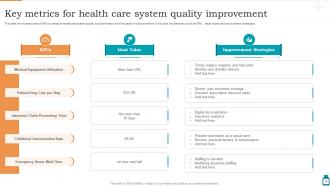
Healthcare system improvement effectiveness should be assessed through patient outcomes like mortality and readmission rates, operational efficiency metrics including wait times and resource utilization, cost-effectiveness measures, and patient satisfaction scores. These comprehensive metrics enable healthcare organizations to track care quality, streamline operations, and enhance patient experiences, with many hospitals finding that balanced scorecards ultimately deliver measurable improvements across clinical and financial performance.
Interdisciplinary collaboration enhances care quality by combining diverse expertise, improving communication between specialists, reducing medical errors, and ensuring comprehensive treatment plans that address all patient needs. When teams including doctors, nurses, pharmacists, and social workers coordinate effectively, hospitals achieve faster diagnoses, shorter patient stays, and significantly better health outcomes while reducing costs.
Innovative care delivery models include telemedicine platforms, AI-driven diagnostics, integrated care networks, community health partnerships, and precision medicine approaches. These models enhance healthcare accessibility by streamlining patient interactions, reducing diagnostic timeframes, and enabling personalized treatments, with many hospitals and health systems finding that strategic technology integration ultimately delivers improved patient outcomes while significantly reducing operational costs.
Data analytics transforms healthcare management decision-making by providing real-time insights into patient outcomes, resource allocation, and operational efficiency patterns. Through predictive modeling and performance dashboards, hospitals and clinics can optimize staffing levels, reduce readmission rates, and enhance care quality, while ultimately delivering faster patient services and significant cost reductions across their operations.
Telemedicine improves rural healthcare access by eliminating geographical barriers, reducing travel costs, enabling specialist consultations, and providing 24/7 medical support through digital platforms. Through remote monitoring and virtual appointments, rural hospitals and clinics can deliver faster diagnoses, preventive care, and chronic disease management, ultimately reducing healthcare disparities while enhancing patient outcomes.
Healthcare reforms must address patient privacy, equitable access, informed consent, resource allocation fairness, and healthcare worker rights. These ethical frameworks ensure reforms benefit all populations while maintaining care quality, with many healthcare systems finding that transparent stakeholder engagement and phased implementation ultimately deliver sustainable improvements and enhanced public trust.
Staff training and development enhances patient outcomes by improving clinical competencies, strengthening communication skills, and reducing medical errors through evidence-based practices. These programs enable healthcare professionals to deliver more accurate diagnoses, provide better bedside manner, and implement safety protocols more effectively, with many hospitals finding that continuous education ultimately reduces readmission rates and increases patient satisfaction scores.
-
They guys always go the extra mile to meet the expectations of their customers. Almost a year has been associated with them.
-
Placing an order on SlideTeam is very simple and convenient, saves you a lot of your time.