


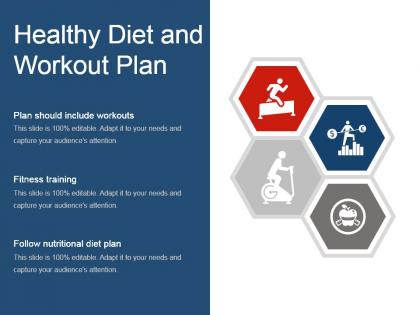
Healthy diet and workout plan powerpoint templates




Try Before you Buy Download Free Sample Product
 Impress Your
 Audience
 100%
100% Editable
 Save Hours
 of Time


Our Healthy Diet And Workout Plan Powerpoint Templates contain the entire gamut. You will never find them half baked.
People who downloaded this PowerPoint presentation also viewed the following :
Healthy diet and workout plan powerpoint templates with all 5 slides:
Answer criticism directed at you with our Healthy Diet And Workout Plan Powerpoint Templates. It enables you to handle the jab.
FAQs for Healthy diet and workout
Look, I used to way overcomplicate this whole thing. There are basically four pillars - nutrition, movement, sleep, and managing stress. Nothing groundbreaking there. Get 7-9 hours of sleep, eat balanced meals, move your body regularly (doesn't need to be some insane CrossFit thing), and find ways to chill out like meditation or walks. The real trick isn't perfecting each area though. It's building consistent routines around them. Pick one pillar and focus on it for two weeks, then slowly add the others. Trust me, consistency beats perfection every time.
Honestly, visuals are a game-changer for health presentations. People process images like 60,000 times faster than text, which is wild when you think about it. Charts tracking progress and before/after photos really help break down all that confusing nutrition stuff into bite-sized pieces. I mean, who wants to read endless bullet points about macronutrients? Nobody I know! Food pyramids and habit trackers keep people actually paying attention. Plus they'll have something visual to remember later instead of trying to recall whatever you said about protein ratios or whatever.
Honestly, nutrition is like the backbone of feeling good - affects your energy, sleep, mood, everything. I tried out-exercising a shit diet for years and it just doesn't work lol. It's probably responsible for like 70% of how healthy you feel overall, so it needs to mesh with your workouts and stress levels. Don't aim for perfection though, that's where people mess up. Track what you're eating now for a week first. Then pick maybe 2-3 small changes you can actually live with forever. The whole "sustainable vs perfect" thing is key - I learned that the hard way.
So for seniors, go with low-impact stuff and maybe medication reminders - oh, and definitely social activities since isolation is rough. Kids are totally different though. Make it fun! Dance parties instead of boring workouts, let them help plan colorful meals, and yeah... probably some screen time rules. The tricky part? Seniors usually just want simple checklists while kids need all the bells and whistles - games, rewards, the whole thing. Different health goals too: seniors need bone strength and fall prevention, kids need to build good habits early. I'd honestly start by just talking to people in whatever age group you're targeting about their daily routines.
Honestly, scrap those boring bullet point lists - they're the worst! Try something visual instead, like weekly calendars where people check off what they did. Challenge cards work great too since people can pick and choose what sounds fun. Those intimidating gym-focused lists just make everyone want to crawl back into bed lol. Mix beginner stuff with harder options, and definitely add weird activities like dancing or gardening. Makes it way less scary. Movement should feel doable, not like torture. Maybe start with just one interactive thing and see how it goes?
Dude, the mental game is everything with these health plans. If you don't actually believe you can pull it off, you're already screwed. Your past diet failures mess with your head too - like that time I quit keto after three days because I missed bread too much lol. But seriously, pick something that fits your actual personality instead of fighting against it. Track your wins, even tiny ones. Get someone to bug you about it when you're being lazy. The biggest thing? How you bounce back from bad days makes all the difference between giving up and keeping going.
Okay so definitely throw in some meditation or breathing stuff - most people are terrible at sleep hygiene too so cover that. Social connection is huge but everyone ignores it for some reason. Maybe I'm biased but I think that's honestly more important than people realize. Mood tracking helps, gratitude practices, setting boundaries with work. Oh and don't separate physical/mental - like walking and yoga directly help your headspace. The whole thing should feel connected, you know? I'd probably start with just 2-3 things that actually make sense for whoever you're talking to.
Honestly, interactive stuff is where it's at - throw in some progress trackers or habit apps that sync with fitness platforms. Seeing those streaks builds up is oddly addictive! If you connect it to their Fitbit or Apple Watch, it feels way more personal since the data just flows in automatically. QR codes are clutch too - link them straight to workout videos or meal prep guides. The whole point is making it feel alive, not like some boring PDF they'll forget about. Oh, and don't go crazy with features right away. Start simple with maybe two things, then build from there.
Okay so I'd track maybe 5-6 things max or you'll burn out. Physical stuff first - weight, measurements, sleep hours, how many workout days you hit. But honestly? Don't skip the mood tracking. Rate your energy and overall feel on like a 1-10 scale each day. Sounds weird but it's actually super telling when you look back at patterns. Oh and habit stuff too - did you drink enough water, stick to your goals, that kind of thing. The mix of hard numbers plus how you're actually feeling gives you the real picture.
Dude, templates are lifesavers because they cut through all that "what should I eat today?" brain fog. Everything's already planned out - meals, workouts, habit tracking - so you don't waste mental energy on decisions. Time isn't an issue either since it's all mapped out. I swear picking which one to use is harder than actually following it! The consistency thing is huge too. You're not just making stuff up as you go. Pick one thing first though - I'd go with meal planning since you gotta eat anyway. Once that sticks, add more.
Walking groups are huge for this - people stick with it way more than solo runners. Same with workout buddies or those neighborhood fitness challenges. Couch to 5K programs are perfect examples actually, the group ones have way better completion rates. Community gardens work too, or cooking clubs where people share recipes and tips. Even online support groups help if that's more your thing. The whole accountability factor just works better than willpower alone, honestly. Maybe throw in a slide where they can map out who'd be in their corner? That shared motivation thing is what separates people who start from people who actually keep going.
Honestly, templates are game-changers because you're not burning mental energy every day deciding what to eat or whether to hit the gym. Everything's already planned out. Plus they build in realistic progress instead of those insane "transform your life in 30 days" things that always crash and burn. I swear motivation is the most unreliable thing ever - some days you have it, some days you don't. That's why systems beat willpower every time. Just make sure whatever template you pick has wiggle room for when life gets crazy (which it will). You need something that bends but doesn't snap completely.
Build flexibility right into your templates from day one. Think about dietary restrictions, food preferences, how different cultures approach exercise - even their basic ideas about what "wellness" means. Some cultures are all about family meals, others focus more on individual fitness goals. Don't just translate stuff either (honestly that's pretty lazy). Research how each culture actually thinks about health. Partner with local experts who get it. Create modular pieces you can easily swap around. The whole point is making each template feel genuine to that culture, not like some generic thing with random tweaks slapped on top.
Dude, progress bars and habit streaks are total game-changers for keeping people hooked. I'd definitely add drag-and-drop meal planning - that stuff feels way more interactive than just typing everything out. Workout timers are clutch too. Honestly, a simple points system works better than you'd think. People love checking things off on interactive calendars, and if you can sync it with their fitness apps or step counters? Even better. The whole trick is making it feel like their personal dashboard instead of some boring tracking spreadsheet. Don't go crazy though - start with like 2-3 features max.
Honestly, sprinkle those success stories right where you introduce each habit - don't just dump them at the end. Like when you talk about meal prep, immediately follow with "Sarah lost 15 pounds doing Sunday meal prep sessions." Way more convincing than vague stuff. The mindset shifts usually hit people harder than just the physical changes, at least from what I've seen. Keep each story super focused on one transformation and make sure you actually get permission first (obvs). Short stories work better as proof points. People need to see your template actually works for real humans, not just in theory. Makes it feel doable instead of impossible.
-
Informative presentations that are easily editable.
-
Really like the color and design of the presentation.