


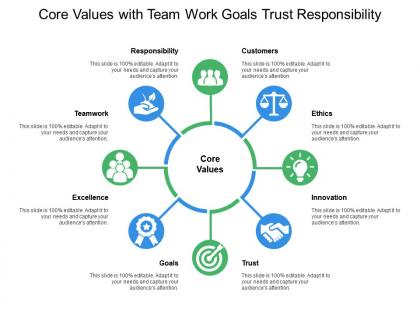
Core values with team work goals trust responsibility




Try Before you Buy Download Free Sample Product
 Impress Your
 Audience
 100%
100% Editable
 Save Hours
 of Time


Ensure folks acquire a firm foundation with our Core Values With Team Work Goals Trust Responsibility. It helps give them a good grooming.
People who downloaded this PowerPoint presentation also viewed the following :
Core values with team work goals trust responsibility with all 5 slides:
Establish hygienic conditions with our Core Values With Team Work Goals Trust Responsibility. Create an environment that is clean and healthy.

FAQs for Core values with team work
Honestly, good teamwork is mostly about not assuming everyone knows what you're thinking. Over-communicate everything - goals, deadlines, when you're stuck. I've seen so many projects blow up just because people didn't speak up. Trust matters too, obviously. You need teammates who'll actually do what they say they'll do. The teams that work best aren't afraid to disagree either - like, constructive arguing is way better than fake harmony. Oh, and regular check-ins help tons. Start by being transparent about your own mess-ups and workload. Sets a good example, you know?
Okay so here's the thing - when you mix different types of people on a team, you get way better ideas. Like, someone from a totally different background will see solutions you'd never think of. Sure, it gets messy sometimes when everyone's challenging each other's ideas (honestly can be annoying lol), but that's usually when the good stuff happens. You avoid that whole groupthink trap. Different personalities, cultures, skills - they all bring something unique to brainstorming sessions. Next project you're on, grab people who think nothing like you do.
Honestly, communication is everything when it comes to teamwork. Without it you're just people working alone in the same room. I've seen teams fall apart over the dumbest misunderstandings that could've been avoided with one conversation. Good communication builds trust and gets everyone on the same page. Be clear about what you expect, give feedback without being a jerk about it, and actually listen when people talk. Oh, and be transparent about your own work first - can't expect others to open up if you don't. Ask questions when something's unclear and give people space to share their thoughts.
Honestly, team dynamics can totally make or break everything at work. Good communication and trust? Your problems get solved faster, ideas flow better, and people don't dread Monday mornings. But when things get toxic - ugh, forget it. People stop collaborating, start second-guessing every move, and basically phone it in mentally. I've watched ridiculously talented teams just implode because they couldn't figure out how to work together (it's actually painful to see). You want people feeling safe enough to speak up without getting their heads bitten off, plus everyone needs to know what they're supposed to be doing.
Honestly, deal with stuff early before it gets messy - nobody wants drama to build up. Set up team rules ahead of time so people know how to handle disagreements when they pop up. Listen to actually understand what everyone's saying, not just wait for your turn to talk. Half the time people are arguing about completely different things anyway, which is kind of hilarious. Don't make it personal or drag up old issues. Focus on the real problem. Look for solutions where everyone wins something, even if it's not perfect. Creating space where people feel safe to speak up makes a huge difference too.
Honestly, the way you lead just ripples through everything your team does. When you're open and collaborative, people start talking to each other more naturally. But micromanage? You'll get people hoarding information and building walls - which sucks for morale. I've noticed teams work way better when their leader actually asks for input and shares decisions. The trick is staying consistent though. Mixed signals mess with people's heads and kill all the good momentum you've built. Maybe watch how your team reacts to different moments this week? It's pretty revealing once you start paying attention.
Honestly, the SMART goals thing actually works - make everything specific, measurable, achievable, relevant, and time-bound. Break it down so each person knows exactly what they're doing. I've watched so many projects crash because everyone thought someone else had the "obvious" tasks covered! Write everything down: who's doing what, when it's due, what success looks like. Have a real kickoff meeting where you walk through each role and how things connect. Don't just get polite nods - you need actual agreement from everyone. Send a summary after so nobody can claim they "didn't realize" later.
Honestly, good video calls make a huge difference - Zoom or Teams work great for staying connected face-to-face. For day-to-day stuff, Slack keeps everyone chatting without endless email chains. Project management tools like Asana or Trello are lifesavers for tracking who's doing what (seriously, I don't know how teams function without them). Google Docs or similar platforms let you edit together in real-time. Oh, and make sure everyone actually knows how to use whatever you pick - sounds obvious but you'd be surprised how many people just wing it and then complain nothing works.
Honestly, trust and accountability make or break teams. You need to feel safe sharing wild ideas and owning up when you mess up. Nobody wants to work with someone who promises the world then disappears - we've all been there and it's the worst. When people actually follow through on what they say they'll do, the whole dynamic shifts. You stop second-guessing everything. Risk-taking becomes normal instead of terrifying. My advice? Start by admitting your own screwups first. It's weird how much that simple move gets everyone else to drop their guard too.
Dude, team building stuff actually works though! Like, you finally see Sarah from accounting has a wicked sense of humor instead of just knowing her as the person who sends budget reminders. When you're stuck on a project later, you'll get how she communicates. Honestly? Some of my best work relationships started over the most ridiculous activities - we still laugh about this one disastrous trivia night. Don't overthink it either. Monthly team lunches work fine. The whole point is just seeing people as actual humans, not email signatures.
Honestly, feedback is a game-changer for teams. It clears up what people expect from each other and catches problems before they blow up. Regular check-ins work way better than those dreaded yearly reviews - I mean, who actually enjoys those? Try weekly team huddles where everyone shares what's going well and what needs work. Keep it about specific behaviors, not personal stuff. The trust thing happens naturally when people feel heard. Oh, and don't just make it top-down - teammates giving each other feedback is incredibly powerful. Start small though.
Honestly? Most teams work best with 5-7 people. Go smaller (3-5) and you'll make decisions way faster, but you might miss out on different perspectives. Bigger teams sound great in theory - more brains, more skills. But trust me, coordinating 8+ people is absolute chaos. You end up in meeting hell just trying to get everyone on the same page. I learned this the hard way on my last project lol. Decision-making becomes painfully slow when there's too many opinions flying around. For whatever you're planning, pick the smallest group that still covers your bases skill-wise.
Honestly, most team disasters come down to people not talking to each other properly. Unclear roles mess things up too - like when everyone assumes someone else is handling the important stuff. Personality clashes happen, but they're usually worse when communication already sucks. Set clear expectations from day one about who owns what. Regular check-ins help catch problems before they explode. Oh, and trust is huge - if people think you're hiding stuff or won't follow through, you're screwed. Maybe start your next project with a quick team charter? Define roles, how you'll communicate, conflict resolution. Sounds boring but it actually works.
Track the obvious stuff first - are projects getting done on time? Quality decent? But honestly, the real magic happens when you get people talking. Monthly retrospectives work great for this. People will actually tell you what's broken if they trust you won't shoot the messenger. Anonymous surveys help too since some folks clam up in meetings. I'd skip the fancy metrics at first - just focus on creating that safe space where teammates can be real with you. You can always add more data later once you've got the feedback flowing.
Honestly, emotional intelligence is like having a secret weapon for teamwork. You can sense when someone's getting frustrated before they even say anything - maybe it's their tone or how they're sitting. That stuff matters way more than people think. When you're aware of your own moods too, you won't accidentally bite someone's head off during crunch time (guilty as charged lol). Here's what actually helps: watch how your teammates act, not just what they say. Their whole vibe tells you if the project's really on track or if things are about to go sideways.
-
Commendable slides with attractive designs. Extremely pleased with the fact that they are easy to modify. Great work!
-
Excellent template with unique design.