


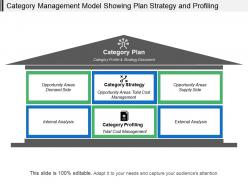
Category management model showing plan strategy and profiling





Try Before you Buy Download Free Sample Product
 Impress Your
 Audience
 100%
100% Editable
 Save Hours
 of Time


Adrenaline begins to flow with our Category Management Model Showing Plan Strategy And Profiling. Your thoughts will get all geared up.
People who downloaded this PowerPoint presentation also viewed the following :
Category management model showing plan strategy and profiling with all 5 slides:
Harness available forces with our Category Management Model Showing Plan Strategy And Profiling. Get them all acting in your favor.
FAQs for Category management model showing plan
So basically, instead of just buying random stuff when you need it, category management groups your spending into logical buckets - like "all IT services" or "facilities stuff." You analyze the whole picture first. What are your patterns? How's the supplier market looking? Then you build actual strategies instead of that reactive "get three quotes and pick one" thing most places do. It's way more strategic than traditional procurement. You're thinking ahead rather than scrambling when something breaks. Honestly, just start by mapping where your money's actually going - the patterns will probably shock you a bit.
Honestly, you'll see the biggest difference in just knowing where your money goes - that visibility is huge. Better supplier relationships come next, plus actual savings that don't disappear after a few months. Instead of every department doing their own random purchasing (which drives me crazy), category management lets you bundle everything for way better negotiating power. Your procurement folks can finally focus on strategy instead of just pushing paperwork around. Oh, and bigger volumes mean better contract terms obviously. I'd start with whatever you spend the most on first - you'll see results faster that way.
So analytics basically turns category management from pure guesswork into actual science. You'll spot demand patterns way easier and figure out which products really drive profit - not just flashy revenue numbers. The forecasting part is honestly pretty sweet too, you can catch seasonal shifts and dying categories before they completely tank. Real customer behavior beats assumptions every time. Testing different assortments becomes way less risky when you've got solid data behind your calls. I'd say start with just 3 key metrics you can track consistently, then expand once those numbers start telling their story.
Honestly, your supplier relationships can make or break category management. I'd focus on your top 3-5 suppliers per category first - don't try to do everything at once. Build real trust with these guys and you'll get access to market intel, new products, and pricing that other buyers never see. The cost reduction opportunities are huge when they actually want to work with you instead of just tolerating you. Set up regular business reviews to brainstorm together. It's weird how much suppliers will bend over backwards once they see you as a partner, not just another pain in their ass. That's where the real magic happens.
Look at your biggest spend categories first - that's where you'll see the most impact. But don't ignore the smaller stuff if it's mission-critical or risky. Customer-facing categories? Those matter way more than their dollar amounts suggest. Here's the thing though - resist going after everything. I've seen teams burn out trying to do too much. Make a simple scorecard: spend size, strategic value, how complex it'll be. Weight those however makes sense for your situation. Stick to maybe 3-5 categories tops. You can always expand later once you've got some wins under your belt.
Honestly, start with solid data analysis first - you need to understand what's actually happening in your category. Get everyone involved early too: procurement, marketing, ops, whoever. I've watched so many of these things crash and burn because someone important got left out. Don't just focus on cutting costs either. Build around real business objectives and pick specific metrics upfront so you can measure if it's working. Oh, and definitely pilot it first - test small, prove it works, then go bigger. Way smarter than risking everything on something untested.
So basically you group similar purchases together and negotiate better deals with fewer suppliers - way less headache than juggling tons of vendors. Bulk pricing but actually strategic about it. You'll cut admin costs big time since you're dealing with maybe 5 companies instead of 50. Better visibility into where your money's going too, so you can catch duplicate services or crappy contracts. Honestly, just mapping out what you're currently spending will probably show some obvious wins right away. I'd start there - bet you'll find overlapping suppliers doing the same stuff.
Honestly, the toughest part is getting departments to actually talk to each other. Finance, procurement, marketing - they're all doing their own thing and don't want to share data. Your spending info will be a mess across different categories too, which makes analysis brutal. Suppliers hate change, so expect pushback there. Oh, and the time investment is nuts - way more than people think going in. Start with just one category where the data isn't completely trashed and you've got people who actually want to help. Prove it works small before going big.
You know how category management is like 90% tedious spreadsheet hell? Technology basically takes over all that grunt work - automated data collection, real-time dashboards, AI demand forecasting. I'm talking hours saved just on data entry alone. The magic happens when you get integrated platforms connecting your POS, inventory, and supplier systems. Then you can actually spot trends and pivot quickly instead of drowning in manual updates. Machine learning even predicts product performance before launch, which honestly feels like cheating sometimes. Start with whatever's eating up most of your time first, then find tools that fix exactly those headaches.
Track the obvious stuff first - sales growth, margins, inventory turns. But honestly, the soft metrics matter just as much. Out-of-stock rates will kill you even if your numbers look decent. I'd add supplier performance and customer satisfaction too. Cross-category stuff is huge since good management creates those halo effects you want. Oh, and don't go crazy with tracking - maybe 5-7 key things on a simple dashboard you actually check monthly. More than that and you'll just get overwhelmed with data that doesn't really help.
So basically, good category management makes shopping way easier for people. They find stuff faster and stumble onto things they didn't even know they needed. Think of it like hosting a party - you want everything where it makes sense, right? Plus you'll have fewer empty shelves on the important items. Honestly, the best part is when customers start thinking of your store first for certain things. My advice? Pick one category and organize it how a customer would actually shop for it, not how your computer system wants it. Makes a huge difference.
Globalization totally changes the game for category planning. Now you're competing with brands from everywhere, not just down the street. Supply chains stretch across continents, and what works in one region might flop in another - honestly keeps things interesting though. You'll need categories that appeal to way more diverse tastes while somehow staying consistent globally. The cool part? Access to suppliers and innovations you'd never find locally. I'd start by figuring out which categories have the biggest international upside or could get crushed by global competitors. That's where I'd focus first anyway.
Honestly, you can't skip stakeholder engagement if you want your category management to actually work. All those brilliant strategies? They're useless if procurement, finance, ops, and end users aren't on board. I've watched so many solid plans crash and burn because nobody bothered getting the right people involved early enough - it's painful to see. Map out who's got influence or who'll be affected by your decisions first. Then loop them into planning from the start, not after you've already decided everything. Trust me, those upfront alignment conversations with your power players will save you major headaches later.
AI analytics are completely changing demand forecasting and how we build assortments. Sustainability's becoming huge for supplier picks too. What's really crazy is how personalized everything's getting - retailers are using data to target super specific customer segments now. Direct-to-consumer brands are honestly making traditional category managers scramble to rethink shelf space deals. Categories are blurring together, so cross-team collaboration isn't optional anymore. Oh, and if you haven't played around with predictive analytics tools yet, start small. Even tiny pilot programs will teach you a ton about what actually works.
Leadership has to actually do this stuff, not just preach it - reward people who collaborate across teams. Mixed project groups work way better than keeping everyone in their lanes. The turf wars between procurement, marketing, and ops are honestly the worst part of this whole thing. Regular category meetings help everyone see what's actually happening instead of just their piece. Oh, and definitely change how you measure success - tie it to category results, not department wins. That's probably the biggest game-changer for getting people to actually work together.
-
Design layout is very impressive.
-
Easily Understandable slides.