


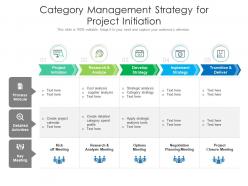
Category management strategy for project initiation





Try Before you Buy Download Free Sample Product
 Impress Your
 Audience
 100%
100% Editable
 Save Hours
 of Time


Our Category Management Strategy For Project Initiation are topically designed to provide an attractive backdrop to any subject. Use them to look like a presentation pro.
People who downloaded this PowerPoint presentation also viewed the following :
Category management strategy for project initiation with all 2 slides:
Use our Category Management Strategy For Project Initiation to effectively help you save your valuable time. They are readymade to fit into any presentation structure.
FAQs for Category management strategy
Look, you gotta think like the actual retailer here - not just about your brand. Map out how your whole category fits into the store first. Some products drive traffic, others drive profit, and you need both working together. Space allocation and pricing should be totally data-driven. I learned this the hard way honestly - you can't just focus on individual SKUs anymore. What do shoppers actually want when they hit that aisle? Build your assortment around that mission. Promotional planning matters way more than people think. Your job is making the entire category perform better, which means understanding how everything connects.
So basically, category management means looking at your whole spending picture instead of just buying stuff as you need it. Like, you'd analyze ALL your office supplies or IT services to spot patterns and bundle deals. Way smarter than the old "get three quotes and pick the cheapest" thing everyone does. You'll get better relationships with fewer vendors, plus lower costs - though it does take more upfront work. Honestly, traditional purchasing is just reactive. Start with whatever category you blow the most money on and see who you're currently buying from.
Honestly, data analysis is what makes or breaks category management decisions. Sales numbers, customer behavior, market trends - that's how you know which products to push or ditch. My old manager used to say "gut feelings don't pay the bills" and he wasn't wrong when you're dealing with massive inventory. The data shows what's actually selling and where your best margins are. Set up weekly reviews with your team (monthly is too slow in my experience). Always check your strategies against real performance before rolling anything out.
So basically, instead of just buying stuff randomly, you group similar purchases together and actually talk to suppliers about what you'll need long-term. They love the predictability - honestly, who doesn't want to know their revenue pipeline? You get better deals, they get steady business. Win-win. The trick is really understanding each category before you negotiate. I'd start small though - pick your top 3 spending areas and set up regular check-ins with those key suppliers. Makes the whole relationship feel less like you're just haggling over pennies every quarter.
So there are three main ones you'll run into. Most people go with the classic 8-step process - it's pretty straightforward with define category, assess performance, set strategies, all that stuff. CPFR is better if you've got solid vendor relationships but it gets messy fast. Then there's ECR which works well for categories where consumer demand is king. Honestly? The specific methodology doesn't matter as much as just picking one and sticking with it. I'd probably start with the 8-step since your team likely knows it already, then tweak things based on what weird quirks your categories throw at you.
Honestly, trends are everything for category management. You're constantly shifting your product mix and pricing based on what's hot. Plant-based stuff blowing up? Time to grab more shelf space, maybe even split it into its own section. Dead trends get shrunk fast - nobody wants stuck inventory. The annoying part is figuring out if something's actually shifting or just having a seasonal moment. I'd definitely set up those regular check-ins with suppliers (they usually know what's coming). Plus your sales data will tell you if the consumer research is actually legit or just hype.
Focus on sales growth, market share, and profit margins first - those three will tell you the most. Inventory turnover is critical too because dead stock just kills your cash flow. Customer satisfaction scores matter way more than people think, and track how well your promos actually work instead of just throwing money at discounts. Oh, and don't forget sales per square foot - that space costs money so make it earn its keep. Supplier performance rounds things out. Honestly, start there and you'll know pretty quickly if your category stuff is actually moving the needle.
Honestly, tech can be a game-changer for category management. You'll get automated data analysis instead of doing it manually (which is such a time suck). Real-time performance tracking shows you exactly what's working. AI helps optimize your product mix based on how customers actually shop, not just hunches. Predictive analytics nail demand forecasting way better than guesswork. Plus planogram software maximizes your shelf space - didn't even know that was a thing until recently. Automated alerts buzz you when categories tank so you can fix things fast. My advice? Pick one solution for your worst headache first.
Honestly, the worst part is gonna be data silos everywhere. Different departments hate sharing info - it's like pulling teeth. Clean data is absolutely crucial since category management runs on analytics, but good luck getting consistent numbers across systems. People resist change too, especially when you're messing with how buying teams have always worked. Oh, and finding staff who get both strategy AND day-to-day execution? Nearly impossible. My advice: pick one category to test first and fix your data mess before doing anything else. Don't try tackling everything at once - you'll burn out fast.
Dude, you absolutely need those other teams on your side. Like, merchandising and supply chain will save your butt with realistic forecasting. Marketing helps you avoid those awkward "wait, we're promoting what now?" moments. Finance keeps you from going crazy with budgets. Honestly, I learned this the hard way - used to just do my own thing and then wonder why nothing worked smoothly. Now I bug them regularly, not just when I'm panicking about a deadline. Makes everything way less stressful when you're all on the same page from day one instead of backtracking later.
Honestly, customer data is everything for category management. Purchase patterns and surveys tell you what's actually selling and why. Demographics help too - you'll be shocked how wrong your assumptions are sometimes. I learned this the hard way at my last job. Pull behavioral analytics to spot trends and pricing opportunities. Then restructure your categories based on what you find. Shelf space allocation becomes way easier when you know your customers. Start with your top 3 segments and see how their buying habits match your current setup. Time promotions around these insights too.
So category captains are your main suppliers who run the whole category management thing for specific products. Usually your biggest supplier in each area. They do all the data crunching, spot trends, figure out pricing and where stuff goes on shelves. Honestly, they're pretty damn good at it since they live and breathe their categories 24/7. You get their expertise without having to become an expert yourself. Just don't blindly follow everything they suggest - they're still trying to sell their own products at the end of the day, you know?
Honestly, just bake the green stuff right into how you pick suppliers from day one. Set some actual targets for each category - carbon cuts, less waste, whatever matters most. Your procurement folks might push back on pricier suppliers at first, but those "expensive" choices usually pay off down the road anyway. I'd also check your categories regularly for better alternatives (you'd be surprised what new options pop up). The trick is making sustainability part of your core strategy instead of something you tack on later. Oh, and don't let anyone tell you it's just a nice-to-have - it's becoming table stakes.
First thing - grab 12-18 months of clean sales data, margins, customer stuff. You need that much time to see actual patterns. Get merchandising, marketing, and ops in a room together because honestly, just looking at spreadsheets won't tell the whole story. Check what competitors are doing and find your gaps or categories that suck. But here's the thing - also dig into what's crushing it and figure out how to do more of that. Once you've got all this, make a priority list with names attached and deadlines. Schedule your check-ins before everyone bolts from the meeting.
Honestly, you've gotta scrap those annual planning cycles - they're useless when everything changes so fast. Go quarterly or even monthly instead. Consumer behavior can completely flip (like, remember how toilet paper became gold during COVID?). Your suppliers need to be flexible partners, not rigid contracts. Diversify your product mix within each category because you never know what'll tank next. Right now, figure out which categories are most at risk. Create backup scenarios for each one. Short cycles, constant data checks, and always have plan B ready. Markets are crazy unpredictable these days.
-
Great designs, really helpful.
-
Good research work and creative work done on every template.
-
Awesome use of colors and designs in product templates.
-
Perfect template with attractive color combination.
-
Colors used are bright and distinctive.