


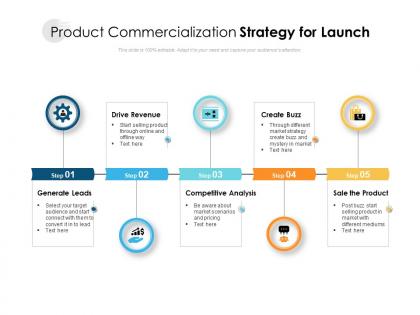
Product commercialization strategy for launch




Try Before you Buy Download Free Sample Product
 Impress Your
 Audience
 100%
100% Editable
 Save Hours
 of Time


Beat any cut off with our Product Commercialization Strategy For Launch. Complete the commitment before the deadline.
People who downloaded this PowerPoint presentation also viewed the following :
Product commercialization strategy for launch with all 5 slides:
Complete the commitment before the deadline with our Product Commercialization Strategy For Launch. Be able to beat any cut off.


FAQs for Product commercialization
Okay so you need five main things sorted: know your audience inside out, figure out where you stand against competitors, nail your pricing, pick the right channels, and set up proper metrics. Most teams totally bomb because they skip the audience research - seriously, I've watched it happen so many times. Your messaging has to be dead clear about what problem you're fixing and why people should give a damn today. Map out your timeline with real milestones, not just fluffy deadlines. Oh and don't just track sales - there's way more important stuff to measure. Get those first three locked down before you even think about tactics.
Dude, you absolutely need market research before launching anything. Who's gonna buy your stuff? What do they actually want? How much will they pay? Without knowing this, you're basically gambling with your money. Start with some customer interviews - just talk to people. Check out your competitors too. I learned this the hard way on my first project lol. The research helps you figure out timing, messaging, all that crucial stuff. You'll avoid so many expensive mistakes. Trust me, spending a few weeks on research upfront saves months of headaches later.
Dude, personas are everything for a product launch. They tell you what pain points to focus on, what language actually works, and where people spend their time online. I've watched so many teams bomb because they just winged it instead of figuring this out first. Short sentences work. But you also want to think about sequencing - do you hit early adopters or go wide right away? That depends on your personas too. Map each one to specific tactics so you're not just throwing stuff at the wall. Oh and the messaging thing - that's probably where I see the biggest difference between teams that do their homework vs ones that don't.
Start building buzz a few weeks before you launch - teaser posts and behind-the-scenes stuff work great. Countdowns are solid too. I'd say partner with influencers who actually get your brand, not just whoever has the most followers (learned that one the hard way). Get people using a unique hashtag early on. The algorithm's honestly pretty random, but posting consistently seems to help. Make your audience feel like they're getting exclusive content instead of just being sold to. Oh, and give yourself at least 2-3 weeks for the teaser campaign - you'll want that momentum building up.
Honestly, I'd focus on just 4-5 key things instead of tracking everything. Day one: check your sales, website traffic, conversion rates - the basics that show if people are actually buying your stuff. Customer acquisition costs are huge too (learned this the hard way). Over the next few months, watch retention rates and satisfaction scores. Social media buzz is cool but don't get obsessed with likes and shares. Set your "success" benchmarks before you launch so you're not scrambling to figure out what good numbers look like afterward.
Start way earlier than feels necessary - seriously, like months ahead. Build a shared timeline with all your teams: marketing, sales, product, support. Train your sales people on messaging first because watching them improvise is painful for everyone. Get support ready with docs and common troubleshooting stuff. Weekly check-ins are clutch for catching problems before they blow up. Honestly, you can't overcommunicate this stuff. Set up a Slack channel where people can bug each other with questions instead of making assumptions. I've seen too many launches tank because someone thought "oh, they probably know about this change."
Honestly, the scariest stuff is usually timing your launch wrong or realizing nobody actually wants what you built. Customer research gets skipped way too often - big mistake. Technical disasters happen too, like your site crashing on day one or supply issues you didn't see coming. My advice? Talk to real customers early and do some beta testing first. Have backup plans ready, especially for inventory stuff. Oh and definitely pad your timeline because something always goes sideways. Start with a smaller soft launch instead of going big right away. Way better to test things out and pivot quickly than flame out completely.
Look, people remember stories way better than boring feature lists. Nobody cares that your app has "better analytics" - but they'll remember how Sarah used those insights to save her failing bakery. Think movie vs instruction manual, you know? Your customer has this whole journey with real problems. Position your product as what turns their mess into success. Way more emotional that way. I learned this the hard way after watching too many launches flop because they sounded like robot presentations. Stories just hit different.
Honestly, timing can make or break everything. I'd work backwards from when you actually want to launch and add buffer time - trust me, something always goes wrong. Early launches = buggy products that tank your momentum. Wait too long and competitors swoop in or you miss seasonal opportunities (nobody wants winter coats in March, right?). Market conditions matter too. Don't launch during major holidays when everyone's distracted or when there's big industry stuff happening. Also check what your competitors are doing - you don't want to get overshadowed. The sweet spot is when your product's actually ready AND the timing makes sense for your audience.
Beta feedback will totally change your launch plan - which is actually a good thing. You'll catch major usability problems or realize your messaging completely confuses people. Sometimes users find ways to use your product you never thought of, opening new markets. The trick is setting up good feedback systems early so you can actually make changes before launch. Oh, and don't be one of those founders who collects feedback then ignores it. Use it to fix your positioning, squash critical bugs, and test whether your go-to-market plan actually makes sense.
Honestly? Go digital first - hit up whatever social platforms your people actually use, not just where you think you should be. Email your existing contacts since they already know you. Content stuff works great too if you're consistent with it. PR partnerships are solid for credibility, though influencer pricing is absolutely insane right now. Press releases still do their thing for B2B launches. Here's the deal though - pick like 2-3 channels max and actually do them well. You'll burn out trying to be everywhere at once. Start where your current customers are already hanging out and build from there.
So competitor analysis is basically your roadmap to not screwing up. Pick 3-5 direct competitors and dig into their pricing, messaging, who they're targeting. Their customer reviews are goldmines - you'll see exactly what pisses people off that you can fix. I actually spend way too much time reading one-star reviews, but whatever works! Look at their launch timing and channels too. The whole point is finding gaps where you can slide in without getting crushed. Use all that intel to figure out your unique angle and pick launch spots where you won't just disappear into the noise.
Tell a story, don't just list features. People need to get WHY your product matters, not what buttons it has. One message per slide keeps things clean. I'd use real customer problems to make it click for people - honestly, I've watched so many launches bomb because they got obsessed with technical specs instead of actual benefits. Practice those slide transitions so you're not stumbling around up there. Always throw in a demo where they can see the thing working. Oh, and end each section telling people exactly what to do next. Short sentences hit harder sometimes.
Dude, partnerships are honestly game-changers for launches. You tap into their audience, they get something cool in return - win-win. Joint campaigns, co-branded stuff, or just getting them to share your thing can blow up your reach instantly. I've literally watched launches go from crickets to trending because one solid partner posted about it. The key is finding companies that hit your same crowd but aren't competing with you directly. They might have distribution you don't, or connections you need. Then just pitch something that benefits both of you - doesn't have to be fancy, just valuable.
Three things you gotta nail right after launch: collecting feedback, keeping marketing alive, and iterating fast. Get surveys running, watch your analytics like a hawk, and actually read those support tickets. Marketing can't just stop - keep pushing case studies and testimonials. Honestly, most founders disappear after launch and wonder why they fail. Plan quick iteration cycles to fix whatever's broken in those first 90 days. They're brutal but crucial for getting real traction. Schedule weekly team reviews so you're not flying blind on what users actually want.
No Reviews