


Product launch proposal powerpoint presentation slides
A successful promotion strategy is as crucial as the product itself. It is not possible to gain profit and generate customers without effective product launch. An informative yet attractive promotion of the product has to be the primary goal to ensure sales and revenue generation. Utilize our Product Launch Proposal PowerPoint Presentation Slides to illustrate your marketing plans that can help your clients to thrive in this competitive environment. Promise your audience with key deliverables like product awareness, enhanced return on investment, and others in the cover letter of this content-specific PPT template. Take the assistance of our brand positioning proposal PowerPoint slide to elaborate on the challenges faced in attaining customers for new products and providing solutions to hit the right target audience and market. Explain the importance of taking the benefit of your company's promotion services to the clients by taking the aid of this brand launch PPT theme. Showcase how important it is to mark a presence in this competitive marketplace by efficient product positioning through this e-campaign PPT visual. Highlight the proposed channels both online and offline that your company incorporates to execute the business strategy through this product strategy PPT deck. Employ our campaign models PPT layout to present the product analytics, the timeframe to achieve each task, and competition analysis to determine the strengths and weaknesses. Give a detailed account of the investments and funds required for the marketing of different products with the assistance of this PPT slideshow. Take advantage of this visually-attractive presentation template to introduce the entire team responsible for formulating the best plan of action according to your business needs. Download this product management PowerPoint presentation and educate your customers easily about the benefits of your professional service for creating brand awareness in the market place.



-

- Google Slides is a new FREE Presentation software from Google.
- All our content is 100% compatible with Google Slides.
- Just download our designs, and upload them to Google Slides and they will work automatically.
- Amaze your audience with SlideTeam and Google Slides.
-

Want Changes to This PPT Slide? Check out our Presentation Design Services
-

- WideScreen Aspect ratio is becoming a very popular format. When you download this product, the downloaded ZIP will contain this product in both standard and widescreen format.
-

- Some older products that we have may only be in standard format, but they can easily be converted to widescreen.
- To do this, please open the SlideTeam product in Powerpoint, and go to
- Design ( On the top bar) -> Page Setup -> and select "On-screen Show (16:9)” in the drop down for "Slides Sized for".
- The slide or theme will change to widescreen, and all graphics will adjust automatically. You can similarly convert our content to any other desired screen aspect ratio.
Compatible With Google Slides

Get This In WideScreen
You must be logged in to download this presentation.


Do you want to remove this product from your favourites?
PowerPoint presentation slides
Presenting our Product Marketing Strategy Proposal Powerpoint Presentation Slides. This is a completely adaptable PPT slide that allows you to add images, charts, icons, tables, and animation effects according to your requirements. Create and edit your text in this 100% customizable slide. You can change the orientation of any element in your presentation according to your liking. The slide is available in both 4:3 and 16:9 aspect ratio. These PPT slides are also compatible with Google slides.

People who downloaded this PowerPoint presentation also viewed the following :
Content of this Powerpoint Presentation
Slide 1: This slide introduces Product Launch Proposal. State Submission date, Submitted by and begin.
Slide 2: This slide displays Cover Letter for Product Launch Proposal
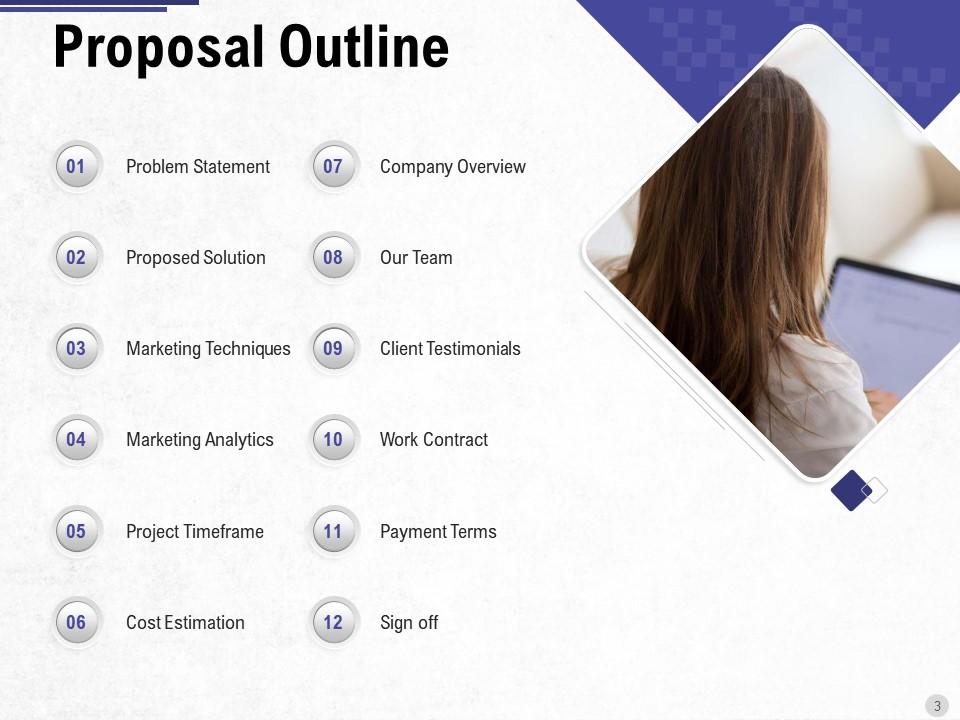
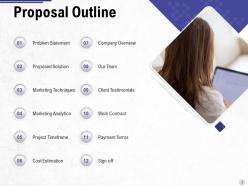
Slide 3: This slide shows Proposal Outline.
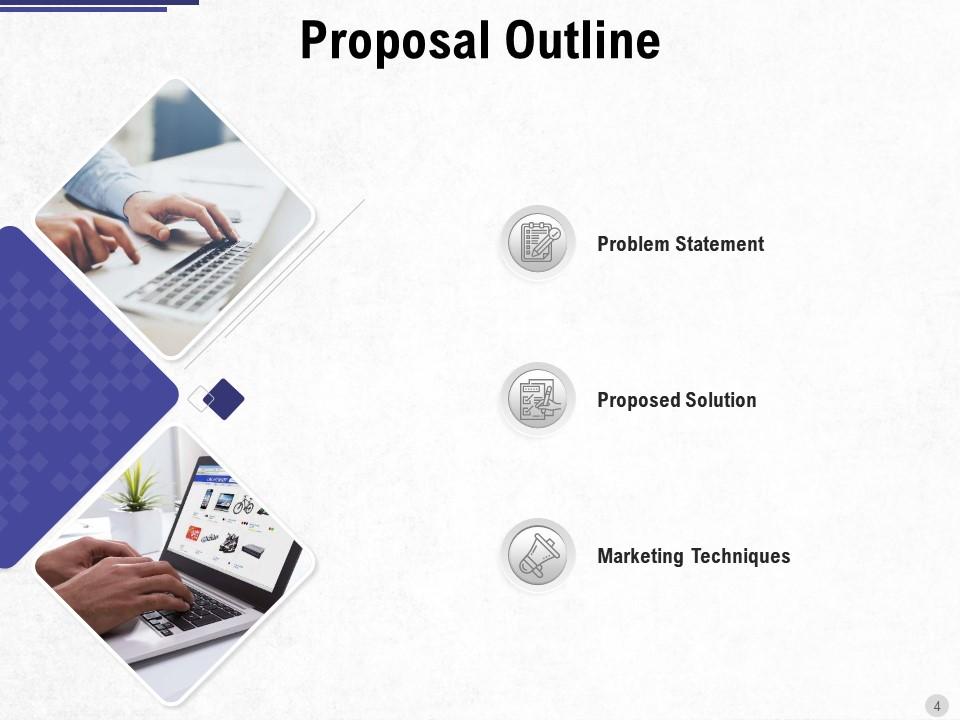
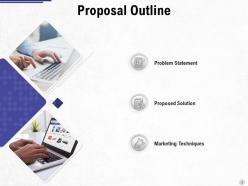
Slide 4: This slide depicts Proposal Outline with- Problem Statement, Proposed Solution, Marketing Techniques.
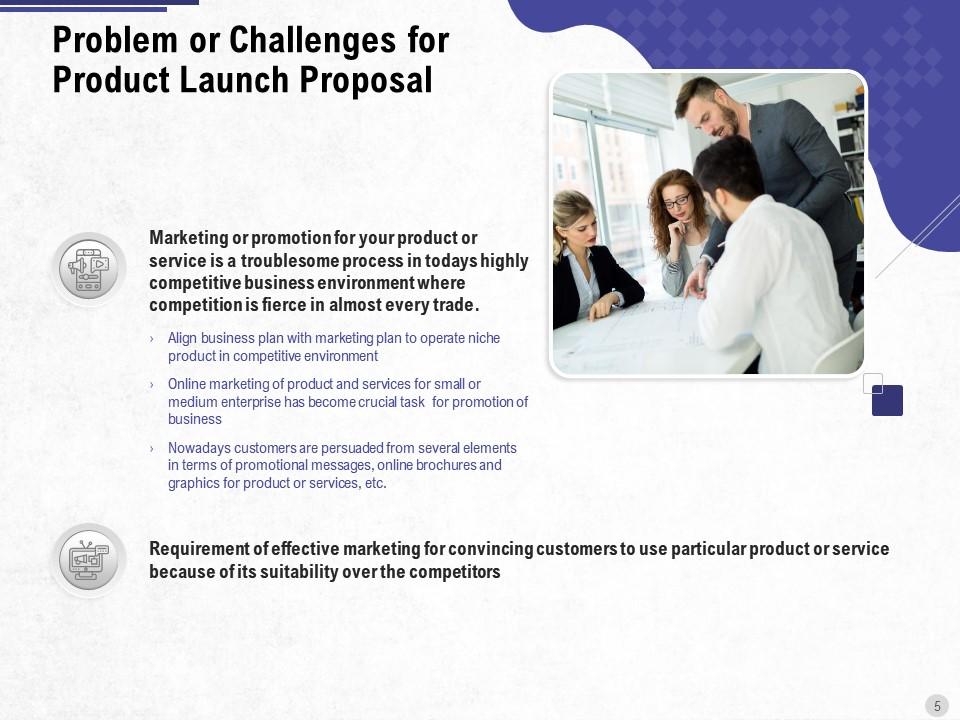
Slide 5: This slide showcases Problem or Challenges for Product Launch Proposal
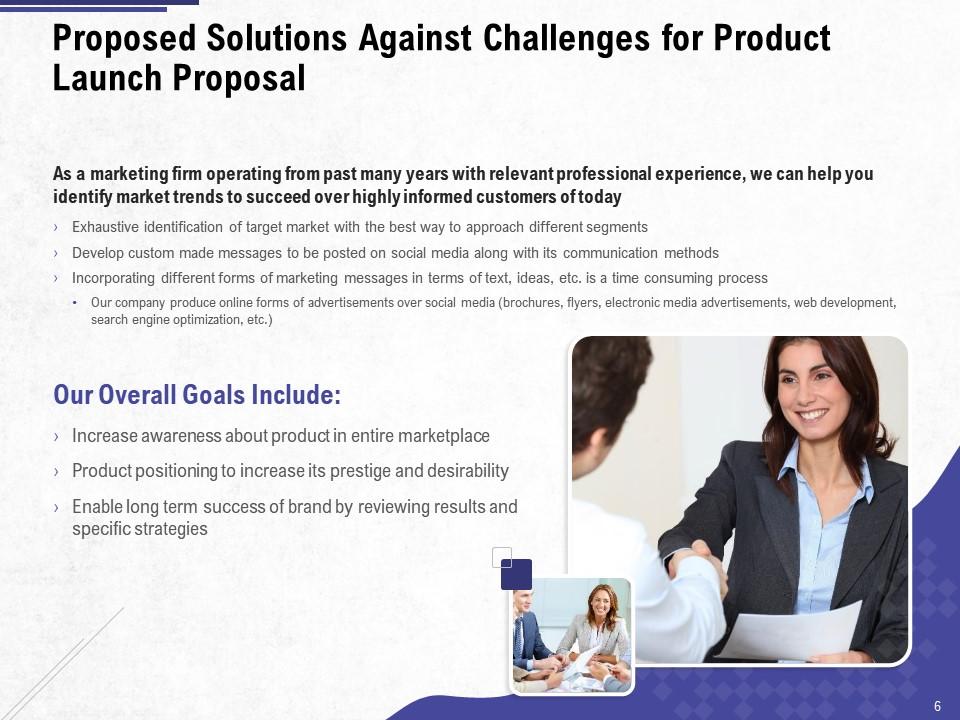
Slide 6: This slide represents Proposed Solutions Against Challenges for Product Launch Proposal.
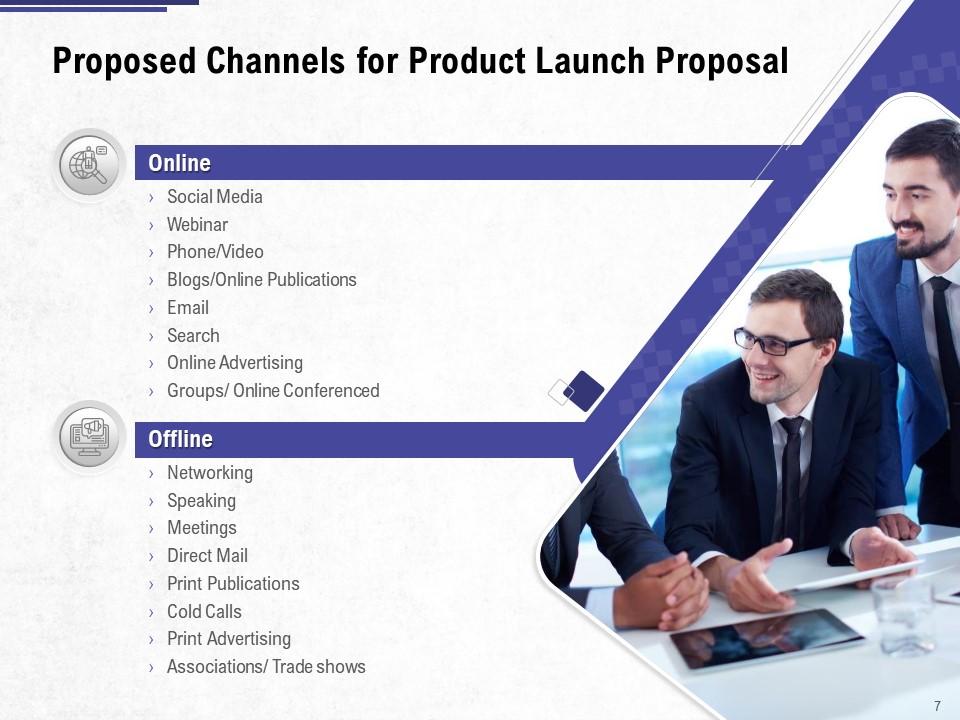
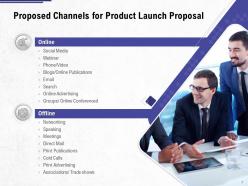
Slide 7: This slide displays Proposed Channels for Product Launch Proposal.
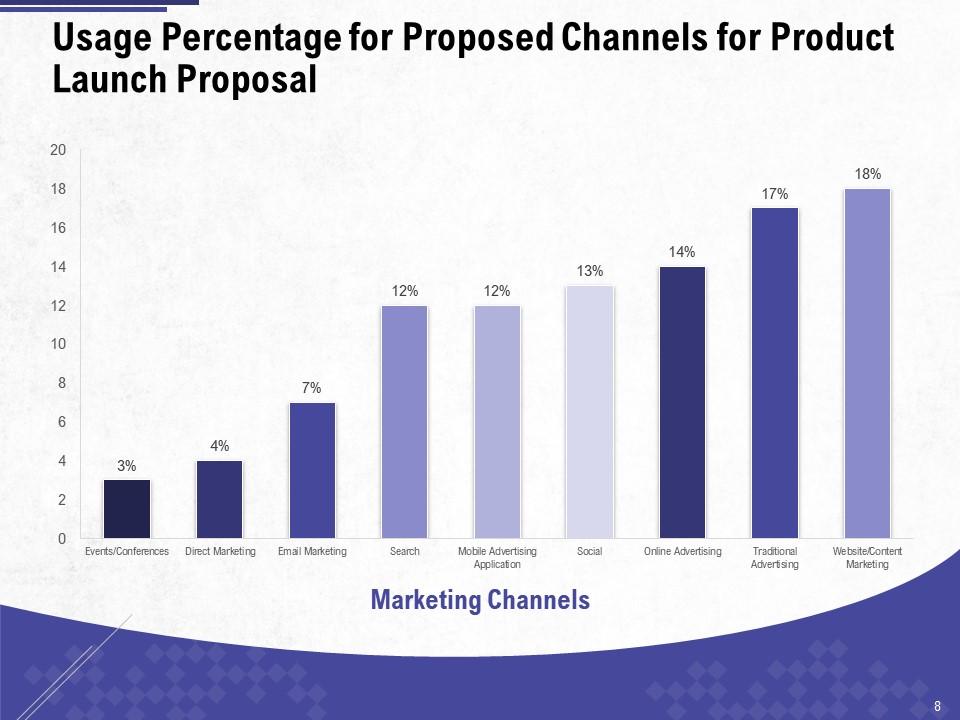
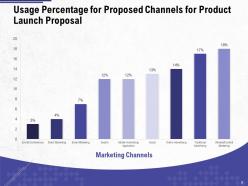
Slide 8: This slide describes the Usage Percentage for Proposed Channels.
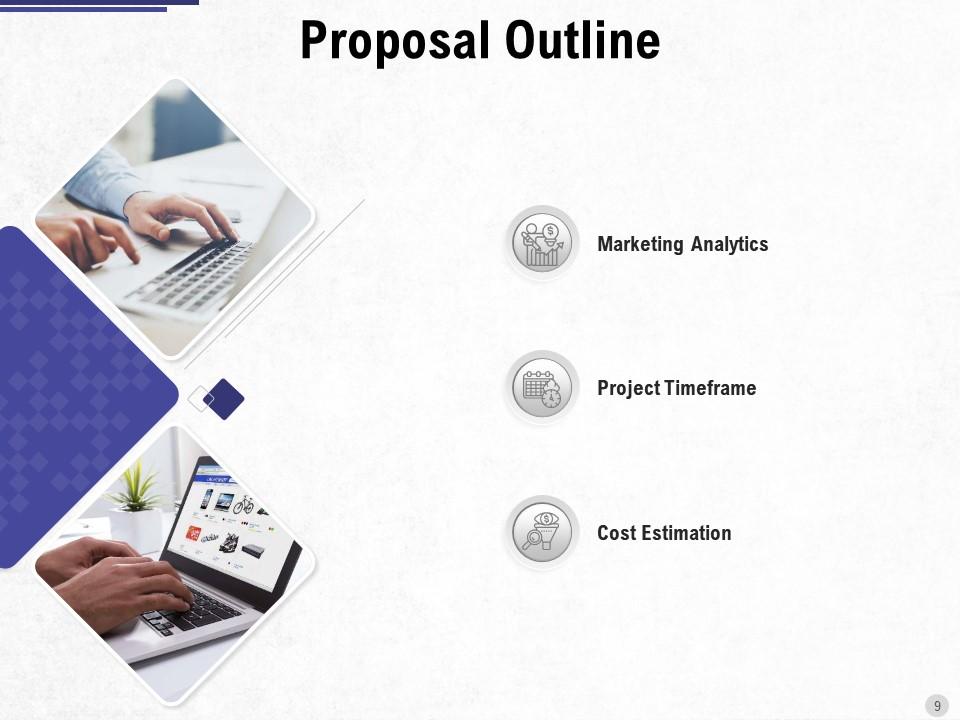
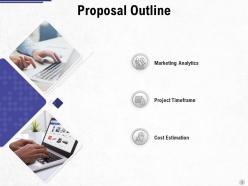
Slide 9: This slide displays Proposal Outline contaning- Marketing Analytics, Project Timeframe, Cost Estimation.
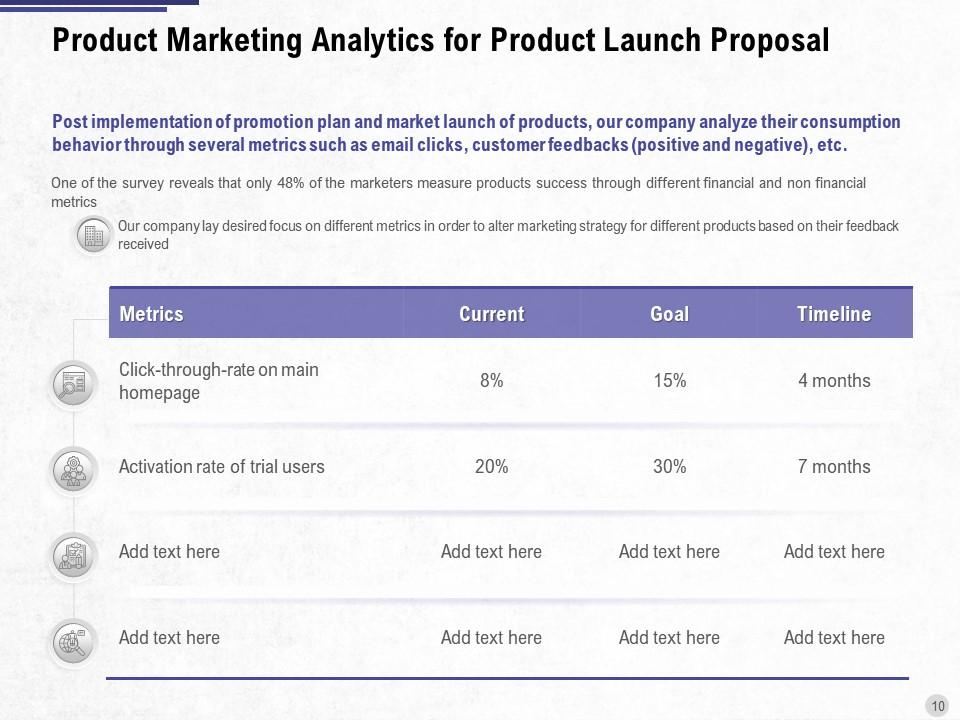
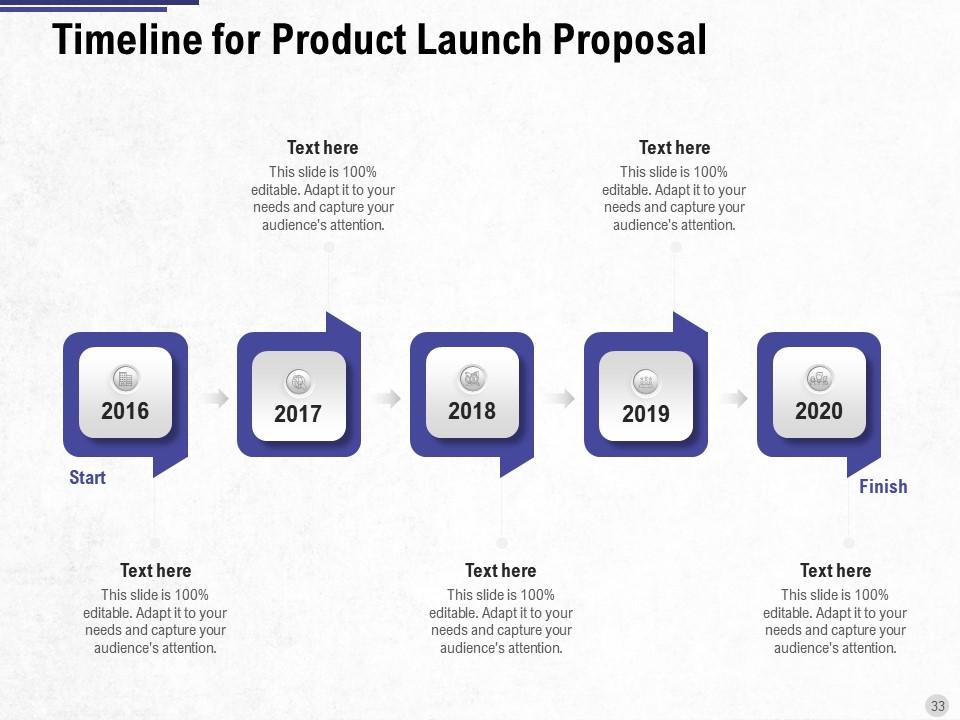
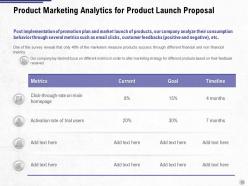
Slide 10: This slide depicts Product Marketing Analytics for Product Launch Proposal
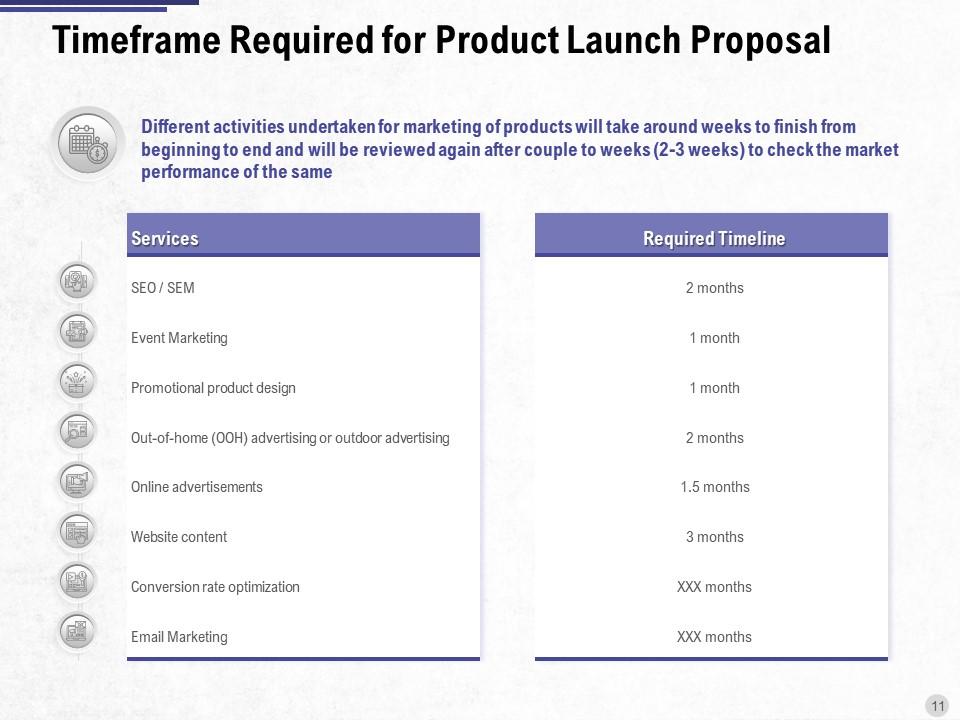
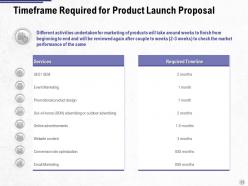
Slide 11: This slide shows Timeframe Required for Product Launch Proposal
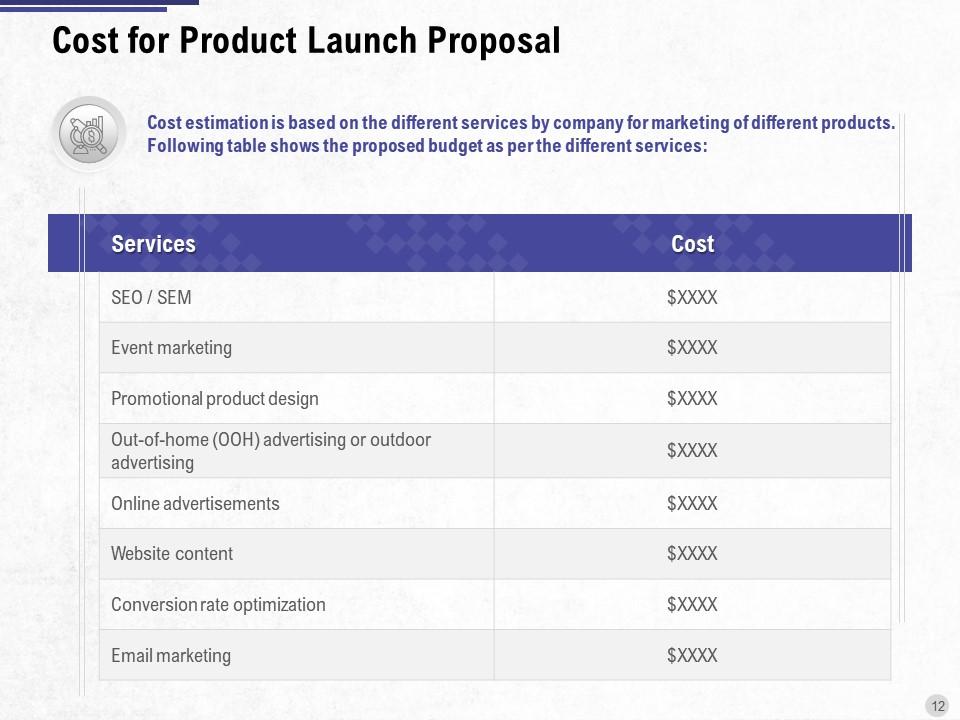
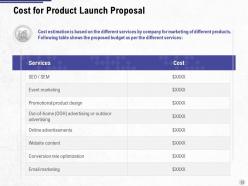
Slide 12: This slide showcases Cost for Product Launch Proposal.
Slide 13: This slide displays Proposal Outline
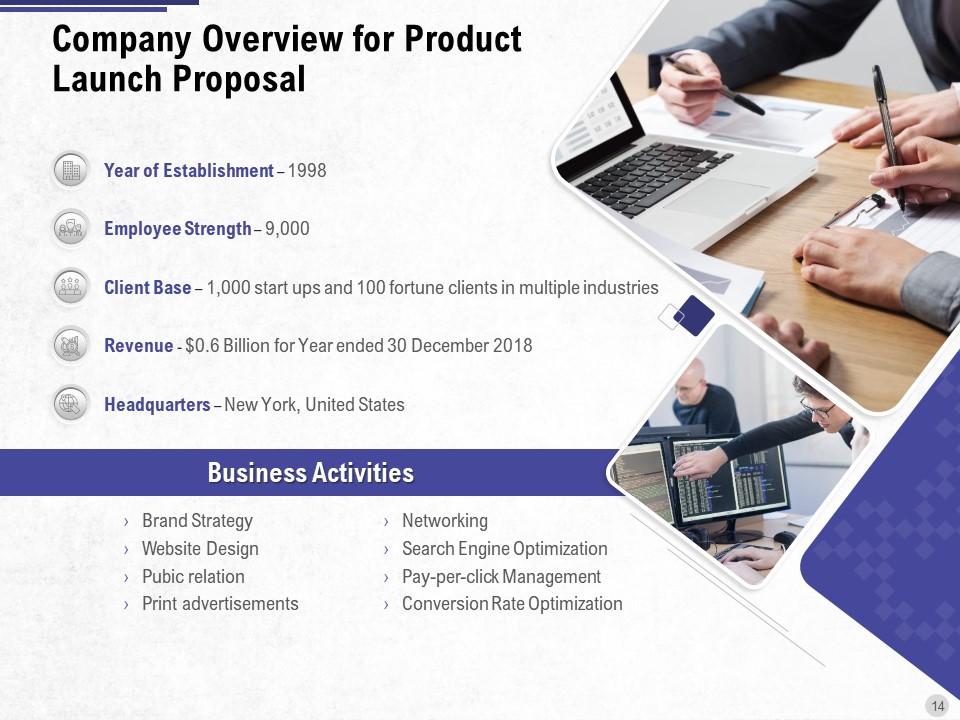
Slide 14: This slide represents Company Overview for Product Launch Proposal.
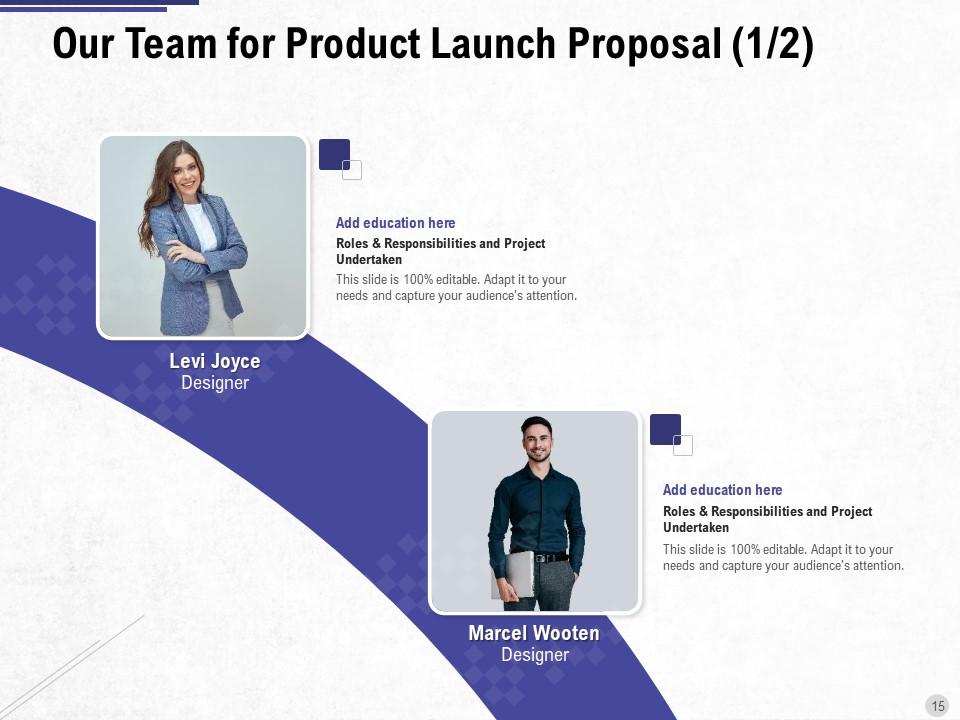
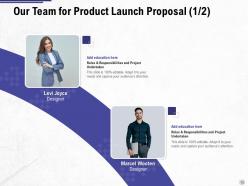
Slide 15: This is Our Team slide with Names and Designations.
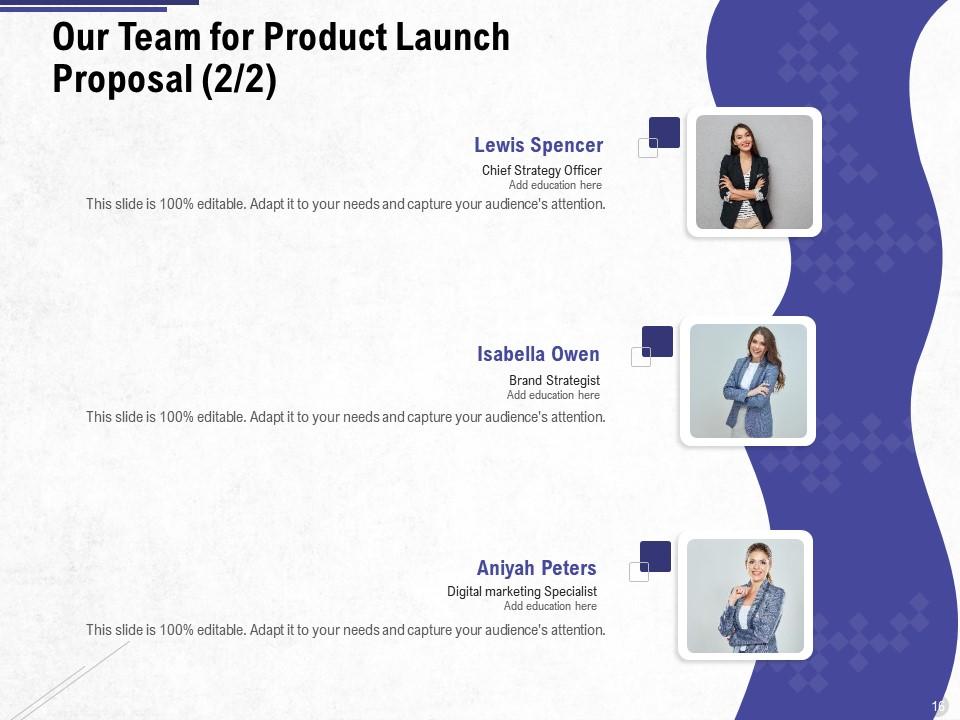
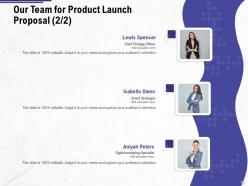
Slide 16: This is also Our Team slide with Names and Designations.
Slide 17: This slide displays Client Testimonials for Product launch Proposal
Slide 18: This slide showcases Proposal Outline.
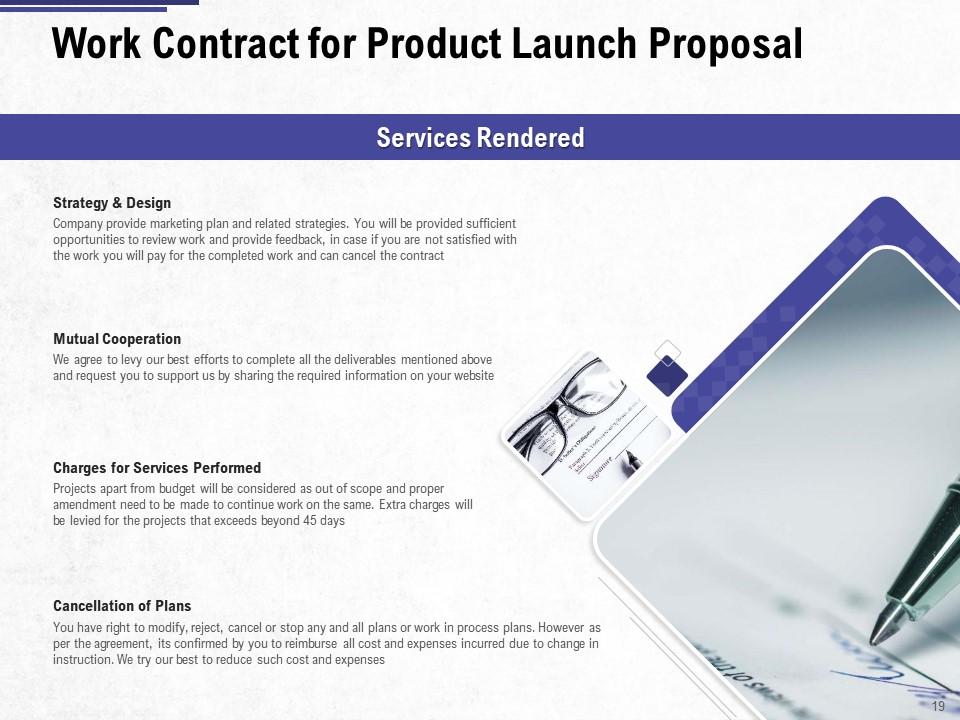
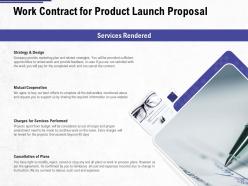
Slide 19: This slide presents Work Contract for Product Launch Proposal with services rendered such as- Strategy & Design, Mutual Cooperation, Charges for Services Performed, Cancellation of Plans. You have right to modify, reject, cancel or stop any and all plans or work in process plans.
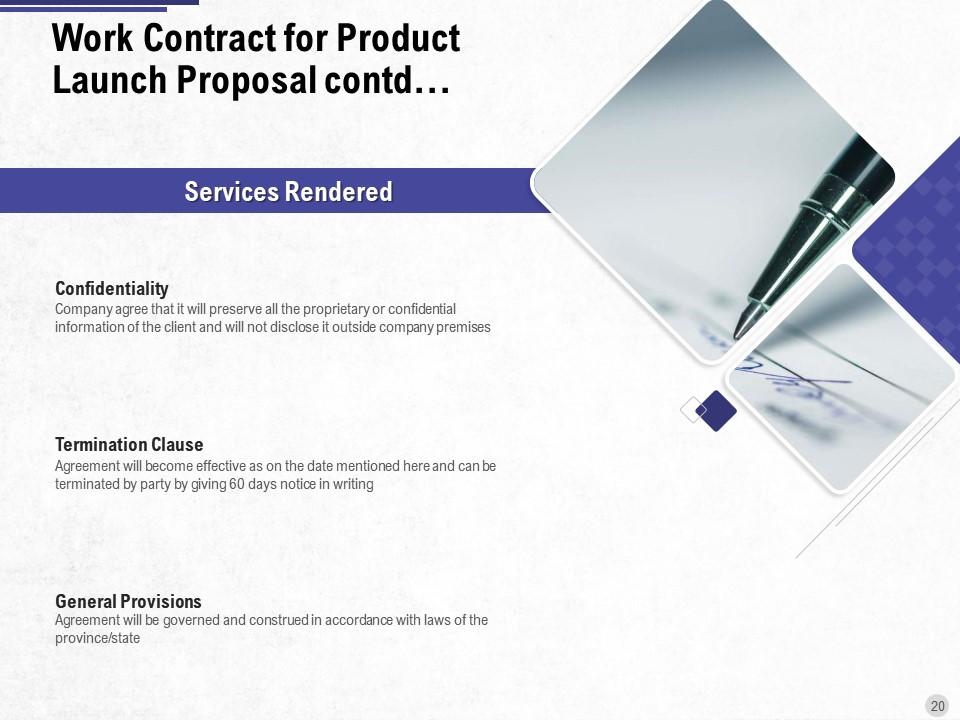
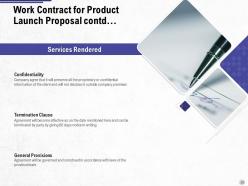
Slide 20: This slide is continued with Work Contract for Product Launch Proposal.
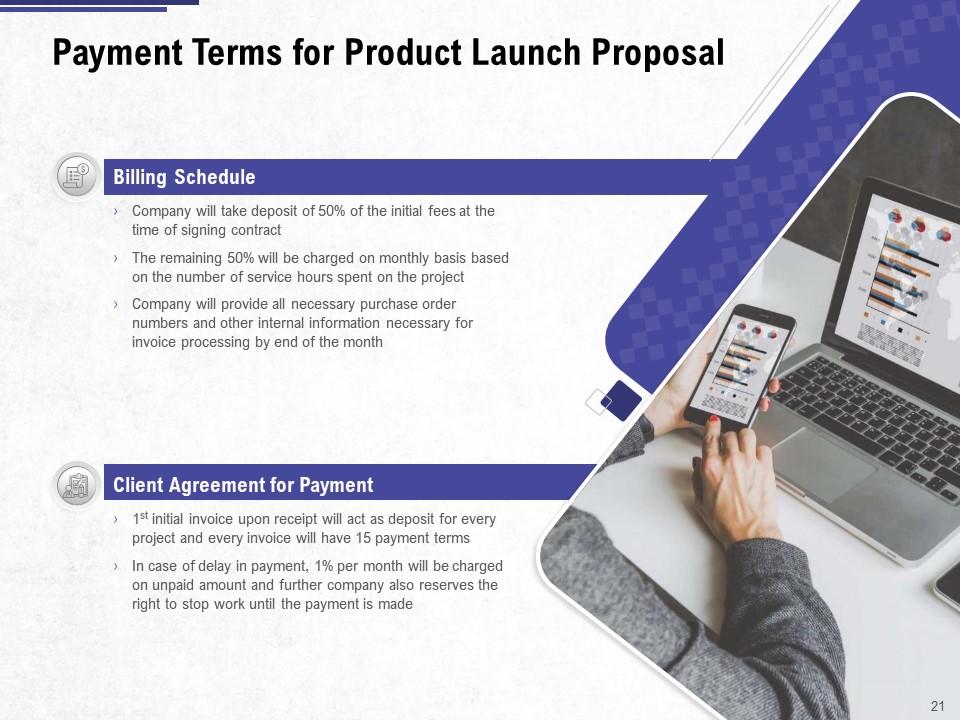
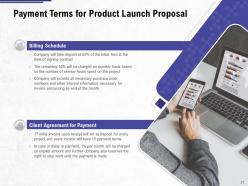
Slide 21: This slide displays Payment Terms for Product Launch Proposal
Slide 22: This is Sign Off slide.
Slide 23: This is Contact Us slide with Address, Contact number and Email address.
Slide 24: This is Icons Slide for Product Marketing Proposal
Slide 25: This slide is titled as Additional Slides for moving forward.
Slide 26: This is About Us slide to showcase Company specifications.
Slide 27: This slide displays Our Mission Vision Goal for Product Launch Proposal.
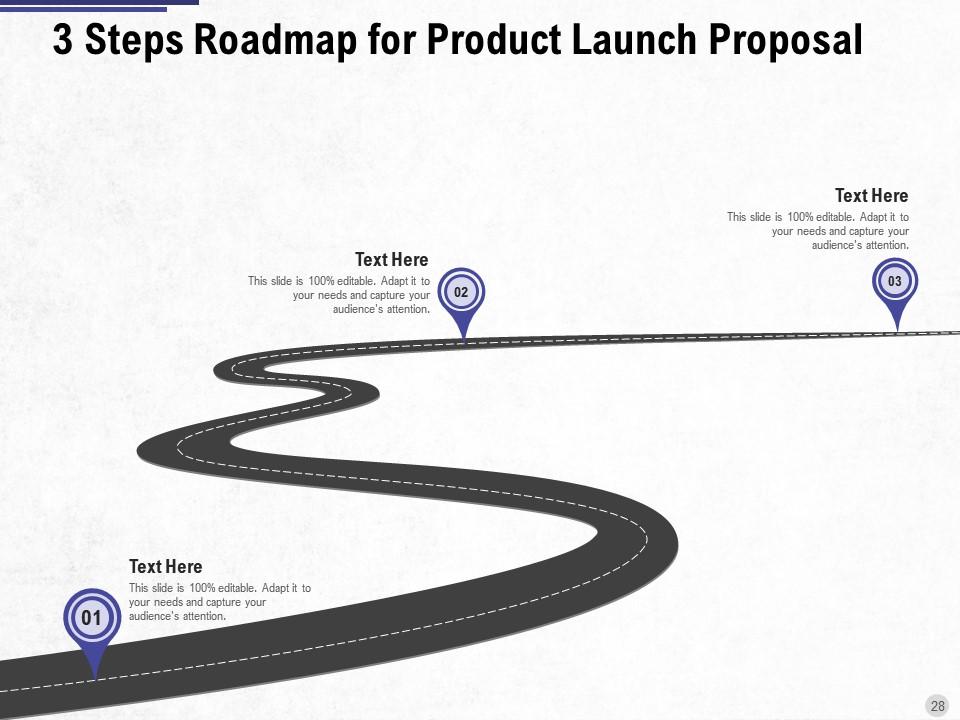
Slide 28: This slide depicts 3 step Roadmap process.
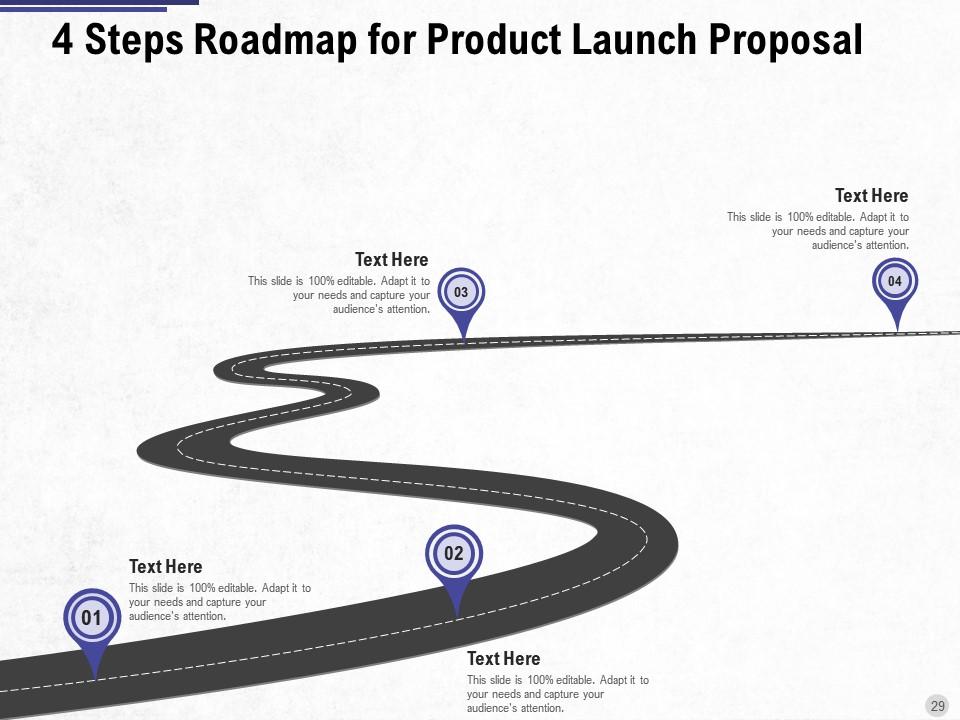
Slide 29: This slide shows 4 Steps Roadmap process.
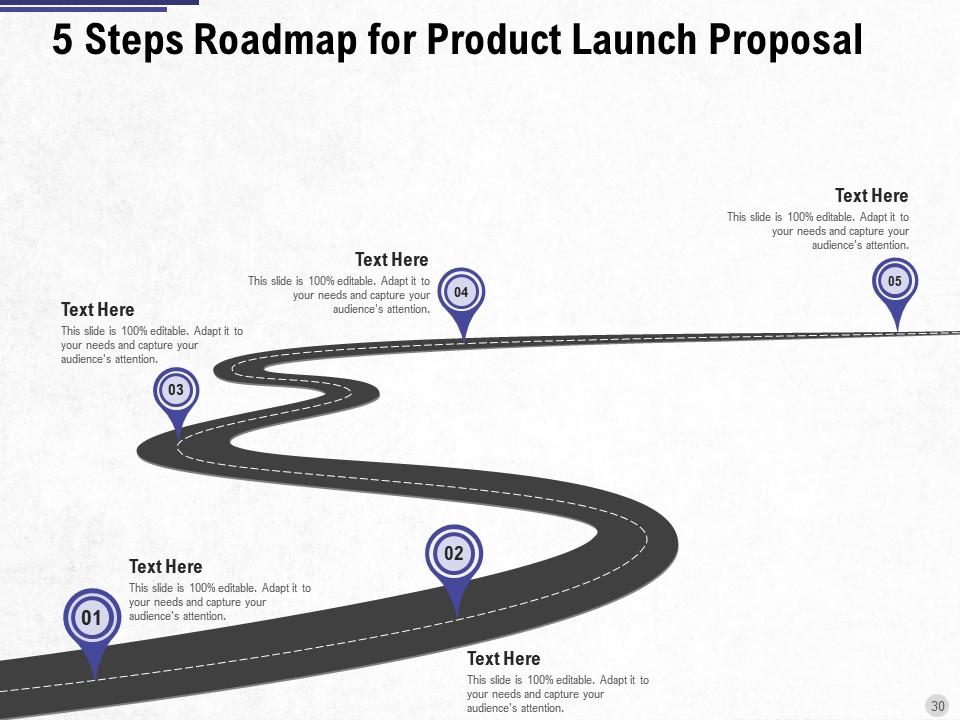
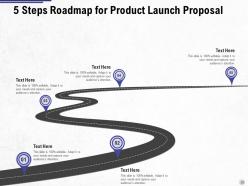
Slide 30: This slide shows 5 Steps Roadmap process.
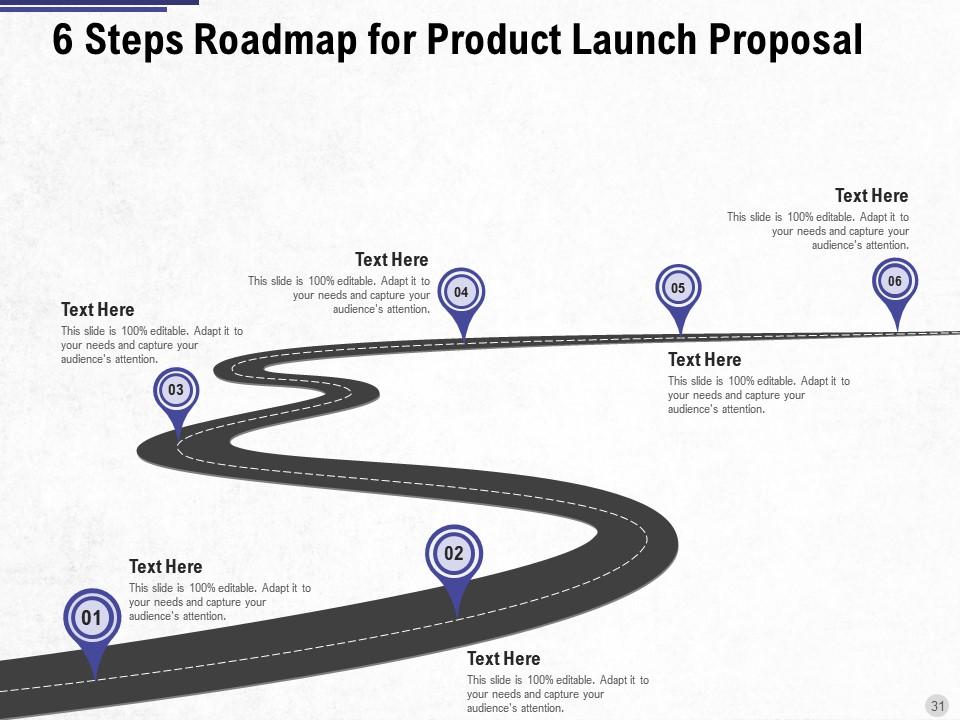
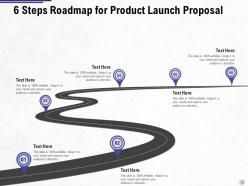
Slide 31: This slide depicts 6 Steps Roadmap process.
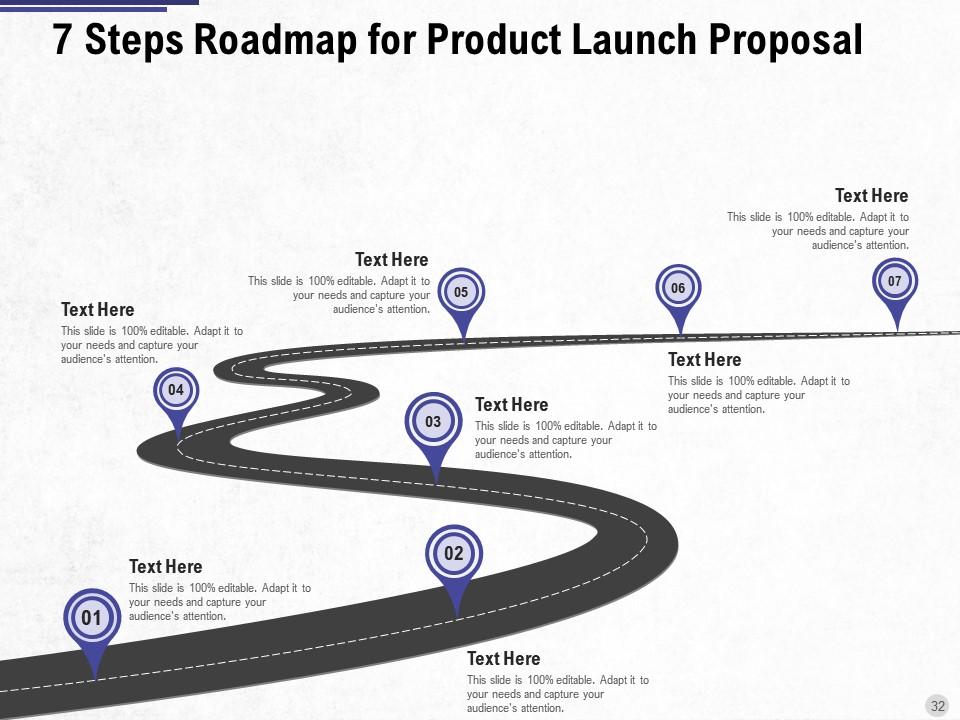
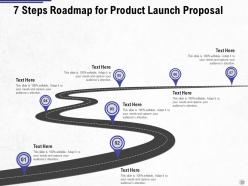
Slide 32: This slide shows 7 Steps Roadmap process.
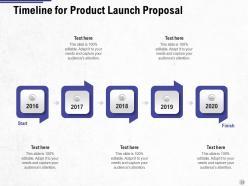
Slide 33: This slide presents Timeline for Product Launch Proposal
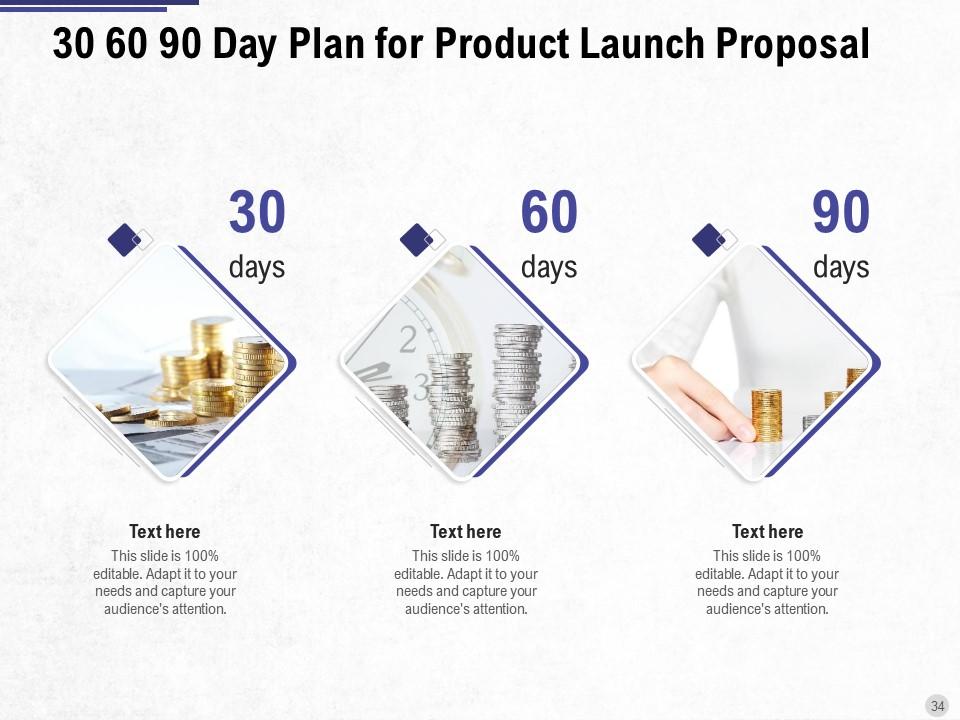
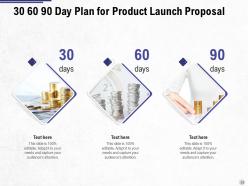
Slide 34: This is 30 60 90 Day Plan slide.
Product launch proposal powerpoint presentation slides with all 34 slides:
Use our Product Launch Proposal Powerpoint Presentation Slides to effectively help you save your valuable time. They are readymade to fit into any presentation structure.
-
Great designs, Easily Editable.
-
The Designed Graphic are very professional and classic.
-
Presentation Design is very nice, good work with the content as well.
-
Editable templates with innovative design and color combination.
