Marketing growth strategy ppt model
Try Before you Buy Download Free Sample Product
Audience
Editable
of Time
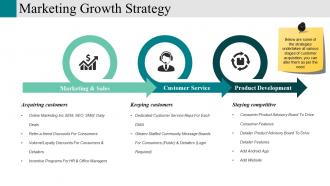
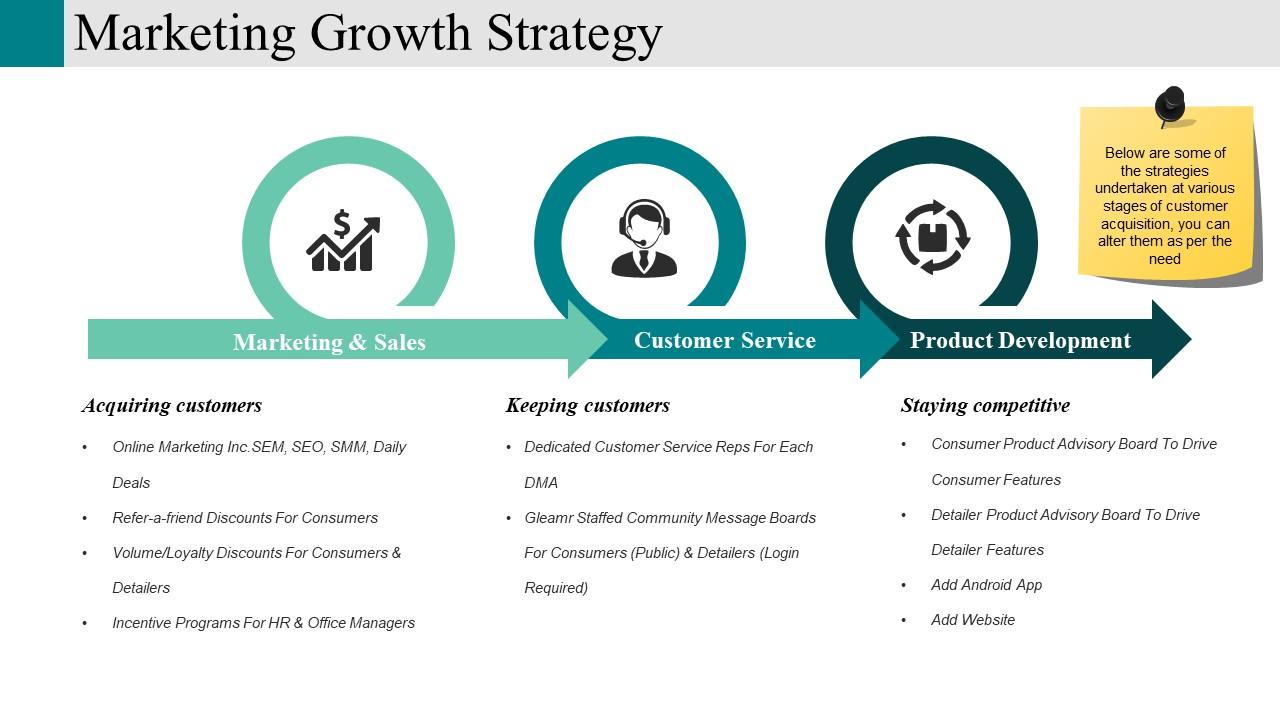
Have a look at our Marketing growth PowerPoint template slide designed to highlight the value of strategic marketing planning. Advertising is the most important aspect of business development in today's time, you have to come up with the growth strategy that helps to increase the sales number. This presentation diagram shows three vital aspects of business growth which are acquiring customers, keeping customers and staying competitive. To ensure that your marketing campaign is successful, you have to work on the principles of marketing mix such as product, price, promotion and place. A combination of all these factors enables you to achieve success. Our marketing growth strategy presentation design shows what is required to engage the customer and how to stay firm in this competitive world. To develop any new brand or advertise an established one, you must have a strategy as how you are planning to achieve your sales and marketing goals. If you understand the marketing strategy, then you have to think out of the box as there are people who can deliver better results. Use this PPT layout and create the marketing growth strategy that will make your business grow. Get the group eager to contribute with our Marketing Growth Strategy Ppt Model. Be able to effectively engage them.
People who downloaded this PowerPoint presentation also viewed the following :
Marketing growth strategy ppt model with all 5 slides:
Calm the cacophony with our Marketing Growth Strategy Ppt Model. Convert disagreements into cohesion.
FAQs for Marketing growth
Honestly? Start with who you're actually talking to - like really know your audience, not just demographics. Set goals you can measure (sounds boring but trust me). Your messaging needs to be the same everywhere, whether that's social, email, whatever. Content is everything right now. Don't just post random stuff - have a plan. I swear half the companies I see are just winging it. You'll want different channels working together, plus good analytics so you know what's working. Oh, and figure out what makes you different from everyone else. First step though - look at what you're doing now and find the gaps.
Honestly, start with what data you're already collecting - most people are sitting on way more useful stuff than they realize. Pick 3-4 metrics that actually move the needle on revenue, not just vanity stuff like page views (though I get it, those numbers feel good). Customer lifetime value and acquisition costs will show you which segments are worth your time. Track which channels really drive conversions too. Build simple dashboards around those key numbers. The real win? You'll spot trends while your competitors are still guessing. Focus on behavioral patterns - they don't lie about where customers actually spend money.
Look, you can't grow your business if you're trying to talk to literally everyone - it's like screaming into the void. Customer segmentation lets you figure out who's actually worth your time and money. You'll spot your most valuable groups, see where the real opportunities are hiding, and honestly? Your messaging will finally stop sounding generic. I always think of it as having actual conversations instead of just broadcasting random stuff. The cool part is finding those underserved segments or new ways to expand with existing customers. Just start digging into your current customer data - look for patterns in behavior, needs, demographics, whatever makes sense for your business.
Honestly, social media is like having a direct line to your ideal customers without the huge ad budgets. Pick one platform where your people actually hang out - don't spread yourself thin across everything. The magic happens when you're genuinely helpful instead of just pitching constantly. I mean, nobody wants to follow a walking advertisement, right? Show up consistently with content that solves real problems. The targeting these days is insane too. Build actual relationships through conversations. That's how you turn random followers into paying customers. Focus on being useful first, sales second.
Honestly, influencer marketing works pretty well if you do it right. You're basically using their audience trust to get in front of people who'd never see your stuff otherwise. Engagement rates are usually way better than regular ads, plus it doesn't feel as pushy. The tricky part though? Finding legit influencers is such a pain now - so many have fake followers it's ridiculous. Also tracking real results (not just likes) gets messy fast. I'd start with smaller creators in your space first. They're cheaper and their followers actually care about what they're saying. Don't go for the big names right away.
Totally! So like, if you're doing print ads, throw QR codes on there that link to landing pages or your social stuff. Direct mail + retargeting campaigns is honestly such a killer combo - I've seen it work really well. Radio spots should definitely mention hashtags or send people to trackable URLs. Oh, and keep your messaging consistent everywhere (obvious but worth saying). The whole point is using digital to grab data and nurture the leads your traditional stuff brings in. I'd start small though - pick one traditional channel and just add one digital piece to it first.
You'll want to look at both leading and lagging stuff to get the full picture. Customer acquisition cost, lifetime value, monthly recurring revenue growth - the usual suspects. Conversion rates at each funnel stage are crucial too. Oh, and retention rates plus NPS scores? Pure gold for figuring out if your growth is actually legit or just a flash in the pan. CAC payback period matters because waiting forever for returns sucks. Honestly though, start with maybe 3-5 core metrics that match your goals. Otherwise you'll drown in spreadsheets and lose focus on what actually moves the needle.
Look, competitive analysis is basically spying on what your rivals are doing right (and wrong). Check out their pricing, messaging, where they advertise - it's honestly kind of fun once you get into it. You'll spot gaps they're missing or find customer segments they're ignoring. Maybe they're all using the same boring channels while missing TikTok entirely. I'd track your top 3-5 competitors monthly - doesn't have to be fancy, just note their big moves. The goal? Find those white spaces where you can swoop in and grab market share they're leaving on the table.
Honestly, I'd go with stuff that doesn't cost a fortune. Referral programs work pretty well - give people a reason to share your thing. Free trials are solid too, lets people try before they buy. Content's been good to me but you gotta be super specific about your niche. Like, really drill down into what your audience actually cares about. Partnerships with other startups can be clutch for cross-promotion - way easier than trying to build an audience from scratch. Oh and product-led growth is having a moment right now. Just pick one thing and test it for a month. Don't try everything at once or you'll burn out.
Honestly, content marketing works because you're building actual relationships instead of just pitching all the time. Think of it like being that friend everyone texts for advice - you help people out consistently, and they remember you when they need something. The trick is really understanding what keeps your customers up at night, then creating stuff that actually helps them figure it out. Map out their biggest questions at different stages and answer them genuinely. Sure, it takes longer than running ads, but people trust you way more when you've already solved their problems before asking for anything.
Honestly, you've gotta be way more hands-on with testing stuff. A/B test everything and check your data weekly - I see so many people just set campaigns and totally forget about them. Big mistake there. Instead of trying to fix broken channels, double down on whatever's actually working for you. Your customer acquisition costs change over time too, so audit those regularly across different channels. The whole game is about being quick to pivot when you notice trends shifting. Oh, and here's something concrete you can do right now - pick one channel that's sucking this week and either fix it fast or just cut it loose.
Dude, partnering up is honestly a game changer. Your reach gets way bigger without blowing your budget. Find orgs that hit your same audience but aren't direct competitors - like, maybe they offer something that complements what you do? Cross-promotions, joint webinars, co-branded stuff all work great. The cool thing is you're getting introduced to people who already trust your partner's brand, which beats cold calling any day. I'd honestly rather do three solid partnerships than ten mediocre ones. Start small with a test campaign and see how it goes.
Honestly, market trends can make or break your growth strategy. If you're swimming against the current, you'll burn through cash super quickly - trust me on that one. Watch for early signals like changing customer behavior, new tech popping up, regulatory shifts, stuff like that. These directly hit your pricing and which channels actually work. Here's the thing though: don't just react to trends. Try to get ahead of them if you can. Build some flexibility into your plans so you're not scrambling when things shift. I've seen too many companies get caught flat-footed because they ignored what was happening around them.
Honestly, positioning is everything for growth - it's like your north star. Without it, you're just throwing spaghetti at the wall and hoping something sticks. You need to know exactly who you're talking to and why they should care about you specifically. Otherwise your marketing feels all over the place and you'll burn through budget targeting people who were never gonna buy anyway. Good positioning helps you pick the right channels and write copy that actually hits. I always tell people to figure this out first before they start scaling anything. Makes such a difference when you're crystal clear on how you want people to see your brand.
Honestly, start by really listening to what's bugging your customers - their pain points will tell you if your messaging is landing or totally missing the mark. Check which channels they actually want to hear from you on (hint: probably not email blasts). I'd steal their exact words when they describe your product - they're way better at explaining it than you think. Track what features they keep bringing up and lean into those hard. Oh, and set up some kind of regular check-ins through surveys or quick calls. Your strategy gets stale fast without fresh input.
-
Easily Editable.
-
Unique research projects to present in meeting.