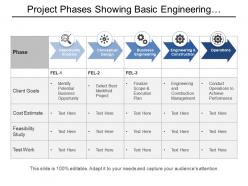
Project phases showing basic engineering construction and operations
Try Before you Buy Download Free Sample Product
Audience
Editable
of Time
Get the graph to bounce back with our Project Phases Showing Basic Engineering Construction And Operations. They will help you halt any decline.
People who downloaded this PowerPoint presentation also viewed the following :
Project phases showing basic engineering construction and operations with all 5 slides:
Encourage folks to express friendship with our Project Phases Showing Basic Engineering Construction And Operations. Generate handshakes all around.
FAQs for Project phases showing basic engineering
So there are five phases you'll go through: initiation, planning, execution, monitoring, and closure. Honestly, planning is where projects usually make it or break - that's when you map out your timeline, resources, and what could go wrong. Initiation just gets everyone aligned on goals and gets stakeholders on board. Then execution is actually doing the work. Monitoring keeps you from going off the rails. Closure wraps it up and documents what you learned (though let's be real, half the time people skip this part). Don't rush the early stuff - bad planning always comes back to bite you later.
Honestly, just use the SMART framework - I know, I know, sounds boring but hear me out. Get everyone in a room and force them to be stupidly specific about what success looks like. Not "improve efficiency" but "cut processing time by 30% in 6 months." Write it all down and literally make people sign off on it. I'm telling you, vague goals are project killers. The more annoying you are about details upfront, the better. What does "done" actually look like? Pin that down first or you'll be having the same circular conversations six months from now.
Honestly, Gantt charts and critical path method are lifesavers for project scheduling - they show task dependencies and catch bottlenecks before they bite you. I'm obsessed with Monday.com and Asana for tracking stuff digitally, though my old boss still lives in Excel spreadsheets. Time-blocking works great for your personal schedule too. Always build in buffer time though - I learned the hard way that everything takes 20% longer than you think. Map out your tasks first, figure out how they connect, then set realistic deadlines and check in weekly.
Honestly, don't just do risk planning once at the start - that's where most people mess up. I check in with my team every week because stuff changes constantly. Rate your risks by how likely they are and how bad they'd be if they happened. Keep a simple list and make sure someone's actually watching each risk (otherwise it just sits there). The trick is catching problems before they blow up your timeline. Like, if you see warning signs early, you can shift resources around or activate backup plans. Oh and definitely bring it up in team meetings - keeps everyone on the same page.
Honestly, communication can totally make or break your team. I've watched projects completely implode because someone just assumed everyone knew what was happening - it's painful to see. You need regular check-ins and clear channels, but don't overthink it. Daily standups work great, or maybe just shared docs that everyone actually uses. Mixed messages kill momentum fast. Sometimes you gotta ditch the endless email chains and just hop on a quick call, you know? Figure out who needs what info and when. Oh, and timing matters way more than people think.
Dude, stakeholder engagement can literally make or break your project. I've watched so many things crash and burn just because someone felt ignored or blindsided. You gotta map out everyone who cares about this thing upfront - who's got influence, who's affected, all that. Then keep them in the loop with regular updates. Don't just tell them stuff though, actually listen when they give feedback. Honestly, the projects where I spent time on this from day one? Way smoother. It's like having everyone rowing in the same direction instead of fighting you the whole time.
Honestly, agile is perfect for this stuff. You break everything into these short 1-2 week sprints instead of being stuck with some massive plan for months. When priorities change (and they always do), you can pivot super quickly. Those daily check-ins might seem annoying at first, but they actually save your butt - you catch problems early before they blow up. Plus the whole team stays on the same page when stakeholders inevitably change their minds or the market shifts. If things are really chaotic, I'd go even shorter on the sprint cycles.
Focus on SPI and CPI first - those tell you if you're on time and budget. Then add scope creep, team velocity, and defect rates. I learned the hard way not to track everything at once, it's just noise. Pick maybe 4-5 that actually matter to whoever's breathing down your neck. Weekly dashboards work great for catching problems early. The key is spotting trends before they bite you. I swear, half the projects I've seen go sideways could've been saved with better tracking upfront.
Honestly, just figure out who does what best on your team and lean into it. Like, who's your perfectionist? Who comes up with wild ideas? Who actually gets people pumped up? Once you know that, give them tasks that fit. I swear, most teams just fight their natural flow instead of working with it. Mix up who runs meetings too - keeps things fresh. Oh, and pair people from different areas together sometimes. Creates better bonds. Main thing though? Make sure people aren't scared to say "hey, this isn't working" early on. Maybe do a quick team style check next week?
Honestly, the biggest thing is breaking down your budget into super detailed line items - like way more detailed than you think you need. Tack on 10-15% extra because something always goes wrong. I'd map out all your resources upfront and check for conflicts with other stuff running. Weekly budget reviews are way better than monthly ones since little overruns snowball fast. Time-tracking tools are your friend here - people are terrible at estimating how long things actually take. Oh, and scope creep is basically inevitable, so don't pretend it won't happen. Build some wiggle room into everything instead of crossing your fingers.
Honestly, you've gotta bake change management right into your timeline from the start - don't just tack it on later. Map out everyone who'll be impacted and figure out their concerns early. I can't tell you how many solid projects I've watched crash because teams ignored the people side of things. Run your communication and training stuff alongside the technical work, not after. Oh, and track how people are actually adopting changes, not just whether your code works. Change management isn't optional - it's as critical as any other piece of the project.
Remote PM is totally different - you can't just pop over to ask quick questions anymore. Documentation becomes your lifeline since everything has to live in shared spaces where the whole team can find it. Time zones are honestly the worst part, you'll be doing math constantly to figure out when everyone's actually working. Communication needs way more structure than before. But here's the thing - your meetings actually get better because people come prepared. Digital tools become essential, not optional. Also the paper trail is chef's kiss compared to in-person chaos. Just pick solid tools everyone can access and set communication rules early.
Oh man, cultural stuff can absolutely tank international projects if you're not careful. Some cultures are crazy direct while others dance around problems forever - total recipe for confusion. Then there's the whole time thing where some teams are super rigid about deadlines and others... well, let's just say "flexible" doesn't begin to cover it. Decision-making is another minefield. Half your teams might want everyone's input while the other half expect the boss to just decide. Honestly, the hierarchy expectations alone will mess with your head. Do your homework on each culture beforehand and pad your timeline like crazy.
Build quality checks right into your workflow instead of waiting until the end. Regular review gates help stakeholders catch stuff early - seriously, finding problems later is such a nightmare and costs way more. Get your team doing peer reviews on important deliverables. Create detailed acceptance criteria upfront and actually use that quality checklist (don't just make one and forget about it). Fresh eyes are golden, so bring in outside reviewers for the big components. Oh, and document your quality standards now so everyone's on the same page about what finished work looks like.
Oh yeah, post-mortems are clutch! Basically you get everyone in a room after a project's done and just tear apart what happened - good and bad. No sugarcoating allowed. Look at timelines, where communication totally fell apart, if you had enough people/budget, all that stuff. I swear it's like group therapy sometimes lol. The real magic happens when you actually write this stuff down though. Otherwise you'll just keep making the same dumb mistakes. After a few projects you'll notice patterns emerging. Just make sure someone's actually responsible for turning those "ah-ha" moments into real process changes.
-
Excellent template with unique design.
-
Perfect template with attractive color combination.