


Helping clients develop a household budget powerpoint presentation slides





Try Before you Buy Download Free Sample Product
 Impress Your
 Audience
 100%
100% Editable
 Save Hours
 of Time


Reach your savings goal with our content-ready helping clients develop a household budget PowerPoint presentation slides. This financial planning presentation has 55 slides which include topics such as financial pyramid, cash flow analysis, financial highlights, resource capacity, new capital budgeting, cost comparison table, risk tolerance analysis, balance sheet dashboard, investment flow chart, and tax planning. Apart from these, few related topics have also been covered, including personal budget, family budget, personal financial management, budget planner, and personal finance. In today’s time, it has become very important to create and stick to a financial plan. Keeping track of all the expenses in a month can help you determine how and when cuts can be made in the spending. The best way to accomplish this is through a readymade home budget plan PPT template. Thus, download helping clients develop a household budget PowerPoint graphics to effectively manage your living expenses. Our Helping Clients Develop A Household Budget Powerpoint Presentation Slides will evolve with you. They help you embrace growth.
People who downloaded this PowerPoint presentation also viewed the following :
Content of this Powerpoint Presentation
Slide 1: This slide introduces HELPING CLIENTS DEVELOP A HOUSEHOLD BUDGET. State YOUR COMPANY NAME and get initiated.
Slide 2: This slide showcases AGENDA. You need to put your company agenda and use it accordingly.
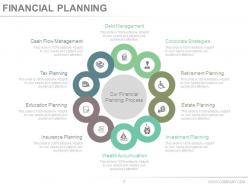
Slide 3: This slide presents FINANCIAL PLANNING which further listed these nine parameters- Investment Planning, Insurance Planning, Estate Planning, Education Planning, Retirement Planning, Tax Planning, Cash Flow Management, Corporate Strategies, Wealth Accumulation, Debt Management, Our Financial Planning Process.
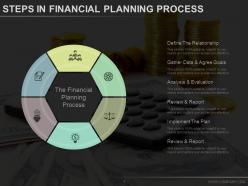
Slide 4: This slide displays STEPS IN FINANCIAL PLANNING PROCESS The Financial Planning Process, Define The Relationship, Gather Data & Agree Goals, Analysis & Evaluation, Review & Report, Implement The Plan, Review & Report.
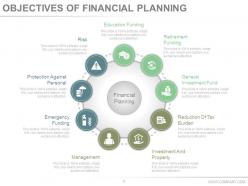
Slide 5: This slide presents OBJECTIVES OF FINANCIAL PLANNING with these nine steps- Financial Planning, Education Funding, Investment And Property Management, Reduction Of Tax Burden, Emergency Funding, General Investment Fund, Protection Against Personal, Retirement Funding Risk.
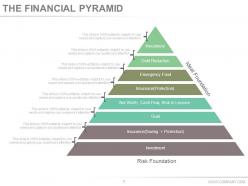
Slide 6: This slide showcases THE FINANCIAL PYRAMID with these parameters- Investment, Debt Reduction, Emergency Fund, Insurance(Protection), Net Worth, Cash Flow, Risk to Lerance, Goal, Investment, Insurance(Saving + Protection), Ideal Foundation, Risk Foundation.
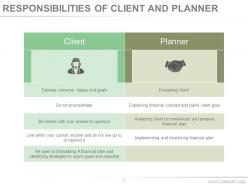
Slide 7: This slide presents responsibilities of client and planner. You can add the client and planner as well.
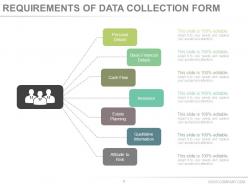
Slide 8: This slide showcases requirement of data collection form with these parameters- Attitude to Risk, Estate Planning, Qualitative Information, Personal Details, Cash Flow, Basic Financial Details, Insurance.
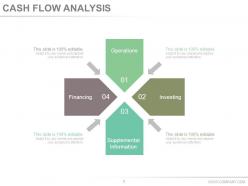
Slide 9: This slide showcases CASH FLOW ANALYSIS with these four stages- Operations, Investing, Supplemental Information, Financing.
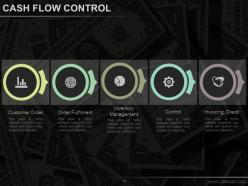
Slide 10: This slide presents cash flow control with these five parameters- Customer Order, Order Fulfilment, Inventory Management Control, Invoicing, Credit.
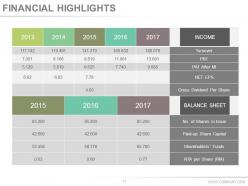
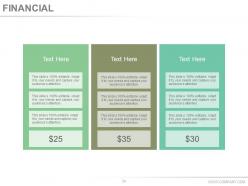
Slide 11: This slide showcases FINANCIAL HIGHLIGHTS. Add the details in the table and make the use of it.
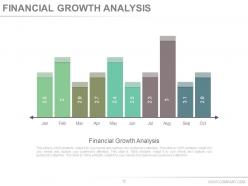
Slide 12: This slide presents Financial Growth Analysis. You can add the details and make the use of it.
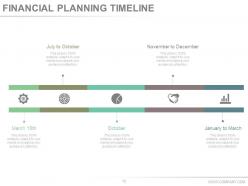
Slide 13: This slide shows FINANCIAL PLANNING TIMELINE with these months gap we have- July to October, November to December, January to March, October. Add the data in your timeline and make the best use of it.
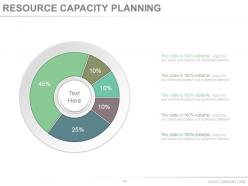
Slide 14: This slide presents RESOURCE CAPACITY PLANNING. You can add the percentage and make the best use of it.
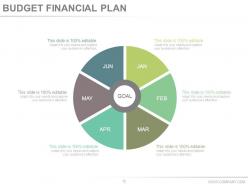
Slide 15: This slide showcases BUDGET FINANCIAL PLAN with some month of variations- JAN, FEB, MAR, APR, MAY, JAN, JUN.
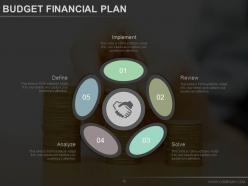
Slide 16: This slide presents BUDGET FINANCIAL PLAN with these five factors- Implement, Solve, Analyze, Define, Review.
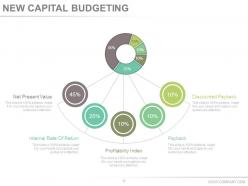
Slide 17: This slide presents NEW CAPITAL BUDGETING with these five parameters- Discounted Payback, Net Present Value, Payback, Internal Rate Of Return, Profitability Index.
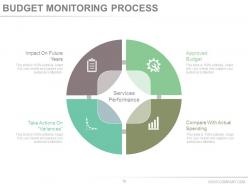
Slide 18: This slide showcases BUDGET MONITORING PROCESS with these Services Performance and having four of the factors- Compare With Actual Spending, Take Actions On “Variances”, Approved Budget, Impact On Future Years.
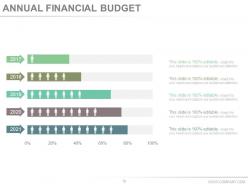
Slide 19: This slide presents ANNUAL FINANCIAL BUDGET. You can add the budget in the different years.
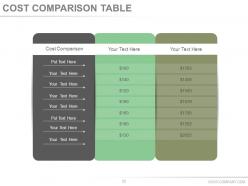
Slide 20: This slide shows COST COMPARISON TABLE. You can add the details in cost comparison.
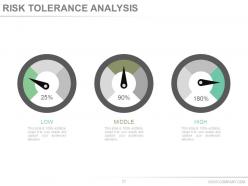
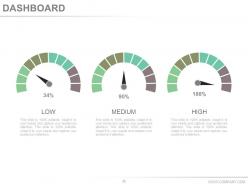
Slide 21: This slide showcases RISK TOLERANCE ANALYSIS with these three meters- LOW, MIDDLE, HIGH.
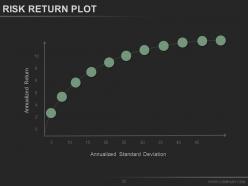
Slide 22: This slide presents RISK RETURN PLOT. You can add the points and make the best use of it.
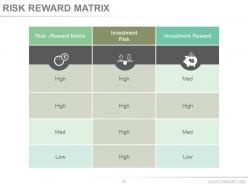
Slide 23: This slide showcases RISK REWARD MATRIX table. You can add the details as per your requirement.
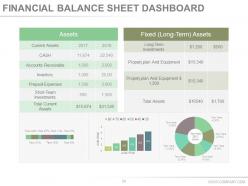
Slide 24: This slide shows FINANCIAL BALANCE SHEET DASHBOARD. Add the data and make the best use of it.
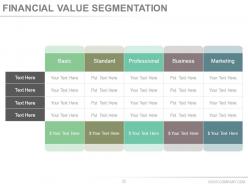
Slide 25: This slide presents FINANCIAL VALUE SEGMENTATION with four of the criteria and these are as follows.
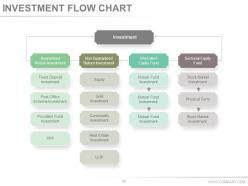
Slide 26: This slide showcases INVESTMENT FLOW CHART with this you can add your requirement as such.
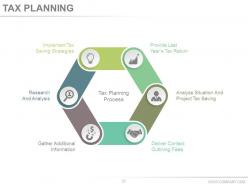
Slide 27: This slide presents TAX PLANNING with these six important parameters- Research And Analysis, Analyze Situation And Project Tax Saving, Implement Tax Saving Strategies, Provide Last Year’s Tax Return, Deliver Contact Outlining Fees, Gather Additional Information, Tax Planning Process.
Slide 28: This slide is titled Additional Slides.
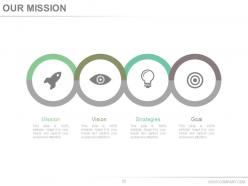
Slide 29: This slide represents Our Mission. State your mission, goals etc.
Slide 30: This slide showcases Our Team with Name and Designation to fill.
Slide 31: This slide helps show- About Our Company. The sub headings include- Creative Design, Customer Care, Expand Company
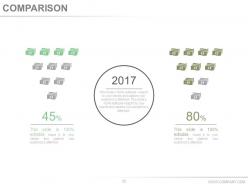
Slide 32: This slide shows Comparison of number of users and Time.
Slide 33: This slide shows Our Goals for your company.
Slide 34: State your Financial score in this slide with relevant imagery and text. br/>Slide 32: This is a Quotes slide to convey message, beliefs etc.
Slide 33: This is a Dashboard slide to show- Strategic System, Success, Goal Process, Sales Review, Communication Study.
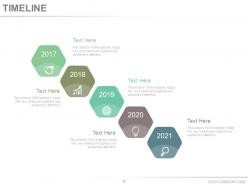
Slide 34: This is a Timelines slide to show- Plan, Budget, Schedule, Review.
Slide 35: This is a Location slide to show global growth, presence etc. on world map.
Slide 38: This is a Timelines slide to show- Plan, Budget, Schedule, Review.
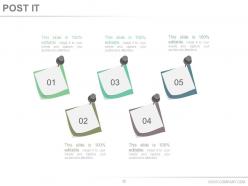
Slide 39: This is a Post It slide for reminders of Direct Marketing.
Slide 40: This slide is titled Community to show company news, events, highlights etc. ntion. This slide is 100% editable. Adapt it to your needs and capture your audience's attention. This slide is 100% editable. Adapt it to your needs and capture your audience's attention. This slide is 100% editable. Adapt it to your needs and capture your audience's attention. This slide is 100% editable. Adapt it to your needs and capture your audience's attention.
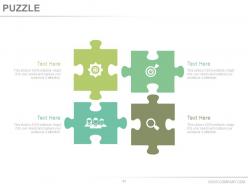
Slide 41: This is a Puzzle slide with the following subheadings- PPC Advertising, Media Marketing, Print Marketing, E-mail Campaigns
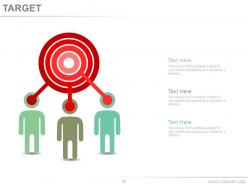
Slide 42: This is a Target slide with the following subheadings- Current Situation, Competitive Analysis, Target Segments, Vision, Positioning.
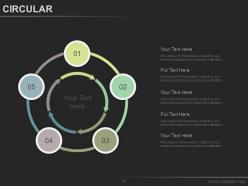
Slide 43: This is a Circular image slide to show information, specifications etc.
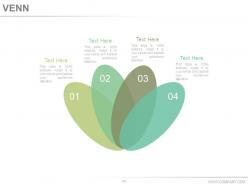
Slide 44: This is a Venn diagram image slide to show information, specifications etc.
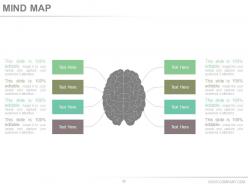
Slide 45: This slide shows a Mind map for representing entities.
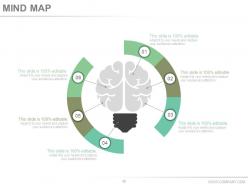
Slide 46: This slide shows a Mind map for representing entities.
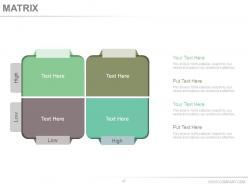
Slide 47: This slide showcases a Matrix with the following content- Development Clients, Dilemma Clients, Star Clients, High Value Clients.
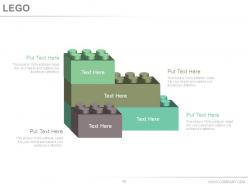
Slide 48: This is a Lego Box slide with the following subheadings- Teach, Encourage, Increase, Build.
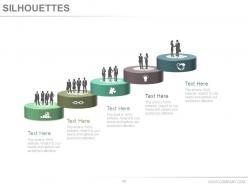
Slide 49: This is a Silhouettes image slide with the subheadings- INVENTORY, PAYMENT, CASH, CREDITCARD, CHECKOUT.
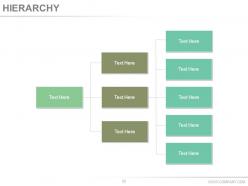
Slide 50: This is a Hierarchy slide showing- Supply Chain Manager, Supply Chain Council, Sourcing, Supplier Quality Engineer, Procurement, Logistics & Management, Supplier Management, Student, Contract Management.
Slide 51: This is a Bulb Or Idea image slide to show information, innovative aspects etc.
Slide 52: This is a Magnifying glass image slide to show information, scoping aspects etc.
Slide 53: This is a Bar Graph image slide to show product comparison, growth etc.
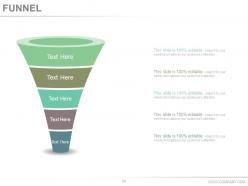
Slide 54: This is a Funnel image slide showing: Calls-to-action, Reachability, User Experience, Color Schemes, Engagement, Simplicity.
Slide 55: This is a Thank You slide for acknowledgement.
Helping clients develop a household budget powerpoint presentation slides with all 55 slides:
There is something childlike about our Helping Clients Develop A Household Budget Powerpoint Presentation Slides. They will be good companions for your baby.







FAQs for Helping clients develop a household budget
Essential household budget components include income tracking, fixed expenses like rent and utilities, variable costs such as groceries and entertainment, debt payments, and savings allocations. These elements work together by providing complete financial visibility, enabling strategic spending decisions, and ensuring systematic wealth building, with many families finding that comprehensive budgeting ultimately delivers reduced financial stress and accelerated goal achievement.
Effective expense tracking involves using budgeting apps, maintaining detailed receipts, categorizing spending into fixed and variable costs, and conducting weekly financial reviews. Many households find that combining digital tools like Mint or YNAB with traditional spreadsheets enables better visibility into spending patterns, ultimately delivering improved financial control and identifying opportunities for strategic savings optimization.
Popular household budgeting tools include Mint, YNAB (You Need A Budget), Personal Capital, PocketGuard, and Goodbudget, each offering unique features for expense tracking and financial planning. These applications streamline budget management by automating transaction categorization, providing spending alerts, and generating detailed financial reports, with many families finding that digital tools significantly enhance their ability to control expenses and achieve savings goals.
Prioritize spending categories by addressing essential needs first, including housing, utilities, groceries, transportation, and minimum debt payments, followed by financial goals like emergency savings and retirement contributions. This strategic approach enables households to maintain stability while building long-term wealth, with many families finding that automating these priority payments streamlines budgeting and enhances financial security.
Effective strategies include implementing a waiting period before purchases, using cash envelopes for variable expenses, tracking spending through budgeting apps, setting specific spending limits for categories, and finding free alternatives for entertainment. These approaches streamline financial discipline by creating accountability, increasing spending awareness, and establishing clear boundaries, with many households finding that combining multiple methods delivers significant savings and improved budget control.
Set realistic savings goals by analyzing your monthly income and expenses, starting with small percentages like 5-10%, and gradually increasing as you adjust spending habits. Many households find that automating transfers to dedicated savings accounts, setting specific targets like emergency funds or vacation goals, and reviewing progress monthly creates sustainable momentum, ultimately building financial security while maintaining comfortable living standards.
An emergency fund serves as a financial safety net within household budgeting, protecting against unexpected expenses like medical bills, car repairs, or job loss while preventing debt accumulation. This strategic reserve, typically covering three to six months of expenses, enables families to maintain their regular budget allocations and long-term financial goals, ultimately delivering stability and peace of mind.
You should review your household budget monthly to track spending patterns, identify variances, and make necessary adjustments, with quarterly deep-dive reviews for major categories like insurance, utilities, and savings goals. Many families find that consistent monthly reviews enable better financial control, faster identification of overspending areas, and more strategic allocation of resources, ultimately delivering improved financial stability and goal achievement.
Common budgeting mistakes include underestimating irregular expenses, failing to track small purchases, setting unrealistic spending limits, neglecting emergency funds, and not reviewing budgets regularly. These oversights often derail financial plans by creating unexpected shortfalls, with many households finding that addressing these issues early enables better expense control, improved savings rates, and ultimately greater financial stability.
Involving family members in budgeting enhances transparency, accountability, and financial literacy through regular family meetings, shared goal-setting, and age-appropriate responsibilities like expense tracking or comparison shopping. This collaborative approach enables better resource allocation, reduces spending conflicts, and builds stronger financial habits across all household members, with many families finding that shared ownership of financial decisions ultimately delivers improved savings outcomes and enhanced financial security.
Inflation significantly impacts household budgeting by reducing purchasing power, increasing costs for essentials like food and housing, and requiring more strategic financial planning. This economic pressure forces families to reassess spending priorities, seek cost-effective alternatives, and implement stricter budget controls, with many households finding that proactive adjustment strategies help maintain financial stability.
**INPUT**: How can I balance debt repayment with savings in my budget? **OUTPUT**: Balancing debt repayment with savings requires strategic allocation using methods like the 50/30/20 rule, debt avalanche approach, and emergency fund prioritization. Many households find that paying minimum debt payments while building a small emergency fund first, then aggressively tackling high-interest debt, ultimately delivers financial stability and long-term wealth building opportunities. [Word count: 53 words]
Effective ways to cut household expenses include reviewing subscription services, negotiating utility bills, meal planning to reduce food waste, switching to generic brands, and implementing energy-saving practices. These strategies streamline spending by eliminating unnecessary costs, optimizing resource allocation, and enhancing financial efficiency, with many households finding that consistent application delivers significant monthly savings and improved budget control.
Preparing for seasonal expenses involves creating dedicated savings categories, tracking previous years' spending patterns, and setting monthly contributions toward holiday or vacation funds throughout the year. By analyzing past expenditures on gifts, travel, and entertainment, households can establish realistic targets and automate transfers to separate accounts, ultimately reducing financial stress and enabling better cash flow management during peak spending periods.
Fixed expenses are consistent monthly costs like rent, insurance, and loan payments that remain the same regardless of usage, while variable expenses fluctuate based on consumption and choices, including groceries, utilities, and entertainment. Understanding this distinction enables households to prioritize essential fixed costs first, then strategically manage variable spending to optimize savings and financial flexibility.
-
Easy to edit slides with easy to understand instructions.
-
Amazing product with appealing content and design.