

High Level Action Plan For Agile Project Management





Try Before you Buy Download Free Sample Product
 Impress Your
Audience
 100%
Editable
 Save Hours
of Time


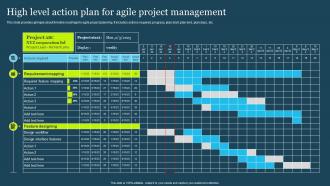
This slide provides glimpse about timeline roadmap for agile project planning. It includes actions required, progress, plan start, plan end, plan days, etc.
People who downloaded this PowerPoint presentation also viewed the following :
High Level Action Plan For Agile Project Management with all 6 slides:
Use our High Level Action Plan For Agile Project Management to effectively help you save your valuable time. They are readymade to fit into any presentation structure.





FAQs for High Level Action Plan For
So Agile breaks down to four key things: put people before processes, working software beats endless documentation, collaborate with customers instead of hiding behind contracts, and adapt to change rather than sticking to rigid plans. Short iterations are your friend here. Get constant feedback and pivot when needed - honestly, anyone who thinks requirements won't change is kidding themselves. Focus on what customers actually need, not what you think they want. Keep your team talking daily. The whole thing is about staying flexible and delivering real value instead of drowning in red tape and meetings.
So basically, traditional project management is like planning your entire road trip down to every gas station stop. You map everything out first - budget, timeline, what you're building - then pray nothing changes. Agile's totally different though. It breaks work into these 2-4 week chunks where you actually build something real each time. Way less stressful honestly. You get feedback constantly instead of waiting months to find out you built the wrong thing. Perfect if your projects are always shifting around (which, let's be real, most are). You can pivot when you learn new stuff rather than being stuck with your original plan.
So there's Scrum, Kanban, and Lean - but honestly most teams just mix and match whatever works. Scrum's got the whole sprint thing with daily standups and roles like Product Owner. Kanban is more about those visual boards where you move tasks around and don't overwhelm yourself with too much work at once. For bigger companies there's SAFe, which is... a lot. XP is solid for dev teams, Crystal for smaller groups. But here's the thing - just pick Scrum or Kanban to start. You'll probably end up tweaking it anyway once you see how your team actually works together.
Honestly, Agile totally changes how teams work together. It kills those stupid departmental walls that make projects drag forever. Daily standups get everyone actually talking instead of working in isolation. Sprint planning lets the whole team weigh in on priorities - not just managers deciding everything. But retrospectives? Those are where the magic happens. Your team can finally say "hey, this process sucks" without it being weird. Everything becomes way more transparent since everyone owns the results together. If you're just starting out, try daily standups first. You'll notice better communication pretty much right away.
So there's the Product Owner who handles the backlog and figures out what actually needs building. Then you've got the Scrum Master - they're like a coach, not your boss, just keeping things moving and clearing roadblocks. Development Team does the actual building and organizes their own work. Pretty straightforward roles, right? But here's the thing - it only works when they're constantly talking to each other instead of doing their own thing in corners. Oh, and make sure everyone owns their piece but isn't too precious about jumping in elsewhere when stuff gets crazy.
Yeah, totally doable! Daily video standups are clutch - way better than Slack updates. Digital boards like Jira keep everyone on the same page when you can't just peek over someone's shoulder. Keep sprint meetings short but don't skip them. Document everything because async work gets messy fast. Oh, and definitely record meetings for people in weird time zones (learned that one the hard way). Write down decisions afterward so nobody's like "wait, what did we agree on?" Retrospectives catch the communication fails before they blow up. Trust me, it works once you nail the rhythm.
Honestly, I'd focus on velocity and sprint burndown first - they show if your team's actually getting stuff done. Customer satisfaction scores are critical too because who cares if you hit deadlines when users can't stand your product, right? Also track defect rates and maybe lead time from concept to launch. But here's the thing - don't go metric-crazy. Pick like 3 or 4 that actually matter to your project and stakeholders. Too many numbers just becomes noise. The key is using whatever you pick to make real decisions, not just pretty dashboards nobody looks at.
Honestly, the hardest part is people just hate changing how they work. Your teams will be lost without someone telling them what to do every five minutes - especially if they've been micromanaged forever. Most managers totally panic about giving up control too. Training is huge but everyone skips it to save money (big mistake). Don't expect miracles right away either. Different departments will adopt it at totally different speeds. Oh, and sprint planning? Yeah, that's gonna be rough at first. Pick one small team to test it out, get leadership actually on board, and be patient.
Honestly, regular demos are a game changer - way better than those painful status update meetings where everyone zones out. Sprint reviews work great because stakeholders can actually click around and play with features themselves. Between sprints, do quick check-ins to catch when priorities shift (and they always do, trust me). The whole thing works better when they feel like they're part of building it with you, not just waiting around for you to deliver something. Oh, and definitely set up a Slack channel or whatever so they can bug you with questions anytime.
So the Product Owner basically owns what gets built and why. They manage the product backlog and decide which features matter most based on business value. Pretty much the bridge between all the stakeholders and your dev team - constantly making calls on "build this now" versus "maybe later." They'll also approve or reject work during sprint reviews, which can be... fun. My advice? Stay super aligned with them on priorities from day one. Don't wait until you're halfway through something to realize they had different expectations. Trust me, they control what actually gets released.
Okay so retrospectives are basically when your team hits pause after each sprint to figure out what's working and what sucks. You're not just venting though - you actually identify specific things to fix and commit to trying them next time. Think of it like debugging your teamwork (yeah I know that sounds super nerdy). The trick is actually following through on those changes instead of just talking about them. Assign someone to own each improvement and check back later. Otherwise you'll just keep having the same conversations over and over, which honestly drives me crazy.
Jira's probably your best bet - super solid for sprints and tracking bugs. Trello's way more intuitive though if you want something simple. We used Asana at my last job and honestly loved the kanban setup. Monday.com has these really slick visual dashboards too. Azure DevOps works great if you're already doing Microsoft stuff everywhere. Here's the thing - I've watched so many teams waste weeks debating which tool is "best" when they could've just picked one and started. My advice? Try free versions of like 2-3 options for a sprint each, then go with whatever doesn't make your team want to pull their hair out.
Yeah totally! Just ditch the tech-specific stuff and focus on the main ideas. Short sprints work great - break everything into chunks with actual deliverables. We did this for a marketing campaign once and it was honestly way smoother than our usual chaos. Daily standups are clutch, plus those retrospective meetings where you figure out what sucked. Instead of user stories, just make work items that actually matter to your customers. The whole point is staying flexible and getting feedback early. Oh and don't overthink it - start small with just standups and retros, then build from there.
Honestly, just make it routine instead of something you panic about last-minute. Weekly sessions work pretty well - get everyone together to review stories, break down the big stuff, and estimate effort. Your product owner needs to show up ready with priorities and actually answer questions (this is huge). Timebox those meetings though or they'll go on forever. Having developers there is clutch because they'll spot technical issues early. Oh, and regularly clean out old stories that don't matter anymore - keeps things from getting bloated. The whole team participating makes such a difference versus just having one person decide everything.
Agile's great for changing requirements because of those short sprints - you can add new stuff at the beginning of each one instead of being stuck with your original plan. The backlog gets shuffled around constantly based on what stakeholders actually want. Daily standups help catch changes early too, which is way better than discovering them later. Honestly, sprint reviews are clutch for this. Don't fight the changes - just roll with them. Your stakeholders need to get that more flexibility usually means something else has to give, whether that's scope or timeline. It's just how it works.
-
The templates you provide are great! They have saved me tons of time and made my presentations come alive. Thank you for this awesome product. Keep up the good work!
-
The designs by SlideTeam are honestly the best I have seen so far. Will be definitely coming back for more.