


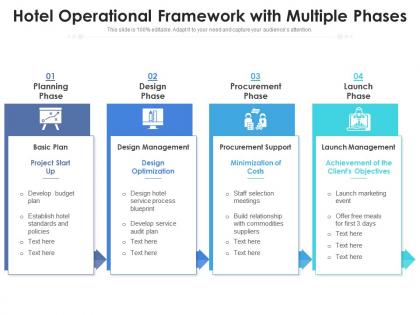
Hotel operational framework with multiple phases




Try Before you Buy Download Free Sample Product
 Impress Your
 Audience
 100%
100% Editable
 Save Hours
 of Time


Our Hotel Operational Framework With Multiple Phases are topically designed to provide an attractive backdrop to any subject. Use them to look like a presentation pro.
People who downloaded this PowerPoint presentation also viewed the following :
Hotel operational framework with multiple phases with all 2 slides:
Use our Hotel Operational Framework With Multiple Phases to effectively help you save your valuable time. They are readymade to fit into any presentation structure.
FAQs for Hotel operational framework
Key components of an efficient hotel operational framework include front desk management, housekeeping coordination, revenue management, guest services, maintenance protocols, and staff scheduling systems. These integrated systems streamline daily operations by automating check-ins, optimizing room turnover, and enhancing guest experiences, with many hotels finding that strategic coordination across departments ultimately delivers improved occupancy rates and operational efficiency.
Technology integration enhances hotel operations by automating check-ins, streamlining housekeeping schedules, and optimizing revenue management through dynamic pricing algorithms. These systems enable hotels to reduce operational costs, accelerate guest services, and deliver personalized experiences, with many hospitality chains finding that integrated platforms ultimately improve both efficiency and customer satisfaction.
Staff training serves as the foundation for hotel operational excellence by ensuring consistent service delivery, proper safety protocols, efficient workflow management, and guest satisfaction standards. Through comprehensive training programs, hotels enhance employee performance, reduce operational errors, and maintain brand consistency across all departments, ultimately delivering superior guest experiences and competitive advantage in an increasingly demanding hospitality landscape.
Hotels implement sustainable practices through energy-efficient systems, waste reduction programs, water conservation technologies, eco-friendly procurement policies, and staff training initiatives. These approaches streamline operations by reducing utility costs, minimizing environmental impact, and enhancing guest experiences, with many hospitality organizations finding that sustainable frameworks ultimately deliver competitive advantage and improved operational efficiency.
Hotels should track occupancy rates, revenue per available room (RevPAR), average daily rate (ADR), guest satisfaction scores, labor cost percentages, and energy consumption per occupied room. These metrics enable hospitality managers to optimize pricing strategies, streamline staffing allocation, and enhance guest experiences, with many hotel chains finding that integrated performance dashboards ultimately deliver improved profitability and competitive positioning.
A hotel's layout and design significantly impacts operational workflows by influencing housekeeping efficiency, guest service delivery, staff movement patterns, and maintenance accessibility. Strategic design choices, such as centralized service areas, optimized room configurations, and clear circulation paths, enable faster room turnovers, reduced labor costs, and enhanced guest experiences, ultimately delivering improved operational efficiency and competitive advantage.
Customer feedback and data analytics inform hotel operational improvements by identifying service gaps, optimizing resource allocation, and predicting guest preferences through real-time monitoring systems. Through integrated platforms analyzing reviews, occupancy patterns, and service delivery metrics, hotels streamline check-in processes, enhance housekeeping efficiency, and personalize guest experiences, ultimately delivering higher satisfaction rates and competitive advantage in an increasingly data-driven hospitality landscape.
Hotels can employ demand forecasting, vendor diversification, inventory optimization systems, centralized procurement, and strategic partnerships with local suppliers to manage supply chain logistics effectively. These strategies streamline operations by reducing costs, minimizing waste, and ensuring consistent availability of essentials, with many hospitality groups finding that integrated logistics platforms ultimately deliver improved guest experiences and enhanced operational efficiency.
Cross-departmental communication is absolutely critical in hotel operations, serving as the backbone that connects housekeeping, front desk, maintenance, food service, and management teams. Effective communication streamlines guest experiences, prevents service disruptions, and enables rapid problem resolution, with many hotels finding that integrated communication systems significantly reduce response times, enhance guest satisfaction, and ultimately deliver competitive operational efficiency.
Best practices for managing housekeeping operations include standardized cleaning protocols, real-time room status tracking, quality assurance inspections, staff training programs, and efficient inventory management systems. These approaches streamline operations by reducing room turnaround times, maintaining consistency across properties, and enhancing guest experiences, with many hotels finding that systematic housekeeping management ultimately delivers higher satisfaction scores and increased operational efficiency.
Hotels leverage predictive analytics for inventory management by analyzing booking patterns, seasonal trends, guest preferences, and market conditions to optimize room availability and pricing strategies. Through machine learning algorithms, properties can forecast demand fluctuations, minimize overbooking risks, and maximize revenue per available room, while streamlining supply chain operations, ultimately delivering enhanced profitability and guest satisfaction.
Hospitality compliance challenges include varying local regulations, frequent policy updates, staff training requirements, documentation management, and multi-jurisdictional standards across properties. These complexities require systematic tracking, regular audits, and comprehensive training programs, with many hotel chains finding that centralized compliance management systems streamline adherence while reducing operational risks and enhancing guest safety standards.
Revenue management strategies integrate into hotel operational frameworks by aligning pricing decisions with demand forecasting, inventory allocation, and distribution channels across all departments. Through dynamic pricing systems, hotels coordinate front desk operations, housekeeping schedules, and marketing campaigns to optimize occupancy rates and average daily rates, while enabling real-time adjustments that maximize revenue per available room and enhance overall profitability.
Essential technologies for optimizing front office operations include property management systems, mobile check-in platforms, automated guest communication tools, digital key systems, and integrated payment processing solutions. These technologies streamline guest experiences by reducing wait times, enabling contactless services, and providing real-time room availability, with many hotels finding that strategic technology integration ultimately delivers faster check-ins and enhanced operational efficiency.
Operational frameworks in luxury hotels prioritize personalized service, extensive staffing ratios, and premium amenities, while budget hotels focus on cost efficiency, streamlined processes, and standardized offerings. Luxury properties emphasize concierge services, room customization, and guest experience management, whereas budget hotels streamline check-in automation, minimize operational complexity, and maximize occupancy rates, ultimately delivering different value propositions for distinct market segments.
-
Excellent Designs.
-
Great designs, really helpful.
-
Presentation Design is very nice, good work with the content as well.
-
Unique design & color.
-
It saves your time and decrease your efforts in half.
-
Wonderful templates design to use in business meetings.
-
Innovative and attractive designs.
-
Attractive design and informative presentation.
-
Topic best represented with attractive design.
-
Great designs, really helpful.