


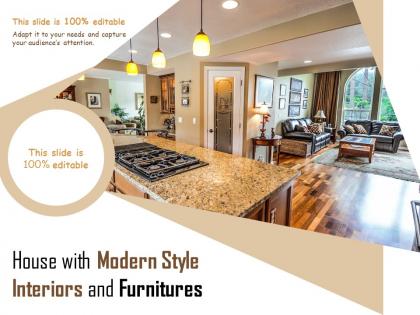
House with modern style interiors and furnitures




Try Before you Buy Download Free Sample Product
 Impress Your
 Audience
 100%
100% Editable
 Save Hours
 of Time


Put out your advice for all to see. Boldly display it on our House With Modern Style Interiors And Furnitures.
People who downloaded this PowerPoint presentation also viewed the following :
House with modern style interiors and furnitures with all 2 slides:
Blast the ball with your ideas. Cover all bases with our House With Modern Style Interiors And Furnitures.

FAQs for House with modern style
Modern interior design is defined by clean lines, minimalist aesthetics, open floor plans, neutral color palettes, and functional furniture with geometric forms. These elements work together by maximizing natural light, emphasizing spatial flow, and incorporating materials like glass, steel, and concrete, with many residential and commercial spaces finding that this approach delivers enhanced functionality and timeless visual appeal.
Color palettes significantly influence mood in modern spaces by affecting psychological responses, energy levels, and spatial perception through strategic combinations of neutral bases, accent tones, and lighting interactions. Cool blues and greens promote calm and focus in offices and bedrooms, while warm oranges and yellows energize social areas, with many designers finding that monochromatic schemes enhance minimalist aesthetics and spatial flow.
Technology revolutionizes modern interior aesthetics through smart lighting systems, integrated home automation, voice-controlled devices, digital art displays, and seamless connectivity solutions. These innovations enhance spatial functionality by creating customizable ambiances, streamlining daily routines, and enabling responsive environments, with many designers finding that strategic technology integration delivers both sophisticated aesthetics and elevated living experiences.
Sustainability trends significantly influence modern interior design through eco-friendly materials, energy-efficient lighting, water-saving fixtures, and locally-sourced furnishings. These approaches streamline environmental responsibility while enhancing aesthetic appeal, with many hospitality, corporate, and residential projects finding that sustainable choices deliver long-term cost savings, improved indoor air quality, and competitive market positioning in an increasingly eco-conscious landscape.
**INPUT**: What are the most popular materials in contemporary interiors? **OUTPUT**: Popular contemporary interior materials include natural wood, engineered stone, brushed metals, textured concrete, and high-performance ceramics. These materials enhance modern spaces by delivering durability, visual appeal, and maintenance efficiency, with many designers finding that strategic combinations create sophisticated environments while minimizing long-term costs and maximizing aesthetic impact. **Word count: 52 words**
Furniture selection enhances modern space functionality by prioritizing multi-purpose pieces, optimized storage solutions, and flexible configurations that adapt to changing needs. Strategic choices like modular seating, expandable dining tables, and built-in storage systems maximize square footage while maintaining clean aesthetics, with many contemporary homes finding that thoughtfully selected pieces deliver both form and efficiency.
Essential design principles for open-concept layouts include defined zones through furniture placement, consistent flooring throughout, strategic lighting layers, cohesive color palettes, and multifunctional storage solutions. These approaches streamline spatial flow by creating visual continuity, maximizing natural light distribution, and enhancing functionality, with many homeowners and commercial spaces finding that strategic zoning ultimately delivers increased flexibility and enhanced living experiences.
Lighting dramatically transforms spatial perception in modern interiors by creating visual depth, highlighting architectural features, and establishing focal points that guide the eye. Through strategic layering of ambient, task, and accent lighting, designers manipulate shadows and brightness to make rooms appear larger, while LED strips and recessed fixtures enhance clean lines, ultimately delivering more dynamic and visually expansive living environments.
Best practices for blending minimalism with comfort include selecting multifunctional furniture, incorporating soft textures through natural fabrics, maintaining neutral color palettes with warm undertones, optimizing natural lighting, and strategically placing cozy elements like throws or cushions. These approaches streamline spaces while enhancing livability, with many designers finding that layering simple, high-quality materials ultimately delivers both visual clarity and inviting comfort.
Art can be effectively integrated into modern interiors through strategic placement, scale consideration, color coordination, lighting enhancement, and texture contrast. These approaches work by creating focal points, balancing minimalist spaces, and adding personality while maintaining clean lines, with many designers finding that carefully curated pieces ultimately enhance spatial depth and deliver sophisticated visual interest without overwhelming modern aesthetics.
Emerging modern kitchen trends include smart appliances with voice control, sustainable materials like bamboo countertops, bold geometric backsplashes, integrated storage solutions, and multi-functional islands serving as workspaces. These design elements streamline meal preparation, enhance functionality, and create seamless entertaining spaces, with many homeowners finding that strategic combinations ultimately deliver both aesthetic appeal and increased property value.
Personal style within modern design can be expressed through strategic color choices, curated art collections, textured materials, unique lighting fixtures, and carefully selected statement pieces that reflect individual preferences. While maintaining clean lines and minimalist principles, homeowners successfully incorporate vintage finds, bold accent walls, or culturally meaningful objects, ultimately creating personalized spaces that balance contemporary functionality with distinctive character.
Common pitfalls in modern interior decorating include over-minimalism creating sterile spaces, neglecting comfort for aesthetics, poor lighting choices, ignoring scale and proportion, and following trends blindly. While modern design emphasizes clean lines and functionality, many homeowners find that balancing visual appeal with livability, incorporating personal touches, and considering long-term usability ultimately delivers more satisfying living environments.
Cultural influence shapes modern interior aesthetics by incorporating traditional craftsmanship, regional color palettes, indigenous materials, and ancestral design philosophies into contemporary spaces. Many designers increasingly blend Scandinavian minimalism with Japanese zen principles, Mediterranean warmth with industrial elements, ultimately creating personalized environments that honor heritage while embracing modern functionality and global accessibility.
Modular and multi-functional furniture delivers space optimization, cost efficiency, design flexibility, enhanced functionality, and future adaptability in modern homes. These innovative solutions streamline living spaces by maximizing square footage, reducing furniture purchases, and enabling easy reconfiguration, with many homeowners finding that strategic furniture choices ultimately enhance both lifestyle convenience and property value in increasingly compact urban environments.
No Reviews