

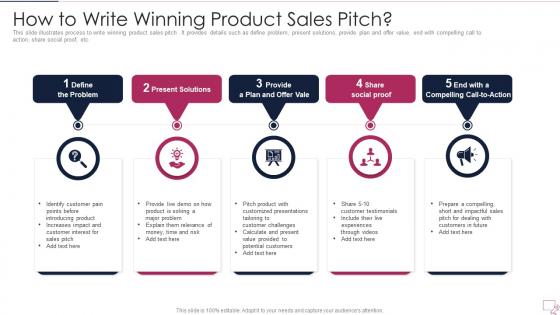
How To Write Winning Product Sales Pitch




Try Before you Buy Download Free Sample Product
 Impress Your
 Audience
 100%
100% Editable
 Save Hours
 of Time


Our How To Write Winning Product Sales Pitch are topically designed to provide an attractive backdrop to any subject. Use them to look like a presentation pro.
People who downloaded this PowerPoint presentation also viewed the following :
How To Write Winning Product Sales Pitch with all 6 slides:
Use our How To Write Winning Product Sales Pitch to effectively help you save your valuable time. They are readymade to fit into any presentation structure.





FAQs for How To Write Winning
Honestly, most sales pitches suck because they're missing key pieces. You need a solid hook first - maybe a crazy stat or question that makes them go "wait, what?" Then spell out their actual problem and how you fix it. But here's what kills me - people always skip the proof part! Throw in some testimonials or data that shows you're not just talking out your ass. Oh, and don't be one of those people who ends with "let me know if you have questions." Give them a clear next step. Trust me, nail these five things and your pitch will feel way more natural.
Dude, stories absolutely crush boring feature lists every time. People remember narratives way better than specs - it's just how our brains work. When you tell a story about how you helped another client, prospects start picturing themselves getting those same results. Way more powerful than just listing benefits. Plus it builds trust because you're sharing real experiences, not sales-speak. I actually learned this the hard way after bombing pitches with nothing but data. Try starting your next one with a quick customer story - even 30 seconds makes a huge difference.
Dude, audience analysis is literally the make-or-break thing for sales pitches. You've gotta figure out who you're talking to first - what keeps them up at night, their budget situation, how they make decisions. Obviously you wouldn't sell a Ferrari to some broke college kid the same way you'd pitch a CEO, you know? Once you get their world, you can talk like them and hit the stuff they actually care about. I always dig into their company and industry drama before any pitch - sounds nerdy but it works. Makes everything way more relevant and honestly just easier to connect with them.
Dude, biggest thing is don't make it about YOU - talk about their actual problems instead. Also stop cramming every feature into one conversation, it's overwhelming. Never read straight from a script either, sounds terrible. Listen to what they're saying instead of just waiting for your turn to talk. Honestly, I see so many people mess this up by leading with how "revolutionary" their product is. Start with how you fix their headache, keep it natural, and always give them a clear next step. Even if it's just "let's chat again Tuesday."
Dude, visuals are a game-changer for sales pitches. People need to *see* what you're talking about, not just imagine it. Charts and mockups make everything click way faster than endless bullet points - honestly, those put everyone to sleep anyway. Templates keep your story tight and help you flow from problem to solution without rambling. Just don't go crazy with random stock photos that don't actually relate to anything. Pick stuff that matches your brand and actually backs up what you're saying. Trust me, prospects remember visual concepts way better than whatever you said five minutes ago.
Hit them with a crazy stat right off the bat - something that makes them go "wait, what?" Works every time. Or ask something like "What if I told you that you're losing $10K monthly without realizing it?" Personal stories are gold too, honestly way better than boring feature lists. I've seen people nail it by sharing a specific win they got for another client. The trick is making everything about THEIR world, not your stuff. Oh and definitely test different openers - what works for one crowd might totally flop with another. Focus on their problems first, solutions second.
Pick 2-3 stats that hit their specific pain points - like "40% cost reduction in your industry" beats generic numbers every time. Don't dump a spreadsheet on them though, that's annoying. Recent data from solid sources only because sketchy stats will torpedo your credibility instantly. Weave the numbers into your story naturally instead of just firing off percentages. Actually, I've seen people lose deals by overdoing the data thing - it's about telling a story they care about, not showing off how many research reports you've read.
Okay so first thing - practice out loud until it doesn't feel weird anymore. I literally used to pitch to my bathroom mirror lol. Know your product super well so you won't freak out when they ask random questions. Here's the thing though: focus on what you're solving for THEM, not what you want from the deal. That shift in mindset helps a ton. Take some deep breaths before you start. Most people actually want you to do well if your thing genuinely helps them. Oh, and definitely prep for the usual objections beforehand - you'll feel way more confident when you're not scrambling for answers.
Honestly, structure is everything when it comes to pitches. Without a clear flow, you're dead in the water. I always go: problem, solution, benefits, then proof. Keeps people following along instead of getting lost. Jump around randomly and you'll confuse the hell out of everyone. I've watched great products bomb because the pitch was a mess - kind of painful to see actually. Hook them at the start, build that urgency in the middle, then push for action at the end. It's basically storytelling but with a business goal. Try mapping your next one out this way and see how much easier it flows.
Dude, emotional appeal is everything. People buy with their feelings first, then scramble to justify it with logic after. I used to just dump features on prospects like an idiot - learned that lesson the hard way! You've gotta hit their real pain points early. What's keeping them up at night? Maybe they're drowning in busywork or worried about looking incompetent to their boss. Find that nerve and press it. Once they feel something, then you can throw in the rational stuff to back up what their gut already knows. Features are boring - emotions sell.
Honestly, watch their body language during the pitch - are they scribbling notes or asking tons of questions? That's usually a good sign. The real proof comes after though. Do they actually book that demo you suggested? Are your follow-up emails getting responses? Sometimes they'll go dark for weeks then randomly call back ready to buy (sales is so unpredictable lol). But yeah, focus on actual moves they make. Did they request a proposal? Introduce you to their boss? Those concrete actions tell you way more than just being polite during your presentation.
Okay so first thing - actually listen instead of getting all defensive right away. Ask stuff like "what's your biggest concern there?" to figure out what's really bugging them. Here's the thing though - most objections are actually good signs! They're interested but just need you to address something specific. I used to freak out whenever someone pushed back, but honestly now I realize they're basically giving me a roadmap of what to fix. Just acknowledge what they said (for real, not fake), then give them examples or solutions that actually matter. Oh and definitely practice the common ones beforehand so you're not sitting there like "uhhhh."
Dude, you've gotta know who you're talking to first. Tech startups? They want to hear about scaling fast and shaking things up. Healthcare companies are all about compliance and keeping patients safe - totally different vibe. I bombed a pitch once using the same generic spiel for everyone, so trust me on this. Manufacturing folks want hard ROI numbers and efficiency stats. Retail cares way more about making customers happy. Here's what works: figure out their biggest 3 headaches, then rebuild your whole pitch around fixing those exact problems. Oh, and switch up your examples and tone too.
Definitely shoot them a thank-you note within 24-48 hours - mention something specific you talked about so it doesn't feel generic. Send whatever you promised during the meeting right away. Then suggest actual next steps with real dates, not vague "let's touch base soon" stuff. I learned this the hard way, but set a reminder to circle back in a week if they ghost you. Persistence works, just don't be that annoying person who calls every day. Oh, and log everything in your CRM because you'll forget details. The goal is staying relevant while actually being helpful, not just pestering them with "any updates?" messages.
Record yourself on your phone - yeah it's awkward but it works. Don't memorize word-for-word though, that'll make you sound like a robot. Run through different versions and practice handling pushback. Get a coworker to watch and call out your weird hand gestures or whatever. I swear the mirror thing helps too, you'll spot nervous tics you never noticed. Work on those first 30 seconds until they're perfect. Oh, and make sure you can transition smoothly between points. The whole thing should feel like a conversation, not a presentation you're reading off.
-
Thanks for all your great templates they have saved me lots of time and accelerate my presentations. Great product, keep them up!
-
Really like the color and design of the presentation.