


HR Monthly Meeting Schedule Plan




Try Before you Buy Download Free Sample Product
 Impress Your
 Audience
 100%
100% Editable
 Save Hours
 of Time


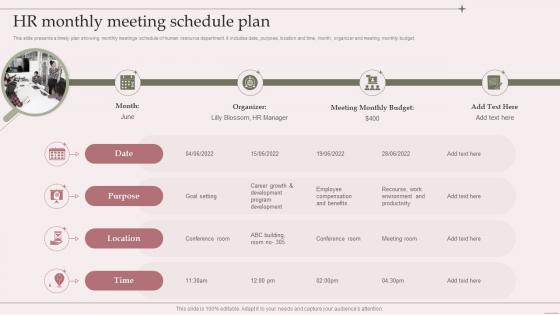
This slide presents a timely plan showing monthly meetings schedule of human resource department. It includes date, purpose, location and time, month, organizer and meeting monthly budget.
People who downloaded this PowerPoint presentation also viewed the following :
HR Monthly Meeting Schedule Plan with all 6 slides:
Use our HR Monthly Meeting Schedule Plan to effectively help you save your valuable time. They are readymade to fit into any presentation structure.






FAQs for HR Monthly
Honestly, just stick to the basics that actually matter. Turnover rate is huge - if people are bailing, you need to know why. Time-to-fill shows how efficient your hiring is, and employee satisfaction scores (though sometimes people BS on those surveys). Absenteeism rates tell you a lot too. Training completion and diversity metrics are solid additions if your company cares about that stuff. But here's the thing - don't track everything under the sun. Pick maybe 5-7 metrics max and actually look at trends over time instead of just glancing at monthly numbers. The key is being ready to explain what's driving changes when your boss inevitably asks.
Honestly, you've gotta stop letting the same three people dominate every meeting. Call on specific folks by name for updates or opinions - don't just sit there hoping someone will jump in. Switch things up with breakout rooms or quick polls instead of death-by-PowerPoint every single time. Oh, and send discussion topics ahead of time so your quieter team members can actually prepare something to say. The biggest thing though? Actually follow through on what people suggest. Nothing kills participation faster than feeling ignored. Once people see their ideas matter, they'll start speaking up way more naturally.
Send your agenda 48 hours early - trust me, people actually need time to prep. Include the usual stuff: policy updates, employee feedback, compliance things. Then add whatever's hot right now, like that benefits rollout or the training everyone keeps bugging you about. I always do a "quick wins" section for tiny updates that don't need real discussion (saves so much time). One clear sentence per item so nobody's confused. Oh, and definitely end with action items - otherwise people walk out wondering what the hell they're supposed to do next.
Honestly, just make "employee concerns" a regular agenda item and actually dive into the patterns you're seeing from exit interviews and surveys. Don't just skim the surface stuff. I'd rotate which department gets the spotlight each month - that way nothing falls through the cracks. The real trick is turning those conversations into actual action items with deadlines and owners. Then follow up next month on what got done. Otherwise you're just sitting around complaining about the same issues over and over, which is basically every HR meeting I've ever been in.
Definitely get Zoom or Teams sorted first. For brainstorming stuff, Miro's amazing - so much better than squinting at someone's tiny shared screen. Mentimeter keeps people awake with polls (virtual meetings are honestly the worst for zoning out). I'd run Slack chat on the side too for quick questions. Oh, and invest in a decent headset if you haven't already - makes a huge difference. Just introduce one new tool at a time though, otherwise everyone gets overwhelmed and nothing works properly.
Oh man, this is so tricky but super important. First thing - never bring up layoffs or major policy stuff in your regular monthly meetings. Save that for closed leadership sessions only. I learned this the hard way watching a coworker accidentally mention restructuring before it was official... total disaster. You'll want to keep detailed notes since these conversations can have legal implications later. What I'd do is create a separate "sensitive topics" section with just the people who absolutely need to know. Then once everything's finalized and you have your communication plan ready, that's when you roll it out to everyone else.
Honestly, our HR meetings are completely different now that we're all about the data. We dig into turnover rates, engagement scores, how the hiring pipeline's looking - that stuff shapes everything we talk about. Way better than the old days when we'd just wing it with random observations! You can actually see patterns, like if one department keeps losing people or whether those diversity programs are doing anything. Helps you catch problems before they blow up too. My suggestion? Bring your team's numbers so you're not just sitting there nodding along.
Block out 10-15 minutes every month for training updates - seriously, don't just cram it in at the end when people are already zoning out. I'd make a simple template that covers what programs wrapped up, what's coming next, plus basic stats like completion rates. Honestly, throwing in one success story or cool learning moment keeps people way more engaged than just rattling off numbers. Give managers a heads up on the training calendar too so they can actually plan around it. The whole point is making it something people find useful instead of just another box to check.
Honestly, just make a simple spreadsheet with who's doing what and when it's due. I ping people about a week before deadlines because everyone's memory is trash these days. Then actually go through the list during meetings - like, really go through it, not that quick glossing-over thing most teams do. If stuff's late, figure out what went wrong and set new dates that actually make sense. The trick is making it feel normal, not like you're being the accountability police. Oh, and Slack works better than email for the reminders IMO.
Send anonymous surveys beforehand to get real feedback. Switch up who you invite - same people every time means same opinions. Don't wait for volunteers during meetings. Call on the quiet ones directly because honestly, the loudest voices usually aren't speaking for everyone anyway. Try breaking into smaller groups where people feel safer sharing. You could also have someone keep an eye on who's actually participating vs. who's just nodding along. The whole thing needs to be deliberate though. Diverse input won't just magically happen if you cross your fingers and hope for it.
Honestly, just send out a quick 3-question survey after meetings - rate relevance, engagement, and whether anything actionable came out of it. Scale of 1-5 keeps it simple. But here's what really matters: follow up on those action items from last time. Did people actually DO the stuff they said they'd do? That tells you way more than any survey will. Also watch who's showing up and who's actually talking during discussions. Maybe do a quarterly check-in where everyone can be brutally honest about what's working. I'd start small though - literally just those 3 survey questions after your next meeting and see what happens.
Try dedicating time each month to stuff like unconscious bias training or reviewing your hiring demographics. Guest speakers from different departments work great too - honestly, it beats the same voices every meeting. You could also look at exit interview patterns or workshop inclusive language for job postings. Oh, and don't forget cultural awareness months! The trick is making it feel natural, not like you're just checking boxes. Start with one discussion point per meeting. Build momentum from there instead of overwhelming everyone right away.
Oh man, I love "Two Truths and a Lie" for this stuff - people get way too into it and you learn random things about coworkers. Quick wins sharing works great too, where everyone just mentions something they accomplished recently. Emoji check-ins are weirdly addictive? Like, adults will genuinely debate whether they're more of a
-
Unique and attractive product design.
-
Illustrative design with editable content. Exceptional value for money. Highly pleased with the product.