


Hr transformation lifecycle roadmap





Try Before you Buy Download Free Sample Product
 Impress Your
 Audience
 100%
100% Editable
 Save Hours
 of Time


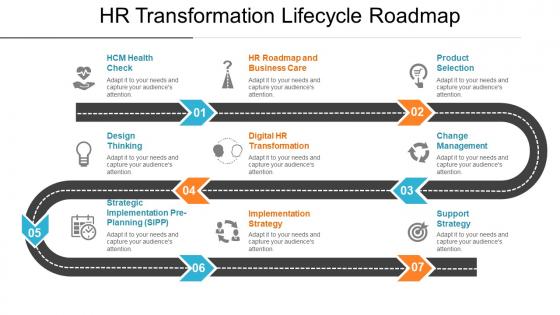
Describe the change in your HR model with our predefined PowerPoint image on HR transformation Lifecycle roadmap PowerPoint template. It allows your business to measure or evaluate the growth of your company through its capability levels. This HR transformation roadmap PowerPoint layout also defines the essential components of the process. Such as the market and HR strategy, business modeling, business processes, available company system and more. Explain the essential benefits of transforming your Human resource model with our HR timeline PPT image. Like, it helps in automating your HR tasks which reduces the manual errors. It likewise also allows the management to develop an adequate process to meet your company targets. The HR transformation PPT design also monitors the better utilization and allocation of your available HR resources and more. Thus, simply click on the download link given below with this PPT layout to create an info graphical Presentation on the concept of HR technology. Focus on the importance of the human angle with our Hr Transformation Lifecycle Roadmap. Be able to handle interracial disputes.
People who downloaded this PowerPoint presentation also viewed the following :
Hr transformation lifecycle roadmap with all 5 slides:
Ensure no important factor is forgotten with our Hr Transformation Lifecycle Roadmap. Be certain to include every angle.


FAQs for Hr
Honestly, it's mostly about keeping up with how fast everything's changing. Digital stuff is forcing companies to completely overhaul their systems. People want their work experience to feel as smooth as their Netflix account - which makes sense when you think about it. The job market's insane right now, so if you're slow to adapt, good people just leave. Oh, and now we can actually track what works instead of making random guesses with data. Remote work basically put all this on steroids. If your HR still feels ancient, you're definitely playing catch-up. I'd start with whatever's driving you most crazy and fix that first.
So basically, tech handles all the boring admin stuff so your team can work on things that actually matter. Look for HR platforms that bundle everything together - recruiting, performance reviews, the whole deal. Self-service portals are clutch too since employees can fix their own basic issues. Honestly, AI and analytics have been huge game-changers for making smarter decisions instead of just winging it. Don't try to change everything at once though - that's a nightmare. Pick one area, show it's worth the money, then roll it out to other departments. Way less painful that way.
Honestly, employee experience should drive your entire HR transformation. Map out where people get frustrated - onboarding, performance reviews, all that stuff. If your team's still dealing with terrible systems and can't get basic answers, you're not really transforming anything, you know? Survey your employees about their biggest HR pain points first. That'll show you what to fix. I'd probably start there instead of guessing what's broken. Focus on the journey from when someone starts to when they leave - those insights will tell you exactly where to spend your time and budget.
Pick 3-5 metrics that actually matter for your goals and get those baselines locked in now. Employee engagement, retention rates, time-to-hire - stuff like that. Monthly dashboards work great for tracking progress. Just don't fall into the trap of measuring everything that looks shiny but tells you nothing useful (been there, it's painful). Survey feedback is gold too since numbers only show half the picture. Honestly, the hardest part isn't collecting data - it's picking what's worth tracking in the first place.
Honestly, your biggest headache will be people who hate change - they're so used to doing things their way. Tech integration is brutal too, especially when your old systems don't play nice together. Budget's always tight because executives never get the real costs upfront. Different departments will push back hard since they think HR stuff messes with their daily grind. Oh, and data migration? Total disaster if your records are already a mess (which they probably are). Get your change management sorted first. Talk about WHY you're doing this constantly, or people will revolt.
Look, first thing - actually dig into what the business is trying to do. Don't just flip through some PowerPoint deck. Get face time with your CEO and department heads. Map out their biggest headaches for the next couple years. Then figure out what HR stuff you need to make that happen. Honestly, I see too many people transforming just to transform - it's such a waste. Every change should tie back to helping the company actually win something. Work backwards from their goals. That way when you pitch an initiative, you can show exactly how it moves the needle on what matters to them.
Honestly, you're gonna need to get comfortable with data analytics and change management stuff. HR isn't just about hiring and firing anymore - you'll be interpreting workforce metrics and turning them into actual business insights. Project management skills are huge too since you'll be juggling like 5 different initiatives at once. Oh, and digital literacy is pretty much mandatory now with all these new platforms constantly popping up. But here's the thing - your influence and stakeholder management abilities matter most. Figure out which of these you suck at and start there.
Honestly, the key is getting your executives on board first - without that, you're screwed. Communicate the hell out of WHY you're doing this because people freak out when they don't understand what's happening. Find some allies in different departments who can help spread the word and calm people down. Don't just dump changes on everyone - actually include them in planning. Oh, and break everything into chunks so it's not this massive overwhelming thing. Quick wins are huge for keeping morale up. Trust me, if people see early results, they'll stop resisting so much.
Honestly, skip the corporate fluff about "improved employee experience" - people see right through that. Focus on what actually makes their day easier. Tell them "no more waiting three weeks for approvals" or "you can finally update your info without calling IT." Real stuff they deal with daily. Be upfront about the messy transition period too. People hate surprises way more than temporary inconvenience. Mix up how you communicate - team meetings, emails, maybe leadership videos if that's your thing. The trick is painting clear before/after pictures that hit their actual pain points.
Start with auditing everything you've got - processes, tech, team skills, the works. Map it all out from hiring to performance reviews. Honestly, bring in someone from outside because you're probably blind to half your issues. I always think it's wild how companies skip the employee survey part, but definitely ask people about their actual HR experience. Oh, and check your data quality early - trust me, messy data becomes a nightmare later. Benchmark against what others are doing too. Just be really honest about where you actually stand versus where you think you do.
Honestly, HR transformation can totally flip your company culture - mostly in a good way if you don't screw it up. Once you ditch the old-school admin stuff and actually use decent tech, people start feeling like... well, like people instead of spreadsheet entries. Communication gets better, things move faster, employees are way more engaged. But fair warning - the whole transition is gonna be a nightmare for a few months. I've seen it go sideways when leadership isn't on board or when nobody explains why you're changing everything in the first place. Clear communication is everything here.
Look, you've gotta bake compliance stuff right into your roadmap from the start. Map out everything you're dealing with - employment law, data privacy, whatever industry regs apply - and get specific people watching each area. Most transformations crash and burn here because everyone gets distracted by cool new tech (been there). Set up compliance checkpoints at every big milestone. Get legal involved early - like, annoyingly early. And document literally everything. Trust me, when auditors show up you'll be so glad you can actually prove what you did and when.
Start with figuring out what skills your team actually lacks - like a proper gap analysis. Then build learning paths that fit each person instead of generic training for everyone. I'd mix workshops, online platforms, and peer mentoring (honestly that peer stuff usually beats formal training anyway). Bring in outside experts for the techy things like analytics or new systems. The biggest thing though? Make it ongoing, not just a one-time deal. Oh, and don't forget regular check-ins to see how it's going and tweak things.
Honestly, you need to keep checking in with people - both HR and regular employees - through quick pulse surveys. Track the stuff that actually matters: how efficient processes are running, whether people are happy, if they're actually using the new tools you rolled out. Don't just do this once and call it good though. I've watched so many companies mess this up because they never bothered asking if things were working. Monthly or quarterly reviews are your friend here. Oh, and this part is crucial - tell people what you learned from their feedback and what you're changing because of it. Nothing kills morale faster than feeling ignored.
Track your operational stuff first - employee engagement, time-to-hire, cost per hire, retention rates. Those are your bread and butter metrics. Strategic ones matter too though: internal mobility, manager effectiveness, diversity goals. Honestly, engagement scores will tell you everything you need to know. If people still hate dealing with HR, you're not there yet. I'd probably do quarterly check-ins on all this data, then tweak your plan based on what's actually happening. Oh, and don't get too caught up in tracking everything - pick like 5-7 metrics max or you'll drown in numbers.
-
Helpful product design for delivering presentation.
-
Presentation Design is very nice, good work with the content as well.