


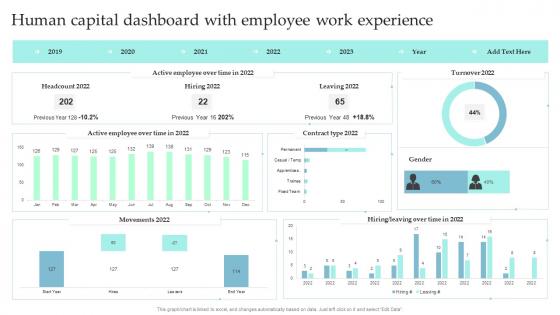
Human Capital Dashboard With Employee Work Experience




Try Before you Buy Download Free Sample Product
 Impress Your
 Audience
 100%
100% Editable
 Save Hours
 of Time


Our Human Capital Dashboard With Employee Work Experience are topically designed to provide an attractive backdrop to any subject. Use them to look like a presentation pro.
People who downloaded this PowerPoint presentation also viewed the following :
Human Capital Dashboard With Employee Work Experience with all 7 slides:
Use our Human Capital Dashboard With Employee Work Experience to effectively help you save your valuable time. They are readymade to fit into any presentation structure.






FAQs for Human Capital Dashboard With
Honestly, start with engagement scores and retention rates - those are your bread and butter. eNPS is solid too since it shows if people would actually recommend working there. I'd throw in time-to-productivity for new hires and maybe track absenteeism (seriously underrated metric). Internal mobility rates tell you a lot about growth opportunities. Oh, and don't skip exit interviews - the patterns that come up are usually eye-opening. But here's the thing: pick like 3-4 max to start. I've seen teams try to measure everything and just end up drowning in data without actually improving anything.
Honestly, those yearly surveys are pretty much useless - people just blow through them. What actually works is setting up quick monthly pulse checks and doing real exit interviews when people leave. Track the patterns you're seeing over time, then connect that data to your retention numbers and productivity stuff. I've watched companies collect feedback for months but never actually look at what it's telling them about turnover or engagement. The biggest thing though? When you fix something based on feedback, tell everyone about it. Otherwise people think you're just collecting data for no reason. Start small with monthly check-ins.
Honestly, tech makes tracking employee stuff so much easier now. Pulse surveys and HR analytics tools grab real-time feedback without you having to chase people down. The automated tracking is a game-changer - engagement scores, retention data, all that good stuff happens in the background. AI can spot weird patterns too, like how often managers check in vs. how happy people actually are. Pretty neat. But here's the thing - don't go overboard at first. Pick one solid survey platform and actually DO something with what you learn. I've seen too many companies collect tons of data that just sits there collecting digital dust.
So satisfaction is like "are you happy with your paycheck and benefits?" Pretty surface level stuff. Engagement's totally different though - it's whether they actually give a damn about the work itself. You could have someone who's satisfied but completely phoning it in, you know? Engagement looks at the emotional side - do they care about company goals, will they put in extra effort when needed? I'd honestly focus way more on engagement surveys since they actually predict who's gonna quit or slack off. Way more useful than just asking if people like their health insurance.
Honestly, start with exit interviews if you're not already doing them - people leaving have zero filter and will tell you everything. Focus groups work well since employees bounce ideas off each other, but sometimes one loud person dominates the whole thing. One-on-ones are where you get the real dirt though. People won't trash their manager in front of coworkers, but they might tell you privately. Oh, and don't forget pulse surveys with open-ended questions - way less work than scheduling a million meetings but you still get good stuff.
Honestly, real-time metrics are a game changer because you'll actually catch problems while you can still fix them. Instead of finding out someone's burned out when they hand in their resignation, you spot the warning signs early. Think burnout, team drama, people checking out mentally - all that stuff shows up in the data before it explodes. I learned this the hard way at my last job, but anyway - employees actually feel heard when you're responding to their feedback regularly instead of doing those pointless annual surveys. Don't go crazy though. Start with maybe 2-3 key things you track weekly. More than that and you'll drown in spreadsheets.
Look, happy employees literally make you more money - it's that simple. They stick around longer, work harder, and treat your customers better. I've seen teams completely transform when people actually feel valued. Your hiring costs drop because nobody's constantly quitting, plus engaged workers genuinely care about doing good work. Companies with solid employee experience grow revenue 3x faster than their competitors (crazy right?). My advice? Start surveying your team regularly, but here's the key part - you have to actually DO something with their feedback. Otherwise it's just pointless paperwork.
Oh man, cultural stuff totally changes how people fill out those surveys! Like, some cultures are super indirect with feedback while others just tell it like it is. Power distance is huge too - in some places people won't ever criticize management even anonymously. I learned this the hard way when our Asia results looked way different than Europe's. Different regions care about totally different things at work - individual praise vs team stuff, you know? Definitely compare within regions only, not globally. The context matters way more than I thought it would.
Skip the boring charts and jump straight into the story - like "retention's up 15% because managers are finally nailing their 1:1s." Trust me, I've watched way too many execs zone out at spreadsheets full of survey data. Pick 2-3 big insights max. Dashboards beat Excel dumps every time. Always answer the "so what" question - what are you actually doing about this stuff? Oh, and end with concrete next steps and deadlines. Otherwise you'll look like you're just reporting numbers instead of fixing problems.
So these metrics show you what's actually going wrong before people bail. Track engagement scores, how people feel about their managers, career development stuff - that's where the red flags pop up. Exit interviews are honestly where you strike gold though, they reveal patterns you'd totally miss otherwise. Like if everyone keeps complaining about crazy workload or zero growth opportunities, boom - that's your retention strategy right there. The trick is actually doing something with all that data instead of just... collecting it and crossing your fingers, you know?
Ugh, getting real feedback from remote people is such a pain. They feel isolated and won't tell you what's actually happening half the time. Tech stuff trips people up too - not everyone's comfortable with digital surveys or jumping on video calls to chat about work drama. Body language tells you so much, and you miss all those little burnout signals when you're not face-to-face. I'd try mixing things up - quick pulse surveys work well, definitely do regular one-on-ones. Oh, and anonymous chat tools are clutch for getting people to spill the truth.
Honestly, you gotta tie your employee stuff directly to what the C-suite actually cares about - revenue, customer scores, retention rates, all that. I learned this the hard way when I kept showing engagement percentages and everyone's eyes would glaze over lol. Figure out what metrics your leadership team is obsessed with first. Then look for connections with your employee data. Like, does turnover in sales impact quarterly numbers? Create dashboards that show both side-by-side. When you can say "hey, our engagement dropped 15% and revenue dipped right after," suddenly people listen. Makes it way easier to get budget for employee programs too.
So basically track how fast new people hit their targets and if they stick around after 90 days. Manager feedback is clutch - tells you if someone's actually ready to do the work. Don't sleep on satisfaction surveys either, first impressions are everything. Oh and completion rates for onboarding stuff, obviously. The big one though? How long before they feel confident in what they're doing. That's what really matters. Start simple with these and add fancier metrics later if you want.
Honestly, I'd start with the big names - Gallup and Deloitte put out solid annual reports with engagement scores and turnover rates broken down by industry. Glassdoor's pretty useful too. Your industry association might share anonymous survey data if you dig around their site. HR consulting firms do benchmarking services, but that'll cost you. The trick is finding companies similar to yours - same size, location, sector. Otherwise you're comparing a tech startup to a manufacturing giant, which is pointless. Pick your top 3-4 metrics first, then hunt for the newest data you can find.
Honestly, HR tech is a game changer for measuring employee experience. You can set up pulse surveys that just run themselves, plus get real-time dashboards showing you what's actually happening. No more drowning in spreadsheets for weeks (been there, done that). The analytics will catch trends you'd totally miss otherwise - engagement drops, who's likely to quit, satisfaction patterns. One platform can handle everything from day-one onboarding through exit interviews, which is way better than switching between a million different tools. I'd start with something that does both surveys and analytics together. Trust me, you'll get your weekends back.
-
Excellent Designs.
-
“Ample and amazing variety of templates available, really helpful for making professional PPT for day to day workings.”