


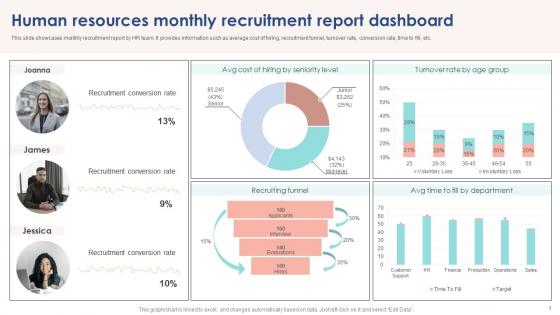
Human Resources Monthly Recruitment Report Dashboard




Try Before you Buy Download Free Sample Product
 Impress Your
 Audience
 100%
100% Editable
 Save Hours
 of Time


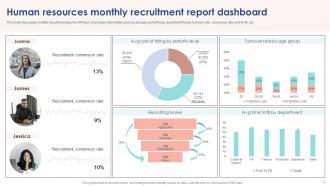
This slide showcases monthly recruitment report by HR team. It provides information such as average cost of hiring, recruitment funnel, turnover rate, conversion rate, time to fill, etc.
People who downloaded this PowerPoint presentation also viewed the following :
Human Resources Monthly Recruitment Report Dashboard with all 7 slides:
Use our Human Resources Monthly Recruitment Report Dashboard to effectively help you save your valuable time. They are readymade to fit into any presentation structure.





FAQs for Human Resources Monthly
Honestly, the culture stuff is probably your biggest headache right now. People feel disconnected when they're all working from different places. Communication gets messy too - no more popping by someone's desk to ask a quick question. Then you've got performance reviews where you can't actually see how people work day-to-day, which is weird. New hires are basically meeting their team through a screen for the first time ever. Oh, and some people are struggling with crappy home wifi while others have fancy setups. Mental health hits different when you're isolated at home. I'd say overcommunicate and do way more check-ins than feels normal.
Honestly, ditch the annual review thing and try pulse surveys instead - Culture Amp or 15Five give you way better real-time feedback. Performance platforms help with goal tracking too. Slack's actually pretty great for building community (not just endless notifications lol) - set up recognition channels or virtual coffee meetups. LinkedIn Learning keeps people happy since everyone loves new skills. Don't go crazy with tech though. Pick one thing that actually fixes a problem your team has, get people on board, then add more later. Oh and make sure whatever you choose doesn't create more work than it solves.
Honestly, your company culture is like a magnet for talent. Good culture? People can actually see themselves working there long-term, even if the pay isn't astronomical. I've seen friends stay at jobs they love way longer than they probably should've just because they felt appreciated. But toxic workplaces? Total disaster - your best people will bolt first chance they get. The trick is actually being honest about what your culture really looks like (not the fantasy version on your website). Then just be consistent about showing that vibe throughout interviews and daily work life. It really makes a huge difference.
Look, hiring diverse people is just step one - the hard part is making everyone feel like they actually belong. Skip those pointless one-day bias workshops. Instead, get diverse interview panels going and track who's getting promoted (the data might surprise you). Employee resource groups help people find their tribe at work. Your leadership needs to visibly care about this stuff too, not just pay lip service. Set up anonymous feedback so you can catch problems early. Honestly, most companies talk a good game but don't measure anything real.
Honestly, prep work makes all the difference here. Go through their whole year beforehand - don't just wing it based on what you remember from last month. I've seen managers do that and it's painful for everyone. Focus on actual examples instead of generic "you did good" feedback. Make it a real conversation too. Ask about their goals and what roadblocks they're hitting. Oh, and take notes during the meeting so you both know what's next. The biggest thing though? Don't save up feedback for one big annual dump. Give it throughout the year so nothing feels like a surprise.
Honestly, start with one metric that's been driving leadership crazy and build from there. Data analytics can help you spot turnover trends and actually predict who might bail next. Look at stuff like time-to-hire, performance ratings, survey responses - you'll catch patterns that would totally fly under the radar otherwise. The insights are genuinely surprising once you dig in. You can make smarter budget calls based on real retention costs, optimize recruiting spend, plus predict headcount needs down the road. I mean, it beats making decisions based on gut feelings and crossed fingers, right?
Honestly, workload management is where I'd start - help people figure out what they can actually say no to. Monthly check-ins are clutch, but like actually ask about stress, don't just go through the motions. Time off that people genuinely take (not those sad unused vacation days we all hoard). Flexible schedules when you can swing it. The biggest thing though? People need to feel safe speaking up before they're completely fried. I learned this the hard way at my last job. Pick one thing and stick with it rather than trying to fix everything at once.
Honestly, don't treat workforce planning like some annual checkbox thing. Track what's happening in your industry constantly - like, are you gonna need more data people? Less of the old-school roles? Too many companies I've seen get completely caught off guard by obvious shifts. Mix up your hiring approach with full-timers, contractors, maybe some upskilling stuff. Oh and definitely run scenarios for different market situations so you're not scrambling later. The key thing? Start watching those leading indicators in your space now, not when it's too late.
Oh man, this stuff will bite you if you're not careful. Biggest mistake? Calling someone a contractor when they're actually an employee - that's lawsuit territory right there. We're talking unpaid overtime claims, benefits drama, the whole mess. The IRS doesn't mess around with this either. Honestly, I've seen companies get totally screwed because they tried to save money on classifications. You'll want clear policies about who counts as what, and maybe check those relationships periodically. My advice? Get a lawyer involved before you make any big decisions here.
Honestly, the trick is making learning feel normal, not like extra homework. Block out time for it - even an hour weekly helps. Mentorship stuff works great, or those lunch sessions where people teach each other random skills they've picked up. Development plans are clutch too because it shows you actually care about where they're headed, not just what they're doing now. Oh, and definitely celebrate when someone learns something new. People love getting recognized for growth - it's like positive reinforcement but for adults lol. The organic approach beats forcing it every time.
Dude, you gotta stop doing what everyone else is doing. Virtual coffee chats are huge right now - show off your actual culture instead of boring job posts. Partner with universities for hackathons, sponsor meetups, build relationships before you even need to hire. Your current employees probably know tons of great people, so lean into referral programs hard. I swear, candidates are so over generic recruitment stuff. Pick one weird channel this month and just try it. Building real connections beats posting into the void every time. Oh and those "day in the life" videos? Gold.
Start by figuring out who your high-potential people are - most companies wait way too long on this. Set up mentoring programs and get them doing cross-functional projects so they're not stuck in one department forever. 360-degree feedback is clutch for showing blind spots. But honestly? Succession planning is where everyone screws up, and that's your golden opportunity. Work with your current leaders to actually coach people instead of just throwing them into training modules. Audit what you've got now, see where the gaps are, then build around those specific holes.
So when crisis hits, HR basically becomes the glue holding everything together. You're managing all the communication, keeping people safe, coordinating who works from where - the whole nine yards. Cross-train your people though, because when someone key is out sick (or worse), you don't want to be scrambling. Build solid communication channels before you need them, not during the mess. Having clear protocols ready to go makes such a difference. It's honestly when HR stops being seen as just the "onboarding and review people" and shows what you're really worth.
Anonymous feedback is your best friend here. Keep surveys short and specific - nobody wants to fill out those soul-crushing annual reviews anyway. Ask about recent stuff, not vague "how's morale" questions. Here's the thing though: you absolutely have to follow up. Share what you learned and what you're actually doing about it. People get so annoyed when they give feedback and then... nothing. Radio silence. Mix up how often you ask for input instead of sticking to some rigid schedule. The whole point is showing people their voices matter by taking real action on what they tell you.
Honestly, the worst thing you can do is dump everything on them day one - their brain will just shut off. Spread that orientation stuff across like two weeks instead. Also, people get weirdly anxious about basic things (where's the coffee? how do I even log in?) so don't skip over that. Give them a buddy who isn't their boss - someone chill who won't make them feel stupid for asking obvious questions. Make a simple checklist of what needs to happen when, but actually follow up on it. I've seen so many places just hand someone a laptop and disappear for a month. Recipe for disaster.
-
Informative and engaging! I really like the design and quality of the slides.
-
Happy to found you SlideTeam. You guys are value for money. Amazing slides.