

IKEA Investor Funding Elevator Pitch Deck Ppt Template





Try Before you Buy Download Free Sample Product
 Impress Your
Audience
 100%
Editable
 Save Hours
of Time


Ikea is a home furnishing product offering company that offers a large product range from home decoration to customized furniture. Our Fundraising proposal titled, Ikea Investor Funding Elevator Pitch Deck outlines problems faced by customers in home furnishing such as lighting issues, unmatching decoration pieces, cluttering kitchen, etc. Additionally, this Home Decor module caters to the solutions offered such as customized furniture and lighting options, organizers, decor pieces, etc. Furthermore, this investors presentation includes company details such as an introduction, key facts, products and services offered, and USP. It also covers major milestones achieved, business model, competitive analysis, market potential, financial performance, etc. Lastly, the home accessories pitch deck entails investment asks, fund allocation, funding history, core team, exit strategy, and shareholding pattern. Download our insightfully developed template now.
People who downloaded this PowerPoint presentation also viewed the following :
Content of this Powerpoint Presentation
Slide 1: This slide introduces IKEA Investor Funding Elevator Pitch Deck. State Your Company Name and begin.
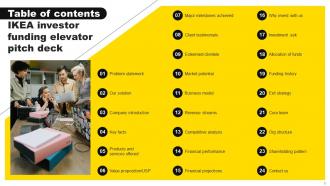
Slide 2: This slide shows a Table of Contents for the presentation.
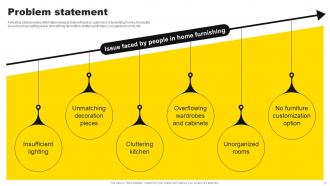
Slide 3: This slide provides information about problems faced by customers in furnishing homes.
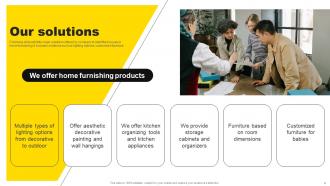
Slide 4: This slide exhibits major solutions offered by company to identified issues in home furnishing.
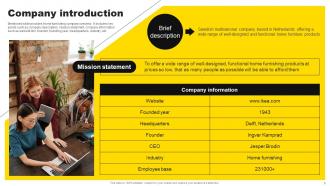
Slide 5: This slide entails home furnishing company overview.
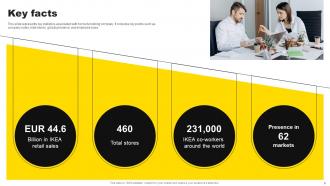
Slide 6: This slide represents key statistics associated with home furnishing company.
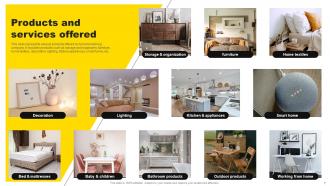
Slide 7: This slide presents various products offered by home furnishing company.
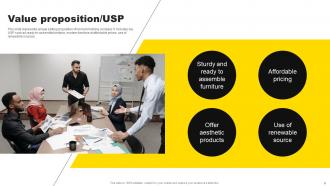
Slide 8: This slide shows unique selling proposition of home furnishing company.
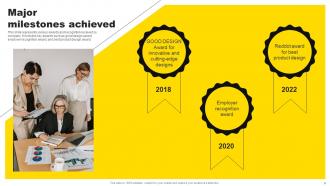
Slide 9: This slide showcases various awards and recognition received by company.
Slide 10: This slide caters to customer reviews related to home furnishing company products and services.
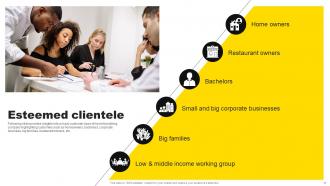
Slide 11: This slide caters to insights into a major customer base.
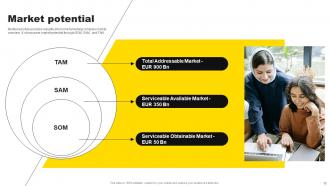
Slide 12: This slide provides insights into home furnishing company market overview.
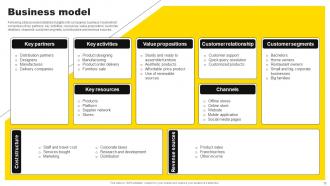
Slide 13: This slide gives detailed insights into companies business model which comprises of key partners, key activities, resources, value proposition, customer relations, channels, customer segment, cost structure and revenue sources.
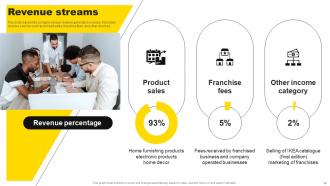
Slide 14: This slide shows company various revenue generation sources.
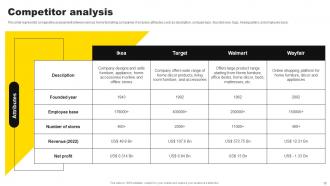
Slide 15: This slide showcases comparative assessment between various home furnishing companies.
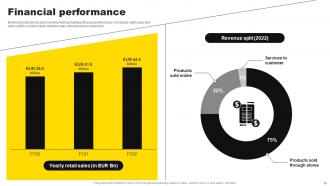
Slide 16: This slide portrays home furnishing business financial performance.
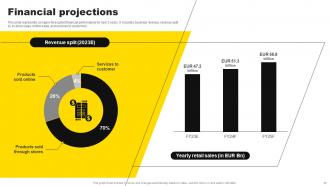
Slide 17: This slide represents company forecasted financial performance for next 3 years.
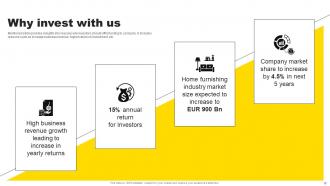
Slide 18: This slide presents insights into reasons why investors should offer funding to company.
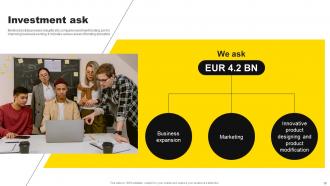
Slide 19: This slide provides insights into company investment funding ask for improving business working.
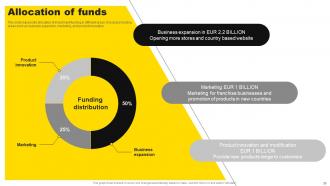
Slide 20: This slide entails allocation of investment funding in different areas.
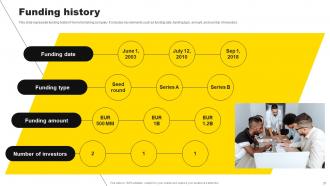
Slide 21: This slide depicts funding history if home furnishing company.
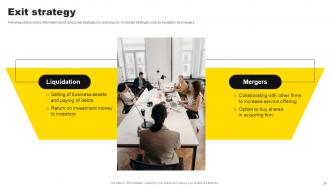
Slide 22: This slide showcases information about various exit strategies for reducing risk.
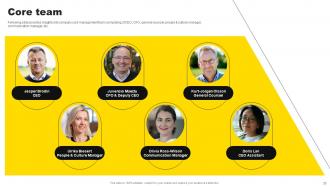
Slide 23: This slide shows insights into company core management team.
Slide 24: This slide deals with organisation chart of company.
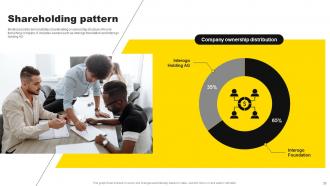
Slide 25: This slide demonstrates shareholding or ownership structure of home furnishing company.
Slide 26: This is a Contact Us slide. Add your Email Address, Contact, Social Media Handles, and Address.
Slide 27: This slide shows all the icons included in the presentation.
Slide 28: This slide is titled Additional Slides for moving forward.
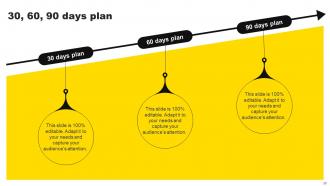
Slide 29: This slide provides a 30-60-90-day plan with text boxes.
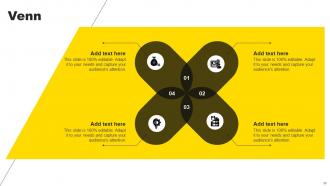
Slide 30: This slide depicts a Venn diagram with text boxes.
Slide 31: This slide is Our Target slide. State your targets here.
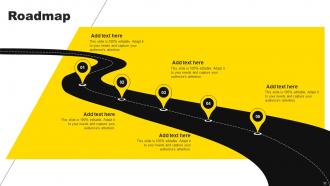
Slide 32: This slide presents a Roadmap with additional text boxes.
Slide 33: This slide is a Quotes slide to convey messages, beliefs, etc.
Slide 34: This slide shows SWOT describing- Strength, Weakness, Opportunity, and Threat.
Slide 35: This slide contains a Puzzle with related icons and text.
Slide 36: This slide is a thank-you slide with address, contact numbers, and email address.
IKEA Investor Funding Elevator Pitch Deck Ppt Template with all 44 slides:
Use our IKEA Investor Funding Elevator Pitch Deck Ppt Template to effectively help you save your valuable time. They are readymade to fit into any presentation structure.














FAQs for IKEA Investor Funding Elevator Pitch
Oh dude, IKEA's structure is actually pretty crazy - they're not like normal companies at all. Most of their stores are owned by this Dutch foundation called Stichting INGKA Foundation, which owns the INGKA Group. The Kamprad family (the founders) still controls a lot through different holding companies, but you won't find any traditional investors or stock stuff since they're private. They basically fund everything through keeping their profits and taking on debt when needed. Way different from how most retailers work, honestly makes researching them kind of a pain.
So IKEA's funding is actually pretty wild - they're owned by this foundation called Ingka, not shareholders like most furniture companies. You can't even buy IKEA stock anywhere. Meanwhile Wayfair and Williams-Sonoma are all public and have to deal with investor drama every quarter. The foundation thing gives IKEA crazy flexibility to think long-term instead of stressing about earnings reports every few months. Honestly it's probably why they can take bigger risks with weird product designs (looking at you, BLÅHAJ shark). It's like the opposite of how most retail works these days.
Oh yeah, IKEA's setup is actually pretty wild - they're owned by a foundation, not regular investors. So they don't have shareholders breathing down their necks for quick profits. They just reinvest their own money and sometimes take on debt for expansion. Honestly, it's kinda genius because they can focus on long-term stuff like sustainability without Wall Street freaking out. That's why they're never in a rush to enter new markets - they'd rather grow steadily than burn through cash trying to scale super fast.
Yeah, IKEA's doing pretty well with investors lately - that whole climate positive by 2030 thing really caught people's attention. ESG funds are all over them because they're actually following through, not just making empty promises. The circular business model is smart too, honestly. What's interesting is how much younger buyers care about this stuff now, which translates to better sales potential. Their renewable energy push has solid numbers backing it up. If you're looking at similar companies, I'd focus on ones with actual timelines and metrics. Skip anything that sounds too vague - those are usually just PR moves.
So IKEA's basically throwing their investor money at warehouse robots - those things are insanely fast compared to people moving boxes around. They're also big on predictive analytics now, which honestly makes sense when you're shipping Swedish meatballs and Billy bookcases to like 50 countries. The rest goes toward expanding suppliers and fixing their delivery mess. Better routes, greener shipping, that kind of stuff. Oh and the data thing - that's where they're making bank apparently. Automation plus smart forecasting seems to be their whole strategy right now.
Oh dude, IKEA doesn't use venture capital at all. They're still privately owned by the Kamprad family through some complicated foundation setup - have been since forever. No outside investors needed, which is honestly kind of impressive for how massive they are now. You can't actually invest in them the normal way since they keep everything locked down internally. If you're curious about them, I'd just study how they run things instead of looking for ways to throw money at them. Pretty unique situation in the retail world tbh.
So IKEA's got this interesting setup - they're owned by a foundation instead of being publicly traded. Makes a huge difference honestly. No shareholders demanding quick profits every quarter, so they can actually invest in long-term stuff like renewable energy and sustainable materials without some analyst freaking out about expenses. Most big retailers can't do that. The foundation thing gives them what's called "patient capital" - basically they can wait for returns instead of chasing immediate cash. Pretty smart structure if you ask me, though I wonder how many other companies could pull it off.
IKEA's weird because they're basically a real estate company selling Swedish meatballs and furniture. Revenue per square meter and same-store growth are the big ones investors watch. Global expansion ROI matters too, obviously. They own most of their properties, so property values going up is actually huge for them - way more than normal retailers. Supply chain stuff is underrated but super important. Digital progress too since everyone's shopping online now. Don't compare them to regular furniture stores honestly. Standard retail metrics like inventory turnover work, but you're missing the point if that's all you look at.
IKEA can't get traditional investor funding because of how they're set up - it's this crazy web of foundations and holding companies instead of regular shareholders. You can't buy IKEA stock anywhere. The Kamprad family basically built it this way on purpose to stay in control and dodge taxes, which honestly is pretty smart if you can pull it off. So they fund everything through their own cash flow and loans instead of going public or getting venture capital. It's totally different from how most big retailers work. Makes sense why they've stayed so weird and unique though.
So IKEA's basically chasing where people's habits went during COVID - home offices exploded and everyone's shopping online now. They're dumping money into sustainable stuff because customers actually care about that now. Instead of just those giant warehouse stores, they're doing smaller city locations with same-day delivery. Makes sense, right? The whole "drive 45 minutes to buy a bookshelf" thing was getting old anyway. Watch for them to keep pushing digital shopping experiences and eco-friendly products. That's where their investment dollars are going.
Honestly, the pandemic was huge for IKEA investors. Everyone was stuck inside going crazy buying furniture online, and IKEA had already nailed their e-commerce game while other retailers were still figuring it out. Their supply chain held up way better than most too - like yeah, they had some issues but nothing compared to the disaster other companies faced. People were basically "nesting" hard during lockdown. What's wild is the pandemic basically proved their whole digital strategy was right, just way earlier than expected. If you're thinking furniture investments, that performance was pretty telling.
So IKEA's doing some wild stuff with their investments right now. They're funding furniture rental services instead of just selling everything outright - which honestly makes sense when you think about how often people move. Their renewable energy game is insane too, like they're generating more power from solar and wind than all their stores actually use. That's pretty crazy considering how massive they are globally. Oh, and they're throwing money at research for biodegradable furniture materials. If you're watching retail trends, this stuff's probably gonna change how everyone else operates. Worth paying attention to for sure.
So IKEA's actually privately owned by this Dutch foundation (Stichting INGKA), which means they don't deal with typical investors at all. No VC pitches or investor decks like normal companies. They just fund everything internally and pump profits back into new stores and operations. Honestly pretty smart setup if you ask me - way less drama than public companies deal with. If you want to dig into their financials, check out their annual sustainability reports. That's where they actually talk about money stuff and priorities. Way simpler than most corporate funding nonsense.
Dude, IKEA's funding issues are wild when you think about it. They're dealing with insane upfront costs for rolling out new stuff to like 400+ stores worldwide. R&D, supply chains, inventory - it all adds up fast. Their 2030 sustainability goal isn't helping either since renewable materials cost way more right now. Makes sense but ouch for the budget. Don't even get me started on all that flat-pack testing they do. Honestly, if you're facing something similar, just roll things out region by region first. Way smarter than going global and potentially burning through cash.
So here's the thing - IKEA doesn't actually have regular investors breathing down their necks. They're set up as a foundation, which is kinda weird but works for them. No quarterly earnings calls or shareholders demanding higher profits. Instead they can just focus on keeping stuff cheap through their whole "democratic design" thing and buying materials in massive quantities. Pretty smart setup if you ask me. For your analysis, you'll want to dig into their supply chain and how they get those economies of scale working, not investor stuff.
-
Out of the box and creative design.
-
The Designed Graphic are very professional and classic.