


Impact Of Cyber Security Breach General Consequences Preventing Data Breaches Through Cyber Security




Try Before you Buy Download Free Sample Product
 Impress Your
 Audience
 100%
100% Editable
 Save Hours
 of Time


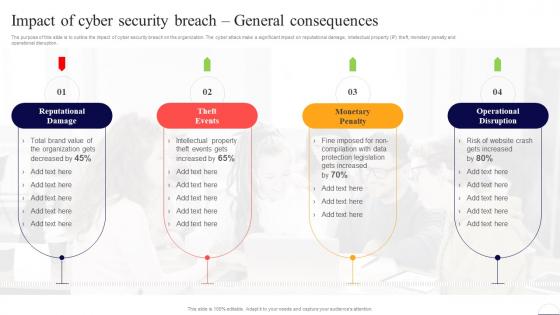
The purpose of this slide is to outline the impact of cyber security breach on the organization. The cyber attack make a significant impact on reputational damage, intellectual property IP theft, monetary penalty and operational disruption.
People who downloaded this PowerPoint presentation also viewed the following :
Impact Of Cyber Security Breach General Consequences Preventing Data Breaches Through Cyber Security with all 6 slides:
Use our Impact Of Cyber Security Breach General Consequences Preventing Data Breaches Through Cyber Security to effectively help you save your valuable time. They are readymade to fit into any presentation structure.





FAQs for Impact Of Cyber Security Breach General Consequences Preventing Data Breaches
Immediate cyber security breach impacts include system downtime, operational disruptions, compromised data access, emergency response costs, and regulatory compliance obligations. These disruptions force organizations to halt critical processes, redirect resources to incident response, and manage customer communications, with many companies experiencing significant revenue losses, damaged stakeholder trust, and cascading effects across interconnected business functions.
Cyber security breaches significantly erode customer trust and brand reputation by exposing sensitive data, demonstrating inadequate security measures, and creating lasting doubts about organizational competence. Companies like Equifax and Target experienced substantial customer defection, revenue losses, and years-long reputation recovery efforts, with many finding that rebuilding trust requires transparent communication, enhanced security investments, and consistent reliability demonstrations.
Cyber security breach recovery costs typically include incident response fees, forensic investigations, legal expenses, regulatory fines, customer notification costs, and system restoration expenses. These financial impacts can range from thousands to millions of dollars depending on breach scope, with many organizations finding that healthcare and financial services face the highest recovery costs, ultimately affecting operational budgets and competitive positioning.
Data breaches significantly impact employee morale through job insecurity concerns, increased workload from remediation efforts, damaged company reputation, and potential blame culture development. These incidents create stress and uncertainty among staff, with many organizations finding that transparent communication, additional support resources, and clear recovery plans help maintain team confidence while rebuilding trust and workplace stability.
**INPUT**: What are the potential legal consequences for organizations that experience a data breach? **OUTPUT**: Legal consequences for data breaches include regulatory fines, class-action lawsuits, compliance violations, mandatory breach notifications, and potential criminal liability for negligence. Organizations face significant financial penalties under regulations like GDPR and CCPA, with many companies finding that proactive cybersecurity investments ultimately deliver lower costs than post-breach legal settlements and regulatory sanctions. [Word count: 54 words]
Cybersecurity breaches trigger regulatory scrutiny through compliance violations under frameworks like GDPR, HIPAA, and PCI DSS, resulting in substantial fines, mandatory audits, and increased oversight requirements. Organizations face penalties ranging from thousands to millions of dollars, with regulatory bodies like the FTC and European data authorities increasingly imposing strict sanctions, ultimately affecting operational licenses and market credibility.
A breach can expose proprietary formulas, product designs, customer databases, strategic plans, and research data to competitors or malicious actors. This intellectual property theft enables rivals to replicate innovations, undercut pricing strategies, and accelerate their own development timelines, while the affected company loses competitive advantage, market position, and years of investment in research and development.
Cybersecurity breaches serve as catalysts for comprehensive policy overhauls, driving organizations to strengthen access controls, enhance employee training protocols, implement multi-factor authentication, and establish incident response frameworks. These security incidents ultimately transform organizational culture by prioritizing data protection, compliance requirements, and risk management practices, with many companies finding that post-breach improvements deliver enhanced operational resilience and competitive advantage.
Cyber security breaches significantly erode investor confidence by demonstrating operational vulnerabilities, potential financial losses, and regulatory compliance failures that directly impact company valuation and market stability. These incidents often trigger stock price declines, increased scrutiny from stakeholders, and higher insurance premiums, with many publicly traded companies finding that transparent breach response and robust recovery plans ultimately help restore market trust faster.
Breaches typically strengthen cybersecurity posture through increased budget allocation, enhanced security protocols, improved employee training, and robust incident response systems. While initial reputation damage occurs, companies often emerge more resilient, with many organizations finding that post-breach investments in advanced threat detection and multi-layered security ultimately deliver stronger defenses and competitive advantage.
Cybersecurity breaches severely impact third-party relationships by eroding trust, triggering contract renegotiations, and requiring enhanced vendor security assessments throughout supply chains. These incidents create cascading vulnerabilities across interconnected networks, with many organizations in manufacturing, healthcare, and financial services finding that compromised suppliers expose their entire operational ecosystem, ultimately demanding strategic security integration and shared responsibility frameworks.
High-profile breaches teach organizations to prioritize proactive security measures, implement comprehensive incident response plans, maintain regular security audits, and ensure transparent stakeholder communication. These lessons enable companies to strengthen their cybersecurity frameworks, minimize potential damage through faster detection and response, and ultimately build greater resilience against future threats.
Cybersecurity breaches significantly impact employee mental health through increased stress, anxiety, guilt, and fear of professional consequences, particularly for IT and security teams directly involved. These psychological effects often manifest as sleep disruption, decreased job satisfaction, and heightened workplace tension, with many organizations finding that providing immediate counseling support, transparent communication, and blame-free incident response protocols helps minimize long-term emotional damage while maintaining team resilience.
Different industries experience cyber security breaches through sector-specific vulnerabilities, with healthcare facing patient data theft, financial services encountering fraud and regulatory penalties, and retail suffering customer information compromise. While banks implement immediate transaction monitoring and hospitals focus on system restoration, manufacturing companies prioritize operational continuity, with many organizations finding that industry-tailored incident response plans significantly reduce recovery time and minimize reputational damage.
Organizations can mitigate long-term breach consequences through comprehensive incident response planning, transparent stakeholder communication, enhanced security infrastructure upgrades, and robust employee retraining programs. These strategies enable businesses to rebuild customer trust, strengthen regulatory compliance, and improve operational resilience, with many financial services and healthcare institutions finding that proactive transparency and security investments ultimately deliver competitive advantage.
-
Thanks to SlideTeam, we have an ideal template to present all the info we need to cover. Their slides give our numbers and projections a more clear and enchanting look.
-
If you have visited their site and failed to find the products, try reaching the customer service because it will be the case that you didn't use the search bar well.