


Implementing Bank Transaction Monitoring Tool Powerpoint Presentation Slides




Try Before you Buy Download Free Sample Product
 Impress Your
 Audience
 100%
100% Editable
 Save Hours
 of Time


Transaction monitoring is keeping track of client transactions while examining past and present facts, patterns, and actions. Grab our Implementing Bank Transaction Monitoring Tool template. Quickly evaluating risk levels helps financial organizations know their customers and take legal action against any money laundering or financial crime risk. Our AML System deck details the timetable for implementation and the significance, advantages, and process flow of transaction monitoring. Additionally, it compares and contrasts manual and automated methods of transaction monitoring. Our TM System deck provides tips for improving transaction monitoring systems that can assist financial organizations and businesses lower risks and reducing money laundering and other financial crimes. Examples include customer segmentation, suspicious activity reporting SAR, anti-money laundering strategies, threshold management, behavioral analytics, alerts management, etc. The complete deck details the financial security departments roles, responsibilities, training plan, communication plan, etc. Finally, our Automatic Transaction Monitoring module highlights KPI dashboards, metrics, impact analysis, costs, and other aspects of transaction monitoring. Get access now.
People who downloaded this PowerPoint presentation also viewed the following :
Content of this Powerpoint Presentation
Slide 1: This slide introduces Implementing Bank Transaction Monitoring Tool. Commence by stating Your Company Name.
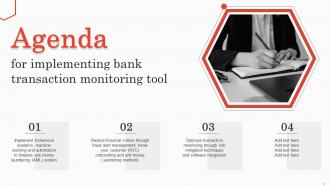
Slide 2: This slide depicts the Agenda of the presentation.
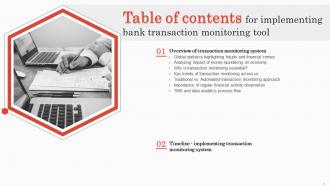
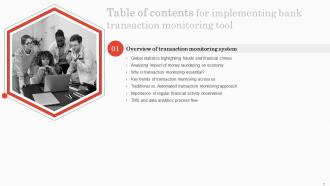
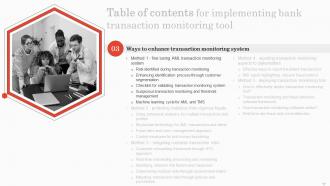
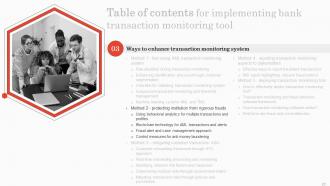
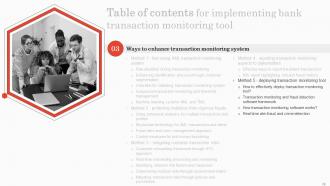
Slide 3: This slide incorporates the Table of contents.
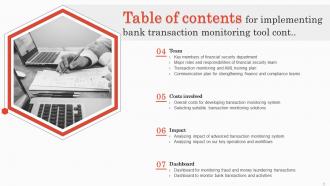
Slide 4: This slide continues the Table of contents.
Slide 5: This is yet another slide continuing the Table of contents.
Slide 6: This slide highlights the Title for the Topics to be discussed next.
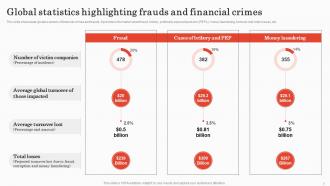
Slide 7: This slide showcases global scenario of financial crimes and frauds.
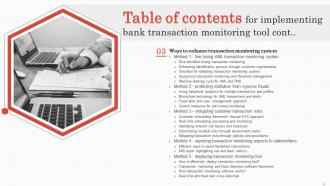
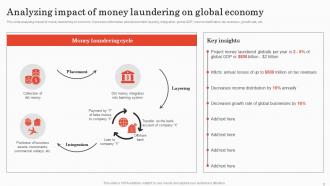
Slide 8: This slide deals with Analyzing impact of money laundering on global economy.
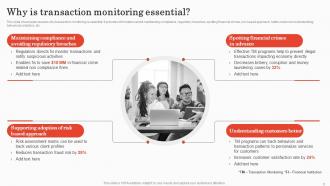
Slide 9: This slide states the reasons why transaction monitoring is essential.
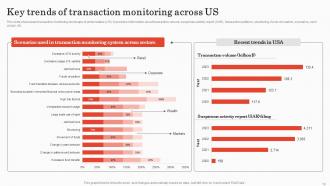
Slide 10: This slide depicts the Key trends of transaction monitoring across US.
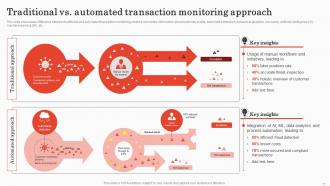
Slide 11: This slide shows difference between traditional and automated transaction monitoring method.
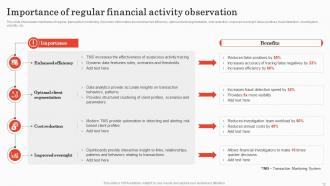
Slide 12: This slide exhibits the Importance of regular financial activity observation.
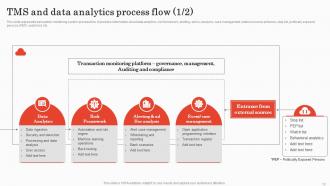
Slide 13: This slide illustrates the TMS and data analytics process flow.
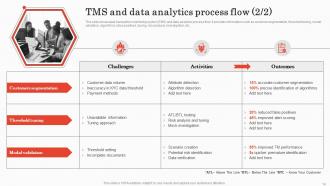
Slide 14: This slide continues the TMS and data analytics process flow.
Slide 15: This slide displays the Heading for the Contents to be covered further.
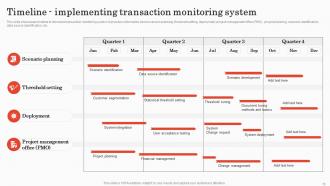
Slide 16: This slide showcases timeline to introduce transaction monitoring system.
Slide 17: This slide incorporates the Title for the Ideas to be discussed in the following template.
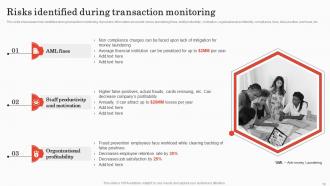
Slide 18: This slide presents the Risks identified during transaction monitoring.
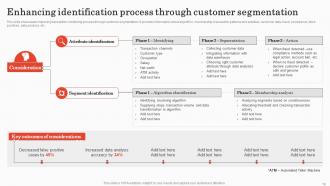
Slide 19: This slide talks about Enhancing identification process through customer segmentation.
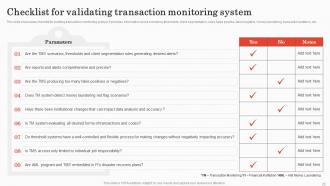
Slide 20: Checklist for validating transaction monitoring system.
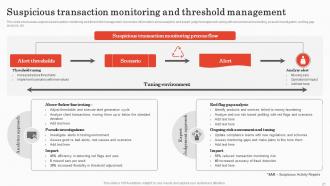
Slide 21: This slide displays the Suspicious transaction monitoring and threshold management.
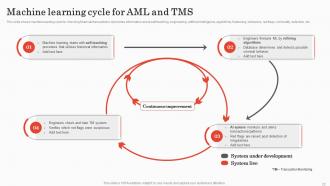
Slide 22: This slide shows machine learning cycle for checking financial transactions.
Slide 23: This slide exhibits the Heading for the Ideas to be covered further.
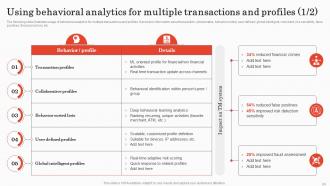
Slide 24: The following slide illustrates usage of behavioral analytics for multiple transactions and profiles.
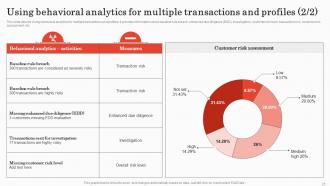
Slide 25: This slide depicts Using behavioral analytics for multiple transactions and profiles.
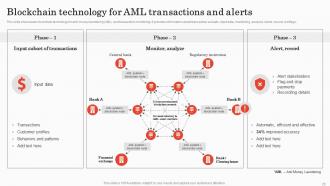
Slide 26: This slide talks about Blockchain technology for AML transactions and alerts.
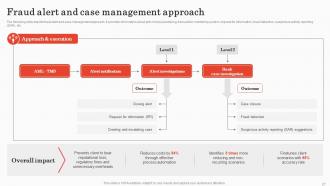
Slide 27: This slide presents the Fraud alert and case management approach.
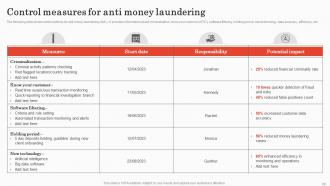
Slide 28: The following slide shows control actions for anti money laundering (AML).
Slide 29: This slide highlights the Title for the Components to be discussed in the upcoming template.
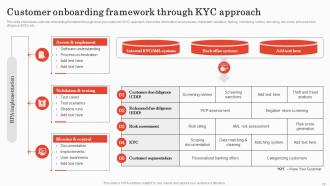
Slide 30: This slide exhibits the Customer onboarding framework through KYC approach.
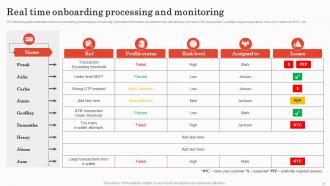
Slide 31: The following slide illustrates real time onboarding, processing an monitoring.
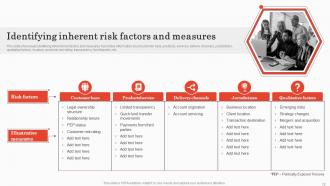
Slide 32: This slide showcases identifying inherent risk factors and measures.
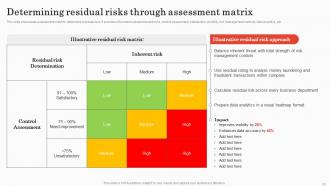
Slide 33: This slide deals with Determining residual risks through assessment matrix.
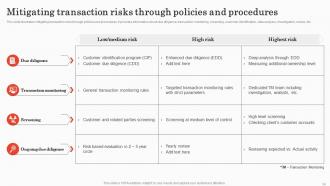
Slide 34: This slide indicates mitigating transaction risks through policies and procedures.
Slide 35: This slide mentions the Heading for the Topics to be covered further.
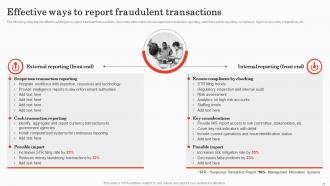
Slide 36: The following slide depicts effective strategies to report fraudulent transactions.
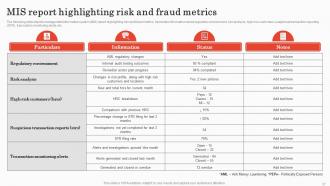
Slide 37: This slide reveals MIS report highlighting risk and fraud metrics.
Slide 38: This slide displays the Title for the Topics to be discussed next.
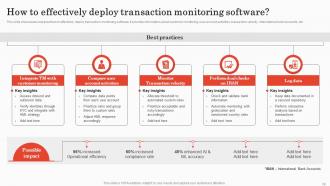
Slide 39: This slide showcases best practices to effectively deploy transaction monitoring software.
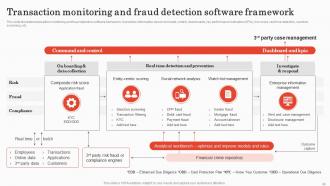
Slide 40: This slide illustrates transaction monitoring and fraud detection software framework.
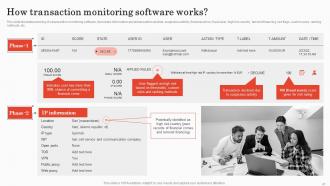
Slide 41: This slide presents working of a transaction monitoring software.
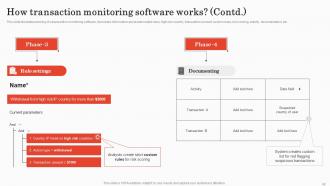
Slide 42: This slide depicts working of a transaction monitoring software.
Slide 43: This slide shows real time crime and fraud detection process flow for ATMS.
Slide 44: This slide highlights the Heading for the Components to be covered further.
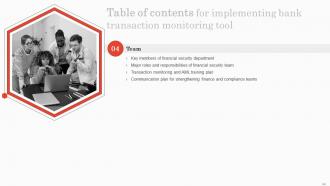
Slide 45: This slide displays the Key members of financial security department.
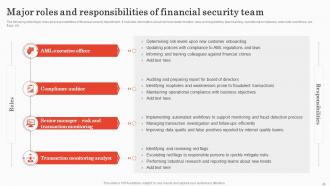
Slide 46: This slide states the Major roles and responsibilities of financial security team.
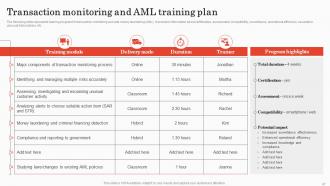
Slide 47: The following slide represents training program for transaction monitoring and anti money laundering (AML).
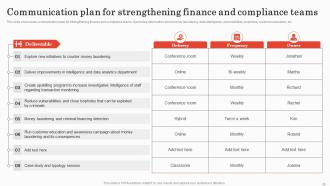
Slide 48: This slide showcases communication plan for strengthening finance and compliance teams.
Slide 49: This slide indicates the Title for the Ideas to be discussed in the following template.
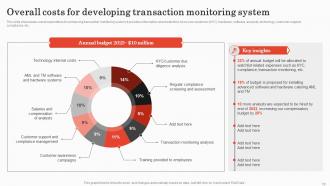
Slide 50: This slide portrays the Overall costs for developing transaction monitoring system.
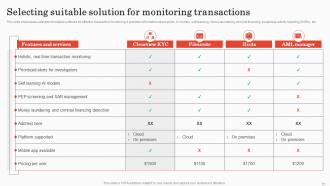
Slide 51: This slide deals with Selecting suitable solution for monitoring transactions.
Slide 52: This slide depicts the Heading for the Ideas to be covered in the upcoming template.
Slide 53: This slide focuses on Analyzing impact of advanced transaction monitoring system.
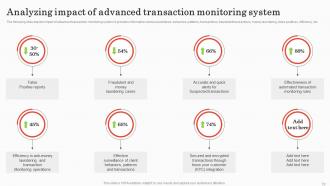
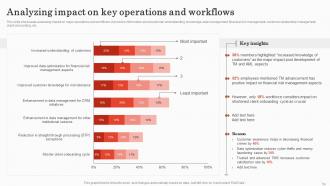
Slide 54: This slide emphasizes on Analyzing impact on key operations and workflows.
Slide 55: This slide mentions the Title for the Topics to be discussed further.
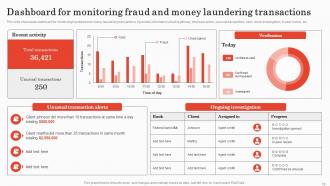
Slide 56: This slide showcases dashboard for monitoring fraudulent and money laundering transactions.
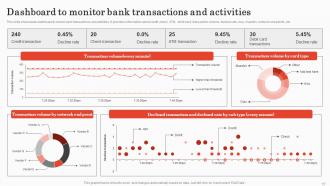
Slide 57: This slide elucidates the Dashboard to monitor bank transactions and activities.
Slide 58: This is the Icons slide containing all the Icons used in the plan.
Slide 59: This slide is used for depicting Additional information.
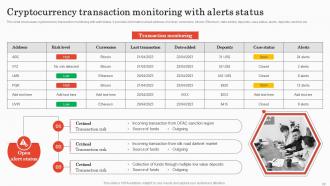
Slide 60: This slide talks about Cryptocurrency transaction monitoring with alerts status.
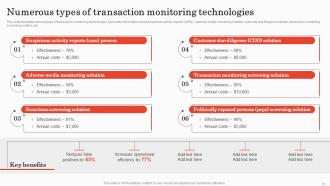
Slide 61: This slide illustrates various types of transaction monitoring technologies.
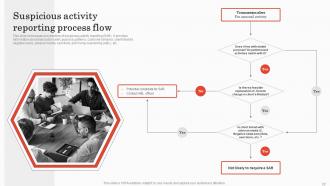
Slide 62: This slide showcases process flow of suspicious activity reporting (SAR).
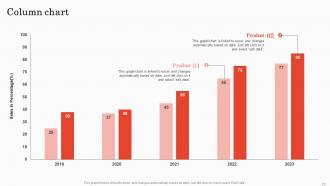
Slide 63: This slide reveals the Column chart.
Slide 64: This slide displays the Timeline.
Slide 65: This is the Puzzle slide with related imagery.
Slide 66: This is the Venn diagram slide.
Slide 67: This is the 30 60 90 days plan slide for effective planning.
Slide 68: This slide contains the Post it notes for reminders and deadlines.
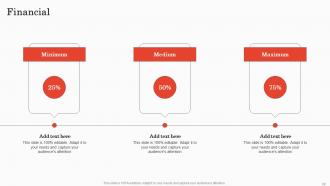
Slide 69: This slide presents information related to the Financial topic.
Slide 70: This slide is used for defining the organization's Target.
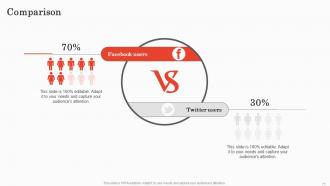
Slide 71: This slide is used for the purpose of Comparison.
Slide 72: This is the Thank you slide for acknowledgement.
Implementing Bank Transaction Monitoring Tool Powerpoint Presentation Slides with all 77 slides:
Use our Implementing Bank Transaction Monitoring Tool Powerpoint Presentation Slides to effectively help you save your valuable time. They are readymade to fit into any presentation structure.











FAQs for Implementing Bank Transaction Monitoring Tool
Real-time monitoring is your bread and butter - can't catch fraud without it. Get something with a customizable rule engine so you're not stuck with generic thresholds that don't fit your customers. Machine learning helps too since fraudsters keep evolving their tactics. False positives will drive you insane, so that's critical. Integration with your core system better be seamless or you'll regret it later. Good reporting keeps compliance happy, and honestly, intuitive dashboards save so much time during investigations. Oh, and definitely test with your actual data first - demos with fake transactions tell you nothing useful.
So these systems scan millions of transactions daily for sketchy patterns - stuff like transfers just under reporting limits or payments to sanctioned people. They flag things humans would totally miss. Banks have to report suspicious activity anyway, so the software creates alerts your compliance team can dig into. Then it spits out those regulatory reports automatically. Honestly the tech is pretty slick, though setting up the right thresholds takes some work. But yeah, it's basically your safety net against getting slammed with penalties.
So AI basically learns fraud patterns way faster than those old rule-based systems. You won't have to mess around tweaking thousands of static rules anymore - the machine learning just adapts automatically. False positives drop big time, which is honestly a huge relief. It spots weird patterns across massive amounts of data in real-time too. Normal customers don't get flagged for random stuff, but actual suspicious transactions get caught. I mean, who wants to waste time investigating false alarms all day? You'll catch real financial crimes way more effectively this way.
So banks usually do data minimization - they only grab what they actually need for compliance stuff. Instead of digging into every single transaction, they look for weird patterns in the data first. Only when something's actually suspicious do they zoom in. Most people have no clue how smart these systems are now, which is probably for the best. You'll want clear policies on how long you keep data around. Focus your algorithms on behavioral stuff rather than personal details. Oh, and definitely be upfront with customers about what you're watching and why - keeps the regulators happy too.
Ugh, false positives are gonna be your worst enemy - your team will get buried in useless alerts. Integration with old systems? Total nightmare. Plus getting the rules calibrated is way trickier than it looks. Don't even get me started on training... these tools are clunky as hell and nobody picks them up quickly. Upfront costs hit hard, and compliance stuff never stops changing so you're constantly tweaking settings. Honestly, regulatory requirements are like a moving target. Do a phased rollout though, and dump money into training upfront. Trust me, it's worth it.
So basically ML looks at tons of stuff at once - your spending habits, where you shop, what time you buy things, all that data. Way better than those old rigid rule systems. It catches weird patterns that would totally slip past traditional fraud detection. The best part? It actually learns and gets smarter over time as scammers try new tricks. Oh and you won't get your card randomly blocked nearly as much since it's way more accurate about what's actually suspicious vs. just different. I'd probably start with supervised learning using your past fraud cases as training data.
Okay so there's really four things you'll want to track. False positive rate is huge - aim for under 5% or your analysts will lose their minds with useless alerts. Detection accuracy matters too, obviously. Processing time from alert to resolution is another big one. Cost per transaction is the fourth metric, though honestly that one's more for the budget people. The goal is catching the bad stuff without drowning in noise. I'd check these monthly and see how you stack up against what everyone else is doing. High detection with low false positives - that's where you want to be.
So basically, these monitoring tools hook up through APIs that connect straight to your core banking system and payment processors. Real-time data feeds if you're lucky, batch processing if not. Most decent tools work with whatever you've got - even those ancient mainframes that refuse to die. Your IT folks will handle the data mapping and security setup, which honestly can be a pain. Just make sure everything can actually communicate without creating those annoying data silos. Oh, and definitely audit your existing systems first before you start shopping around for vendors - saves headaches later.
Yeah, most transaction monitoring tools are pretty customizable - banks all have different risk appetites and compliance stuff to deal with. You can usually tweak the detection rules and thresholds to fit your customer base better. Some let you build custom scenarios from scratch, which is way better than generic solutions IMO. The trick is finding vendors who actually get your compliance requirements and won't just give you some cookie-cutter setup. I'd definitely ask for a demo using your real transaction data. That's the only way to see if their customization options actually work for what you need.
Look, when banks mess up their transaction monitoring, they get absolutely hammered. Regulators will slap them with enormous fines - Wells Fargo paid $3 billion for this stuff. Criminal charges are on the table too if they accidentally help launder money. Their stock tanks, customers bail, and honestly the whole thing becomes a PR nightmare. Sometimes regulators force them into these expensive cleanup programs or restrict their business operations. I mean, compliance costs suck but they're nothing compared to what happens when you get caught slipping.
Quarterly updates are the bare minimum, but monthly is way better - fraud patterns change so damn fast these days. Regulations shift constantly too, so you can't just wing it. Set up regular review cycles where you're tweaking rules and updating risk scores. Machine learning models doing continuous updates? That's the gold standard if you've got the budget for it. Don't wait around for those big annual overhauls either. Schedule smaller tune-ups and watch your false positive rates - they'll tell you when things need adjusting. Trust me on this one.
Your team needs training on three main things: the risk indicators your tool tracks, how to investigate alerts properly, and escalation procedures. Investigation is where most people mess up initially - it's trickier than it looks. Get them hands-on practice with the interface and reporting stuff. Scenario-based training works best honestly, walking through real examples together. Keep everyone updated on new typologies and regulatory changes too. Short sentences help sometimes. Pick someone as your main expert who can jump in when things go sideways quickly.
So basically these tools use machine learning to catch sketchy transactions by looking at your customers' normal patterns. They track spending habits, amounts, timing, location - all that stuff. If someone who normally buys coffee suddenly starts pulling huge cash amounts at 3am, boom, it gets flagged. The system also compares against known fraud patterns and spots things like structuring or tons of rapid transactions. Honestly, the key is tweaking those sensitivity settings for your specific customer base - otherwise you'll get buried in false alarms and your team will hate you.
So first thing - document everything right when you get that alert. Get the transaction amounts, who's involved, all that stuff. Then dig into it before filing because trust me, compliance will just bounce it back if you rush through it. Look for weird patterns, double-check the customer info, note anything sketchy about timing or amounts. Most places give you 30-60 days depending on what type of alert it is. Oh and definitely keep good notes in whatever system you use - the next person reviewing it will thank you later when they don't have to start from scratch.
So these monitoring tools automatically catch sketchy patterns across different currencies and countries - saves your compliance team from drowning in data. They check transactions against sanctions lists and spot weird routing that screams money laundering. The cool part? They connect dots between transactions that look totally unrelated but aren't. Honestly, most banks mess up by not checking if their tool actually handles each country's specific rules first. Oh, and they catch structuring attempts too - you know, when people try splitting big amounts across borders to fly under the radar.
-
Loved the collection. Editing the presentation was seamless with their templates.
-
“There is so much choice. At first, it seems like there isn't but you have to just keep looking, there are endless amounts to explore.”