


Importance Of After Sales Follow Up Training Ppt




Try Before you Buy Download Free Sample Product
 Impress Your
 Audience
 100%
100% Editable
 Save Hours
 of Time


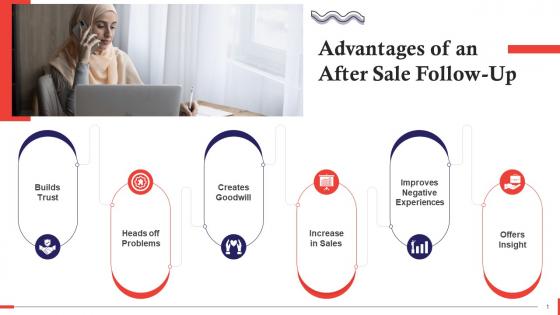
These slides highlight the advantages of an after sale follow-up. It helps in building trust, warding off problems, creating goodwill, increasing sales, improving negative experiences, and offering insights.
People who downloaded this PowerPoint presentation also viewed the following :
Content of this Powerpoint Presentation
Slide 1
This slide highlights the advantages of an after sale follow-up. It helps in building trust, warding off problems, creating goodwill, increasing sales, improving negative experiences, and offering insights.
Slide 2
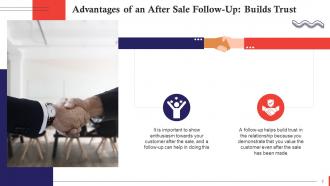
This slide talks about building trust as an advantage of an effective after sale follow-up. It is important to show enthusiasm towards your customer after the sale, and a follow-up can help in doing this. A follow-up helps build trust in the relationship because you demonstrate that you value the customer even after the sale has been made.
Slide 3
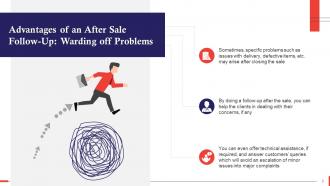
This slide discusses heading off problems as an advantage of an effective after sale follow-up. Sometimes, specific problems such as issues with delivery, defective items, etc. may arise after closing the sale. You can even offer technical assistance if required and answer customers’ queries which will steer clear of escalation of other problems that may occur in future.
Slide 4
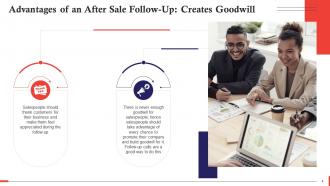
This slide talks about creating goodwill as an advantage of an effective after sale follow-up. Salespeople should thank customers for their business and make them feel appreciated during the follow-up.
Slide 5
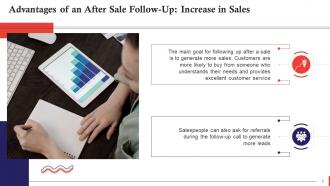
This slide discusses increase in sales as an advantage of an effective after sale follow-up. The main goal of following up after a sale is to generate more sales. Customers are more likely to buy from someone who understands their needs and provides excellent customer service.
Slide 6
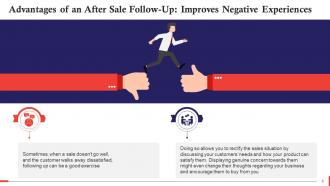
This slide talks about improving negative experiences as an advantage of an effective after sale follow-up. Sometimes, when a sale doesn’t go well, and the customer walks away dissatisfied, following up can be a good exercise.
Slide 7
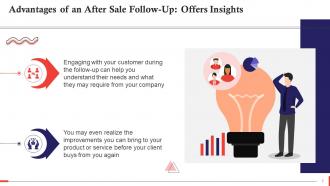
This slide discusses offering insights as an advantage of an effective after sale follow-up. Engaging with your customer during the follow-up can help you understand their needs and what they may require from your company.
Importance Of After Sales Follow Up Training Ppt with all 23 slides:
Use our Importance Of After Sales Follow Up Training Ppt to effectively help you save your valuable time. They are readymade to fit into any presentation structure.







FAQs for Importance Of After Sales Follow
Key objectives include ensuring customer satisfaction, identifying upselling opportunities, gathering feedback for improvements, building long-term relationships, and reducing churn rates. These strategic touchpoints enhance customer loyalty by addressing concerns promptly, delivering personalized experiences, and demonstrating ongoing value, with many organizations finding that systematic follow-up increases retention and drives sustainable revenue growth.
Personalized communication enhances customer satisfaction by addressing individual needs, referencing specific purchase history, and tailoring solutions to unique circumstances. Through targeted messaging and customized support approaches, businesses in retail, automotive, and technology sectors deliver more relevant experiences, build stronger relationships, and increase repeat purchases, with many organizations finding that personalized follow-ups significantly improve customer loyalty and retention rates.
Customer feedback serves as the primary diagnostic tool for identifying service gaps, measuring satisfaction levels, and uncovering improvement opportunities across touchpoints like support response times, product performance, and resolution effectiveness. By systematically analyzing feedback patterns, companies can streamline service processes, enhance staff training protocols, and develop proactive solutions, ultimately delivering faster resolutions and stronger customer retention rates.
CRM systems like Salesforce and HubSpot, automated email platforms, customer support software such as Zendesk, survey tools, and integrated communication platforms are most effective for managing after-sales follow-up. These technologies streamline customer interactions, automate routine touchpoints, and track satisfaction metrics, with many retail and service organizations finding that strategic combinations ultimately deliver enhanced customer retention and operational efficiency.
Businesses measure after-sales follow-up success through customer satisfaction scores, repeat purchase rates, retention percentages, Net Promoter Scores, and response times to support inquiries. These metrics enable companies to track relationship quality, identify improvement opportunities, and demonstrate ROI, with many organizations finding that systematic measurement ultimately delivers enhanced customer loyalty and increased revenue growth.
Common pitfalls include overwhelming customers with excessive contact, using generic messaging instead of personalized communication, focusing solely on upselling rather than genuine support, and neglecting to track response patterns. These missteps undermine customer relationships by creating frustration and distrust, with many businesses finding that strategic, value-focused follow-up delivers higher satisfaction and long-term loyalty.
Timing significantly impacts after-sales follow-up efficacy by determining customer receptiveness, issue resolution speed, and satisfaction outcomes. Strategic timing enables businesses to address concerns while they're fresh, capitalize on positive experiences for testimonials, and demonstrate proactive service commitment, with many organizations finding that immediate follow-up within 24-48 hours maximizes engagement and builds lasting customer loyalty.
Re-engaging silent customers requires targeted outreach through personalized email sequences, value-added content delivery, exclusive offers, satisfaction surveys, and proactive customer success check-ins. These strategies work by addressing potential concerns, demonstrating ongoing value, and rebuilding communication pathways, with many retail and service organizations finding that systematic follow-up campaigns significantly improve customer retention and lifetime value.
Businesses can tailor follow-up approaches by segmenting customers based on purchase value, frequency, demographics, and behavior patterns, then customizing communication channels, timing, and messaging accordingly. High-value customers might receive personalized phone calls and exclusive offers, while new customers get educational content and onboarding support, ultimately enhancing satisfaction and retention rates.
Effective follow-up emails include personalized subject lines, timely delivery within 24-48 hours, clear value propositions, actionable next steps, and mobile-optimized formatting. These practices enhance customer engagement by demonstrating genuine care, addressing specific concerns, and providing relevant solutions, with many retail and service organizations finding that strategic follow-up sequences increase customer satisfaction and drive repeat business.
After-sales follow-ups should occur at strategic intervals: immediately after purchase, one week later, one month post-purchase, quarterly check-ins, and annually for relationship maintenance. This structured approach balances customer engagement with respect for their time, with many successful businesses finding that personalized timing based on purchase value and customer preferences ultimately delivers stronger loyalty while avoiding communication fatigue.
Beneficial follow-up content includes product usage tips, maintenance guides, complementary service offerings, customer success stories, and exclusive promotions tailored to purchase history. These communications enhance customer relationships by delivering ongoing value, demonstrating continued support, and identifying expansion opportunities, with many businesses finding that personalized, educational content significantly increases retention rates and drives additional revenue growth.
After-sales follow-up enhances customer retention by addressing concerns, gathering feedback, ensuring satisfaction, and demonstrating ongoing commitment to service excellence. Through regular check-ins and proactive support, businesses strengthen relationships, identify upselling opportunities, and reduce churn rates, with many companies finding that systematic follow-up increases repeat purchases and referrals significantly.
Key metrics include customer satisfaction scores, response time to inquiries, resolution rates, repeat purchase frequency, and Net Promoter Scores (NPS). These measurements enable organizations to identify service gaps, streamline communication processes, and enhance customer retention strategies, with many companies finding that systematic tracking of these indicators ultimately delivers improved customer loyalty and increased revenue opportunities.
After-sales follow-up drives upselling and cross-selling through personalized recommendations based on purchase history, proactive maintenance reminders that introduce complementary products, and satisfaction surveys that identify additional needs. This strategic approach enables businesses to increase customer lifetime value, strengthen relationships, and boost revenue per customer, with many retailers and service providers finding that targeted follow-up communications generate significantly higher conversion rates than cold outreach.
-
Design layout is very impressive.
-
Out of the box and creative design.