


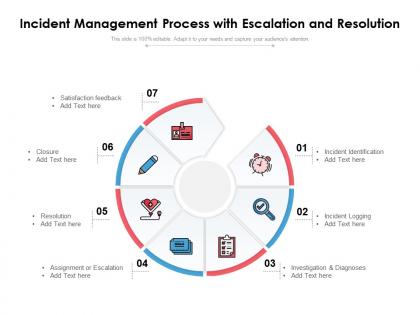
Incident management process with escalation and resolution




Try Before you Buy Download Free Sample Product
 Impress Your
 Audience
 100%
100% Editable
 Save Hours
 of Time


Emit your thoughts with our Incident Management Process With Escalation And Resolution. Your audience will get on the same frequency.
People who downloaded this PowerPoint presentation also viewed the following :
Incident management process with escalation and resolution with all 5 slides:
Broaden the database with our Incident Management Process With Escalation And Resolution. Get a bigger bandwidth to choose from.




FAQs for Incident management process with
So there's basically six main steps you gotta follow. First, catch the problem - either someone reports it or your monitoring picks up something funky. Log it right away and figure out how urgent it is. Then assign it to whoever knows that system best. Investigation comes next - this is where you play detective and figure out what actually broke. Fix it, test that everything's working again. Oh, and don't skip the boring part at the end where you document everything. Trust me, future you will thank you when the same thing breaks again at 2am.
Honestly, communication can make or break your whole incident response. I've watched teams completely fall apart because nobody was talking to each other - it's painful to see. Set up your channels beforehand and pick someone to handle updates. Keep everyone posted: your team, stakeholders, customers, the works. Even if nothing's changed, tell people that. Those "what's going on??" messages will flood your Slack otherwise. Be upfront about what you know and what you don't. Oh, and set expectations early about how often you'll update everyone.
Dude, start with three basics: grab something like PagerDuty for alerts, set up Slack for team chat, and get a ticketing system going. Trust me on the communication part - I've seen incidents turn into total disasters just because nobody could find the right people. Get some monitoring tools feeding alerts into your system too. Oh, and build out runbooks so your team isn't completely lost when stuff hits the fan at 3am. Honestly though? Nail down your alerting and team communication first. Everything else can wait until those are rock solid.
Document everything, seriously. What happened, when, who fixed it - all of it goes in the record. Use ITIL or whatever framework your industry follows. Run regular audits because catching problems yourself beats having regulators find them first. Your team needs to actually understand the compliance rules (crazy how many places skip this basic step). Train everyone on escalation procedures and response times. Oh, and don't treat compliance like an afterthought you slap on later - build it into your regular workflow from day one. Start with creating checklists for different incident types.
Honestly, you'll mostly see security breaches, system outages, and data loss - oh, and hardware just randomly dying on you. Network issues are the worst though, I swear they happen every other week. Software bugs pop up all the time too, plus compliance stuff and the occasional natural disaster messing with your servers. Different incidents need totally different responses, so it's worth documenting what keeps happening. That way your team gets faster at spotting patterns. I'd dig through your last six months of tickets first - you might be surprised what's actually eating up most of your time.
Think of it like this - incident management deals with fires that are already burning, while risk management tries to fireproof your house. Every incident you handle becomes valuable intel for your risk assessments. Those post-incident reviews? Pure gold for spotting new vulnerabilities or confirming ones you already suspected. Your risk controls should also guide how you prioritize incidents - honestly, some low-impact stuff can probably wait if you're swamped. The magic happens when your incident playbooks actually match your risk tolerance levels. Just make sure your risk folks see those incident trends regularly.
Focus on the big ones first: MTTR, MTBF, and first-call resolution rates. Customer satisfaction scores after incidents matter too. Response time from alert to acknowledgment is honestly make-or-break for your reputation. I'd also watch escalation rates - nobody wants tickets bouncing around forever. Post-incident reviews are clutch because that's where you actually learn from the mess. Oh, and don't try tracking everything at once. Start with maybe 3-4 metrics max or you'll just overwhelm everyone and nothing gets done right.
Oh man, automation is a game changer for incident response. It handles all the boring stuff - creating tickets, sending notifications, escalating based on how bad things are. Your team saves a crazy amount of time because incidents get routed to the right people instantly instead of someone sitting there figuring out who should handle what. Honestly, it cuts down on mistakes too, which happen way too often when everyone's panicking during an outage. Just set up your rules and thresholds properly first. I'd start with basic alert routing and add more features as you go.
Honestly, start with the basics - your team needs rock-solid troubleshooting skills and communication training. Nobody wants updates that sound like they're reading from a script during an outage. Document your current processes first, then figure out where the knowledge gaps are. Tabletop exercises are seriously underrated - way better to mess up in practice than during a real incident. Oh, and don't skip monitoring tools training because you can't fix what you can't see. ITIL frameworks help too, but your own runbooks might be more practical.
Dude, culture is everything in incident management. I've watched entire teams fall apart because nobody wanted to admit something was wrong - they'd rather let things burn than get blamed. You need people to feel safe speaking up early, not hiding problems until they explode. Blame-heavy places? Total disaster. Teams just protect their own turf instead of actually helping each other. But when you focus on learning from screwups and getting everyone talking, incidents get resolved so much faster. Honestly, half the battle is just making sure people aren't scared to escalate things quickly.
You really can't wing incident response without getting the right people involved early on. These folks know which systems actually matter to the business and can help you figure out what to tackle first. While you're deep in the technical weeds, they're the ones talking to frustrated users and telling you whether your fix actually solved anything. I learned this the hard way - there's nothing worse than thinking you've solved everything only to find out you missed something obvious. Don't wait until everything's broken to figure out who these key people are. Map that out ahead of time.
Right after each incident, grab everyone involved for a quick post-mortem while it's still fresh. Document what broke, what actually worked, and how to stop it happening again. Honestly, the hardest part is making sure people actually use your knowledge base later - I've seen so many teams create these things that just collect dust. Build it into your incident closure process so you don't skip it when you're stressed. Then bring up these lessons in regular team meetings and update your runbooks. Trust me, you'll thank yourself when the same issue doesn't bite you twice.
Ugh, alert fatigue is the worst - teams get hit with constant notifications but can't tell what's actually urgent. Communication becomes this nightmare game of telephone between different groups while everything's on fire. Honestly, the tooling doesn't help either since everyone's juggling like 5 different platforms at once. My advice? Start by fixing your alerting rules to cut down the noise first. Way more important than fancy new tools. Then get some kind of central spot where everyone can see the same info during incidents. Makes such a difference when people aren't scrambling around blind.
Go 70/30 - most energy on putting out fires since they're inevitable, but protect that 30% for proactive stuff like better monitoring and actually doing postmortems. The hard part? Don't let that proactive time get eaten alive when everything's burning. Block out weekly "prevention hours" where you only work on fixing root causes from recent disasters. I'd track things like how fast you catch problems, not just how quick you fix them. Trust me, spending time now on prevention beats getting woken up at 3am later. Those future emergency calls you'll avoid make it so worth it.
Honestly, start by mapping out your current process and timing each step - you'll see exactly where things drag. Get clear escalation paths written down so people aren't wondering who to call. Automate your alerts to hit the right folks immediately (not Monday morning email checkers, ugh). Set up dedicated channels for each incident. Trust me, updates get buried in regular chat. Do post-mortems after everything's resolved - that's where you'll find the real bottlenecks. Pre-written runbooks are a lifesaver too. People panic less when they've got steps to follow instead of making it up as they go.
No Reviews