

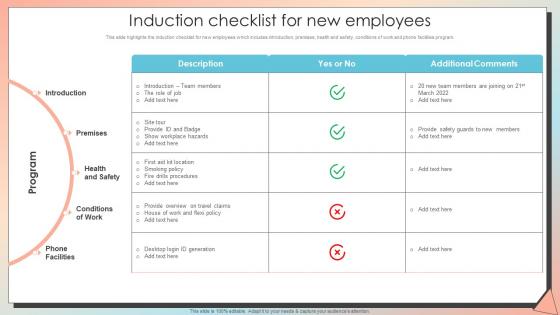
Induction Checklist For New Employees New Employee Induction Programme




Try Before you Buy Download Free Sample Product
 Impress Your
 Audience
 100%
100% Editable
 Save Hours
 of Time


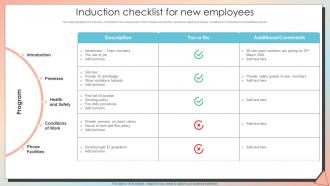
This slide highlights the induction checklist for new employees which includes introduction, premises, health and safety, conditions of work and phone facilities program.
People who downloaded this PowerPoint presentation also viewed the following :
Induction Checklist For New Employees New Employee Induction Programme with all 6 slides:
Use our Induction Checklist For New Employees New Employee Induction Programme to effectively help you save your valuable time. They are readymade to fit into any presentation structure.





FAQs for Induction Checklist For New Employees New
Start with the obvious stuff - workplace policies, safety procedures, IT setup, and introductions to their team. Role-specific training comes next. Then there's all the tedious compliance stuff nobody wants to do but has to anyway. I always throw in company culture bits and org structure so they're not totally lost. Oh, and definitely assign them a buddy - trust me on this one. Give them a checklist they can actually check off themselves. Makes them feel involved and honestly saves you from forgetting random things later. Plan out their first few months too.
Dude, you definitely need an induction checklist for remote onboarding! Without it, you'll forget half the stuff - tech setup, team intros, all those random systems they need access to. Your new hire won't be there physically to remind you either, so they'll just sit at home wondering why they can't log into anything. The checklist gives them a clear timeline of what's happening when. I learned this the hard way with our last hire - poor guy waited three days for his laptop login info. Make sure you assign owners to each task with actual deadlines, not just "soon."
Honestly, it's a game changer for getting new people up to speed without all the drama. Teams work way better together when everyone gets different perspectives from the start. Misunderstandings drop big time, which is huge for productivity. Your company looks good too - people stick around longer when they feel valued, and it draws in better candidates. Oh, and clients notice when your team actually knows how to communicate across cultures. Just don't make it another death-by-PowerPoint situation. Use real examples they'll face, maybe some role-playing stuff. Way more effective than boring slides.
Check it every quarter for sure, but honestly? Update it whenever something big changes at work. New software, policy shifts, office moves - that stuff matters more than sticking to a schedule. Like if you just switched from Slack to Teams, don't wait three months to fix the checklist. Your new hires will be lost on day one! I'd put someone in charge of watching for these changes. Set a calendar reminder for the quarterly deep dive, then just tweak things as they come up. Way easier than doing massive overhauls later.
Honestly, going digital with your induction checklist is a game changer. No more drowning in paperwork or forgetting to send someone their IT setup reminder (been there). You'll get automatic notifications, real-time tracking, and it pulls employee info straight from your HR system. Updates are instant too - none of that "print 50 new copies because we changed one policy" nonsense. The analytics actually show you where things get stuck, which is pretty useful. Oh, and definitely start with something basic rather than going all out - learned that the hard way with our last software rollout!
Honestly, the retention thing is what I'd watch most closely - are people actually staying past those first 90 days? That's usually the biggest tell. Also track how long it takes new hires to hit their productivity goals and get feedback surveys from them about the whole experience. Oh, and measure completion rates on your checklist items too - if people keep skipping the same steps, you'll know something's off. I'd throw together a basic dashboard with these numbers and check it monthly. Time-to-independence is another good one - basically how long before they can handle key tasks solo.
Safety training first - that's literally required by law in most places. Harassment prevention and data protection come next, plus whatever industry stuff you deal with (HIPAA, financial regs, whatever). Don't overwhelm them with everything day one though. Anti-discrimination training is huge too. Honestly, I'd focus on what could actually land someone in legal hot water if they screw up. Save the fluff training for later. Week one should be the must-haves, then spread out the rest over their first month. Trust me, nobody retains 8 hours of compliance videos anyway.
Exit surveys after their first month work well. Also try casual check-ins around week 2-3 - way better than waiting till they're already frustrated. Anonymous feedback forms help too since people are more honest that way. Ask stuff like "what confused you most?" instead of generic "how's it going?" questions (everyone just says fine to those). Don't overhaul everything after one person complains though. Wait for patterns across multiple hires. New people spot things you've stopped noticing. I'd probably review your process quarterly and make it a standing agenda item.
Don't make it super generic - that's the worst thing you can do. Like, if it applies to everyone it helps nobody, you know? Also resist cramming every single task in there or people will take one look and nope out. Oh and update the damn thing! I swear companies spend weeks creating these elaborate checklists then let them collect dust for three years. Ask your new hires what's actually helpful vs what feels like pointless busy work. Honestly, test it with just a couple people first. You'll catch the obvious problems before rolling it out to everyone.
So basically you want to give new people a list of social activities to do their first few weeks. Things like grabbing coffee with their assigned buddy, sitting in on team meetings, maybe shadowing someone for a bit. Honestly, it's genius because otherwise they'll just sit there feeling super awkward while everyone else already knows each other. The key is mixing formal stuff (like "meet your manager") with casual hangouts - that's where people actually bond. You don't want it to feel forced though, so maybe throw in some optional things too. It prevents that horrible new-kid-at-school vibe.
Honestly, start with the basics - employee handbook, org chart, their actual job description. Login info for everything they'll need is huge too. Nobody wants to spend their first day just waiting around for IT to get their act together. Throw in contact lists for key people and maybe some company culture stuff so they're not totally lost. First week schedule is clutch. Oh, and definitely make an FAQ covering benefits and random policy questions - saves you from answering the same things over and over. Just dump it all in one shared folder they can bookmark.
Start by going through your current checklist with fresh eyes - what assumptions are you making? Look for stuff like biased language or weird family structure assumptions that might make people feel left out. Add sections for pronouns, accessibility needs, different communication styles. I'm always shocked how many places still forget the basics here. Religious holidays, dietary stuff, flexible work - get that covered early. But here's the thing: don't just let HR handle this alone. Pull in people from different backgrounds when you're designing it, and definitely get feedback from your newest hires. They'll catch things you completely missed.
So many ways to do this! Google Forms or Microsoft Forms are super easy for basic digital checklists. Honestly, I've seen people do crazy creative stuff with Trello boards for onboarding - works better than you'd think. BambooHR and Workday are solid if you want the full HR platform thing, or Asana handles workflows really well. Even just a shared Excel with checkboxes works for smaller teams (boring but effective). The main thing is picking whatever your team won't ignore after two weeks. I'd start simple first, then upgrade later if you need more bells and whistles.
Honestly, just build it in layers. Start with the basic stuff everyone needs - company policies, safety, HR paperwork. Then add department-specific modules on top. Like sales teams need CRM training and client protocols, IT needs system access and security stuff. Marketing focuses on brand guidelines and their tools. The real trick? Ask department heads what trips up their new hires most in month one. That's where you'll find the gaps. Way better than guessing what people actually need day-to-day versus just throwing generic company info at them. Works every time.
Break your checklist into smaller chunks and give each piece to someone specific. Digital tracking works way better than paper - trust me, those printed lists always disappear when you need them most. Don't dump everything on day one either. Space out check-ins across the whole first week instead. Have your HR person do a final walkthrough with the new hire to catch anything that got missed. Oh, and pick one person to own the whole thing - even when multiple teams are handling different parts, someone needs to be the point person who makes sure nothing slips through.
-
Crisp and neat slides. Makes it fun and easier to curate presentations.
-
The presentations are very helpful. I am always able to get appropriate templates for the different topics related to my profession.