


Information Security Risk Management And Mitigation Plan Powerpoint Presentation Slides




Try Before you Buy Download Free Sample Product
 Impress Your
 Audience
 100%
100% Editable
 Save Hours
 of Time


Risk assessment and management plan can help the organization identify the cybersecurity threats and implement a plan to mitigate the risks. Here is an efficiently designed template on Information Security Risk management and Mitigation Plan. It will help a company to safeguard information and critical data of organizational assets. This presentation covers different types of cybersecurity threats faced by firms worldwide and the process of managing the information security risks. A major chunk of the presentation covers an information security risk management plan that can help to identify assets vulnerable to information security risks. It also covers the assessment of information security risks through vulnerability rating and risk assessment matrix. It also showcases mitigation plans that can help an organization resolve information security risks promptly and strategies to avoid information breaches. This presentation also shows training that can help the organization train employees to respond and manage the information security threat. This presentation also covers the roles and responsibilities of the risk management team and budget allocation for managing cybersecurity risks. At last, this presentation highlights the impact of a risk management plan on the information security capabilities of the organization. Get access to this powerful template now.
People who downloaded this PowerPoint presentation also viewed the following :
Content of this Powerpoint Presentation
Slide 1: This slide introduces Information security risk management and mitigation plan. State your company name and begin.
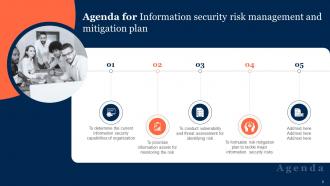
Slide 2: This slide states Agenda of the presentation.
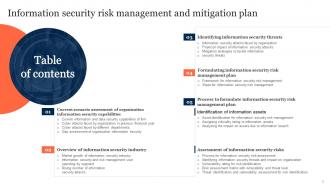
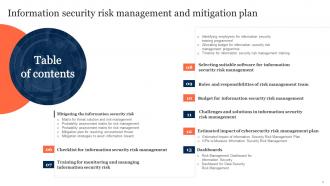
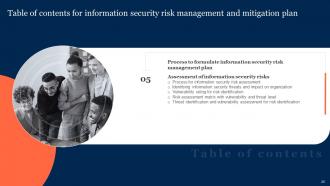
Slide 3: This slide presents Table of Content for the presentation.
Slide 4: This is another slide continuing Table of Content for the presentation.
Slide 5: This slide highlights title for topics that are to be covered next in the template.
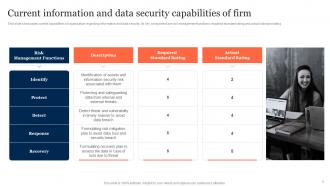
Slide 6: This slide shows Current Information and Data Security Capabilities of firm.
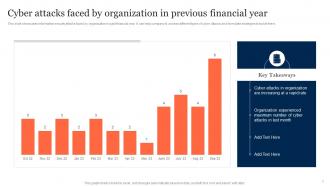
Slide 7: This slide presents Cyber Attacks Faced by Organization in Previous Financial Year.
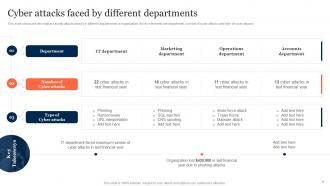
Slide 8: This slide displays Cyber Attacks Faced by Different Departments.
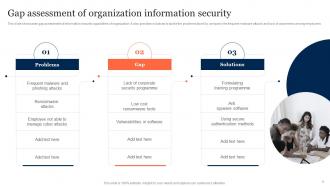
Slide 9: This slide represents Gap Assessment of Organization Information Security.
Slide 10: This slide highlights title for topics that are to be covered next in the template.
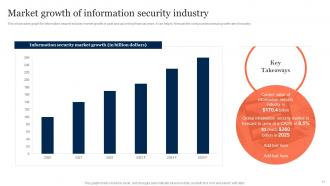
Slide 11: This slide showcases Market Growth of Information Security Industry.
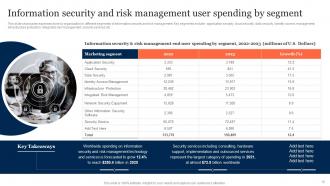
Slide 12: This slide shows Information Security and Risk Management User Spending by Segment.
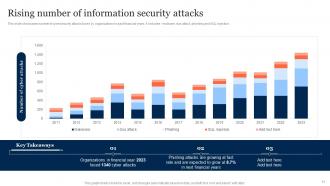
Slide 13: This slide presents Rising Number of Information Security Attacks.
Slide 14: This slide highlights title for topics that are to be covered next in the template.
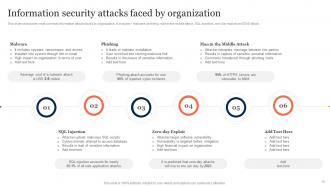
Slide 15: This slide displays Information Security Attacks Faced by Organization.
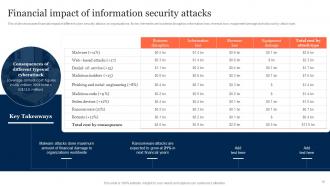
Slide 16: This slide represents Financial Impact of Information Security Attacks.
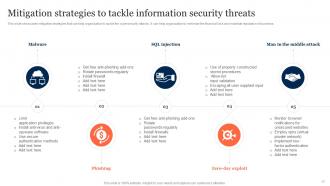
Slide 17: This slide showcases Mitigation Strategies to Tackle Information Security Threats.
Slide 18: This slide highlights title for topics that are to be covered next in the template.
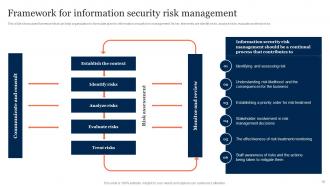
Slide 19: This slide shows Framework for Information Security Risk Management.
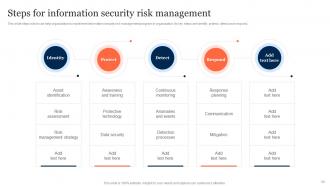
Slide 20: This slide presents Steps for Information Security Risk Management.
Slide 21: This slide highlights title for topics that are to be covered next in the template.
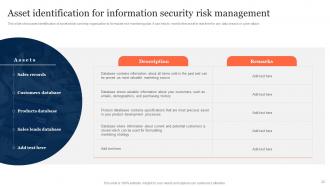
Slide 22: This slide displays Asset Identification for Information Security Risk Management.
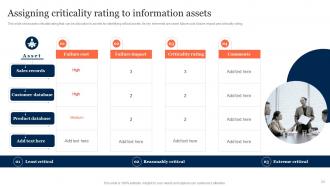
Slide 23: This slide represents Assigning Criticality Rating to Information Assets.
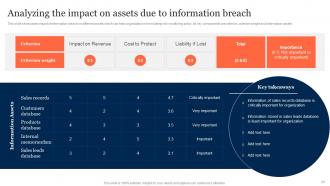
Slide 24: This slide showcases Analyzing the Impact on Assets due to Information Breach.
Slide 25: This slide highlights title for topics that are to be covered next in the template.
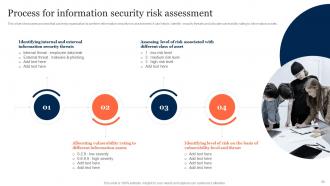
Slide 26: This slide shows Process for Information Security Risk Assessment.
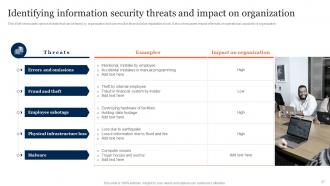
Slide 27: This slide presents Identifying Information Security Threats and Impact on Organization.
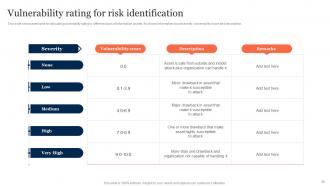
Slide 28: This slide displays Vulnerability Rating for Risk Identification.
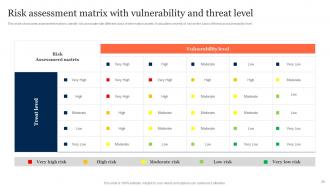
Slide 29: This slide represents Risk Assessment Matrix with Vulnerability and Threat Level.
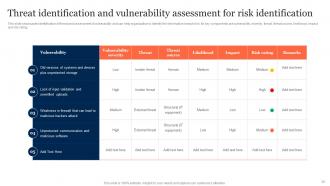
Slide 30: This slide showcases Threat Identification and Vulnerability Assessment for Risk Identification.
Slide 31: This slide highlights title for topics that are to be covered next in the template.
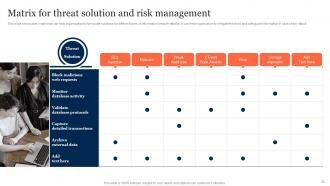
Slide 32: This slide shows Matrix for Threat Solution and Risk Management.
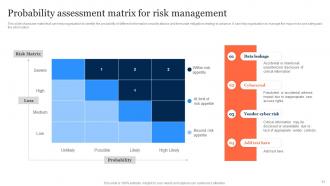
Slide 33: This slide presents Probability Assessment Matrix for Risk Management.
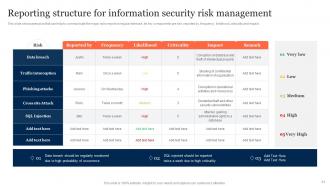
Slide 34: This slide displays Reporting Structure for Information Security Risk Management.
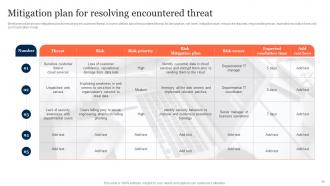
Slide 35: This slide represents Mitigation Plan for Resolving Encountered Threat.
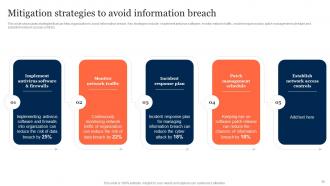
Slide 36: This slide showcases Mitigation Strategies to Avoid Information Breach.
Slide 37: This slide highlights title for topics that are to be covered next in the template.
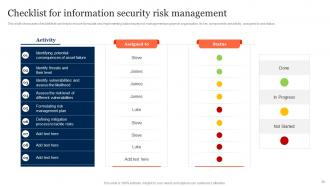
Slide 38: This slide shows Checklist for Information Security Risk Management.
Slide 39: This slide highlights title for topics that are to be covered next in the template.
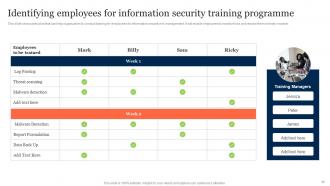
Slide 40: This slide presents Identifying Employees for Information Security Training Programme.
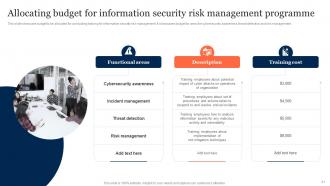
Slide 41: This slide displays Allocating Budget for Information Security Risk Management Programme.
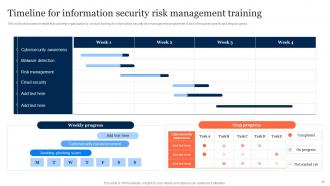
Slide 42: This slide represents Timeline for Information Security Risk Management Training.
Slide 43: This slide highlights title for topics that are to be covered next in the template.
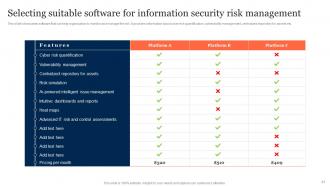
Slide 44: This slide showcases Selecting Suitable Software for Information Security Risk Management.
Slide 45: This slide highlights title for topics that are to be covered next in the template.
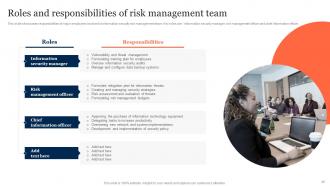
Slide 46: This slide shows Roles and Responsibilities of Risk Management Team.
Slide 47: This slide highlights title for topics that are to be covered next in the template.
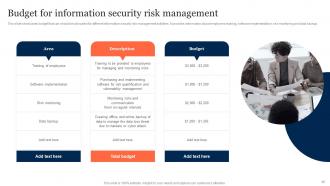
Slide 48: This slide presents Budget for Information Security Risk Management.
Slide 49: This slide highlights title for topics that are to be covered next in the template.
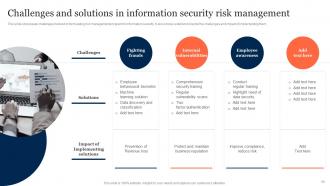
Slide 50: This slide displays Challenges and Solutions in Information Security Risk Management.
Slide 51: This slide highlights title for topics that are to be covered next in the template.
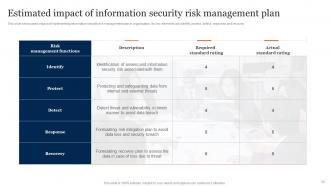
Slide 52: This slide represents Estimated Impact of Information Security Risk Management Plan.
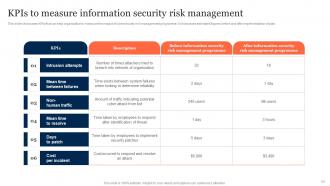
Slide 53: This slide showcases KPIs to Measure Information Security Risk Management.
Slide 54: This slide highlights title for topics that are to be covered next in the template.
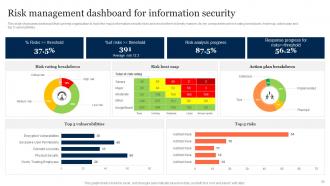
Slide 55: This slide shows Risk Management Dashboard for Information Security.
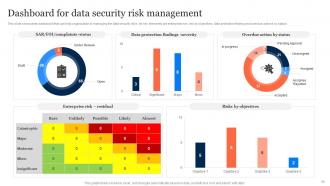
Slide 56: This slide presents Dashboard for Data Security Risk Management.
Slide 57: This slide highlights title for topics that are to be covered next in the template.
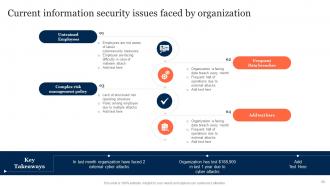
Slide 58: This slide displays Current Information Security Issues Faced by Organization.
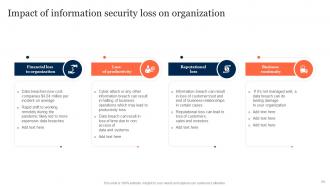
Slide 59: This slide represents Impact of Information Security Loss on Organization.
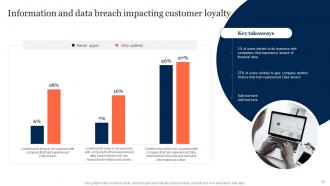
Slide 60: This slide showcases Information and Data Breach Impacting Customer Loyalty.
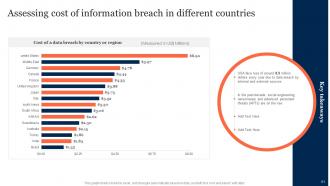
Slide 61: This slide shows Assessing Cost of Information Breach in Different Countries.
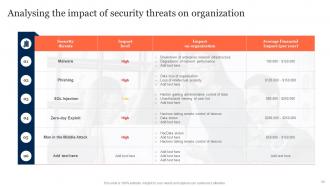
Slide 62: This slide presents Analyzing the Impact of Security Threats on Organization.
Slide 63: This slide contains all the icons used in this presentation.
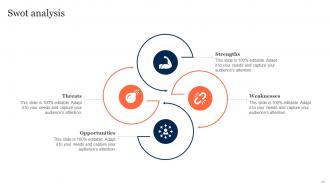
Slide 64: This slide shows SWOT describing- Strength, Weakness, Opportunity, and Threat.
Slide 65: This slide provides 30 60 90 Days Plan with text boxes.
Slide 66: This slide showcases Magnifying Glass to highlight information, specifications etc
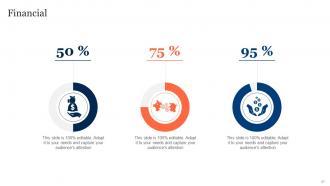
Slide 67: This is a Financial slide. Show your finance related stuff here.
Slide 68: This slide contains Puzzle with related icons and text.
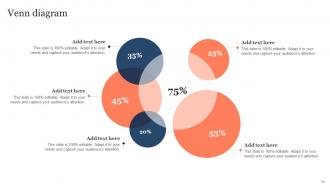
Slide 69: This slide depicts Venn diagram with text boxes.
Slide 70: This slide shows Post It Notes. Post your important notes here.
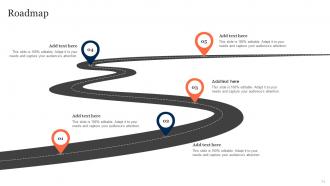
Slide 71: This slide presents Roadmap with additional textboxes.
Slide 72: This is a Thank You slide with address, contact numbers and email address.
Information Security Risk Management And Mitigation Plan Powerpoint Presentation Slides with all 77 slides:
Use our Information Security Risk Management And Mitigation Plan Powerpoint Presentation Slides to effectively help you save your valuable time. They are readymade to fit into any presentation structure.







FAQs for Information Security Risk Management And Mitigation Plan
So you'll want four main pieces: risk assessment, treatment, monitoring, and governance. First, figure out what assets you have and what could threaten them. Then assess how likely each risk is and what damage it'd cause. After that, decide if you'll accept it, reduce it, transfer it, or avoid it completely - though honestly most companies just try to fix everything instead of being strategic about it. You need ongoing monitoring too since new risks pop up constantly. Oh, and make sure someone's actually in charge of this stuff. The biggest thing? Don't treat it like a one-and-done project. Build in regular check-ins.
Risk assessment is basically just figuring out what could go wrong - you know, identifying threats and weaknesses in your systems. Risk management is way bigger though. It takes all that assessment stuff and actually does something about it with response plans, putting those plans into action, and keeping tabs on everything over time. Honestly, most companies I've seen are pretty good at the assessment part but terrible at follow-through. Assessment is like getting a diagnosis from your doctor. Management is actually taking the medicine and changing your lifestyle. You can't really manage risks you haven't identified first, but don't just stop there - create real action plans for the stuff that'll actually hurt your business.
Look, compliance is basically your starting point - like GDPR, HIPAA, whatever applies to your industry. It sets the minimum bar for security controls and risk processes. But here's the thing: it's just the floor, not where you stop. Most compliance frameworks cover the obvious baseline stuff everyone should already be doing anyway. Your real risk management needs to go way beyond just ticking those boxes. Build on those requirements, then add controls that actually fit your specific threats. I always tell people - start with compliance as your foundation, but don't get stuck there.
Start with a risk matrix - plot likelihood vs impact for each threat. Score everything on both scales, then hit the high-likelihood/high-impact stuff first. Seems basic but tons of companies get distracted by whatever scary headline they saw that morning. Don't forget to factor in your existing controls and how much fixes would actually cost. Sometimes a medium risk that's dirt cheap to solve beats out something major that'd drain your budget. My old boss used to say "perfect is the enemy of done" - he had a point. Pick your top 5-10 risks and work through them systematically instead of jumping around randomly.
You've got three main ones: NIST SP 800-30, ISO 27005, and OCTAVE. NIST is huge in the US - gives you a solid structure for threat identification and risk calculations. ISO 27005 works great internationally, especially if you're already doing ISO 27001 stuff. OCTAVE's more comprehensive but honestly kind of overkill unless you're a big organization. Here's the thing though - most companies don't follow these frameworks exactly as written. They pick one that fits their size and compliance requirements, then tweak it for their specific situation. Way more practical that way.
Yeah, it's wild how new tech just blows up your whole risk picture. AI, IoT, cloud stuff - they all bring these weird new vulnerabilities that old security frameworks can't handle. Honestly, trying to keep up with it all makes my head spin sometimes. Your best bet is ditching those once-a-year risk reviews for something way more flexible. Real-time threat monitoring helps tons. You'll need DevSecOps baked into everything too. And here's the thing - your risk tolerance? It's gonna change constantly as you roll out new tech, so don't get too attached to old policies.
The big thing is feeding incident data straight back into your risk assessments. When stuff goes wrong, document which vulnerabilities got hit, how your defenses actually held up, and the real damage to the business. That info is pure gold for updating threat models. Most teams just treat incidents like isolated disasters instead of learning from them - drives me crazy. Use those post-incident reviews to spot risks you missed and tweak your ratings based on what attackers are really doing. Oh, and set up regular check-ins where your IR folks update risk management on new threats they're tracking.
Honestly? Training is what turns your employees from security risks into actual protectors. Most breaches happen because someone clicked a sketchy link or got fooled by social engineering - it's crazy how often that's the case. But when people know how to spot phishing emails and follow basic protocols, you'll see way fewer incidents. The trick is keeping it regular, not just doing some boring one-time presentation. Try monthly security reminders or those fake phishing tests. Builds that "wait, is this legit?" reflex people need.
Track both leading and lagging stuff to get the full picture. Mean time to detect incidents, how fast you respond, percentage of critical vulns fixed on time - the usual suspects. Don't forget security training completion rates either. Honestly, my favorite metric is repeat incidents because it shows whether you're actually solving problems or just putting band-aids on everything. Risk appetite alignment matters too - count how many risks blow past your thresholds. Oh, and risk assessments completed on schedule. Start with maybe 3-4 that actually matter to your business, then add more later.
Look, you gotta bake security right into how you do business from day one - can't just slap it on later. Figure out what risks you can actually live with for different projects, then match your controls to that. I've watched teams absolutely murder innovation by using the same crazy strict rules for everything (spoils the whole vibe honestly). Build quick approval lanes for low-risk stuff. Save the intense review process for things that could genuinely mess you up. Oh, and start by identifying your most valuable assets first - makes everything else way clearer.
Start with a good vuln scanner - Nessus or Qualys work well. For monitoring, you'll want a SIEM like Splunk or QRadar to catch weird stuff happening across your network. Honestly, spreadsheets are trash for risk tracking nowadays, so grab something like RiskLens or ServiceNow GRC. Asset discovery tools are clutch too since you can't protect what you don't know exists. My advice? Get visibility first. Once you can actually see what's in your environment, then add the monitoring and formal risk tracking on top.
So basically, you've gotta let current threats drive where you put your money and effort. New attack methods pop up? Time to shuffle your priorities around. Like if ransomware's suddenly hammering your industry, that jumps way ahead of whatever boring compliance stuff you were working on before. Honestly, I see too many teams still chasing theoretical problems instead of real ones. You should be checking threat intel regularly and updating your risk assessments based on what's actually happening out there. Don't just stick to the same old playbook when the bad guys are constantly switching tactics.
Honestly, the worst part is you're flying blind - can't really see what vendors are doing with your data behind the scenes. Their security questionnaires are usually garbage, just generic templates that don't mean much. Risk keeps shifting too after you've already connected everything, which is super annoying to track. And here's the kicker - when they mess up and get hacked, guess who's still responsible for the data leak? You are. I'd start with some kind of scoring system for vendor risk and make your important ones send regular security updates. It's not perfect but better than nothing.
Look, annually is the absolute minimum but don't just stick to that. Big stuff like new systems, breaches, or reg changes? Review immediately. I've watched companies get wrecked because they waited for their yearly review while threats evolved around them. Quarterly check-ins work better tbh - catches things that pop up between formal reviews. The threat landscape moves too damn fast these days. Sure, do your annual deep dive, but also stay flexible. That rigid schedule approach? It'll bite you eventually when something major shifts and you're still operating on outdated assumptions.
Look, leadership makes or breaks this stuff. I've watched companies where execs talk a big game about security but then slash budgets when things get tight - total joke. You need your leaders actually walking the walk. Have them show up to training sessions, talk about risks in regular meetings, not just dump everything on IT. Security can't be this separate thing that only nerds care about. When employees see the C-suite taking it seriously and making smart investments, they'll follow. Get your leadership team visibly championing this stuff first.
-
I am glad to have come across Slideteam. I was searching for some unique presentations and templates for my business. There are a lot of alternatives available here.
-
This PowerPoint layout is very helpful from a business point of view, and it's visually stunning too! I'm so happy with this product because it has helped me understand and deliver great presentations.