Integrated Marketing Communication Plan Activities

Rating:
80%
Integrated Marketing Communication Plan Activities Integrated Marketing Communication Plan Activities
Slide 1 of 6

or

Favourites Favourites

Try Before you Buy Download Free Sample Product

Audience Impress Your
Audience
Editable 100%
Editable
Time Save Hours
of Time
The Biggest Sale is ending soon in
0
0
:
0
0
:
0
0
Rating:
80%
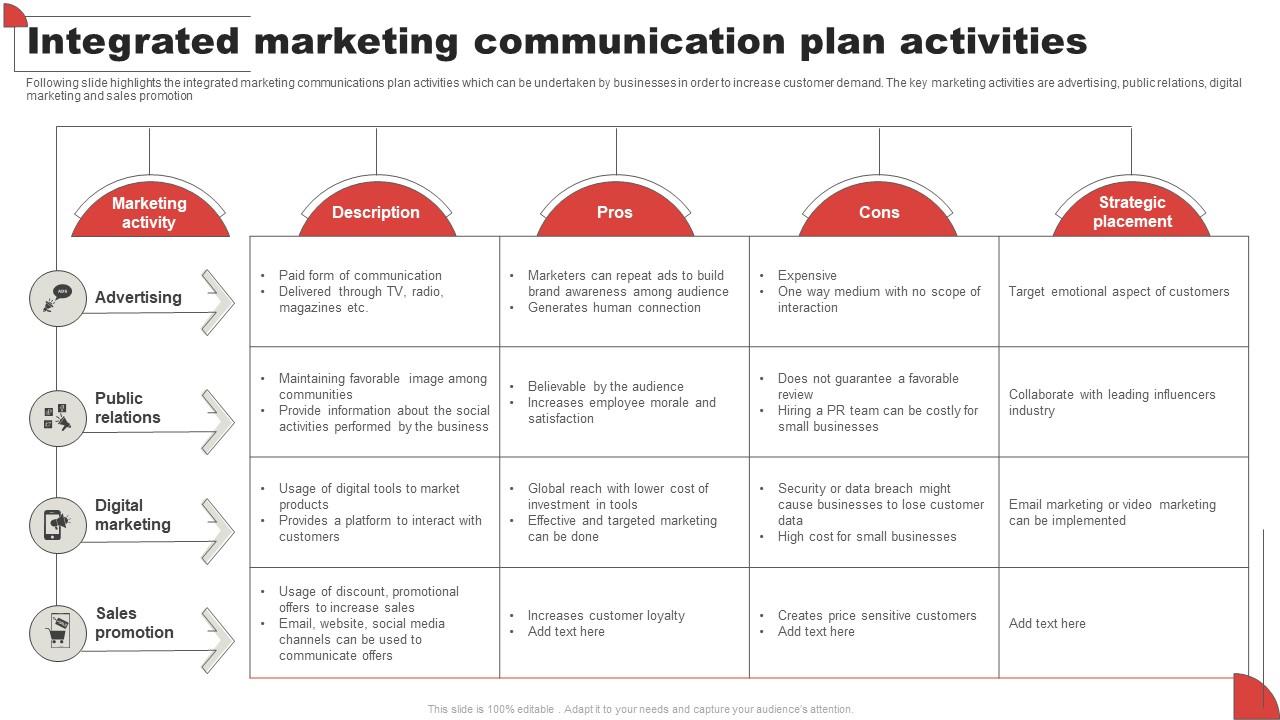
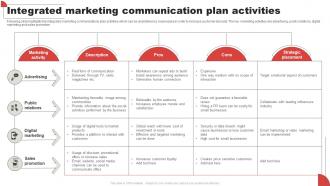
Following slide highlights the integrated marketing communications plan activities which can be undertaken by businesses in order to increase customer demand. The key marketing activities are advertising, public relations, digital marketing and sales promotion Introducing our Integrated Marketing Communication Plan Activities set of slides. The topics discussed in these slides are Marketing, Public, Digital. This is an immediately available PowerPoint presentation that can be conveniently customized. Download it and convince your audience.

FAQs for Integrated Marketing

So IMC is basically getting all your marketing channels - advertising, PR, direct marketing, sales promos, personal selling - to actually talk to each other instead of doing their own thing. Apple's probably the gold standard here, their launches are so coordinated it's almost annoying how good they are at it. But I've seen companies where the social media team apparently never met the email team, and customers get totally different vibes everywhere. Your brand voice needs to match whether it's a billboard or a sales call. Honestly, just audit everything you're doing first and spot the weird inconsistencies.

So basically, IMC gets all your marketing stuff talking the same way - your social posts, emails, ads, whatever. Traditional marketing? Each thing does its own random thing. Super confusing for customers honestly. Like imagine seeing a formal corporate Facebook ad, then getting a super casual email from the same brand. Weird, right? IMC fixes that mess by keeping your voice consistent everywhere. Way better customer experience when everything feels connected instead of all over the place. I'd start by looking at what you're doing now and spotting where your messaging contradicts itself.

Honestly, you've got to start with understanding how your customers actually behave - it's literally the backbone of everything else. Figure out where they hang out online, how they shop, what their buying process looks like. Are they researching on their phones but purchasing on laptops? Track that stuff first. Then match your strategy to their real habits, not what you think they're doing. I mean, there's no point blasting Facebook ads if everyone's on TikTok, right? Map out how they move between different touchpoints. Build your whole integrated approach around their patterns - that's what actually works.

Honestly, measuring integrated campaigns is kind of a pain but totally doable. Track each channel separately first - set up UTM codes for digital stuff, run brand surveys, watch engagement on social/email/PR. But here's the thing: people don't just see one ad and buy, right? Their journey's all over the place. So use Google Analytics multi-channel funnels or marketing mix modeling to see how everything works together. Oh, and definitely grab your baseline numbers before you launch - otherwise you'll be screwed when your boss asks for ROI proof later.

Oh man, getting everyone to actually communicate is brutal - marketing and sales teams love working in their own little bubbles. Budget stuff gets messy fast when you're juggling multiple channels. Measuring ROI? Good luck with that when your campaign is spread across like 6 different platforms. You'll want consistent messaging but each platform needs its own vibe, which is honestly exhausting. My advice? Start with weekly check-ins between teams and create some basic messaging docs everyone can actually use (not those 50-page brand guides nobody reads).

Honestly, digital marketing IS your IMC these days. Social media, email, SEO, paid ads - they should all match your offline stuff and tell the same story. The cool part? You get instant feedback instead of wondering if that billboard actually worked (which let's be real, you never really know). Your Instagram posts need to vibe with your print ads and events. Same messaging, same brand feel. I'd start by looking at all your digital touchpoints - are they consistent? Make sure everything's working together instead of doing its own random thing.

So basically storytelling keeps everything connected - your ads, emails, social stuff all feel like they belong together instead of random messages. Way more memorable than boring feature lists (which nobody cares about anyway). Stories work great because you can slice them up for different channels. Like take one main story and turn it into a video, then pull quotes for Instagram, mention it in newsletters... whatever works. The trick is finding your brand's main struggle or big change moment first. Then you just tell different pieces of that across all your touchpoints. Makes everything feel intentional.

Honestly, Nike's "Just Do It" is still unbeatable - they've been saying the same thing everywhere for like 30 years and it never gets old. You see it on billboards, Instagram, their stores, everywhere. Coca-Cola did something similar with "Share a Coke" but made it personal with those custom bottles. Then there's Old Spice - they went totally weird with those towel guy commercials and somehow made it work across all their social stuff too. The key thing? Your brand feels the same whether someone's watching TV or scrolling their phone. Pick one of these and really dig into how they do it.

Think of social media as your megaphone for spreading your main message everywhere your people actually spend time. Each platform needs its own flavor though - Instagram wants pretty visuals, LinkedIn prefers the professional spin, Facebook handles longer stories better. The cool part? You can actually talk back and forth with people, which gives you gold for your other marketing stuff. Honestly, I'd start by figuring out where your audience really hangs out (not just where you think they should be). Then build content calendars for each platform that all tie back to your bigger campaign goals. Keep your brand voice consistent but don't just copy-paste the same post everywhere.

So basically, when all your marketing stuff matches up - like your Instagram posts sound the same as your emails and store signs - people start trusting you way more. It's that friend thing where they're consistent no matter where you see them. Customers notice when your brand feels scattered (honestly drives me crazy when companies can't keep their story straight). But when everything clicks together? That's when real loyalty happens. You should definitely check what you're putting out there first - I bet you'll find some weird inconsistencies you didn't even realize were there.

Yeah totally doable on basically no budget! First figure out your main message and stick to it everywhere - like literally everywhere. Social media's obviously your go-to since it's free. Don't spread yourself too thin though, pick maybe 2-3 places max where your people actually are. Website plus one social platform plus email can crush it if the messaging matches up. Honestly I've seen massive brands completely botch their consistency, so you're not behind or anything. The key is just being super disciplined about keeping everything aligned across whatever channels you pick.

Honestly, get a good CRM first - that's your foundation for tracking customers everywhere they interact with you. Then grab something like HubSpot or Marketo for automating your campaigns. Don't forget social media management tools to keep your messaging consistent (which is harder than it sounds, trust me). Google Analytics and social insights will show you what's actually working. Here's the thing though - integration is everything. Your tools have to work together or you'll go crazy switching between platforms. Start with one solid system instead of piecing together random tools. Way less stressful.

Dude, cultural stuff will make or break your campaigns abroad. What kills it in the US might totally flop somewhere else - or worse, offend people. You can't just translate copy and call it a day. Colors mean different things, humor doesn't always cross borders, and people consume media differently everywhere. I learned this the hard way once, trust me. Your whole strategy needs to change - messaging, visuals, which channels you use, timing, everything. Honestly? Partner with local teams who actually get the culture. They'll save you from looking like an idiot and wasting budget.

Just be straight with people - no sneaky claims or manipulative stuff. Don't target kids or elderly folks in sketchy ways, and respect different cultures. Privacy matters a ton, especially with all the data tracking these days. I know hitting those targets feels urgent, but cutting corners always bites you later. Think about whether you'd actually want your family using what you're pushing. Before launching anything, show it to different people on your team. Ask yourself "would I cringe if my mom saw this ad?" Sounds basic but it works. Also, make sure whatever you're promoting doesn't totally contradict what your brand claims to stand for.

Honestly, data analytics is like having a crystal ball for your marketing campaigns. You'll see exactly which messages hit different audience segments and track people's entire journey from first click to purchase. The best part? No more shooting in the dark - you can tweak things on the fly based on real data. Set up tracking everywhere first (kind of a pain but worth it), then build those customer profiles to guide your messaging. You can finally time everything perfectly and throw money at channels that actually convert. Real-time optimization beats guessing every single time.

Ratings and Reviews

80% of 100
Review Form
Write a review
Most Relevant Reviews
  1. 80%

    by Cortez Graham

    Unique and attractive product design.
  2. 80%

    by Dwight Pena

    Use of icon with content is very relateable, informative and appealing.

2 Item(s)

per page: