


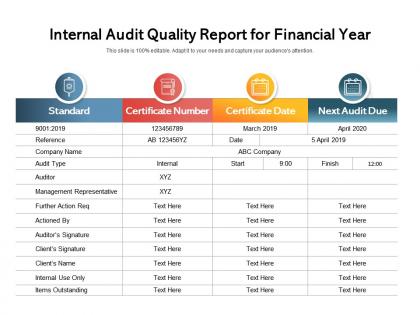
Internal audit quality report for financial year




Try Before you Buy Download Free Sample Product
 Impress Your
 Audience
 100%
100% Editable
 Save Hours
 of Time


Feel completely at ease with our Internal Audit Quality Report For Financial Year. They put you in the correct frame of mind.
People who downloaded this PowerPoint presentation also viewed the following :
Internal audit quality report for financial year with all 2 slides:
Build the framework with our Internal Audit Quality Report For Financial Year. Create a bridge to carry your thoughts across.

FAQs for Internal audit quality report
So for your quality report, hit the big stuff first - audit methodology and whether you're actually following IIA standards. Team competency is huge too, plus any training gaps you've spotted. The compliance piece is boring but necessary (audit charter adherence, independence checks, stakeholder surveys). Performance metrics matter - cycle times, how many recommendations actually get implemented. Honestly though? Stakeholder feedback usually tells the real story better than all those numbers. Oh, and don't skip the action plan at the end - that's literally the only part leadership will read anyway.
Track your audit cycle times and how often management actually implements your recommendations - that's the real test. Also measure stakeholder satisfaction scores, but honestly, the most important thing is whether issues get fixed or just sit there. I've watched so many audit reports disappear into the void! Start by figuring out where you are now, then set some realistic quarterly targets. Focus on two things: efficiency (covering the right stuff on schedule) and impact (actually reducing risks). Management's response time tells you everything about how seriously they take your work.
Ugh, getting consistent data from different audit teams is a nightmare - seriously feels like everyone speaks their own language. Plus you're constantly walking this tightrope between showing real problems and not freaking out leadership. Year-end deadlines make everything worse since everyone's already drowning. Honestly though, start way earlier than you think you need to. Build some standard templates so teams aren't just winging it with data collection. And definitely hash out what "quality" actually looks like before you start tracking anything - saves so much headache later. Oh, and maybe prep leadership that they're gonna see some ugly stuff at first.
Honestly, solid audit reports are what keep leadership actually paying attention to what's going on. Your board needs reliable info to catch problems early - otherwise they're flying blind. The thing is, when reports are clear and thorough, people actually read them and do something about it. But sloppy ones? They just collect dust in some folder. I've seen it happen way too many times. Good reporting also keeps everyone honest since they know issues will get documented properly. Focus on findings that people can actually act on instead of just ticking compliance boxes.
Put the big stuff right at the top - execs barely skim these things anyway. Skip the audit-speak and write like you're explaining it to your boss over coffee. Rate your findings clearly and give them actual steps to fix problems, not just "we observed issues." Charts beat paragraphs every time for showing what's broken. Oh, and always include what management said they'll do and when. I learned this the hard way - if you make it too complicated, it just sits on someone's desk forever. The whole point is getting them to actually do something about the problems you found.
Honestly? Once a year minimum, but most places I know do it quarterly or every six months. Really depends how quickly your stuff changes - some industries move fast, others don't. Quick warning though: I've watched teams get stuck in this endless update cycle that just burns everyone out. Not worth it. Pick a schedule that actually makes sense for your audit cycle and stick with it. Maybe set a phone reminder or something so you don't forget. The goal is just keeping it current with your real metrics and any reg changes. Consistency matters way more than being perfect about timing.
Honestly, stakeholder feedback is what makes your Internal Audit Quality Report actually worth reading. Get input from audit committee members, senior management, and auditees through surveys or interviews - ask them about audit effectiveness, communication, how much value you're adding. Don't just go through the motions though. This feedback becomes your quality metrics and shows you where to improve. Focus on specific stuff like timeliness and report clarity so you get insights you can act on. It's really what proves your audit team is making a difference in the org.
Start with dashboards and simple charts to track stuff like audit cycle times and how fast findings get resolved. Heat maps are actually pretty cool for showing risk coverage across different areas. Don't go crazy with fancy analytics right away though - build basic visualizations first using your current audit data. Once your team gets the hang of it, you can add predictive analytics to spot quality issues before they blow up. Trend analysis showing audit effectiveness over time beats boring spreadsheets any day. Oh, and definitely track stakeholder satisfaction scores if you're not already.
Honestly, I'd break this down into five main things. Does your team actually have the right skills and certs? That's basic but worth checking. Your audit planning should match up with real organizational risks - this is where most places mess up, tbh. Look at whether your procedures are solid and documented properly. Communication matters too - are your findings getting to management clearly? Oh, and make sure you're hitting professional standards like IIA requirements. I'd probably just grab your last few audit reports and benchmark against these areas first.
Ugh, timing is everything with audits - seriously. Rush through your fieldwork and you'll miss the big stuff that actually matters. But here's the thing: drag it out too long and your recommendations are already outdated when you present them. I learned this the hard way on a project last year where we took forever and management was like "yeah, we already fixed that." You want enough time to dig deep and find the real issues, but not so much that you're delivering stale insights. My trick? Work backwards from when they need answers and build in buffer time for the unexpected stuff.
Oh definitely go with the IIA's IPPF standards first - that's like the gold standard for internal audit stuff. ISO 31000 covers your risk management side pretty well too. COSO frameworks are great if you're heavy into internal controls. Honestly, I've seen people go overboard trying to reference every single framework out there, but it just makes the report messy. Stick to maybe 2-3 solid ones that actually fit your situation. The whole point is showing how your audit function stacks up against these benchmarks anyway. Industry-specific ones can be useful depending on what sector you're in, but those three will cover most of what stakeholders care about.
Look, you gotta rank these by risk and business impact first. Critical stuff goes right up front - don't make executives dig through pages to find the scary findings! I learned that the hard way. High-risk issues affecting operations or compliance get immediate attention, then work down to medium and low priority items. Here's the thing though - chat with key stakeholders about your rankings before you finalize everything. Saves you headaches later when they inevitably disagree with something. Also factor in what's actually realistic for them to fix and when, considering their resources and any regulatory deadlines they're facing.
So you need four main things for your action plan. First, spell out exactly what needs fixing for each issue - no vague stuff. Then assign clear owners so there's no confusion about who's responsible. Realistic deadlines are huge too (trust me, I've watched so many plans crash because someone thought they could fix everything in two weeks). Oh, and don't forget measurable success criteria so you know when you're actually done. Build in regular check-ins to catch problems early. The key thing? Make everything concrete enough that there's zero question about what "finished" looks like.
So these reports are basically your audit team's report card - they show you if your internal audits are actually doing their job or just going through the motions. Think of it like checking if your home security system works before trusting it completely. The reports will call out any weak spots in how audits are run, which matters because those gaps could mean you're missing real risks. Honestly, most companies don't pay enough attention to this stuff. But when you fix the audit issues they find, you'll get way better data for deciding where to focus your time and budget on risk management.
Honestly, data analytics tools are huge - you can analyze entire datasets instead of just samples, so you catch way more problems. AI stuff flags weird patterns that'd take you forever to find manually. Even basic automation saves so much time on the boring repetitive stuff. Real-time monitoring is clutch too instead of waiting for those annual reviews. Cloud platforms help with documentation and team collaboration. Oh, and start small - pick one area where you're doing tons of manual work and automate that first. Don't try to overhaul everything at once.
No Reviews