


Inventory Strategy Powerpoint Ppt Template Bundles





Try Before you Buy Download Free Sample Product
 Impress Your
 Audience
 100%
100% Editable
 Save Hours
 of Time


Our Inventory Strategy Powerpoint Ppt Template Bundles are topically designed to provide an attractive backdrop to any subject. Use them to look like a presentation pro.
People who downloaded this PowerPoint presentation also viewed the following :
Inventory Strategy Powerpoint Ppt Template Bundles with all 17 slides:
Use our Inventory Strategy Powerpoint Ppt Template Bundles to effectively help you save your valuable time. They are readymade to fit into any presentation structure.








FAQs for Inventory Strategy Powerpoint
Key components of an effective inventory strategy include demand forecasting, inventory classification, reorder point optimization, supplier relationship management, and technology integration. These elements work together by reducing carrying costs, minimizing stockouts, and improving cash flow, with many retail and manufacturing organizations finding that strategic inventory management ultimately delivers competitive advantage through enhanced customer satisfaction and operational efficiency.
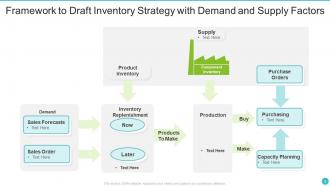
Businesses balance inventory levels with demand forecasting by implementing data-driven analytics, establishing safety stock parameters, utilizing just-in-time delivery systems, and leveraging predictive modeling technologies. Through advanced forecasting algorithms, retailers and manufacturers optimize stock rotation, minimize carrying costs, and reduce stockouts, while maintaining customer satisfaction levels, ultimately delivering improved cash flow and operational efficiency.
Technology serves as the backbone of modern inventory management through AI-driven demand forecasting, real-time tracking systems, automated reordering platforms, and integrated supply chain analytics. These digital solutions streamline operations by reducing human error, optimizing stock levels, and enabling predictive insights, with retailers and manufacturers finding that automated systems ultimately deliver cost reductions and enhanced customer satisfaction.
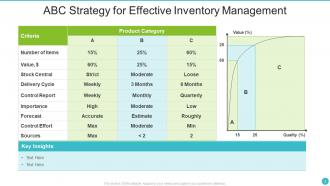
Inventory turnover ratios can be optimized through demand forecasting, ABC analysis for prioritizing high-value items, just-in-time ordering, supplier relationship improvements, and regular inventory audits. These strategies streamline operations by reducing carrying costs, minimizing stockouts, and accelerating cash conversion cycles, with many retail and manufacturing organizations finding that strategic inventory management ultimately delivers improved liquidity and competitive advantage.
Just-in-time inventory systems reduce costs by minimizing storage expenses, reducing waste from obsolete stock, lowering insurance and handling costs, and decreasing capital tied up in inventory. Manufacturing companies and retailers find that JIT approaches streamline supply chains, enhance cash flow, and eliminate overproduction costs, ultimately delivering improved operational efficiency and stronger profit margins.
Multi-channel inventory challenges include stock visibility across platforms, demand forecasting complexity, channel conflict from pricing inconsistencies, synchronized fulfillment coordination, and real-time inventory accuracy. These obstacles create operational inefficiencies through overselling, stockouts, and misallocated resources, with many retailers finding that integrated inventory management systems streamline coordination while delivering improved customer experiences and competitive advantage.
Seasonal demand significantly influences inventory strategy by requiring businesses to adjust stock levels, diversify product mixes, and optimize warehouse capacity throughout different periods. Companies in retail, hospitality, and consumer goods leverage predictive analytics and flexible supply chains to anticipate fluctuations, minimize overstock costs, and ensure adequate availability during peak seasons, ultimately delivering improved customer satisfaction while maintaining operational efficiency.
Key inventory strategy metrics include inventory turnover ratio, carrying costs, stockout frequency, order fulfillment rates, and days sales outstanding. These metrics enable organizations to streamline operations by identifying slow-moving products, optimizing warehouse efficiency, and enhancing customer satisfaction, with many retail and manufacturing companies finding that comprehensive tracking ultimately delivers reduced costs and improved competitive advantage.
Companies leverage data analytics to improve inventory accuracy by implementing predictive forecasting, real-time tracking systems, demand pattern analysis, automated reorder points, and variance detection algorithms. Through machine learning and IoT sensors, retailers and manufacturers can identify discrepancies faster, optimize stock levels, and reduce shrinkage, ultimately delivering cost savings and enhanced customer satisfaction.
Stockouts create customer frustration, lost sales, and damaged brand loyalty, while excess inventory ties up capital, increases storage costs, and risks obsolescence. Both scenarios significantly impact customer satisfaction, with stockouts driving customers to competitors and overstocking leading to markdowns that can devalue brand perception, ultimately affecting long-term customer relationships and profitability.
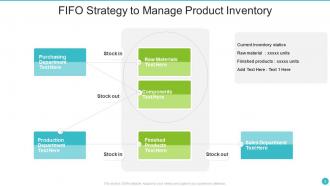
Businesses implement FIFO effectively through systematic inventory labeling, organized storage layouts, automated tracking systems, and regular staff training on rotation protocols. This approach minimizes waste and ensures product quality, with many retailers, food distributors, and pharmaceutical companies finding that consistent FIFO practices reduce spoilage costs while maintaining customer satisfaction and regulatory compliance.
**INPUT**: What inventory management methods are best suited for perishable goods? **OUTPUT**: Effective inventory management methods for perishable goods include FIFO (First In, First Out), real-time tracking systems, demand forecasting algorithms, automated reordering protocols, and temperature-controlled storage monitoring. These approaches streamline operations by minimizing waste, optimizing turnover rates, and ensuring product freshness, with many retailers and food service providers finding that strategic combination of these methods delivers significant cost reductions and enhanced customer satisfaction. [Word count: 60 words]
Automation improves inventory control by enabling real-time tracking, predictive analytics, and automated reordering systems that minimize human error and optimize stock levels. Through AI-powered demand forecasting and RFID technology, retailers and manufacturers streamline warehouse operations, reduce carrying costs, and enhance supply chain efficiency, ultimately delivering better customer satisfaction and competitive advantage.
Supply chain disruptions significantly reshape inventory strategy by forcing organizations to increase safety stock levels, diversify supplier networks, and implement more flexible forecasting models. Companies across manufacturing, retail, and healthcare sectors are adopting strategic buffering approaches, nearshoring initiatives, and real-time visibility technologies, ultimately delivering greater resilience while balancing carrying costs with operational continuity.
Inventory segmentation enables businesses to improve efficiency by categorizing products based on value, demand patterns, and turnover rates, allowing for tailored management approaches. Through strategic classification systems, retailers and manufacturers optimize stock levels, reduce carrying costs, and enhance service quality, with many organizations finding that segmented approaches ultimately deliver better resource allocation and competitive advantage.
-
Best way of representation of the topic.
-
Enough space for editing and adding your own content.