


Investment Banking Pitchbook With Post Selling Plans And Operational Forecasts Ppt Template





Try Before you Buy Download Free Sample Product
 Impress Your
 Audience
 100%
100% Editable
 Save Hours
 of Time


Investment Banking Pitchbook is created when a client is approaching an investment bank looking for prospective buyers. The main purpose of our Investment Banking Pitchbook with Post Selling Plans and Operational Forecasts is to persuade the client that they should choose an investment bank to handle the deal. This module provides details regarding company overview, products, and services, management structure, geographical presence, investment banking fee structure, most successful investment banking deals, etc. Also, the deck covers details regarding market overview such as market trends, competitor comparison, product differentiation, comparisons based on key financials, etc. Moreover, our sell-side investment pitch book presents details regarding the deal overview such as market valuation summary, key points of the deal, operational forecasts, income statement projections, revenue forecast, etc. At last, it shows a list of potentially interested companies, a business overview of the target company, post-selling plans of the selling company, pro forma condensed combined statement of operations, etc. Download this template now.
People who downloaded this PowerPoint presentation also viewed the following :
Content of this Powerpoint Presentation
Slide 1: This slide introduces Investment Banking Pitchbook with Post Selling Plans and Operational Forecasts.
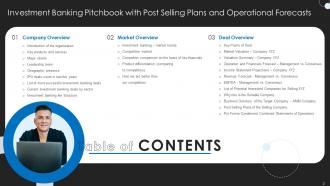
Slide 2: This slide shows Table of Content for the presentation.
Slide 3: This slide highlights title for topics that are to be covered next in the template.
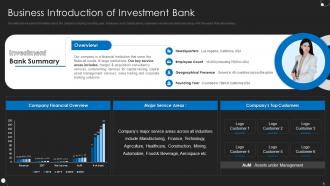
Slide 4: The slide shows a brief information about the company.
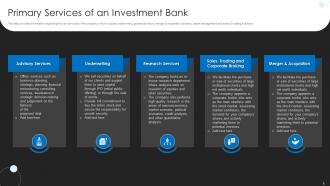
Slide 5: The slide provides information regarding the key services of the company.
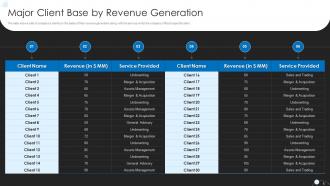
Slide 6: The slide shows a list of company’s clients on the basis of their revenue generation along with the service which the company offers to specific client.
Slide 7: The slide provides the name and designation of the key management team members along with the Experience of the executives.
Slide 8: The slide provides information about the geographical presence of the company along with the number of offices in each country.
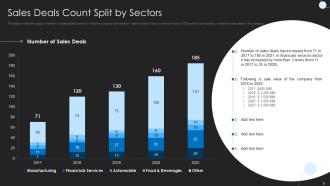
Slide 9: The slide provides the graph of number of sales deals (by sector) which the company has handled in last five years.
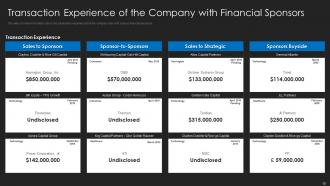
Slide 10: The slide provides information about the transaction experience that the company has with various financial sponsors.
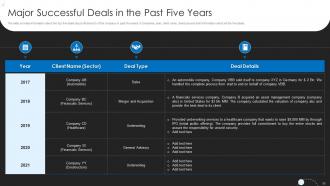
Slide 11: The slide provides information about the top five deals (by profit amount) of the company in past five years.
Slide 12: The slide shows the graph of current deals bifurcation under different services.
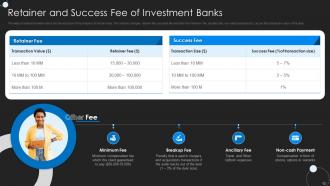
Slide 13: The slide provides information about the fee structure of the company for its services.
Slide 14: This slide exhibit table of content- Market Overview.
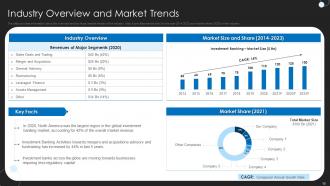
Slide 15: The slide provides information about the overview and key facts (market trends) of the industry.
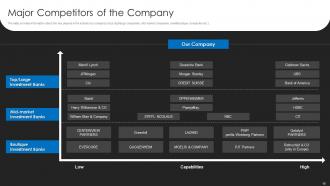
Slide 16: The slide provides information about the key players in the industry by company’s size.
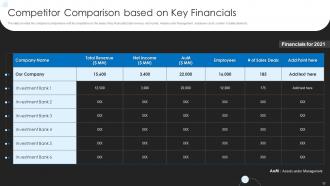
Slide 17: The slide provides the company’s comparisons with its competitors on the basis of key financials.
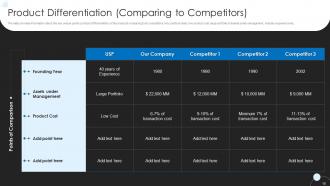
Slide 18: The slide provides information about the key unique points (product differentiation) of the products comparing to its competitors.
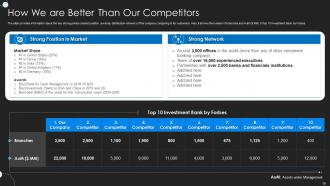
Slide 19: The slide provides information about the key strong points (market position, awards, distribution network) of the company comparing to its customers.
Slide 20: This slide exhibit table of content- Deal Overview.
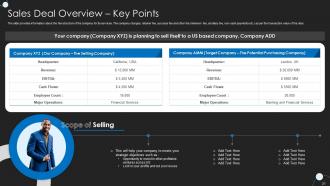
Slide 21: The slide provides information about the overview of the sales deal of the company’s client.
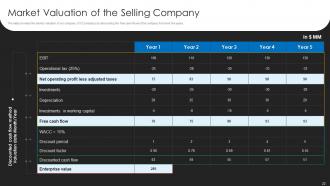
Slide 22: The slide provides the market valuation of our company (XYZ company) by discounting the free cash flows of the company from next five years.
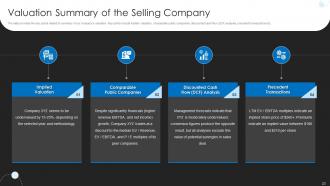
Slide 23: The slide provides the key points related to summary of our company’s valuation.
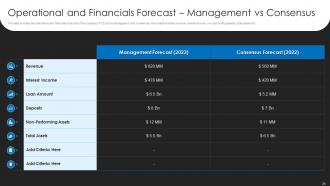
Slide 24: The slide provides the operations and financials forecast of the company (XYZ) by the management and consensus.
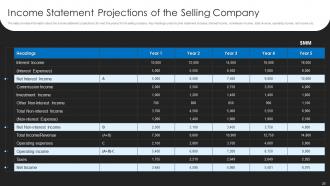
Slide 25: The slide provides information about the income statement projections (for next five years) for the selling company.
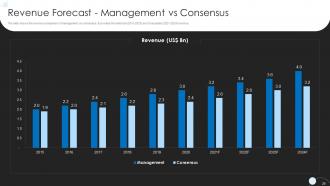
Slide 26: The slide shows the revenue comparison of management vs consensus.
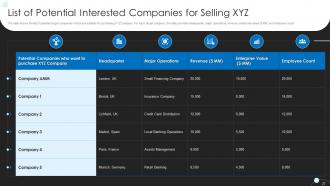
Slide 27: The slide shows the list of potential target companies which are suitable for purchasing XYZ Company.
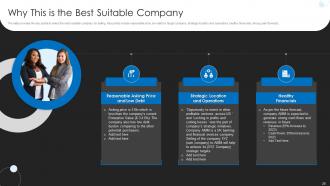
Slide 28: The slide provides the key points to select the most suitable company for selling.
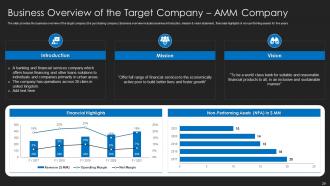
Slide 29: The slide provides the business overview of the target company (the purchasing company).
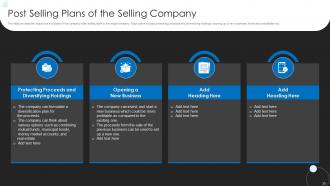
Slide 30: The slide provides the objectives and plans of the company after selling itself to the target company.
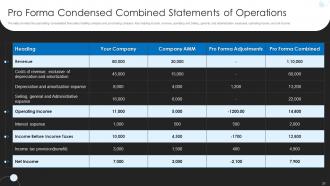
Slide 31: The slide provides the post selling consolidated financials of selling company and purchasing company.
Slide 32: This slide contains all the icons used in this presentation.
Slide 33: This slide is titled as Additional Slides for moving forward.
Slide 34: This is About Us slide to show company specifications etc.
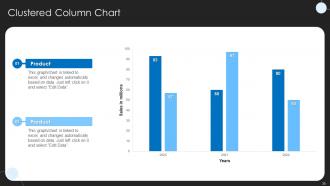
Slide 35: This slide provides Clustered Column chart with two products comparison.
Slide 36: This is Our Mission slide with related imagery and text.
Slide 37: This slide describes Line chart with two products comparison.
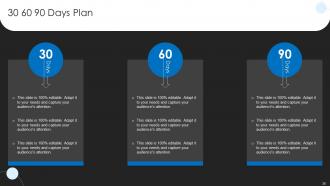
Slide 38: This slide provides 30 60 90 Days Plan with text boxes.
Slide 39: This is Our Target slide. State your targets here.
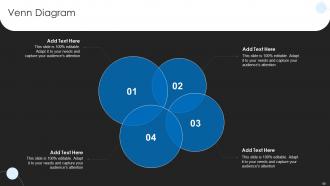
Slide 40: This slide depicts Venn diagram with text boxes.
Slide 41: This is a Timeline slide. Show data related to time intervals here.
Slide 42: This slide shows Post It Notes. Post your important notes here.
Slide 43: This is a Thank You slide with address, contact numbers and email address.
Investment Banking Pitchbook With Post Selling Plans And Operational Forecasts Ppt Template with all 48 slides:
Use our Investment Banking Pitchbook With Post Selling Plans And Operational Forecasts Ppt Template to effectively help you save your valuable time. They are readymade to fit into any presentation structure.


















FAQs for Investment Banking Pitchbook With Post Selling Plans And Operational
Investment bankers serve as financial advisors, underwriters, merger facilitators, market makers, and capital structure specialists for corporations and institutions. Through client relationship management, deal structuring, and market analysis, investment bankers enable companies to raise capital efficiently, execute strategic acquisitions, and optimize financial performance, ultimately delivering enhanced market positioning and competitive advantage.
Investment banks assist companies in M&A by providing strategic advisory services, conducting due diligence, performing financial valuations, and facilitating negotiations between parties. Through their expertise in deal structuring and regulatory compliance, investment banks streamline complex transactions, minimize risks, and optimize deal terms, with many corporations finding that professional guidance ultimately delivers faster closings, better valuations, and enhanced strategic outcomes.
Investment banks utilize equity securities, debt instruments, convertible bonds, preferred stock, and hybrid securities for capital raising activities. These instruments enable organizations to access diverse funding sources by matching investor preferences with corporate financing needs, streamlining capital allocation processes, and delivering flexible terms that support strategic growth initiatives across various market conditions.
Investment banks evaluate company financial health through comprehensive analysis of financial statements, cash flow patterns, debt-to-equity ratios, market position, and management quality. These assessments enable banks to determine underwriting risks by examining revenue stability, profitability trends, and competitive advantages, with many institutions finding that thorough due diligence ultimately delivers better pricing strategies and successful market offerings.
Equity financing involves selling company ownership shares to investors in exchange for capital, while debt financing requires borrowing money that must be repaid with interest over time. Investment banks facilitate both through IPOs, private placements, bond issuances, and loan syndications, with companies increasingly using strategic combinations of both to optimize capital structure and minimize costs.
Market trends significantly influence investment banking strategies by shaping deal timing, sector focus, regulatory compliance approaches, and risk assessment methodologies. Through advanced analytics and market intelligence, banks adjust their advisory services, capital raising recommendations, and merger timing to align with economic cycles, while helping clients navigate volatile markets, ultimately delivering optimized outcomes and strategic competitive advantages.
Investment banks face regulatory challenges including capital adequacy requirements, compliance with Dodd-Frank and MiFID II, anti-money laundering protocols, stress testing mandates, and cross-border regulatory coordination. These evolving requirements demand significant compliance investments and operational adjustments, while banks increasingly find that robust regulatory frameworks ultimately enhance market stability, client trust, and long-term competitive positioning.
Technology has transformed investment banking through algorithmic trading, artificial intelligence for risk assessment, blockchain for settlements, and digital client platforms. These innovations streamline operations by automating complex transactions, enhancing regulatory compliance, and accelerating deal processing, with many firms finding that digital transformation delivers faster execution times, reduced operational costs, and improved client experiences in an increasingly competitive landscape.
An initial public offering (IPO) is when a private company first sells shares to public investors through stock exchanges, with investment banks serving as underwriters who price, market, and distribute the securities. Investment banks facilitate this process by conducting due diligence, preparing regulatory filings, and managing investor roadshows, ultimately enabling companies to raise capital while delivering significant advisory fees and market-making opportunities.
Investment banks manage transaction risk through comprehensive due diligence, rigorous financial modeling, diversified deal portfolios, and multi-layered approval processes that involve senior analysts and risk committees. These institutions leverage sophisticated analytics and stress-testing scenarios to evaluate potential exposures, while maintaining strong client relationships and regulatory compliance, ultimately delivering strategic advisory services that balance lucrative opportunities with prudent risk management across diverse market conditions.
Investment bankers must navigate conflicts of interest, client confidentiality, fair dealing, regulatory compliance, and market manipulation prevention. These ethical frameworks ensure transparency and trust by requiring disclosure of potential conflicts, maintaining strict information barriers, and prioritizing client interests over personal gain, with many institutions finding that robust ethical practices ultimately deliver enhanced reputation, regulatory compliance, and sustainable competitive advantage.
Investment banks contribute to economic growth by facilitating capital formation, enabling corporate mergers and acquisitions, underwriting securities offerings, and providing strategic advisory services to businesses and governments. These institutions streamline market efficiency by connecting investors with opportunities, supporting job creation through corporate expansion, and enhancing liquidity across financial markets, ultimately delivering improved capital allocation and economic stability.
Investment banks utilize financial modeling to evaluate company valuations, analyze merger and acquisition scenarios, assess risk profiles, and structure complex transactions for corporate clients. These sophisticated models enable banks to provide data-driven strategic recommendations, forecast financial performance under various scenarios, and justify pricing decisions, ultimately delivering more accurate advisory services and competitive positioning for clients in capital markets.
Essential skills for investment banking include strong analytical abilities, financial modeling expertise, attention to detail, communication skills, and resilience under pressure. Investment banks typically seek candidates with finance, economics, or business degrees, with many professionals finding that CPA or CFA certifications, internship experience, and proficiency in Excel and PowerPoint ultimately deliver competitive advantages in this demanding field.
Global economic factors significantly impact investment banking through market volatility, interest rate fluctuations, regulatory changes, currency movements, and shifting capital flows across regions. During economic uncertainty, banks adapt by diversifying services, expanding into emerging markets, and leveraging technology for risk management, while economic growth periods create increased M&A activity, IPO opportunities, and cross-border transactions, ultimately requiring strategic agility.
-
“Superb. What a great finding. Thankful for SlideTeam. We were paying people to make slides which went all in vain. We are so happy to have found you.”
-
Every time I ask for something out-of-the-box from them and they never fail in delivering that. No words for their excellence!