


IOT In Device Management Plan Powerpoint Ppt Template Bundles




Try Before you Buy Download Free Sample Product
 Impress Your
 Audience
 100%
100% Editable
 Save Hours
 of Time


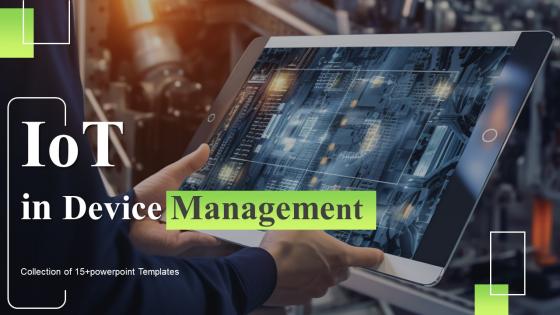
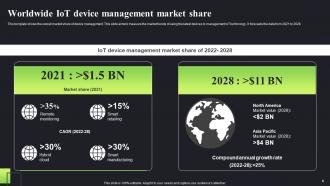
Introducing our comprehensive IoT in Device Management presentation, tailored for businesses seeking streamlined control over their connected devices. Seamlessly encompassing keywords like mobile device management, IoT device management companies, remote device management system, remote management IoT, and IoT device management pricing, this PPT unveils a strategic roadmap to efficiently oversee diverse IoT endpoints. Explore cutting edge solutions that empower remote monitoring, configuration, and updates, optimizing operational efficiency. With a focus on affordability and scalability, our presentation equips you with insights into IoT device managements potential to enhance productivity and unlock new avenues for growth. Stay ahead in the IoT landscape with informed decisions powered by our insightful resource.
People who downloaded this PowerPoint presentation also viewed the following :
IOT In Device Management Plan Powerpoint Ppt Template Bundles with all 39 slides:
Use our IOT In Device Management Plan Powerpoint Ppt Template Bundles to effectively help you save your valuable time. They are readymade to fit into any presentation structure.
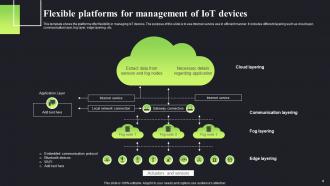
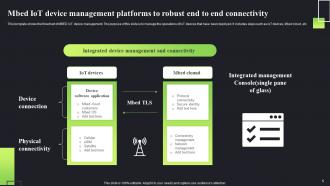
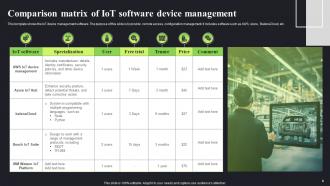
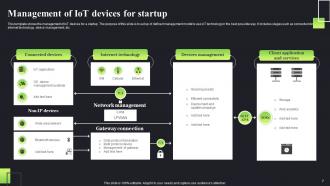









FAQs for IOT In Device Management Plan Powerpoint
Managing IoT devices at scale presents challenges including connectivity issues, security vulnerabilities, device heterogeneity, data management complexity, and maintenance overhead. These obstacles can significantly impact operational efficiency, especially in manufacturing and healthcare environments, while organizations increasingly find that strategic IoT management platforms help streamline deployment, enhance security protocols, and ultimately deliver better resource allocation and competitive advantage.
Organizations ensure IoT device security through comprehensive lifecycle protocols including secure authentication, regular firmware updates, network segmentation, continuous monitoring, and end-of-life decommissioning procedures. These security frameworks enable enterprises to minimize vulnerabilities while maintaining operational efficiency, with many financial institutions and healthcare organizations finding that proactive device management ultimately delivers enhanced data protection and regulatory compliance.
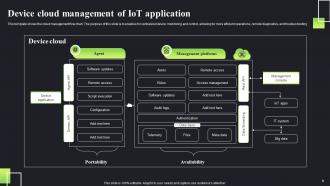
Cloud computing serves as the central backbone for IoT device management, enabling remote monitoring, data storage, real-time analytics, firmware updates, and scalable device provisioning across distributed networks. Through cloud platforms, organizations streamline device lifecycle management, enhance security protocols, and deliver predictive maintenance capabilities, with industries like manufacturing and healthcare finding that centralized cloud management reduces operational costs while improving system reliability.
Standards and protocols ensure IoT devices communicate seamlessly across different platforms, networks, and manufacturers by establishing common frameworks for data exchange, security, and connectivity. These unified approaches streamline device integration, reduce deployment complexity, and enhance scalability, with organizations increasingly finding that standardized environments deliver faster implementation, lower maintenance costs, and improved interoperability across diverse IoT ecosystems.
Best practices for firmware updates across diverse IoT devices include automated deployment systems, staged rollout protocols, backup and rollback capabilities, device compatibility verification, and secure update channels. These approaches streamline operations by minimizing downtime, reducing manual intervention, and ensuring consistent security patches, with many organizations in manufacturing and smart city infrastructure finding that centralized management platforms ultimately deliver faster deployment cycles and enhanced operational reliability.
Businesses can leverage artificial intelligence for smarter IoT device management through predictive maintenance, automated troubleshooting, real-time performance optimization, and intelligent resource allocation. AI-powered analytics enable organizations to anticipate device failures, streamline operations, and enhance security protocols, with manufacturing and healthcare sectors finding that these capabilities significantly reduce downtime while delivering improved operational efficiency.
IoT device health monitoring strategies include real-time telemetry analysis, predictive maintenance algorithms, automated alert systems, performance benchmarking, and remote diagnostic capabilities. These approaches enable organizations to identify potential failures before they occur, optimize resource allocation, and maintain operational continuity, with manufacturing and healthcare facilities finding that proactive monitoring reduces downtime costs significantly.
Regulatory requirements significantly influence IoT device management by mandating data privacy protections, security protocols, compliance documentation, and regular auditing processes. Healthcare organizations managing connected medical devices and financial institutions deploying IoT sensors must implement stringent access controls, encryption standards, and monitoring systems, ultimately ensuring regulatory compliance while maintaining operational efficiency and reducing legal risks.
Edge computing transforms IoT device management by enabling local data processing, reducing network latency, minimizing bandwidth usage, and enhancing security through distributed architecture. This approach allows organizations to streamline real-time analytics, improve response times for critical applications, and reduce cloud dependency, with manufacturing plants and smart cities finding that edge-enabled IoT delivers faster decision-making and operational efficiency.
Organizations can effectively manage IoT data through cloud-based platforms, edge computing, data analytics tools, automated processing systems, and robust security protocols. These technologies streamline data collection, storage, and analysis by reducing bandwidth costs, enabling real-time insights, and ensuring compliance, with many enterprises finding that strategic data management ultimately delivers operational efficiency and competitive advantage.
Secure IoT provisioning techniques include zero-touch enrollment, certificate-based authentication, hardware security modules, over-the-air configuration, and encrypted bootstrap protocols. These methods streamline device lifecycle management by automating credential distribution, enabling remote configuration, and ensuring tamper-proof identity verification, with manufacturing and healthcare sectors finding that automated provisioning reduces deployment costs while maintaining security compliance.
User interface design and usability significantly impact IoT device management by determining how efficiently administrators can monitor, configure, and troubleshoot connected systems across their networks. Well-designed interfaces streamline device provisioning, enable real-time visibility into performance metrics, and simplify complex operations through intuitive dashboards, with many organizations finding that user-friendly management platforms reduce operational overhead while accelerating response times to critical issues.
Key metrics for IoT device performance and reliability include uptime percentages, response times, data transmission accuracy, battery life, connection stability, and error rates. These measurements enable organizations to optimize network efficiency, predict maintenance needs, and ensure consistent service delivery, with many manufacturing and healthcare facilities finding that proactive monitoring reduces operational costs while enhancing overall system reliability.
Organizations can foster collaboration between IT and operational technology in IoT management by establishing cross-functional teams, implementing unified communication platforms, creating shared governance frameworks, and developing integrated security protocols. Through joint training programs and collaborative planning sessions, manufacturing plants, smart buildings, and logistics companies streamline device deployment, enhance operational visibility, and ultimately deliver improved system reliability while reducing security vulnerabilities across their IoT ecosystems.
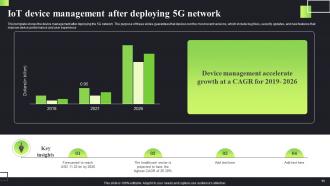
Emerging trends in IoT device management include edge computing integration, AI-driven predictive maintenance, zero-trust security frameworks, 5G connectivity optimization, and automated lifecycle management platforms. These technologies streamline operations by reducing latency, preventing costly downtime, and enhancing security protocols, with many organizations finding that strategic adoption ultimately delivers improved operational efficiency and competitive advantage.
-
They helped us design the pamphlets for our church’s food drive! The people loved the design, and I’m happy to say it was successful. Thank you, SlideTeam!
-
Great experience, I would definitely use your services further.