


IoT Network Architecture Template Bundles




Try Before you Buy Download Free Sample Product
 Impress Your
 Audience
 100%
100% Editable
 Save Hours
 of Time


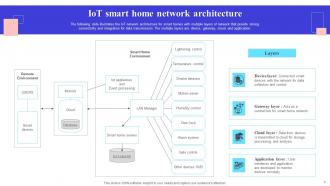
Introducing our comprehensive PowerPoint presentation on IoT Network Architecture, designed to enlighten and empower your understanding of the digital landscape. Dive deep into the intricacies of Cloud Network Architecture, discovering how it forms the backbone of scalable IoT ecosystems, enabling seamless data exchange and storage. Explore the innovative Smart Home Network Architecture, unraveling the secrets behind intelligent, interconnected homes that simplify daily life. Delve into the critical realm of IoT Security Architecture, safeguarding your network against vulnerabilities and threats. With visually engaging graphics and expert insights, this PPT equips you to navigate the dynamic world of IoT network design. Whether you are a tech enthusiast or a professional, gain invaluable knowledge to harness the potential of IoT for a smarter, safer future. Elevate your expertise with our IoT Network Architecture presentation today.
People who downloaded this PowerPoint presentation also viewed the following :
IoT Network Architecture Template Bundles with all 34 slides:
Use our IoT Network Architecture Template Bundles to effectively help you save your valuable time. They are readymade to fit into any presentation structure.









FAQs for IoT Network
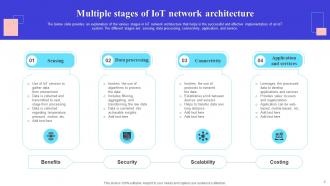
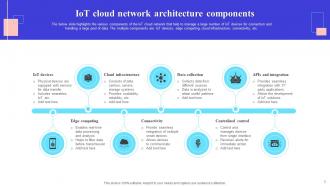
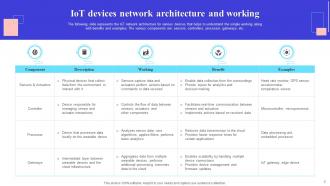
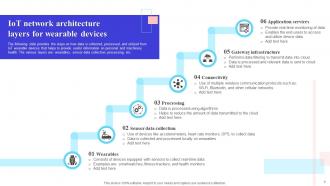
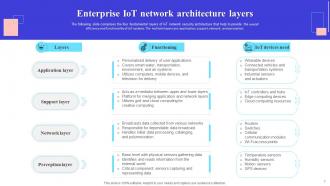
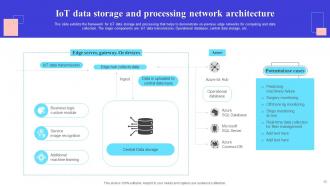
So basically you've got sensors/devices collecting data, then connectivity stuff like WiFi or cellular to move it around. Edge computing handles some processing locally - seriously cuts down on delays which is huge. Cloud platforms do the heavy lifting for analytics and storage, plus manage all your devices. Applications are where users actually see everything. Data flows both ways - up from sensors, down with commands. Honestly I'd start by figuring out exactly how your data needs to move first, then pick components based on what kind of speed and bandwidth you actually need. Way easier than trying to build everything at once.
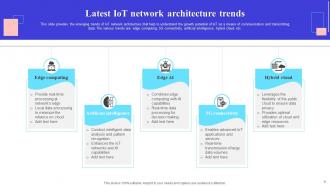
So basically edge computing processes stuff right on your IoT devices instead of shipping everything to the cloud. Way faster responses since there's no back-and-forth with remote servers. Your bandwidth costs drop too - you're only sending the important data, not every tiny sensor ping. Battery life gets better because devices aren't constantly transmitting. Honestly, it's a game-changer for anything needing instant reactions. Real-time apps actually work in real-time! I'd start by figuring out which of your apps can't handle delays - those should be your first edge candidates.
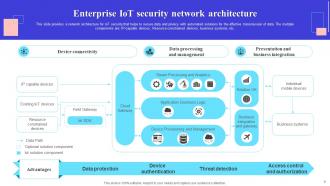
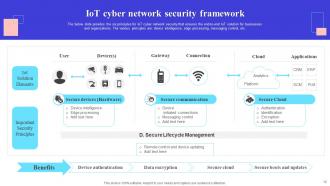
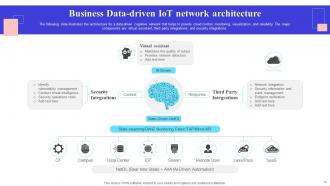
Security can't be an afterthought with IoT - you've gotta bake it in from day one. Authentication, encryption, access controls need to happen at every single layer. The real challenge? Most IoT devices are pretty weak processing-wise, so you're always juggling strong security against performance limits. Honestly, I've watched so many teams skip the security planning and then scramble later when shit hits the fan. Map out your data flows first and spot all the ways someone could break in. That'll show you where to focus your efforts without going crazy trying to secure everything at once.
Honestly, protocol choice can totally tank your IoT setup if you pick wrong. MQTT's my go-to for most projects - handles sketchy connections really well and won't eat your bandwidth. Only downside is you'll need that broker sitting in the middle adding some lag. CoAP is actually amazing for direct device talk, way more efficient than people give it credit for. HTTP? Skip it unless you absolutely have to - it's just overkill for sensors and stuff. Really depends what you're building though. Need instant responses? CoAP's your friend. Dealing with devices that drop offline constantly? MQTT all day. Just test both with your actual hardware first.
So the biggest pain points are gonna be bandwidth getting crushed, managing all those devices (which honestly becomes a total mess), and your systems just drowning in data. Once you hit thousands of devices, it's like shoving a fire hose through a straw. Security becomes this massive headache too - every new endpoint is another vulnerability. Real-time stuff starts lagging. Don't even get me started on trying to update firmware across different device types. My advice? Get your edge computing sorted early and grab a solid device management platform before everything spirals.
So basically, centralized IoT means all your device data gets funneled to one main server or cloud - like everything has to go through this single hub. With decentralized setups, you're spreading that processing across different nodes and edge devices instead. Centralized is definitely easier to manage and you get consistent policies, but man, if that hub goes down you're screwed. Plus there's the whole privacy thing. Decentralized systems don't have those bottlenecks and your data stays local (so faster response times), but coordinating everything becomes a nightmare. Honestly? Go centralized if you want simple oversight, decentralized if performance matters more.
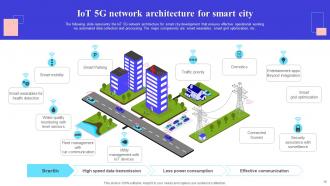
So basically 5G is a game changer for IoT stuff. Latency drops from like 50ms to 1ms which is insane - that's what makes autonomous cars and remote surgery actually possible. You can also pack way more devices per tower now. The speeds are obviously faster too, but honestly the latency thing is what gets me excited. Oh and there's this network slicing feature where you can create separate virtual networks for different projects, which is pretty neat. If you're planning anything big with IoT, you should definitely start thinking about 5G now because it opens up so many possibilities that just weren't there with 4G.
So you've got three main spots to put ML in your IoT setup. Edge devices can run simple models for instant decisions - no waiting for data to bounce around. Fog computing is honestly where the magic happens though, since you're analyzing patterns across multiple devices locally. Cloud handles the heavy lifting for complex analytics and training new models. Just match your model complexity to how fast you need answers. Time-sensitive stuff? Keep it on the edge. Everything else can work its way up the chain.
Honestly, just stick with the boring but reliable standards - MQTT, CoAP, or basic REST APIs. Don't get fancy with custom protocols unless you hate yourself. JSON's your best friend for data exchange since literally everything can read it. You'll want some kind of device management system set up from day one. Sounds obvious but I've seen too many people skip this step. Your gateway should handle protocol translation between different device types. Oh and definitely test everything together early - like way earlier than you think. Build a little test lab with different devices and run compatibility checks constantly. Trust me on this one.
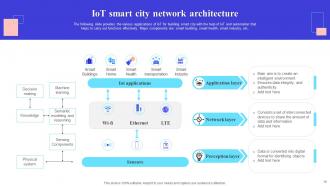
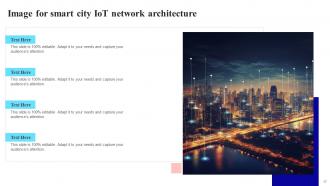
So IoT architecture is what connects all the smart city stuff - sensors, traffic lights, air quality monitors, you name it. Most cities use a layered setup where edge devices grab data, gateways bundle it up, then cloud platforms crunch everything for insights. Security's huge here because no one wants hackers messing with traffic systems (nightmare scenario). A hybrid edge-cloud approach works best since it cuts down latency for critical stuff. Honestly, just figure out your city's biggest priorities first, then build the network around those specific needs. Way easier than trying to do everything at once.
Start by checking what's actually draining your batteries - you'll probably spot some obvious power hogs. Sleep/wake cycles are your best friend here, and ARM Cortex-M chips work great if you're picking new hardware. Ditch WiFi when you can and go with LoRaWAN or Zigbee instead. Way easier on batteries. Oh, and stop sending constant data streams - batch your messages and only transmit what you actually need. I learned this the hard way on my last project. Three main things to nail: device power management, smart network protocols, and better data strategies.
So basically it comes down to where you want your computing power and how much data you're pushing around. Cloud-heavy means you're constantly streaming raw data upstream - which honestly can get expensive fast with bandwidth costs. Edge processing keeps most stuff local, just sends summaries up to the cloud. Way lighter on your network but now you need beefier hardware scattered everywhere. Most people I know end up doing a mix anyway. Figure out what actually needs instant decisions vs what can chill and get processed later in the cloud.
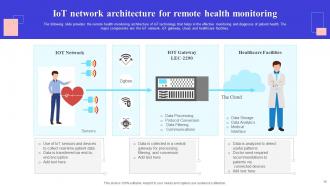
So definitely track latency first - IoT stuff breaks when responses are slow. Throughput and packet loss matter too, plus energy consumption if you're running on batteries. Connection reliability is huge because random dropouts will drive you crazy (trust me on that one). Coverage area's another big one to watch. Honestly, I'd set up dashboards for all these metrics right away. You'll catch problems early instead of scrambling later. Battery life and how well it scales when you add more devices are worth monitoring too. Start simple though - don't overcomplicate it.
Honestly, modularity is your best friend here - build everything so you can swap pieces without breaking the whole system. Skip proprietary protocols and go with MQTT or CoAP instead. Microservices architecture is clutch for this. Edge computing is where everyone's headed right now (and for good reason), but don't lock yourself into just one approach. Your setup should handle both centralized and distributed processing. Oh, and security updates need to be baked in from the start - can't stress this enough. Start by looking at what protocols you're using now and figure out what's too rigid. Scalable cloud infrastructure is non-negotiable too.
Tesla's cars constantly beam data to their servers for updates and monitoring - pretty smart setup. Barcelona has this crazy mesh network with thousands of sensors tracking everything from traffic to air quality. GE factories do something different though - they process machine data locally but push important stuff to the cloud. John Deere's tractors are honestly kind of wild with all their GPS and soil sensors. The main thing? If you need real-time decisions, process at the edge. Analytics can wait for the cloud.
-
“Detailed and great to save your time.”
-
You know what? I'm so glad I opted for this PPT design. It has been a total game-changer for me and my presentations. Thank you!