


IoT Smart Lighting Powerpoint Ppt Template Bundles




Try Before you Buy Download Free Sample Product
 Impress Your
 Audience
 100%
100% Editable
 Save Hours
 of Time


Embark on an illuminating journey into IoT Smart Lighting with our comprehensive PowerPoint presentation. Explore the transformative power of smart lighting systems, uncovering their role in revolutionizing spaces with energy efficient illumination. Delve into automated lighting management, understanding how IoT technology orchestrates seamless and responsive lighting environments. This presentation illuminates the potential of IoT driven smart lighting, offering insights into enhanced energy efficiency, adaptive illumination, and automated controls. Empower your team with a strategic understanding of IoT enabled lighting systems, guiding efforts towards sustainable practices and optimized lighting solutions. Harness the power of IoT to transform spaces, optimize energy usage, and create dynamic lighting environments that adapt intelligently to diverse needs.
People who downloaded this PowerPoint presentation also viewed the following :
IoT Smart Lighting Powerpoint Ppt Template Bundles with all 28 slides:
Use our IoT Smart Lighting Powerpoint Ppt Template Bundles to effectively help you save your valuable time. They are readymade to fit into any presentation structure.









FAQs for IoT Smart Lighting Powerpoint
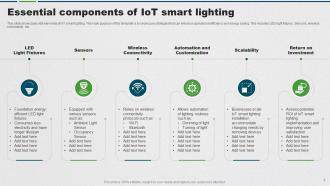
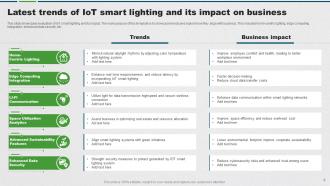
Key components of an IoT smart lighting system include LED fixtures, wireless sensors, network connectivity modules, centralized control platforms, and mobile management applications. These technologies work together by enabling automated brightness adjustment, occupancy detection, and remote monitoring capabilities, with many commercial buildings and smart cities finding that integrated systems deliver significant energy savings, reduced operational costs, and enhanced user experiences.
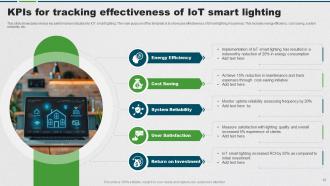
IoT smart lighting reduces energy consumption by automatically adjusting brightness based on occupancy, daylight levels, and usage patterns, while enabling remote control and scheduling optimization. Through sensors and connectivity, residential homes achieve 20-30% energy savings and commercial buildings streamline operational costs, ultimately delivering lower utility bills and enhanced sustainability with intelligent resource management.
IoT smart lighting security concerns include unauthorized network access, data privacy breaches, device hijacking, firmware vulnerabilities, and weak authentication protocols. These risks present both challenges and opportunities for organizations, with many companies finding that implementing robust encryption, regular security updates, and network segmentation ultimately delivers enhanced protection while maintaining operational efficiency.
Smart lighting enhances user experience by enabling personalized automation, voice control, and adaptive brightness based on daily routines, occupancy, and natural light levels. Through IoT integration, homeowners achieve seamless scheduling, energy optimization, and mood-based ambiance control, while smart sensors automatically adjust lighting throughout different rooms, ultimately delivering convenience and significantly reducing energy costs.
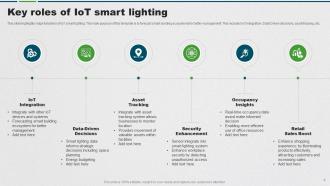
Data analytics enables IoT smart lighting systems to optimize energy consumption, predict maintenance needs, and adapt to usage patterns through real-time monitoring and machine learning algorithms. By analyzing occupancy data, ambient light levels, and energy consumption trends, facilities managers can reduce operational costs by up to 40%, while delivering enhanced user experiences and extending equipment lifespan across commercial buildings.
Smart lighting integration with IoT devices creates seamless home automation through synchronized scheduling, adaptive responses to environmental sensors, and centralized control systems. These interconnected systems streamline energy management, enhance security through coordinated lighting and camera systems, and deliver personalized experiences, with many homeowners finding that integrated ecosystems reduce operational costs while providing superior convenience and control.
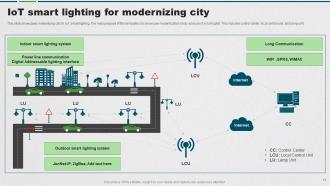
IoT smart lighting systems commonly use Zigbee, Z-Wave, Wi-Fi, Bluetooth Mesh, and Thread protocols, along with standards like IEEE 802.15.4 and Matter for interoperability. These technologies enable seamless device communication, centralized control, and energy optimization across commercial buildings, smart cities, and residential installations, with many organizations finding that standardized protocols ultimately deliver reduced maintenance costs and enhanced scalability.
IoT smart lighting transforms outdoor spaces by providing adaptive brightness based on foot traffic, weather conditions, and time schedules, while enabling remote monitoring and energy optimization across entire park networks. Through motion sensors and connectivity features, municipalities can reduce energy costs by up to 50%, enhance public safety with responsive illumination, and streamline maintenance operations, ultimately delivering better visitor experiences and significant operational savings.
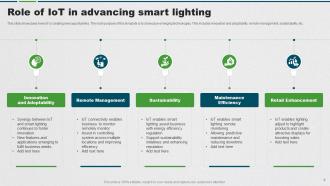
Deploying IoT smart lighting at scale presents challenges including network infrastructure requirements, device interoperability issues, cybersecurity vulnerabilities, high initial implementation costs, and ongoing maintenance complexity. While these obstacles require strategic planning and investment, many organizations find that phased deployment approaches, robust security protocols, and standardized platforms ultimately deliver significant energy savings and operational efficiency gains.
Sensors in smart lighting enhance environmental sustainability by automatically adjusting brightness based on occupancy, daylight availability, and usage patterns, significantly reducing energy consumption. These intelligent systems enable buildings, cities, and manufacturing facilities to minimize electricity waste, lower carbon footprints, and achieve up to 60% energy savings, while delivering operational cost reductions and supporting corporate sustainability goals.
IoT smart lighting in retail environments includes adaptive product spotlighting, customer behavior tracking through movement sensors, dynamic mood lighting for different shopping zones, energy optimization based on occupancy patterns, and personalized lighting experiences via mobile app integration. These technologies enhance customer experiences by creating engaging atmospheres, reducing operational costs through automated controls, and providing valuable analytics on shopping patterns, with many retailers finding that strategic lighting ultimately drives increased sales and improved energy efficiency.
User interfaces and mobile apps enhance smart lighting functionality by enabling remote control, scheduling automation, energy monitoring, and personalized lighting scenes from anywhere. Through intuitive dashboards and voice integration, facilities managers can optimize energy consumption, reduce operational costs, and create adaptive environments, with many commercial buildings and retail spaces finding that app-based controls deliver significantly improved user experiences and operational efficiency.
IoT smart lighting can significantly enhance circadian rhythms and well-being by automatically adjusting color temperature and brightness throughout the day, mimicking natural sunlight patterns. These systems enable better sleep quality, improved mood regulation, and enhanced cognitive performance, with hospitals, offices, and educational institutions finding that circadian-optimized lighting reduces fatigue and increases productivity.
IoT smart lighting adapts to user preferences through machine learning algorithms, occupancy sensors, circadian rhythm tracking, voice controls, and mobile app customization. These systems learn individual patterns by monitoring usage behaviors, automatically adjusting brightness and color temperature throughout the day, while enabling personalized scheduling for different family members, ultimately delivering energy efficiency and enhanced comfort experiences.
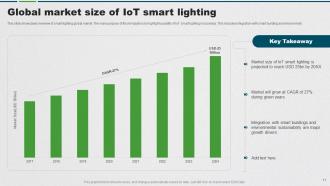
IoT smart lighting presents both upfront investment challenges and significant long-term savings compared to traditional systems. While initial costs can be 20-40% higher due to sensors, connectivity infrastructure, and smart bulbs, organizations typically achieve 50-70% energy reduction, minimized maintenance through predictive analytics, and enhanced operational efficiency, with many commercial buildings and manufacturing facilities finding payback periods of 2-3 years.
-
Thrilled to see several customizable templates catering various verticals and industries.
-
The templates you provide are great! They have saved me tons of time and made my presentations come alive. Thank you for this awesome product. Keep up the good work!