


Key Aspects Of Brand Management Branding CD V





Try Before you Buy Download Free Sample Product
 Impress Your
 Audience
 100%
100% Editable
 Save Hours
 of Time


A subfield of marketing, brand management oversees all communications efforts working together to define a brands image and personality. Grab our Key Aspects of Brand Management template. It is expertly designed to increase customer loyalty and leverage the firms profits. Our brand management deck aids in the management of equity, awareness, reputation, and performance. It includes a branding overview detailing the brand, objectives, and characteristics. Further, brand management encompasses brand identity and positioning by emphasizing various elements. These are associated with brand identity, critical brand positioning strategies, a brand messaging framework, and brand repositioning. Our Brand Awareness PPT also highlights Aakers and Kellers brand equity models. Brand asset valuation is performed to assess a brands strength and growth potential. Key members of the brand management team include the VP of Marketing, the Director of Product Marketing, and others. The brand managers role is also described, along with his qualifications, salary, and responsibilities. Lastly, our Brand Reputation module exhibits two case studies. These highlight the role of brand management through brand awareness campaigns and logo rebranding. Get immediate access.
People who downloaded this PowerPoint presentation also viewed the following :
Content of this Powerpoint Presentation
Slide 1: This slide introduces Key Aspects of Brand Management. Commence by stating Your Company Name.
Slide 2: This slide depicts the Agenda of the presentation.
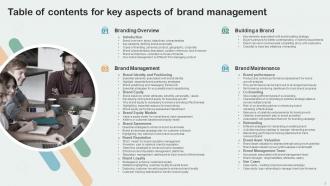
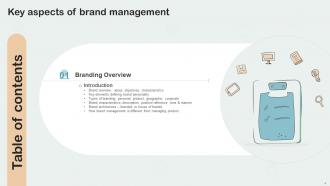
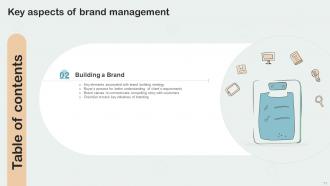
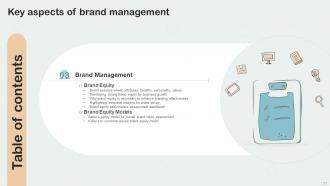
Slide 3: This slide incorporates the Table of contents.
Slide 4: This slide highlights the Title for the Topics to be discussed next.
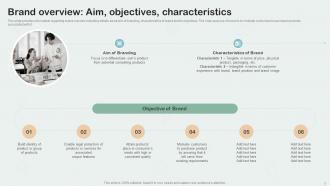
Slide 5: This slide provides information regarding brand overview including details about aim of branding, characteristics of brand and its objectives.
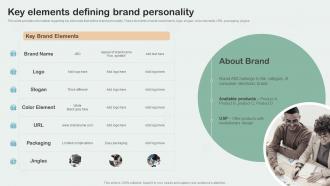
Slide 6: This slide presents the Key elements defining brand personality.
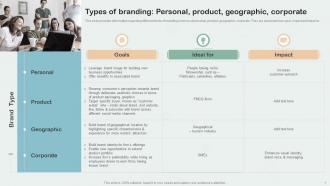
Slide 7: This slide gives a glimpse of different kinds of branding in terms of personal, product, geographic, corporate.
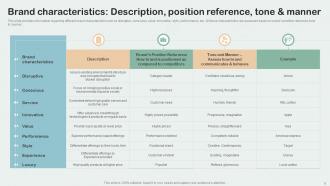
Slide 8: This slide provides information regarding different brand characteristics such as disruptive, conscious, value, etc.
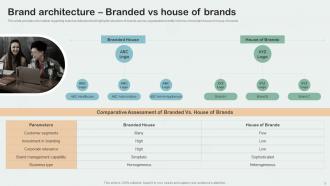
Slide 9: This slide talks about brand architecture that highlights structure of brands across organizational entity in terms of branded house or house of brands.
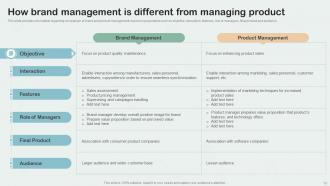
Slide 10: This slide showcases the comparison of brand and product management, based on parameters such as objective, interaction, etc.
Slide 11: This slide incorporates the Heading for the Components to be discussed next.
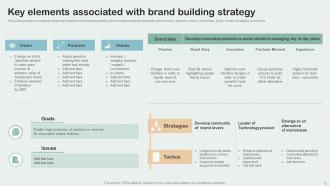
Slide 12: This slide states the Key elements associated with brand building strategy.
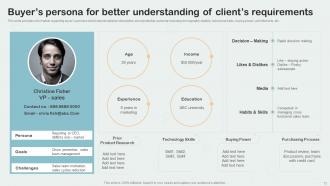
Slide 13: This slide reveals the Buyer’s persona for better understanding of client’s requirements.
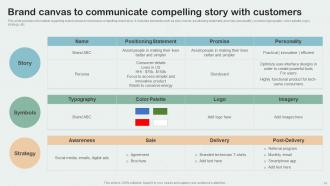
Slide 14: This slide illustrates the Brand canvas to communicate compelling story with customers.
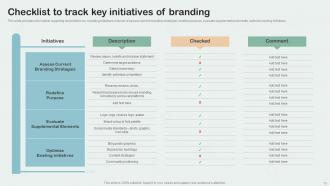
Slide 15: This slide displays the Checklist to track key initiatives of branding.
Slide 16: This slide elucidates the Title for the Ideas to be discussed next.
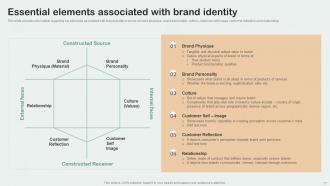
Slide 17: This slide portrays the Essential elements associated with brand identity.
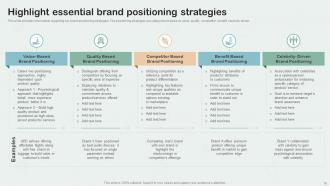
Slide 18: This slide highlights the essential brand positioning strategies.
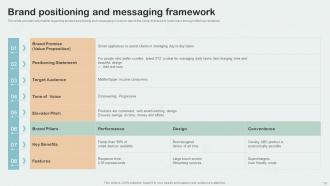
Slide 19: This slide illustrates the Brand positioning and messaging framework.
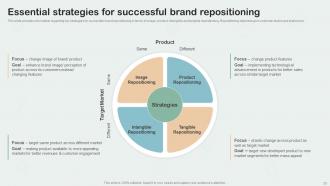
Slide 20: This slide talks about the Essential strategies for successful brand repositioning.
Slide 21: This slide incorporates the Heading for the Ideas to be covered in the following template.
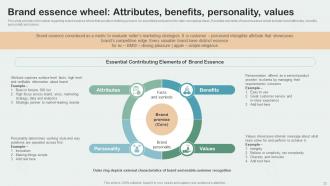
Slide 22: This slide provides information regarding brand essence wheel that assists in defining a brand.
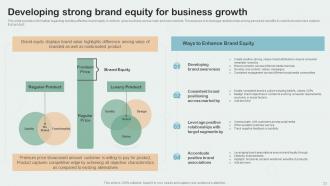
Slide 23: This slide focuses on Developing strong brand equity for business growth.
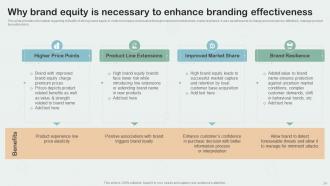
Slide 24: This slide provides information regarding criticality of strong brand equity in order to increase brand value through improved market share, brand resilience.
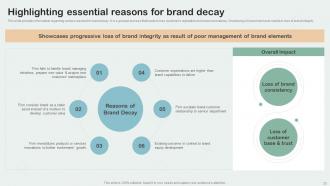
Slide 25: This slide exhibits the essential reasons for brand decay.
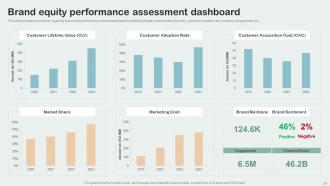
Slide 26: This slide displays the Brand equity performance assessment dashboard.
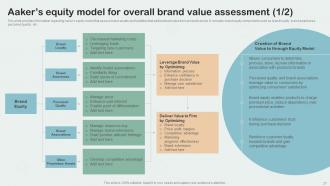
Slide 27: This slide deals with Aaker’s equity model for overall brand value assessment.
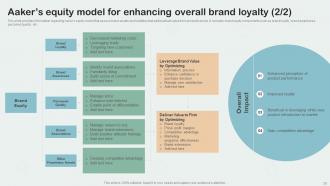
Slide 28: This slide continues the Aaker’s equity model.
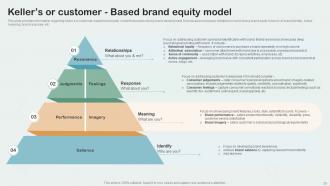
Slide 29: This slide provides information regarding Keller’s or customer-based brand equity model that enable strong brand development.
Slide 30: This slide incorporates the Heading for the Ideas to be covered further.
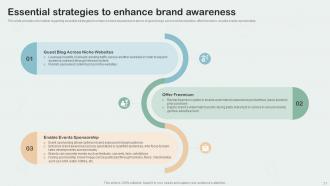
Slide 31: This slide emphasizes on the Essential strategies to enhance brand awareness.
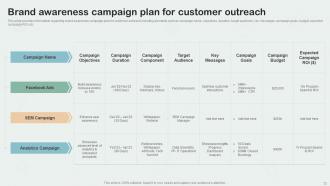
Slide 32: This slide talks about the Brand awareness campaign plan for customer outreach.
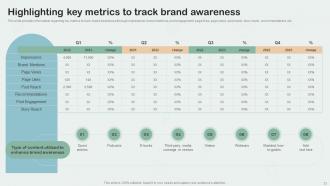
Slide 33: This slide highlights the key metrics to track brand awareness.
Slide 34: This slide displays the Title for the Topics to be covered further.
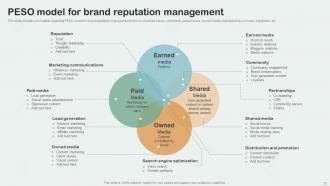
Slide 35: This slide exhibits the PESO model for brand reputation management.
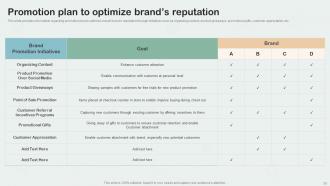
Slide 36: This slide emphasizes on the Promotion plan to optimize brand’s reputation.
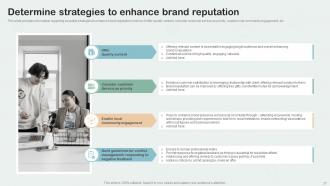
Slide 37: This slide provides information regarding essential strategies to enhance brand reputation.
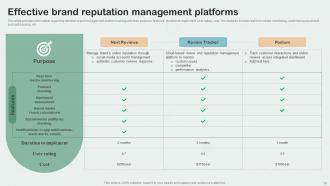
Slide 38: This slide states the Effective brand reputation management platforms.
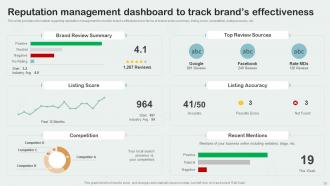
Slide 39: This slide illustrates the Reputation management dashboard to track brand’s effectiveness.
Slide 40: This slide portrays the Heading for the Contents to be covered in the forth-coming template.
Slide 41: This slide showcases the Strategies to enhance customers loyalty towards brand.
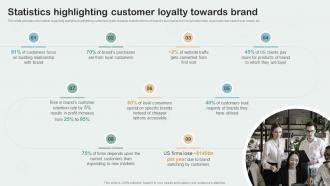
Slide 42: This slide presents the Statistics highlighting customer loyalty towards brand.
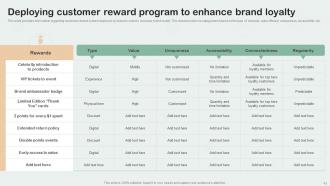
Slide 43: This slide deals with Deploying customer reward program to enhance brand loyalty.
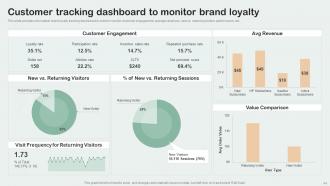
Slide 44: This slide represents the Customer tracking dashboard to monitor brand loyalty.
Slide 45: This slide includes the Title for the Ideas to be discussed next.
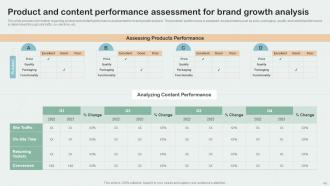
Slide 46: This slide provides information regarding product and content performance assessment for brand growth analysis.
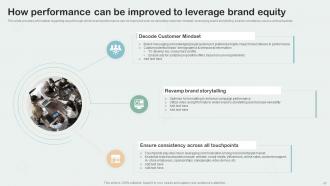
Slide 47: This slide provides information regarding ways through which brand performance can be improved such as decoding customer mindset, revamping brand storytelling, etc.
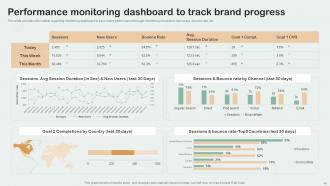
Slide 48: This slide exhibits the Performance monitoring dashboard to track brand progress.
Slide 49: This slide indicates the Heading for the Ideas to be covered in the forth-coming template.
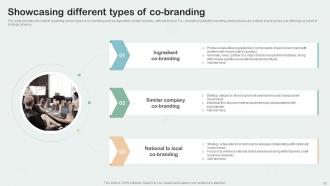
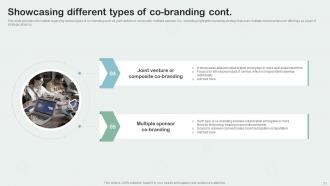
Slide 50: This slide Showcases the different types of co-branding.
Slide 51: This slide continues the different types of co-branding.
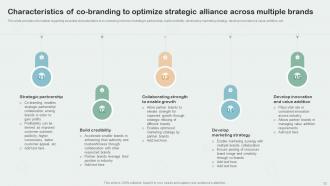
Slide 52: This slide reveals the Characteristics of co-branding to optimize strategic alliance across multiple brands.
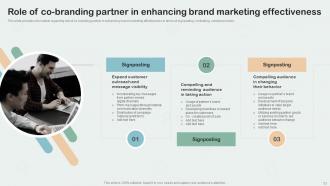
Slide 53: This slide presents the Role of co-branding partner in enhancing brand marketing effectiveness.
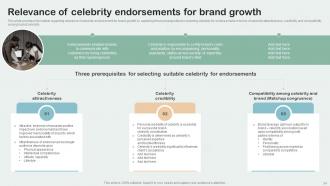
Slide 54: This slide deals with the Relevance of celebrity endorsements for brand growth.
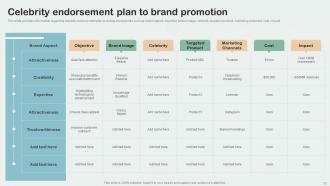
Slide 55: This slide focuses on the Celebrity endorsement plan to brand promotion.
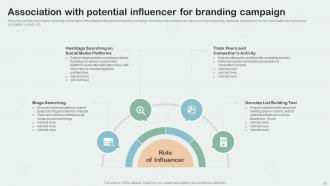
Slide 56: This slide emphasizes on the Association with potential influencer for branding campaign.
Slide 57: This slide incorporates the Title for the Components to be covered next.
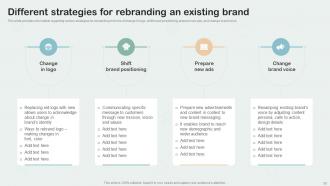
Slide 58: This slide exhibits the Different strategies for rebranding an existing brand.
Slide 59: This slide portrays the Activities tracking roadmap to manage rebranding process.
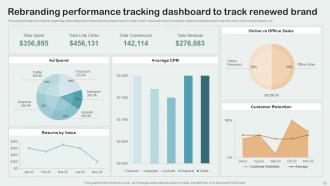
Slide 60: This slide provides information regarding rebranding performance tracking dashboard in order to track renewed brand.
Slide 61: This slide indicates the Heading for the Topics to be discussed further.
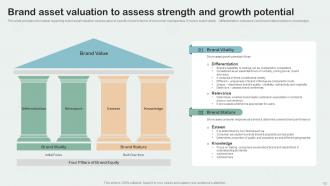
Slide 62: This slide outlines the Brand asset valuation to assess strength and growth potential.
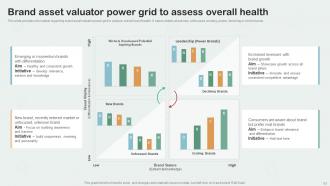
Slide 63: This slide talks about the Brand asset valuator power grid to assess overall health.
Slide 64: This slide depicts the Title for the Ideas to be covered next.
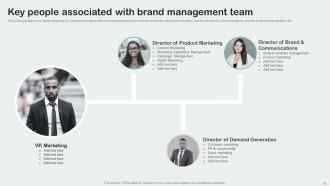
Slide 65: This slide highlights the Key people associated with brand management team.
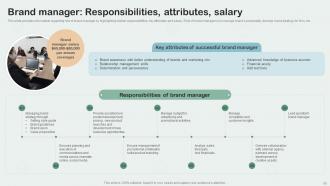
Slide 66: This slide provides information regarding role of brand manager by highlighting his/her responsibilities, key attributes and salary.
Slide 67: This slide mentions the Heading for the Ideas to be discussed in the upcoming template.
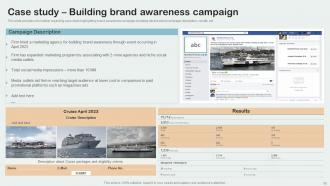
Slide 68: This slide reveals a case study highlighting brand awareness campaign including derails about campaign description, results, etc.
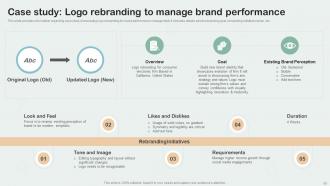
Slide 69: This slide depicts a case study showcasing logo rebranding for brand performance management.
Slide 70: This is the Icons slide containing all the Icons used in the plan.
Slide 71: This slide diplays Additional information.
Slide 72: This is the About us slide. State your company-related information here.
Slide 73: This is Meet our team slide. State your team-related information here.
Slide 74: This is the Puzzle slide with related imagery.
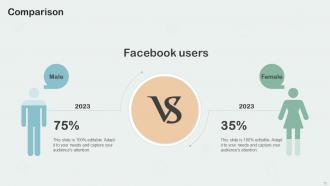
Slide 75: This slide is used for the Comparison purpose.
Slide 76: This slide contains the Post it notes for reminders nad deadlines.
Slide 77: This is the 30 60 90 Days plan slide for efficient planning.
Slide 78: This slide presents the organization's Roadmap.
Slide 79: This is the Thank You slide for acknowledgement.
Key Aspects Of Brand Management Branding CD V with all 84 slides:
Use our Key Aspects Of Brand Management Powerpoint Presentation Slides Branding CD to effectively help you save your valuable time. They are readymade to fit into any presentation structure.














FAQs for Key Aspects Of Brand Management
Effective brand management includes brand positioning, visual identity development, consistent messaging across channels, customer experience optimization, and performance monitoring through analytics. These components work together by establishing clear market differentiation, building emotional connections with target audiences, and maintaining brand equity, with many organizations finding that strategic integration of these elements delivers enhanced customer loyalty and sustainable competitive advantage.
Brand positioning significantly influences customer perception by establishing clear expectations, creating emotional connections, and differentiating offerings from competitors through strategic messaging and value propositions. Through consistent positioning across touchpoints, companies shape how customers perceive quality, reliability, and relevance, with many organizations finding that strategic positioning ultimately drives customer loyalty, premium pricing power, and sustained competitive advantage in increasingly crowded markets.
Effective brand consistency strategies include developing comprehensive brand guidelines, implementing centralized asset management systems, conducting regular brand audits, establishing clear communication protocols, and providing ongoing team training. These approaches streamline messaging, visual identity, and customer experiences across digital platforms, retail locations, and marketing materials, with many organizations finding that consistent branding increases revenue recognition by up to 23%.
Social media significantly impacts brand reputation by amplifying customer feedback, enabling real-time communication, and creating viral content opportunities that can enhance or damage brand perception within hours. Through strategic social engagement, brands streamline customer service, build authentic relationships, and monitor sentiment across platforms, while proactive management helps organizations respond quickly to concerns, ultimately delivering enhanced brand loyalty and competitive advantage in an increasingly digital marketplace.
Storytelling enhances brand identity by creating emotional connections, communicating core values, differentiating from competitors, and building memorable narratives that resonate with target audiences. Through compelling brand stories, companies across retail, hospitality, and technology sectors strengthen customer loyalty, increase engagement, and establish authentic relationships, ultimately delivering greater brand recognition and competitive advantage in increasingly crowded markets.
Brand management success is measured through brand awareness metrics, customer loyalty rates, market share analysis, brand equity assessments, and net promoter scores. These indicators enable organizations to track perception shifts, customer retention improvements, and competitive positioning gains, with many companies finding that consistent measurement across touchpoints ultimately delivers enhanced customer experiences and sustainable revenue growth.
Common brand management pitfalls include inconsistent messaging across channels, neglecting customer feedback, failing to adapt to market changes, overlooking competitor analysis, and inadequate brand monitoring. These missteps can significantly damage brand equity and customer trust, with many organizations finding that proactive brand governance, regular market research, and consistent cross-platform messaging ultimately deliver stronger market positioning and sustained competitive advantage.
Companies can successfully rebrand by maintaining core values while gradually introducing changes, communicating transparently with customers about the reasons and benefits, and ensuring consistent quality throughout the transition. Strategic rebranding involves preserving trusted elements like customer service standards and product quality, with many organizations finding that involving customers in the process through feedback and early previews ultimately strengthens loyalty and competitive positioning.
Brand equity is crucial in competitive markets because it differentiates products, commands premium pricing, and builds customer loyalty that withstands competitor pressure. Companies with strong brand equity, like Apple in technology or Nike in sportswear, enjoy sustained market share, reduced marketing costs, and resilient customer relationships, ultimately delivering competitive advantage and long-term profitability even during intense market competition.
Brands can leverage customer feedback through systematic collection across multiple touchpoints, sentiment analysis, real-time response protocols, and integration into product development cycles. Companies like retail chains and hospitality businesses use feedback management platforms to identify improvement opportunities, enhance customer experiences, and strengthen brand loyalty, ultimately delivering competitive advantage and increased customer retention.
Brands can differentiate in saturated markets through unique value propositions, innovative customer experiences, strategic partnerships, premium positioning, and niche targeting. These approaches enable companies to stand out by delivering superior service quality, personalized interactions, and memorable brand moments, with many organizations finding that combining emotional storytelling with operational excellence ultimately drives customer loyalty and sustainable competitive advantage.
Storytelling enhances brand loyalty by creating emotional resonance, shared values, and memorable experiences that transcend traditional product features. Through authentic narratives, brands like Nike and Patagonia build deeper customer relationships, foster community engagement, and differentiate themselves in competitive markets, ultimately driving repeat purchases and advocacy.
Employee advocacy transforms employees into authentic brand ambassadors who share company content, values, and experiences across their personal networks, significantly amplifying brand reach and credibility. Through strategic employee advocacy programs, organizations enhance brand visibility, build trust through peer-to-peer recommendations, and strengthen recruitment efforts, with many companies finding that employee-shared content generates higher engagement rates and more qualified leads than traditional marketing channels.
Emerging brand management trends include AI-driven personalization, sustainability-focused messaging, influencer micro-partnerships, omnichannel experience integration, and purpose-driven storytelling. These approaches streamline customer engagement by delivering targeted content, building authentic connections, and creating seamless touchpoints across platforms, with many organizations finding that strategic brand evolution ultimately enhances customer loyalty and competitive positioning.
Data analytics informs brand management strategies by tracking customer sentiment, monitoring brand perception across channels, analyzing competitor positioning, and measuring campaign effectiveness in real-time. Through predictive analytics and consumer behavior insights, companies like retail giants and financial services firms optimize messaging, identify emerging market opportunities, and allocate marketing resources more strategically, ultimately delivering stronger brand equity and competitive differentiation.
-
Great product with effective design. Helped a lot in our corporate presentations. Easy to edit and stunning visuals.
-
The best part about SlideTeam is their meticulously prepared presentations (complete-decks and single-slides both), infused with high-quality graphics and easy to edit. All-in-all worthy products.