


Transportation and ride sharing services industry pitch deck ppt template




Try Before you Buy Download Free Sample Product
 Impress Your
 Audience
 100%
100% Editable
 Save Hours
 of Time


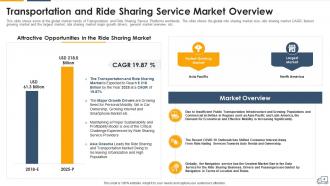
A transportation and ride sharing company also known as a transportation network company, ride-hailing service, the vehicles are known as app-taxis or e taxis is a company that matches passengers with drivers of vehicles for hire via websites and mobile apps. The Transportation and Ride Sharing Market is expected to reach dollar 218 Billion by 2025 at a CAGR of 19.87 percent. Here is an efficiently designed pitch deck on Transportation and Ride Sharing Services that present a summary of the Industry showing challenges and solution. The deck displays a market overview, top market players, and growth drivers of Service Platforms. Also, this presentation provides details on the growth rate of the Ride-Sharing Service Market by Region, market segmentation of Sharing Service Platforms, business strategies of Service Platforms, and service offerings of Transportation and Ride-Sharing Platforms. Additionally, this pitch deck provides information on Transportation and Ride-Sharing Platforms value proposition, business model and competitive analysis, key people involved in Transportation and Ride Sharing Platform, and leadership and future initiatives by Ride-Sharing Platforms. Get access to this 100 percent editable and insightful pitch deck now.
People who downloaded this PowerPoint presentation also viewed the following :
Content of this Powerpoint Presentation
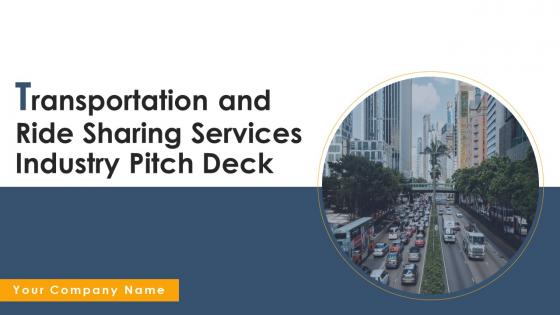
Slide 1: This slide introduces Transportation and Ride Sharing Services Industry Pitch Deck. State Your Company Name and begin.
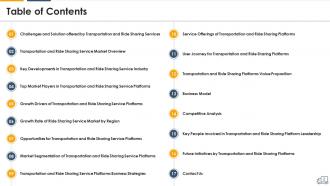
Slide 2: This slide shows Table of Content for the presentation.
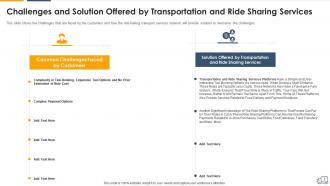
Slide 3: This slide presents Challenges and Solution Offered by Transportation and Ride Sharing Services.
Slide 4: This slide shows Transportation and Ride Sharing Service Market Overview.
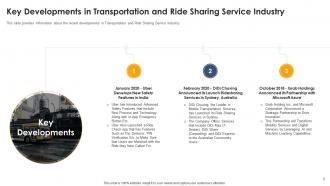
Slide 5: This slide displays recent developments in Transportation and Ride Sharing Service Industry.
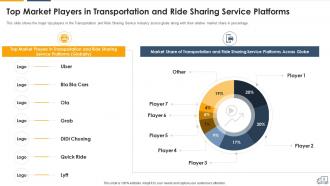
Slide 6: This slide represents Top Market Players in Transportation and Ride Sharing Service Platforms.
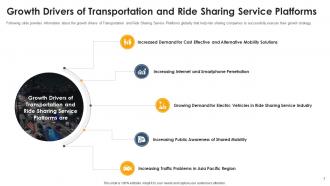
Slide 7: This slide shows Growth Drivers of Transportation and Ride Sharing Service Platforms.
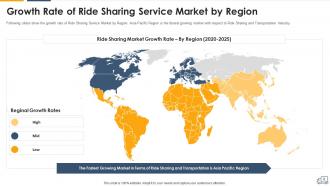
Slide 8: This slide presents Growth Rate of Ride Sharing Service Market by Region.
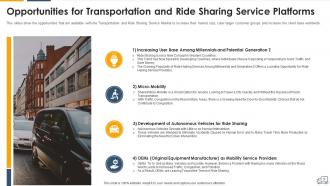
Slide 9: This slide shows Opportunities for Transportation and Ride Sharing Service Platforms.
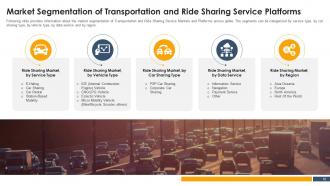
Slide 10: This slide displays Market Segmentation of Transportation and Ride Sharing Service Platforms.
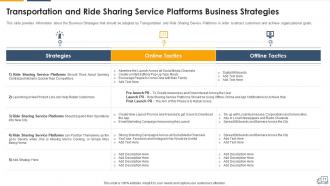
Slide 11: This slide represents Transportation and Ride Sharing Service Platforms Business Strategies.
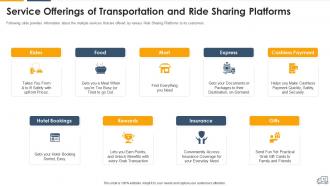
Slide 12: This slide shows Service Offerings of Transportation and Ride Sharing Platforms.
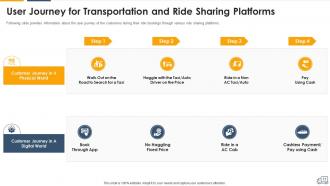
Slide 13: This slide presents User Journey for Transportation and Ride Sharing Platforms.
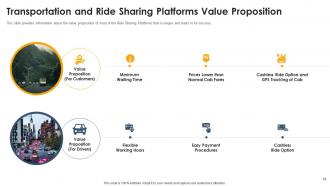
Slide 14: This slide shows Transportation and Ride Sharing Platforms Value Proposition.
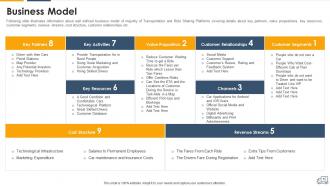
Slide 15: This slide displays business model of majority of Transportation and Ride Sharing Platforms.
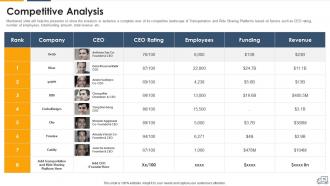
Slide 16: This slide represents investors or audience a complete view of its competitive landscape of Transportation and Ride Sharing Platforms.
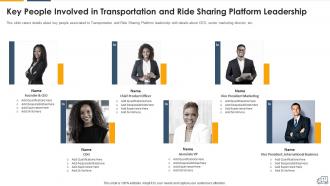
Slide 17: This slide shows Key People Involved in Transportation and Ride Sharing Platform Leadership.
Slide 18: This slide presents Future Initiatives by Transportation and Ride Sharing Platforms.
Slide 19: This is a Contact Us slide with address, contact numbers and email address.
Slide 20: This slide displays Icons for Transportation and Ride Sharing Services Industry Pitch Deck.
Slide 21: This slide is titled as Additional Slides for moving forward.
Slide 22: This slide shows 30 60 90 Days Plan with text boxes.
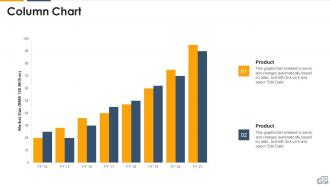
Slide 23: This slide displays Column chart with two products comparison.
Slide 24: This slide shows Roadmap with additional textboxes.
Slide 25: This slide displays Puzzle with related icons and text.
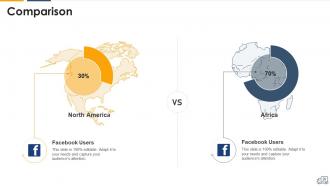
Slide 26: This is a Comparison slide to state comparison between commodities, entities etc.
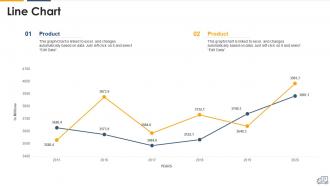
Slide 27: This slide shows Line Chart with two products comparison.
Slide 28: This slide presents Post It Notes. Post your important notes here.
Slide 29: This is an Idea Generation slide to state a new idea or highlight information, specifications etc.
Slide 30: This is Our Target slide. State your targets here.
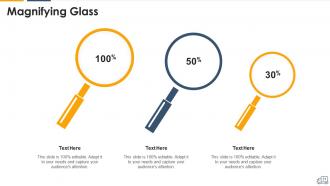
Slide 31: This slide represents Magnifying Glass to highlight information, specifications etc
Slide 32: This is a Timeline slide. Show data related to time intervals here.
Slide 33: This is a Thank You slide with address, contact numbers and email address.
Transportation and ride sharing services industry pitch deck ppt template with all 41 slides:
Use our Transportation And Ride Sharing Services Industry Pitch Deck Ppt Template to effectively help you save your valuable time. They are readymade to fit into any presentation structure.













FAQs for Transportation and ride sharing services industry pitch
Today's most innovative urban transportation trends include electric vehicle adoption, shared mobility platforms, autonomous vehicle pilots, micro-mobility solutions like e-scooters, and smart traffic management systems. These technologies streamline urban movement by reducing emissions, optimizing route efficiency, and enhancing accessibility, with cities like Singapore and Barcelona finding that integrated transportation networks ultimately deliver faster commutes and improved air quality.
Public transportation systems can be optimized through electric and hybrid vehicle fleets, renewable energy integration, smart routing algorithms, energy-efficient infrastructure, and real-time passenger analytics. These technologies streamline operations by reducing emissions, minimizing energy consumption, and maximizing ridership efficiency, with many cities finding that strategic combinations ultimately deliver lower operational costs and enhanced urban mobility experiences.
Electric vehicles significantly reduce urban pollution by eliminating tailpipe emissions, decreasing particulate matter, and minimizing nitrogen oxides in city centers. Many metropolitan areas like Los Angeles and Beijing are finding that widespread EV adoption, combined with cleaner electricity grids, delivers measurably improved air quality and better public health outcomes.
Technology is transforming logistics and freight transportation through IoT tracking systems, AI-powered route optimization, autonomous vehicles, blockchain supply chain management, and predictive analytics platforms. These innovations streamline operations by reducing delivery times, minimizing fuel costs, and enhancing cargo visibility, with many shipping companies finding that automated systems ultimately deliver significant operational efficiency and competitive advantage.
Implementing autonomous vehicles presents both significant challenges and transformative benefits, including regulatory hurdles, infrastructure requirements, public acceptance concerns, enhanced safety through reduced human error, and improved traffic efficiency. While transportation companies face substantial initial investments and technological integration complexities, many logistics firms, ride-sharing services, and delivery companies are finding that autonomous systems ultimately deliver reduced operational costs, 24/7 availability, and competitive advantage in increasingly automated markets.
Transportation infrastructure drives economic development by reducing logistics costs, improving market access, and attracting business investment through enhanced connectivity. Modern transportation networks enable faster goods movement, lower operational expenses, and expanded customer reach, with many regions finding that upgraded ports, highways, and rail systems ultimately deliver increased trade volumes, job creation, and competitive regional advantage.
Effective strategies for reducing road congestion include implementing congestion pricing, expanding public transit networks, promoting carpooling and ride-sharing, optimizing traffic signal timing, and encouraging remote work policies. These approaches streamline urban mobility by redistributing traffic patterns, enhancing alternative transportation options, and leveraging smart infrastructure technologies, with many cities finding that strategic combinations ultimately deliver faster commutes and improved air quality.
Transportation planning incorporates equity and accessibility through comprehensive community engagement, prioritizing underserved neighborhoods in infrastructure investments, ensuring affordable public transit options, and designing accessible facilities for disabled individuals. By strategically combining route optimization with targeted service expansion, cities like Portland and Seattle deliver improved mobility for low-income residents while reducing transportation costs and enhancing overall urban connectivity.
Transportation modes present varying environmental impacts, with aviation and shipping producing significant carbon emissions, while rail and public transit offer more sustainable alternatives through energy efficiency and reduced per-capita consumption. Electric vehicles, bicycles, and walking minimize environmental footprints, with many cities finding that strategic combinations of these modes deliver improved air quality and reduced greenhouse gas emissions.
Transportation policy changes significantly influence urban development by shaping land use patterns, housing density, infrastructure investment priorities, and economic growth corridors. These policies drive strategic planning decisions across cities, with many metropolitan areas finding that transit-oriented development, pedestrian-friendly zoning, and multimodal connectivity ultimately deliver more sustainable communities and enhanced economic competitiveness.
High-speed rail systems present promising future prospects through technological advancement, environmental sustainability requirements, and increasing urbanization demands. These systems enhance economic connectivity, reduce carbon emissions, and provide competitive alternatives to air travel, with countries like Japan, France, and China finding that strategic rail investments ultimately deliver regional development, improved mobility infrastructure, and significant competitive advantages in increasingly congested transportation networks.
Ride-sharing influences traditional public transportation by complementing existing services, filling first-mile and last-mile gaps, and creating competitive pressure for improved efficiency. Many transit agencies increasingly integrate ride-sharing partnerships for underserved routes, while urban areas find that combined mobility options enhance accessibility, reduce individual car ownership, and ultimately deliver more flexible transportation networks.
Emerging bicycle and pedestrian infrastructure innovations include protected bike lanes with physical barriers, smart traffic signals that detect cyclists and pedestrians, shared mobility hubs integrating bike-share and transit, and permeable materials for sustainable walkways. These technologies enhance urban mobility by reducing congestion, improving safety, and promoting environmental sustainability, with cities like Copenhagen and Portland finding that strategic infrastructure investments ultimately deliver healthier communities and increased economic activity.
Transportation systems adapt to climate change through infrastructure resilience upgrades, electrification of vehicle fleets, smart routing technologies, and sustainable fuel alternatives. These strategic approaches enable transit authorities, logistics companies, and urban planners to minimize emissions while enhancing operational efficiency, with many cities finding that integrated climate adaptations ultimately deliver cost savings and improved service reliability.
Data analytics enhances transportation efficiency by optimizing route planning, predicting maintenance needs, analyzing traffic patterns, and improving resource allocation across networks. Through real-time data processing, transportation companies streamline operations, reduce fuel costs, and minimize delays, while cities leverage analytics for smart traffic management, ultimately delivering faster services and better passenger experiences.
-
Nice and innovative design.
-
Easily Editable.
-
Colors used are bright and distinctive.
-
Easily Editable.
-
Awesome use of colors and designs in product templates.